
Michael Kunze, Managing Director of MKey Solution GmbH and an expert in industrial digitalization, explains why companies now need to systematically preserve the experience of their employees—and the role worker assistance systems can play in this process:
“The shortage of skilled workers has been a challenge for industry for years. The discussion usually focuses on vacant positions, a lack of applicants, or competition for qualified employees. However, another aspect is often overlooked: as the baby-boomer generation retires, companies are losing not only employees, but also decades of accumulated practical experience and know-how.
Particularly in manufacturing, this knowledge is often critical to quality, productivity, and process reliability—and it is difficult to replace.”
Experience Does Not Disappear at the Push of a Button
The scale of this development is significant. According to the Federal Statistical Office of Germany, around 13.4 million people of working age will reach the statutory retirement age by 2039. This corresponds to almost one-third of today’s working population.[1]
At the same time, the younger generations entering the workforce are significantly smaller in number. The labor market will therefore not be able to close this gap in the foreseeable future.[2]
This development is particularly significant for industry. While each retirement initially means the departure of just one individual, much more is actually lost than a position that needs to be filled.
Long-serving employees possess extensive knowledge of the specific characteristics of a production environment: which sequence of steps works reliably in a complex assembly process, how different material batches behave, or which early signs indicate that an error is developing.
This practical knowledge is rarely documented in its entirety. It has evolved over many years through daily interaction with machines, products, and processes.
As product variety increases and batch sizes become smaller, this implicit knowledge becomes even more important. Production processes are becoming more complex, product changeovers more frequent, and quality requirements higher.
At the same time, the time available to train new employees is becoming shorter. Companies are therefore facing the challenge of transferring knowledge faster than it is being lost.
Documentation Alone Is Not Enough
Many companies respond with process descriptions, work instructions, or knowledge databases. This is useful, but it only partially addresses the underlying problem.
Information only creates value when it is available at the right moment. A multi-page PDF cannot replace support directly at the workplace. Employees have to search for information, interpret it, and apply it to their specific work situation.
Under time pressure, the risk of misunderstandings or deviations from the defined process increases.
New employees and temporary replacements in particular benefit only to a limited extent from conventional documentation.
Furthermore, production processes are continuously being adapted. Work instructions quickly become outdated if changes are not consistently incorporated. This makes standardized knowledge transfer even more difficult.
Worker Assistance Makes Experience Scalable
This is precisely where modern worker assistance systems can make a decisive contribution.
Their real value does not lie in monitoring employees or replacing their work. Rather, they make existing corporate knowledge available whenever it is needed.
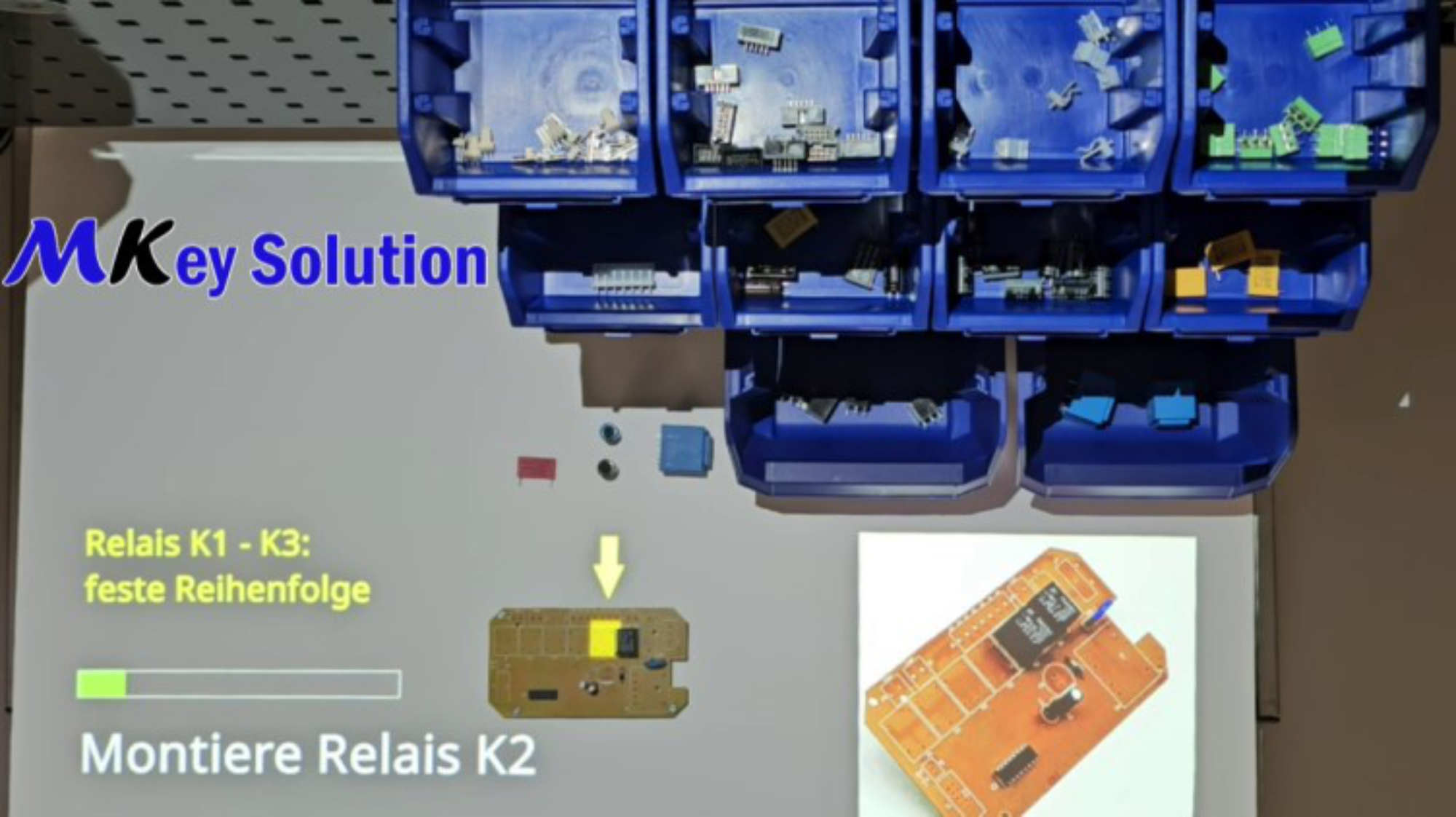
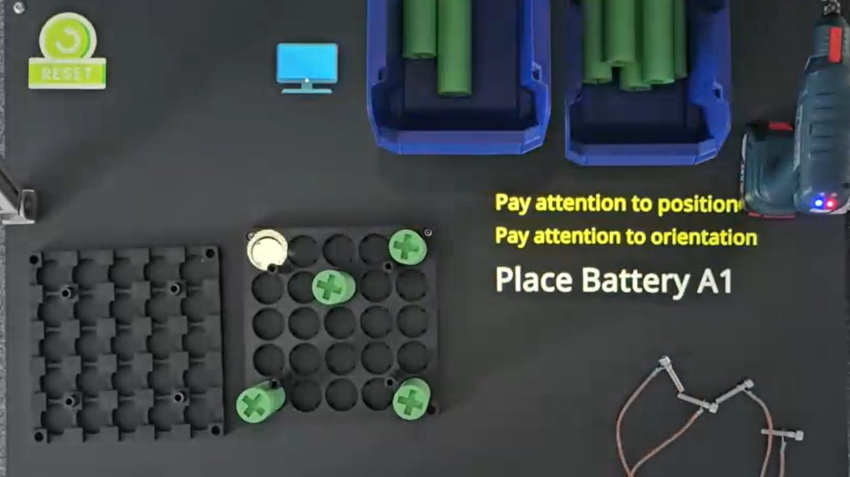
Digital step-by-step instructions guide employees safely through complex workflows. Images, videos, or augmented-reality applications provide information exactly where it is required—directly at the workplace.
Process changes can be updated centrally and then made immediately available to all employees.
This reduces the effort required for training as well as dependence on individual knowledge holders.
At the same time, new opportunities for quality assurance arise. Work steps can be documented in a traceable manner, targeted inspections can be integrated, and errors can be prevented at an early stage.
This not only improves product quality but also relieves experienced specialists.
Instead of repeatedly answering the same questions or continuously supporting new colleagues, experienced employees can focus their expertise precisely where it is actually needed.
MKey Solution is an Arkite Gold System Integrator and implements the Arkite Operator Guidance Platform in combination with its own integration and application expertise.
Knowledge as Part of the Process
Social changes such as demographic shifts cannot be stopped. Companies can, however, decide how they respond to them.
Organizations that keep critical know-how exclusively with individual employees make their production increasingly vulnerable.
Those that systematically digitize knowledge and integrate it directly into the work process create the foundation for stable operations—regardless of who is working on the line at any given time.
The true strength of modern worker assistance therefore lies less in digitizing work instructions than in preserving business-critical knowledge.
Experience is not replaced; it is preserved and made accessible to all employees.
In view of the upcoming wave of retirements, this could become one of the most important competitive factors in industrial production.”
Further information: MKey Solution – Worker Assistance System
Michael Kunze is Managing Director of MKey Solution GmbH. After studying electrical engineering at Friedrich-Alexander-Universität Erlangen-Nürnberg (FAU), he worked for many years for a leading provider of sensor technology, measurement technology, and cameras.
Since 2014, he has focused on the integration of industrial machine vision and measurement technology through his own company. With his extensive experience and in-depth expertise, particularly in the field of 3D cameras, he is a sought-after industry expert and keynote speaker.
Since its foundation in 2015, MKey Solution GmbH has been developing customized systems for industrial machine vision and measurement technology to automate production and logistics processes and ensure quality.
This is achieved through the integration of cameras, sensors, and software that provide instructions and alert employees to errors in real time.
A particular focus is placed on the worker assistance system, which supports employees during assembly and manufacturing processes. Work steps are visually guided and automatically verified using Time-of-Flight sensors.
Errors are detected immediately and prevented before they can progress further through the process.
[1] Source: German Federal Statistical Office
[2] Source: German Federal Statistical Office