

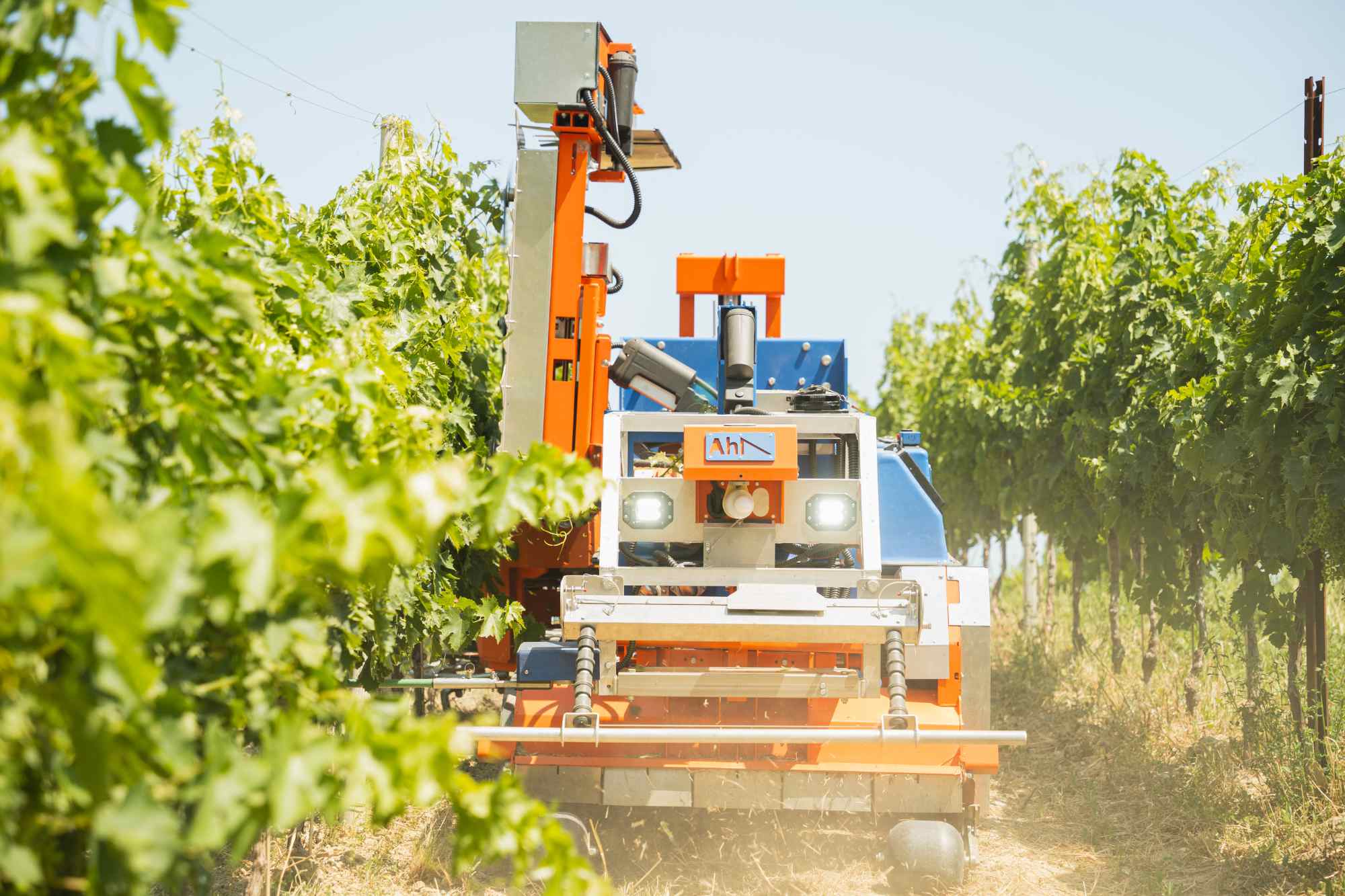
PeK Automotive develops innovative low-voltage autonomous electric vehicles for agriculture, rescue, and defence. Their customizable electric vehicles are known for their cost-effective production and operation, environmentally friendly features and innovative design – all while built with safety and durability in mind.
Their flagship systems, Slopehelper and Agilehelper, are zero-emission, GNSS-free, and built to reduce labor while increasing safety and efficiency. The company is driven by a mission to support those doing the world’s toughest jobs with smart, sustainable technology, designed not just for competitive edge, but to benefit the entire industry.
How do your products or solutions contribute to greater operational efficiency for your clients or end-users?
We don’t produce just machines or platforms — we deliver complete autonomous systems. Our systems cover the entire agrocycle, from 1st of January till 31st of December, integrating every process from soil preparation to harvesting into one coordinated ecosystem.
Our solution represents Agriculture 4.0, already incorporating elements of Agriculture 5.0 — with full real-time operational control through IoT connectivity and on-board AI decision-making.
As a result, our clients eliminate the need for human labor throughout the whole agrocycle, achieving over 3 times improvement in cost efficiency compared to conventional mechanized agriculture with lower initial investments.
Which key technologies or design principles have most improved the efficiency of your latest product generation?
The core design principle of our latest generation is the system-as-one-component approach — we develop not separate machines, but fully integrated systems where every subsystem is functionally and energetically unified.
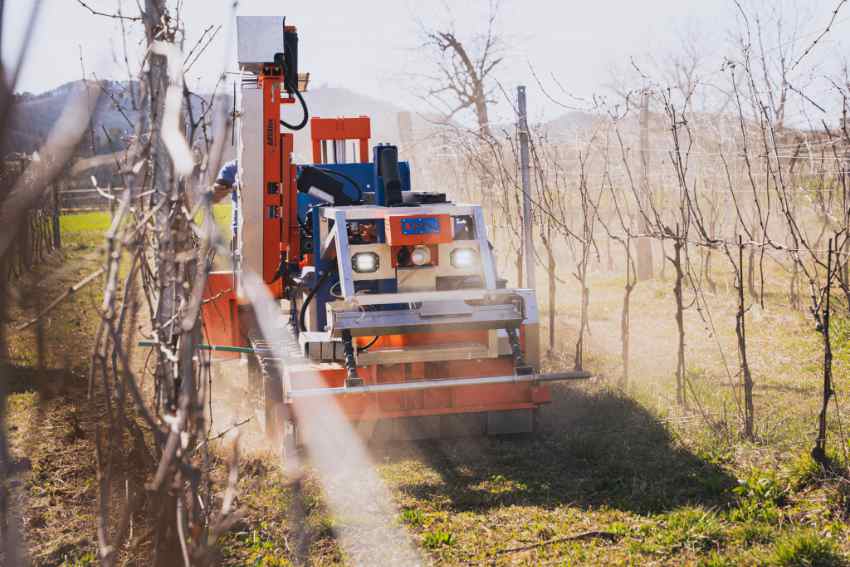
Efficiency improvement is achieved through several key technologies:
1. Direct electric energy transformation — we avoid any intermediate energy conversions or transmissions between the battery and the working instrument, relying exclusively on pure electromechanical pathways.
2. System-on-Chip (SoC) electronics in all critical control modules, ensuring high-speed data processing and compact, energy-efficient architecture.
3. A redundant communication network operating under our proprietary real-time operating system designed specifically for UGV (unmanned ground vehicle) applications.
4. On-board Artificial Intelligence, which enables real autonomous motion, environmental adaptation, and continuous optimization of operational parameters.
Together, these principles create a compact, intelligent, and energy-efficient platform that maximizes autonomy and reliability.
How do you define and measure “efficiency” within your organization or product portfolio?
For us, efficiency is defined in only one practical way — cost efficiency. Since we develop systems for plantation-scale agribusinesses, the ultimate measure of value is profitability. Every design, engineering, and operational decision we make is therefore evaluated through its impact on the customer’s cost per hectare and return on investment.
We are the only company today offering an open Feasibility Calculator, which allows any potential customer to compare the total yearly agrocycle cost of their current conventional equipment with the cost of operating our Autonomous Agricultural System.
This tool, available at 🔗 https://pek-agrobot.com/shelper/#feasibility and 🔗https://feasibility.slopehelper.com/, provides a transparent calculation of ROI and payback period, making the efficiency of our solution measurable, predictable, and verifiable.
In what ways has digitalization (IoT, data analytics, AI, etc.) influenced your approach to improving efficiency?
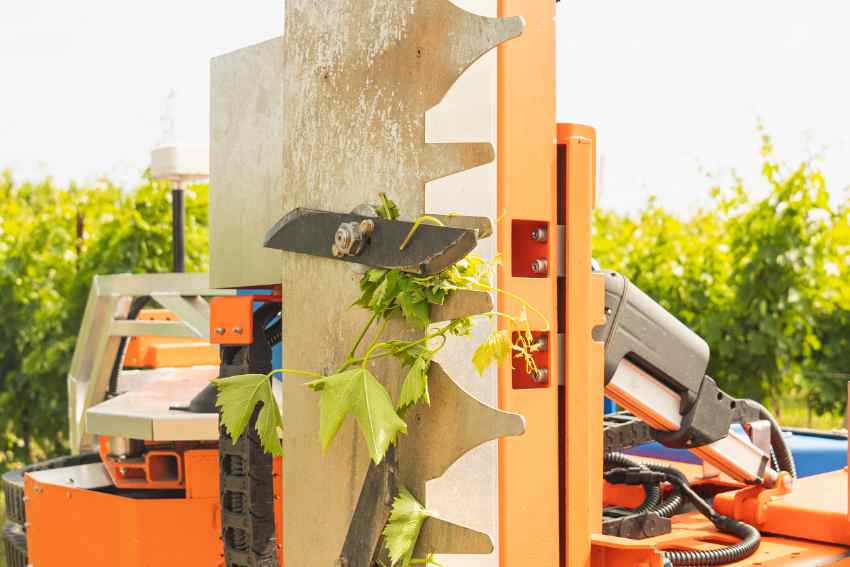
For us, digitalization is not an improvement tool, it is the foundation of our technology. Concepts such as IoT connectivity, real-time data analytics, and on-board AI are not add-ons; they are the core architecture of our autonomous systems.
Every operation, from navigation to task execution and system diagnostics is driven by continuous data exchange and autonomous decision-making.
In other words, digitalization doesn’t just enhance our efficiency — it defines how our systems exist and operate.
Can you share a recent project or case study where efficiency gains led to significant performance or sustainability benefits?
Of course. One of the last impactful products (and I emphasize “product,” not “project,” since we focus on real, self-sustaining technologies rather than subsidized experiments) is our Autonomous Fruit Picker.
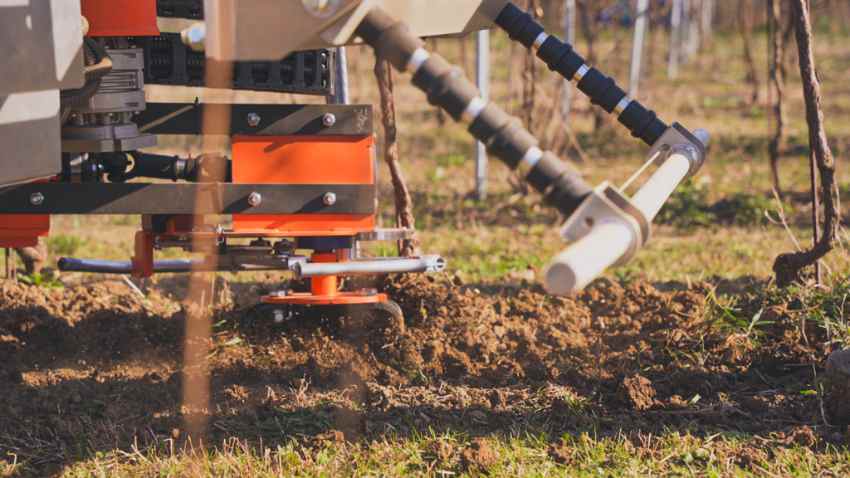
This machine represents a major breakthrough: it is the first truly autonomous fruit-picking system that requires no human operator. Compared with conventional fruit-harvesting combines, which depend on seasonal labor and remain idle for most of the year, our picker operates as an integrated element of the full autonomous agrosystem.
It delivers over three times higher cost efficiency than traditional harvesting teams and platforms. More importantly, because it functions as part of the year-round autonomous agrocycle, the same robotic system performs other field operations from January 1st to December 31st: maximizing equipment utilization, reducing idle time, and ensuring full sustainability of operations.
How do you balance efficiency improvements with other priorities, such as reliability, quality, or environmental impact?
First of all, we don’t accept compromises. We don’t “balance” efficiency against reliability, quality, or environmental goals because all of these parameters are integrated into our system specification from the very beginning.
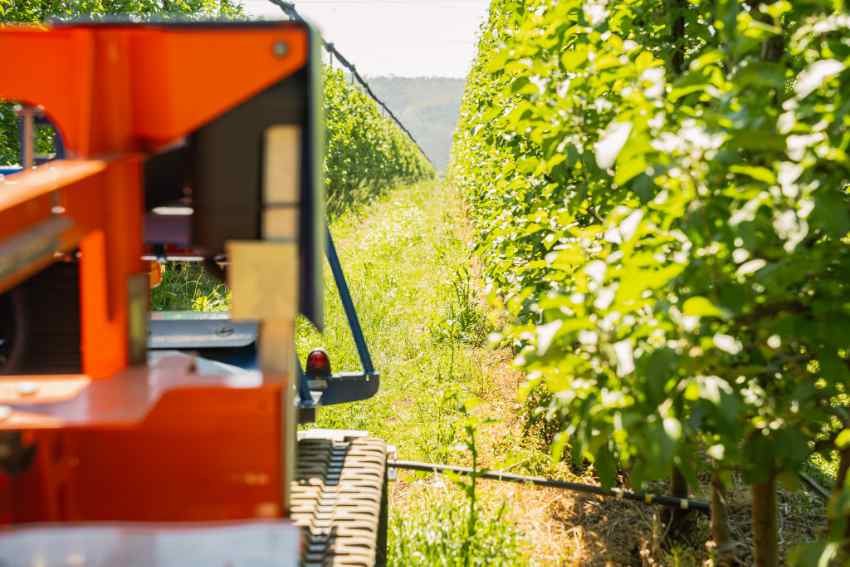
Our autonomous agrosystem contains no combustion engine, no motor oil, and no hydraulic oil it is a fully low-voltage electric platform built around the most advanced concepts of direct electric drive. This design inherently eliminates many failure points, making the system far more reliable than any conventional machinery based on internal combustion engines.
We provide 1,600 operating hours of warranty over five years, which enables our customers to confidently transition to biological (eco-cycle) production without any loss of investment. For comparison, a traditional tractor typically provides only 800–1,200 hours per year, which makes such a transition economically difficult.
In our philosophy, efficiency, reliability, and environmental performance are not competing goals — they are different expressions of the same system logic.
What role do your suppliers or partners play in helping you achieve higher efficiency across your value chain?
To be honest, we are a very specific company because of we rely primarily on our own proprietary technologies. All critical elements like: electronics, mechanical systems, and software are developed entirely in-house.
We do cooperate with external partners, but only for non-critical manufacturing processes, such as simple mechanical parts or PCB pick-and-place assembly services. This strategy gives us two key advantages:
- Technological independence — by controlling all intellectual property and design, we can flexibly adapt our electronic component base and avoid supply-chain disruptions or component shortages.
- Cost optimization — by outsourcing only low-complexity production to regions with more efficient energy management and lower manufacturing costs, we reduce total system cost without compromising quality or reliability.
In other words, our suppliers support our efficiency not by innovation, but by scale and flexibility, while the core efficiency remains defined by our own technology.
How do you ensure that efficiency improvements are maintained over the full lifecycle of your product or solution?
In our case, this is a relatively straightforward task. Agricultural instruments do not operate 365 days per year, each works only during specific stages of the annual agrocycle.
During the first three years of development, however, we deliberately ran our systems in continuous operation, 365 days per year, to simulate the equivalent of a ten-year lifecycle under real working conditions. This long-term testing allowed us to identify and refine numerous details in mechanical design, electronics, firmware, and software, ensuring that every component maintains its efficiency and reliability throughout its full operational life.
As a result, our customers receive technologies that are already lifecycle-validated, minimizing maintenance needs and preserving performance stability for many years.
What challenges or barriers do you face when implementing efficiency-driven innovations in your industry?
Our main barrier is not technological it’s human and cultural. We face a widespread post-industrial mindset, where many people have lost the sense of responsibility, discipline, and purpose that true engineering and manufacturing demand.
In today’s liberal environment, it is increasingly common to meet individuals who possess great potential but lack the commitment to results and the understanding of collective goals. For them, work becomes a form of self-expression rather than a contribution to society or to the customer’s needs.
Such attitudes can slow progress, as innovation requires people who see their work as part of a common mission, not merely a personal occupation. Of course, the culture inside our company naturally filters out those who cannot adapt but even so, we sometimes lose valuable time and energy in this process.
Despite that, we maintain a clear focus: to build a team of professionals who share a sense of responsibility, precision, and purpose, because only such people can create technologies that truly serve the world.
Looking ahead, which emerging technologies or trends do you believe will most unlock new levels of efficiency in your field?
I would highlight the following key technological directions, ranked by their impact potential:
- Mass production of solid-state batteries — this will at least double the on-board energy capacity, fundamentally extending the autonomy and operational time of field robots.
- Next-generation Artificial Intelligence — especially context-aware and adaptive models capable of dynamic decision-making in complex outdoor environments.
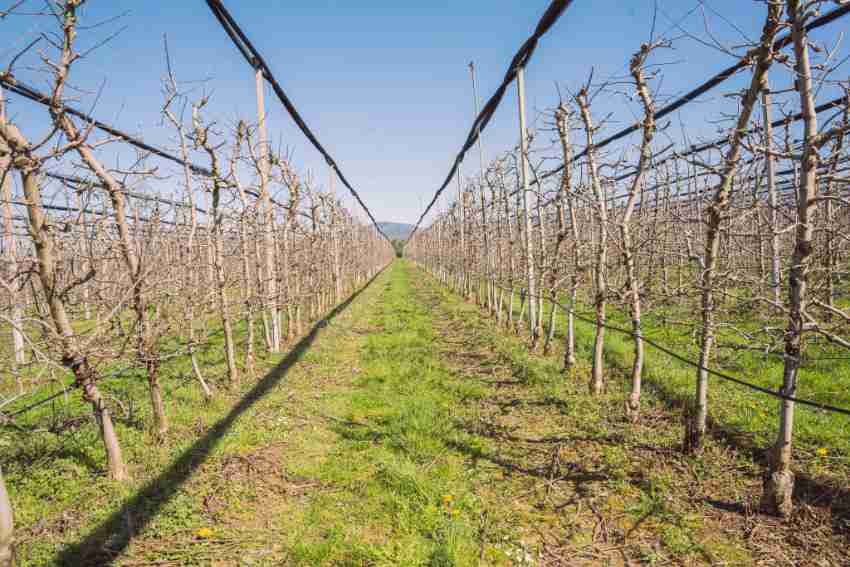
- Advanced photovoltaic technologies, particularly semi-transparent solar panels that can be installed above orchards or vineyards to provide sustainable energy in remote agricultural zones.
- High-frequency radar technologies — we already employ 120 GHz systems, but the future lies in large-scale multi-gate MIMO radar arrays, offering superior environmental perception and precision navigation.
- Composite structural technologies — especially in the power frame segment, enabling lightweight yet high-strength carrying structures for next-generation autonomous vehicles.