
Fylde has 60+ years’ experience in delivering test, measurement and signal condition solutions to a range of industries. The company has developed a very diverse portfolio of past and present clients from many industries. Whether that be linking movement of the leaning tower of Pisa and the phases of the moon or using our isolation amplifier in the development of the latest electronic road vehicles and trains. Fylde has supplied equipment to companies as diverse as CERN and their Large Hadron Collider and to the horse racing industry for monitoring the quality of their racecourses. Research departments and universities love our high-speed amplifiers for their Split Hopkinson Pressure Bar testing.
A brief description of the company and its activities.
If it flies, floats or lives beneath the waves, we’ve got kit that can help.
We’ve supplied equipment and support to clients on all seven continents. Yes, including Antarctica! The list goes on, as does the Fylde team. We’re into the fourth generation of staff. The whole of the Fylde ‘family’ has a wealth of knowledge and experience. We love analogue electronics, and we relish a challenge.
What are the main areas of activity of the company?
Fylde is an engineering lead company with 25% of the total staff employed in the design department. This is complemented with manufacturing all run out of Preston city centre in the UK.
Fylde takes on projects covering design, manufacture, calibration, service and repair that relate to the test, measurement and signal conditioning industry.
What’s the news about new products?
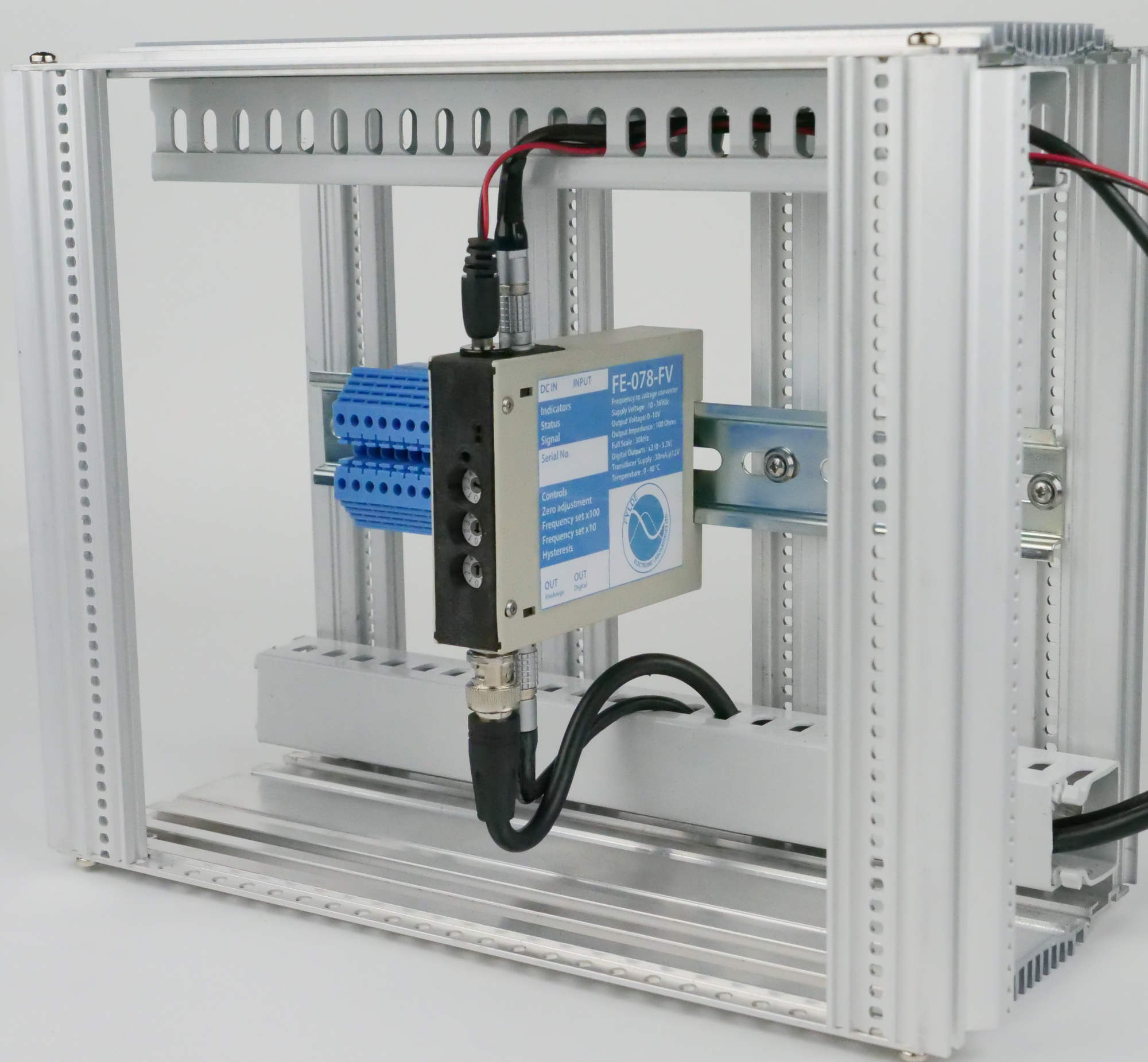
New Product FE-078-FV
This instantaneous F-V converter accepts frequency inputs from electromagnetic or light activated sources, or from a low impedance output of other signal conditioning systems for virtually all pulse or frequency waveforms from 10mV to 30V RMS.
The frequency of the incoming signal is converted to an output voltage in the range 0-10V, requiring just one pulse of the new frequency to update the output voltage.
The full-scale frequency (10Hz to 30kHz) is set using two front panel decimal rotary switches, and an onboard jumper selects the output span so that 0.0 V can represent 0 Hz or 90% of the full-scale frequency. The lowest frequency which can be converted is 0.25 Hz.
Low noise, 0.1% linearity output, provides excellent analogue performance, and selecting the on board 3 pole filter provides a frequency averaging function when required.
Compatible with standard DIN Rail specifications.
New Product FE-549-CDT
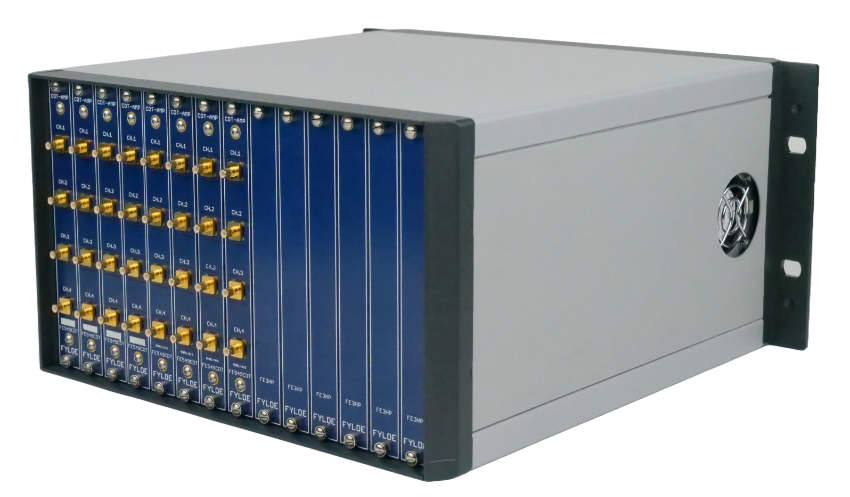
Presented in a narrow panel, Eurocard format, this 4 channel CDT amplifier enables the connection of 4 separate capacitance transducers, or 2 back-to-back dual channel transducers, and provides a voltage proportional to capacitance on 4 buffered outputs.
Featuring a unique transformer coupled preamplifier the energisation level is raised to 40V p-p which brings benefits to noise and stability. Driven from a common oscillator utilising individual power buffers, negates problems of beating which may be associated with multichannel CDT systems.
Up to 14 modules (56 channels) may be fitted into a 42HP Eurocard frame, which contains a common power supply and master oscillator.
New Product FE-1001-PA
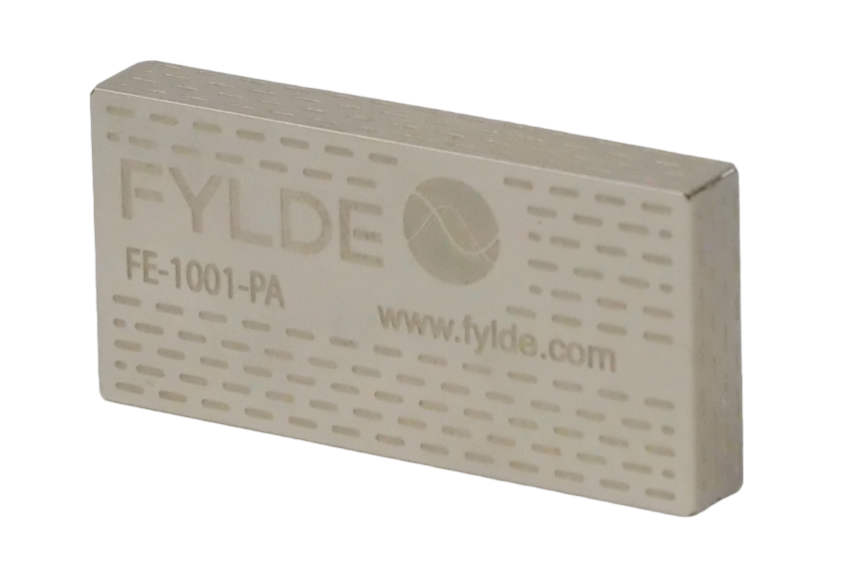
A highly integrated, low powered and compact board to suit a wide range of transducer and gauge installations.
This unit includes ten different gain settings with very precise output amplitude adjustment. Additionally, it contains AC/DC coupling with five high pass and five low pass settings allowing for more flexible filtering range.
With amplifier setup using I2C this is a great way to add a high precision signal conditioner to your OEM design or experiment, ask the team about shields for all your favourite development platforms.
What are the ranges of products?
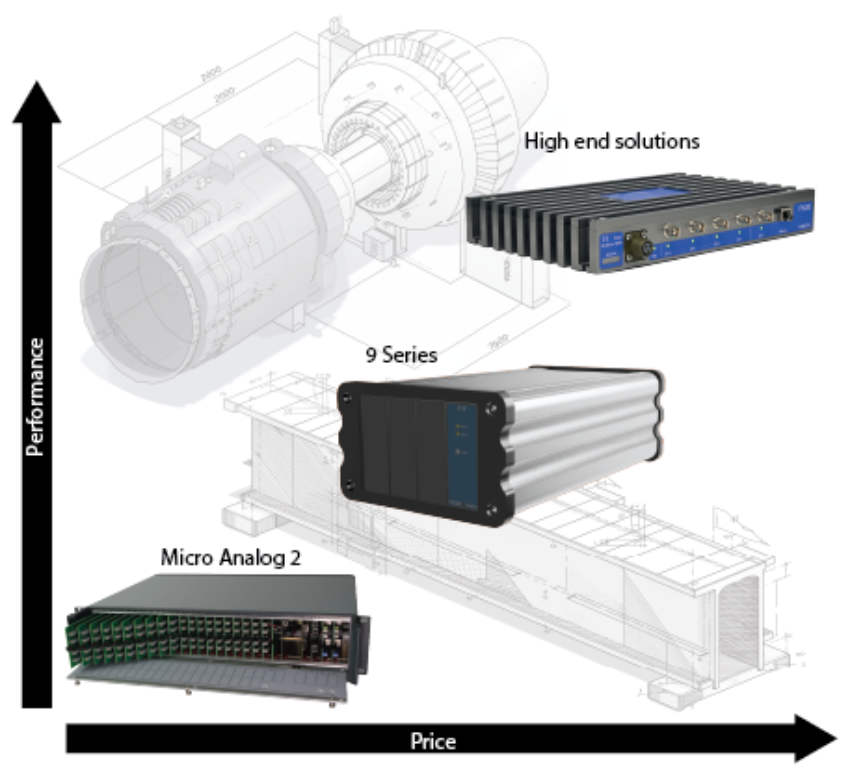
Fylde has a solution to suit your budget and requirements, with our Micro Analog range offering a range of cards, housing up to 40 channels per rack, this really is a high-density, cost-effective solution. The range also features a free data acquisition application called MADAQ.
9 Series offers a great blend of performance Vs price, offering a range of measurement solutions that can be combined in up to 16 channels per rack. Then there is our range of high-end solutions designed to focus in on application specific measurements, including blade passing analysis and high bandwidth strain gauge measurements (FE-(H)-389-TA).
At what stage is the market where you are currently active?
Steady with consistent demand from Europe, North America and Asia.
What can you tell us about market trends?
With a push by world governments towards NET Zero and a green future, we are seeing an increasing interest in isolation amplifier technology. To service the EV and renewable markets.
Isolation amplifiers form an integral part of a measurement system when battery stack measurements, power line monitoring, ground loop elimination, current shunt measurements are required often forming an interface to data acquisition systems or oscilloscope front ends.
The FE-961-IA amplifier comprises a low noise, low drift input stage with differential characteristics.
There are 9 input ranges with a maximum of 2500Vpk.
The amplifier is exceptionally easy to use and is fully protected on all ranges to 3kV DC or RMS continuous, and up to 5kV pk (1s).
The FE-960-IA has an advanced depletion mode FET input stage, gain up to x100 or attenuation of divide by 100.
High speed pulses down to 3uS can be measured. Limit detection indication for out-of-range signals.
Common to all FE96x-IA amplifiers.
A high-performance isolation stage and a filter with buffered voltage output.
Bandwidth is 200kHz.
What are the most innovative products marketed?
The distance between a turbine blade and the turbine casing is a critical measurement for engineers. It is, however, a difficult measurement because of the typically high temperatures and rotational speeds involved. It’s usually difficult to locate electronic instruments close to the measurement and cables must be routed through a hostile environment before arriving at the electronic equipment’s location.
Fylde has a long history of supplying electronic equipment to make tip clearance measurement using triaxial capacitance probes. Probes are mounted in the casing and measure the capacitance formed by each blade tip as it passes the probe.
Techniques include using the capacitance between blade tip and probe to change an oscillator frequency (Frequency Modulation) or using the capacitance at a fixed frequency to vary the amplitude of an oscillator (Amplitude Modulation.)
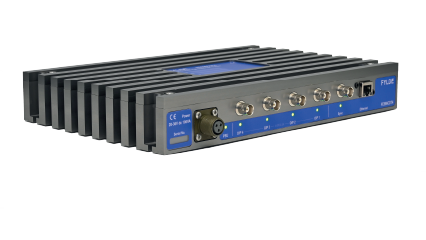
The FE-596-CDT4 is a 4 channel Capacitance Probe system for gas turbine measurements of blade tip clearance and time of arrival. The system has high bandwidth and low noise which facilitates vibration analysis applications. Wide Measurement Bandwidth 0.16Hz to 375kHz -3dB (-0.1dB >200kHz) Low Noise (0.5aF/√Hz) Both triaxial fully guarded and low-capacity pseudo triaxial type probes may be used. Probes may be situated up to 30m away from the FE596CDT4 by using a combination of Mineral Insulated (MI) & Low Capacity Triaxial Extension (LCTE) cables.
Remote configuration and monitoring over a LAN or WAN are very simple and powerful. Auto-Tune & Auto-Balance commands quickly optimise the FE596CDT4 to work with any connected Probe / Cable combination. Gains may be set over a wide range to achieve the best possible Signal to Noise Ratio (SNR), whilst avoiding clipping with large signals. Commands allow for diagnosis of both System and Probe health. Multi-colour LEDs indicate the status of each channel.
For maximum versatility the system is powered from 24V DC Auto-Tuning for input cable lengths up to 30m Auto-Balance to remove static capacitive & resistive leakages. Maintains high measurement accuracy with high Probe & cable temperatures Quasi-DC Mode for Static Measurements.
What estimations do you have for 2024?
2025 is set to end in a busy period for us at Fylde, there has been a recent surge in requirements for our high specification products, for both blade passing analysis and high bandwidth strain gauge equipment.