
Senseven is an austrian DeepTech startup based in Vienna. The company developed the first smart and mobile inspection system for leak detection and quantification in valves. Senseven combines acoustic emission technology with software and AI to support standardized, data-driven inspection processes in industrial plants.
Interview with Anna Grausgruber, Co-Founder and CGO of Senseven.
What are the main areas of activity of the company?
Anna Grausgruber: Senseven’s activities center on simplifying and digitizing industrial inspection processes (especially for valves in a first step), covering the full workflow: from data acquisition on site, to immediate evaluation of results with algorithms and AI, through automated reporting and structured data management.
The principal areas of activity include:
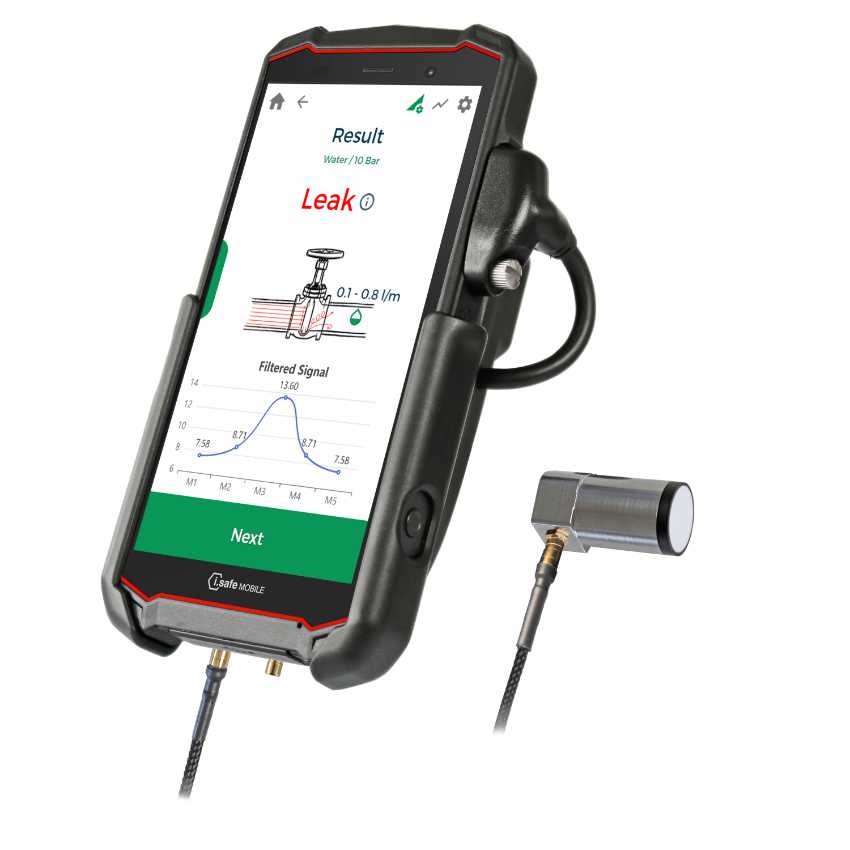
- Development of a digital inspection system: Senseven designed and developed a software-guided inspection system that transforms a conventional smartphone into a tool, capable of capturing and interpreting inspection data. The system guides users through the measurement process, reducing reliance and deep specialist expertise.
- Sensor integration and data acquisition: Senseven integrates an acoustic emission sensor with a mobile device to collect acoustic emission data from industrial valves. This step forms the basis for reliable inspection results.
- Automated data processing and interpretation: Through algorithms and AI, collected sensor data is processes in real time on the inspection device and evaluated to determine asset condition. This automated interpretation accelerates detection of leaks and provides consistent, reproducible assessment outcomes. The tool identifies leaking vs non-leaking valves and can estimate the leak rate with the help of in-house developed AI models, once a leak is detected.
- Immediate results on site: The software delivers inspection results directly in the field, enabling maintenance teams to take decisions without any delay. Users no longer need to wait for offline analysis or specialist review to understand inspection findings.
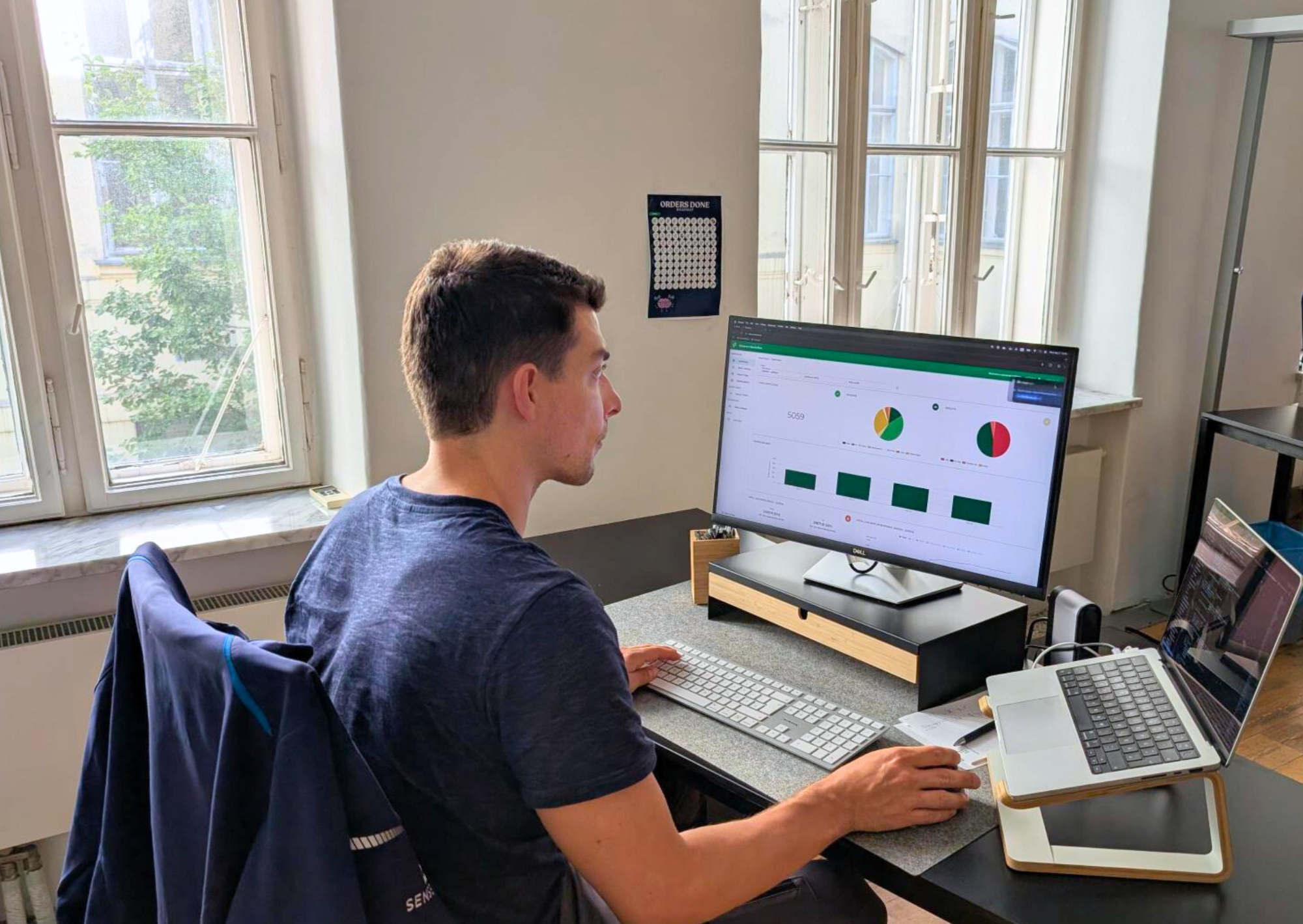
- Structured data management and reporting: Inspection data is synchronized with a cloud-based Backoffice platform where it can be stored, further analyzed and accessed for trend analysis. The platform supports automated generation of standardized reports
What’s the news about new products/services?
A.G: In comparison to leading competitive systems Senseven’s inspection system stands out due to its digital approach. Senseven’s Valve Sense system is the only one transforming a smartphone into a fully functional inspection device through the inspection app and connected sensor technology. This development eliminates the need for proprietary handheld instruments and allows updates to be deployed primarily through software. Senseven can continuously develop, test and release new features without hardware changes. This includes improvements in user guidance, data handling, and integration with backend systems. In addition, Senseven is continuously improving its AI models for leak quantification by incorporating new data from inspections in the field and laboratory environments, leading to more robust and consistent results over time compared to the competition.
What are the ranges of products/services?
A.G: Currently, Senseven focuses on the distribution of its Valve Sense system for leak detection and quantification in valves. In 2026, the system will be further enhanced for the inspection of steam traps, combining temperature measurements with acoustic emission technology.
What is the state of the market where you are currently active?
A.G: Senseven primarily operates in the processing industries, with the majority of users coming from the oil and gas, chemical, and petrochemical sectors. In these industries, leaking valves represent a significant risk factor, as they can lead to unplanned downtime, safety hazards for personnel, high repair costs, and additional emissions. As a result, there is strong and sustained demand for reliable inspection methods that support early detection and objective assessment of leaks.
From the beginning, Senseven has addressed this market on a global scale. Its Valve Sense system has been deployed internationally since the early stages of the company, and today customers use the technology in more than 40 countries. While regulatory frameworks, inspection practices, and digital maturity vary across regions, the underlying challenges related to asset integrity, safety, and emissions control are broadly comparable, creating a consistent market need for standardized, digital inspection solutions.
What can you tell us about market trends?
A.G: Across processing industries, several structural trends are shaping the market for industrial inspection solutions. One of the most significant is the continued shift from manual, experience-based inspections toward standardized, digital, and data-driven processes. Plant operators are increasingly seeking inspection methods that produce consistent and comparable results, independent of individual inspectors, and that can be documented in a traceable manner.
Environmental regulation is another major driver. In sectors such as oil and gas, chemicals, and petrochemicals, requirements related to emissions monitoring, leak detection and repair (LDAR), and sustainability reporting are becoming more stringent. This has increased demand for inspection tools that not only detect leaks but also provide quantifiable results and structured documentation that can be used for internal reporting and external audits.
At the same time, there is a growing emphasis on operational efficiency and workforce optimization. Many operators face a shortage of experienced inspection personnel and are therefore interested in solutions that guide users through inspection tasks, reduce training effort, and enable less specialized staff to perform reliable measurements. Mobile and software-guided inspection systems are gaining relevance in this context.
Finally, integration is becoming increasingly important. Inspection data is no longer viewed in isolation but as part of a broader digital ecosystem that includes maintenance management, asset integrity systems, and environmental reporting platforms. As a result, there is a clear trend toward inspection solutions that offer structured data outputs, interfaces to existing systems, and the ability to support long-term analysis and continuous improvement.
What are the most innovative products/services marketed?
A.G: Senseven is currently only focusing on one solution in the market. It’s innovation lies in the simplification and digitalization of the whole inspection process
What estimations do you have for the end of 2025?
A.G: 2025 has been another year of growth for Senseven. We continued the adoption of our digital inspection system across the globe and were able to further gain customers especially in Oil and Gas, Chemicals and petrochemicals. Senseven’s focus was on product refinement to enable customers to quickly and easily detect and quantify leaking valves, making industrial plants safer, more efficient and more sustainable.