
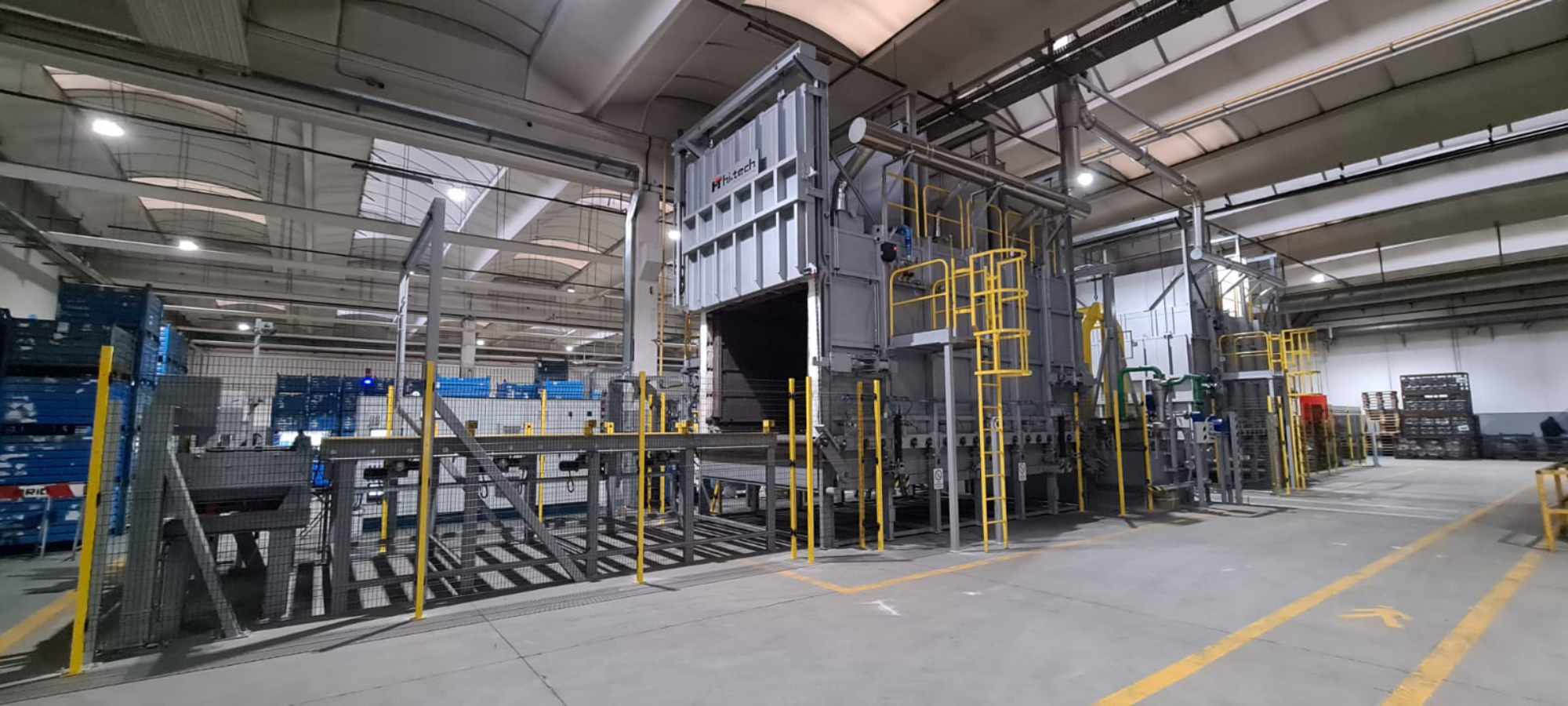
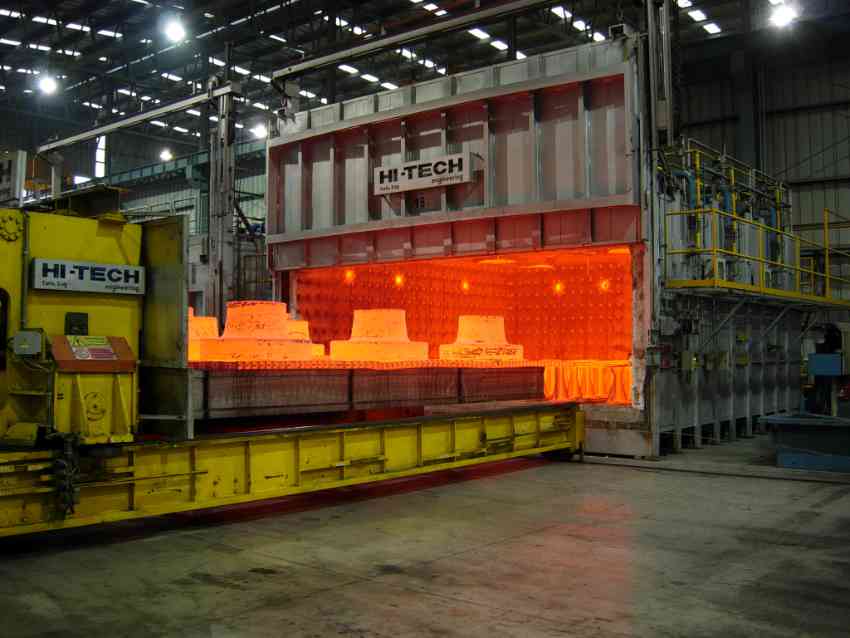
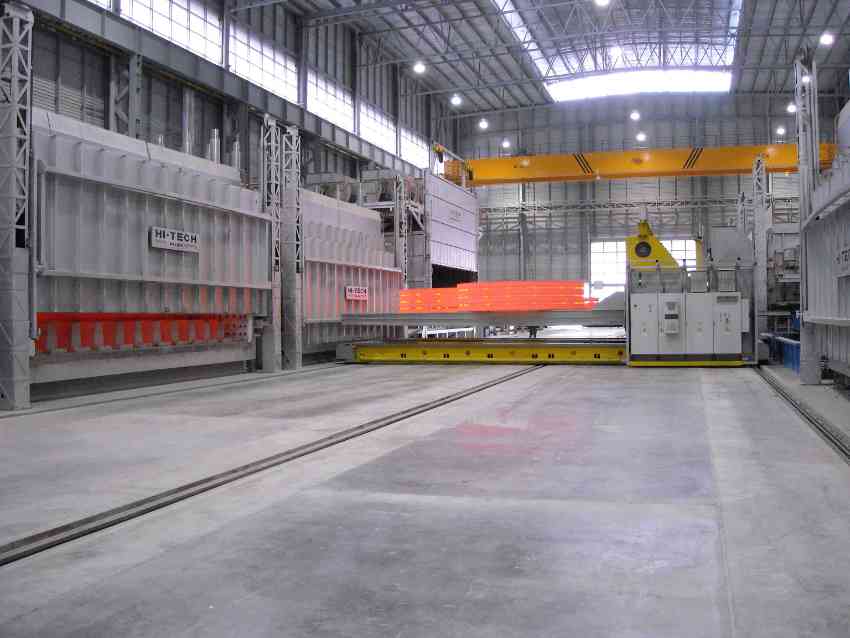
Hi-Tech engineering is an Italian company specialized in the design and construction of turnkey and tailored heat treatment plants. The company’s main portfolio includes tunnel and roller continuous furnaces, modular type of furnaces, different types of quench (water quench, air quench, oil quench, polymer quench, direct submersion, spray etc), car-bottom furnaces, belt-type furnaces. Hi-Tech engineering offers customized solutions and services. They grant 24/48h assistance and training services.
Interview with Clara Ghiurca, Sales Manager at Hi-Tech engineering.
A brief description of the company and its activities
Clara Ghiurca: Hi-Tech engineering is an Italian company, specialized in the construction of heat treatment installations for aluminum or steel raw parts. We are a team of project engineers and specialized technicians able to manage internally the whole development of a project: from mechanical and electrical design to automation software and metallurgical expertise.
Our company is in Turin, a particular zone of Italy with a very high presence of forging companies linked to the automotive sector of Fiat. We are a small company and for this reason particularly flexible on the market oscillations but also for the customers need with a 24 hour availability to interventions.
We supplied forging companies all around the world, from China to USA, from Mexico to India, South Africa, Sweden, Poland, Czech Republic, France and Italy of course. Our personnel is directly involved into the re-assembling of the lines and their start-up and generally we use local manpower for a better assistance to the customer.
Our company doesn’t have any catalogue; we only design tailored installations, customized to the needs of our client, based on previous experiences and reference lists.
We can adapt our layout to existing layouts and restrictive requirements.
What are the main areas of activity of the company?
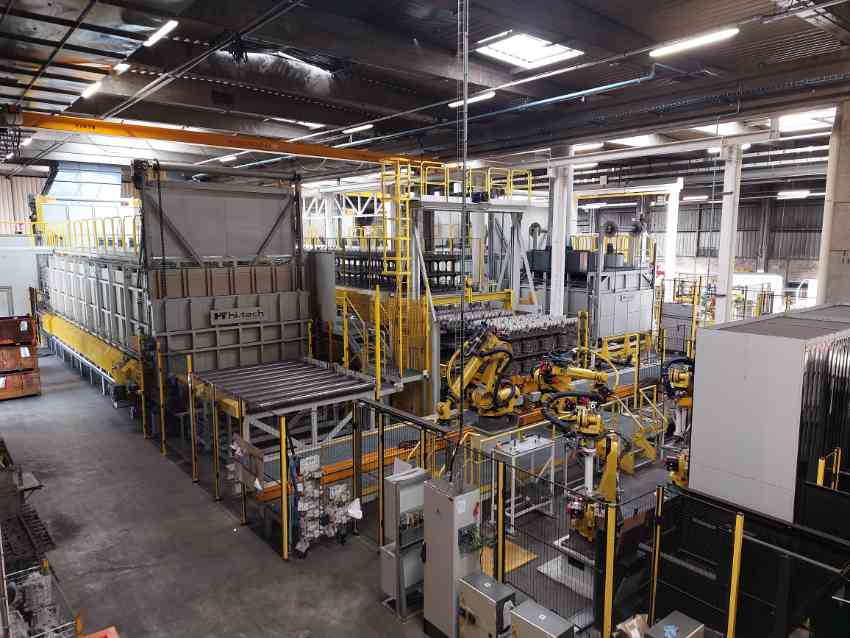
C.G: The company’s core activities focus on the design and manufacture of advanced heat treatment installations, delivering reliable, tailored to customer requirements for industrial thermal processing needs. Our customers are forging companies, steel producers, heat treaters.
Those customers who have never had internal heat treatment department. Those customers who need to implement their existing heat treatment lines. Those who find it difficult to reach certain heat treatment targets with existing equipment. Or simply customers who want to improve their processes with new ones or, again, add new parts to their production.
Our main goals are the specific applications. One of them is roller type furnace, for bars and pipes but also for medium-small parts placed into racks. Another specificity of our company is the possibility to manufacture pilot and test lines in order to ensure the customer about the final result.
What’s the news about new products/services?
C.G: Lately the needs from the market are different: materials (steel or aluminum) are changing, shapes of parts to be heat-treated are becoming more and more complicated, budgets for new projects are decreasing. The challenge we met is to help customers to meet their heat treatment targets within these new conditions.
We have inside our plant several heat treatment equipment for testing: the feasibility laboratory tests, on small parts generally, is the very important added value that differentiates us from our competitors.
What are the ranges of products/services?
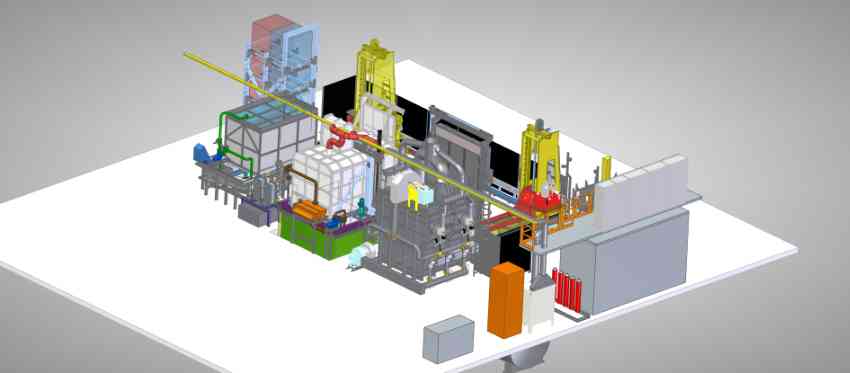
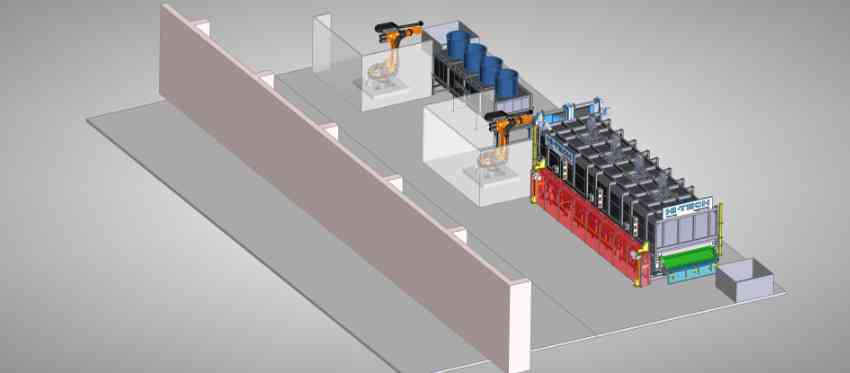
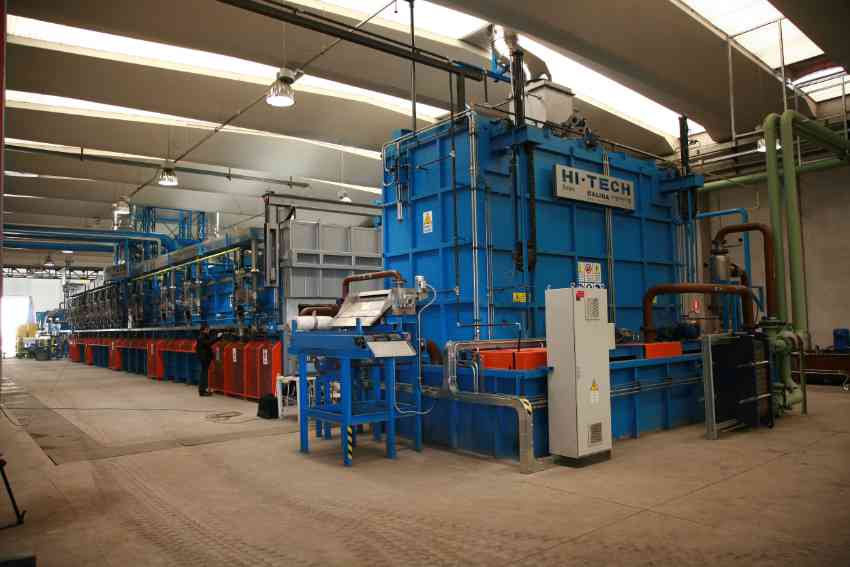
C.G: We manufacture furnaces, quench systems and loading/unloading machines. Based on the available space at the customer’s site, on the required production rate, on the quality level that is required, our applications may be different. That’s the reason of the process of tailoring an installation. For example, for fixed and certain productions, continuous roller type lines are the most appropriate while modular type lines are the most suitable for increasing or decreasing production. Quench systems may be done in oil, polymer, air depending on the material to be heat-treated. We have solutions for mostly all applications on the raw material heat treatment.
Besides project engineering and construction, services we offer are feasibility studies help us and our customers to make strategical choices, and assist the production to support the customer while using the new heat treatment line.
Another specific added value is the ability to adapt to existing systems and machinery.
What is the state of the market where you are currently active?
C.G: It is a quite inhomogeneous situation but still the automotive industry is the most active market for our company. This is a key sector for heat treatment which has slowly slowed down due to the uncertainty of European Community about the ecological targets to be reached.
But still the automotive industry demand, especially for gears, shafts, powertrain and EV components, remains one of the strongest drivers of heat treatment services globally.
Aerospace and heavy machinery sectors require high-performance, fatigue-resistant components are also moving slowly even if they need advanced heat treatment processes.
The feeling is that the market achieved maturity in existing processes and that new challenges are needed for stepping up.
What can you tell us about market trends?
C.G: There’s increasing focus on energy-efficient and environmentally compliant technologies, driven by regulation and cost pressures.
High energy consumption and operational costs remain significant constraints in some markets.
Environmental and emissions requirements are pushing investment into greener technology and processes.
Growing industrial automation and digital process controls (Industry 4.0, IoT, predictive maintenance) are becoming more integrated into heat-treating operations.
Electrically heated furnaces and precision processes (like case hardening, annealing, vacuum heat treatment) are taking larger market share due to better control, efficiency, and material quality.
What are the most innovative products/services marketed?
C.G: What is linked to energy efficiency, cost efficiency, remote control is now the drive for the market.
As regards the heat treatment installations, the most innovative products are furnaces heated by electrical energy instead of gas combustion. But while electrically heated installations support environmental goals, the persistently high cost of electricity in Italy reduces their economic viability.
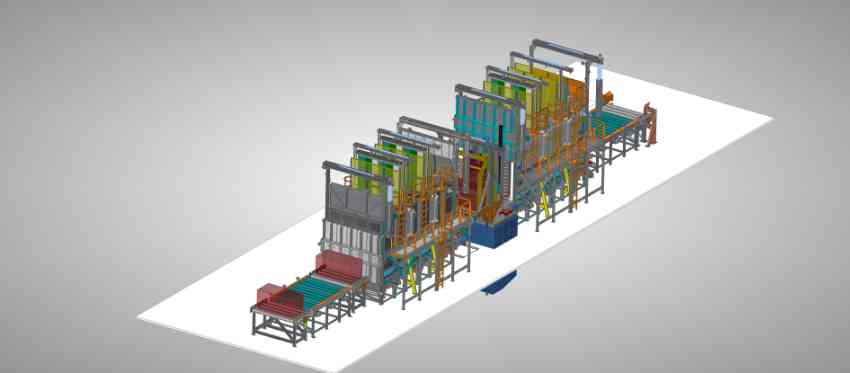
Another trend to be considered is the possibility to be modular equipment as the market is constantly evolving and dynamic: as for the starting cost of investment it is convenient but also for the cost of usage.
What estimations do you have for the beginning of 2026?
C.G: The current economic and social context is described as characterised by significant challenges for Italian and international companies. Market uncertainties, global tensions and rapid technological changes are highlighted, elements that test companies’ ability to adapt and innovate. In this complex scenario, Hi-Tech Engineering stands out for its resilience and determination in looking to the future. Particular attention is paid to constant investment in staff training, considered essential for the renewal of skills and to ensure continuity, innovation and long-term success. Furthermore, Hi-Tech Engineering demonstrates a strong commitment to investing in research and development, conducting laboratory tests at its headquarters using equipment such as furnaces, quenching tanks and quenching cells, or using customer equipment. This approach allows processes to be optimised and results to be consolidated at an industrial level.
The market is continuously evolving but still standing on old projects that never started. We have currently, besides the in-progress constructions, at least ten consolidated projects and studies that are not going ahead due to market uncertainty. Our company applies to different markets, from automotive to heavy machinery, from aerospace to energy sectors. We are optimistic about the stalled projects as we have solutions for all reasonable requirements. We can meet the new materials changes by doing feasibility studies. We can stand for the new energy challenge by producing also electrical heated equipment. We can also meet the cost efficiency requirement thanks to our ability to design tailored installations, modular and flexible.