
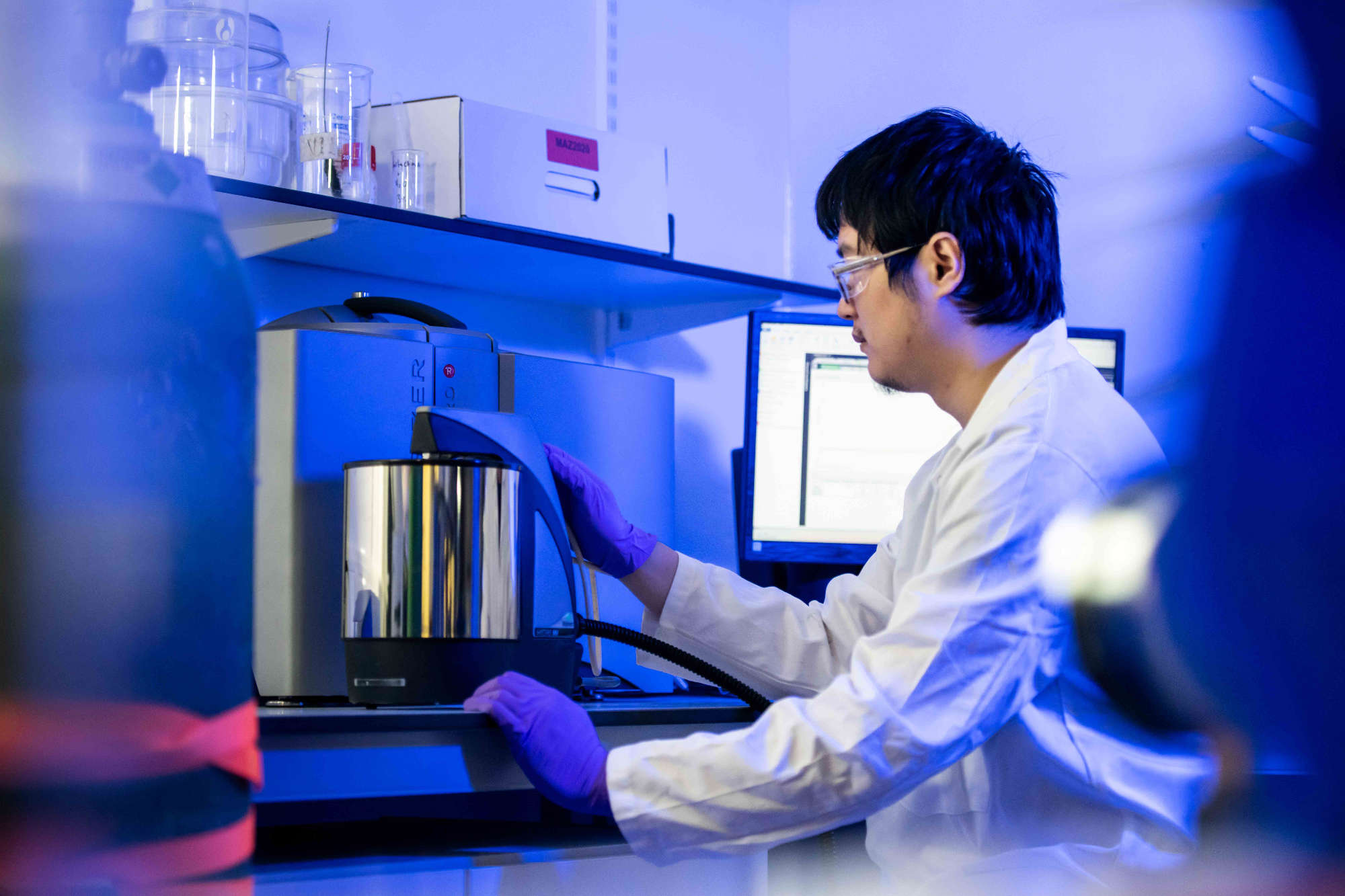
Anaphite is a Bristol-based battery technology company focused on decarbonising battery production by enabling the industry’s shift to dry electrode coating. Their core activity is developing and manufacturing Dry Coating Precursor (DCP®) powders – engineered, dry composite powders that enable high-speed dry coating of battery electrodes.
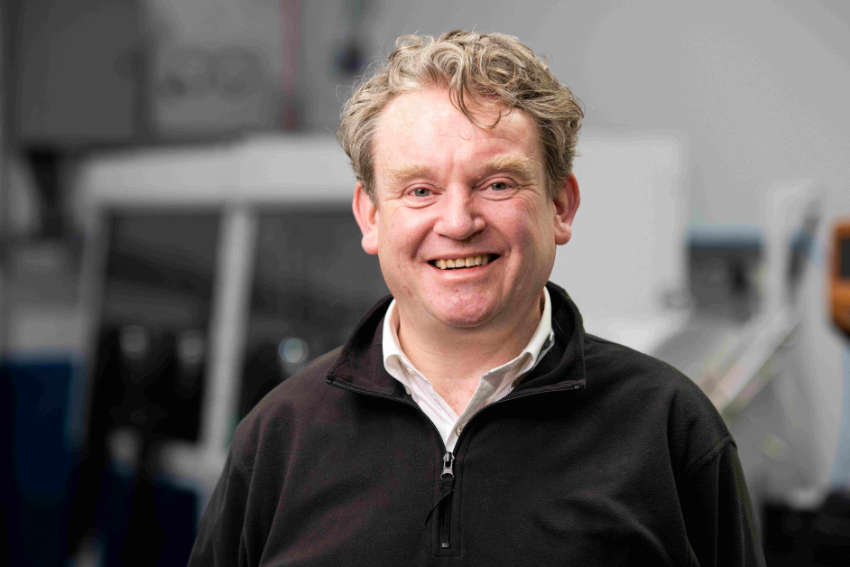
Interview with Joe Stevenson, CEO of Anaphite.
What are the main areas of activity of the company?
Joe Stevenson: Using dry coating to manufacture electrodes delivers huge cost and carbon emission savings. The traditional method (used in 99% of electrode manufacture) combines the electrode components in a solvent-based slurry. The solvents then need to be evaporated in an energy intensive drying stage, which accounts for 20- 30% of cell manufacturing costs. In contrast, dry electrode coating applies the electrode components, directly onto a current collector, completely dry, so no solvent removal is needed.
Our DCP® powders are not mechanically mixed blends of powders; they are made with chemistry-based processes. This gives our powders the homogeneity essential for excellent electrode performance, the flowability vital for electrode coating in a roll-to-roll calendar, and allows us to tailor formulations to specific cost, performance or sustainability targets. We work in close collaboration with cell manufacturers to solve their dry coating challenges, providing both DCP® materials and extensive coating expertise.
Our activities span four key areas: Chemistry R&D and process development; in-house dry-coated electrode production using our DCP® powders; characterisation, cell building and testing; industrialisation via a flexible production rig to produce DCP® powders at scale.
What are the ranges of products/services?
J.S: We offer two complementary commercial models tailored to customer needs. First, we formulate custom DCP® composite powders to customer specifications and license our process technology packages, enabling customers to manufacture DCP® at their own cell production facilities. This approach reduces supply chain risk and allows them to maintain their validated material suppliers – particularly valuable for large customers with established dry coating programmes.
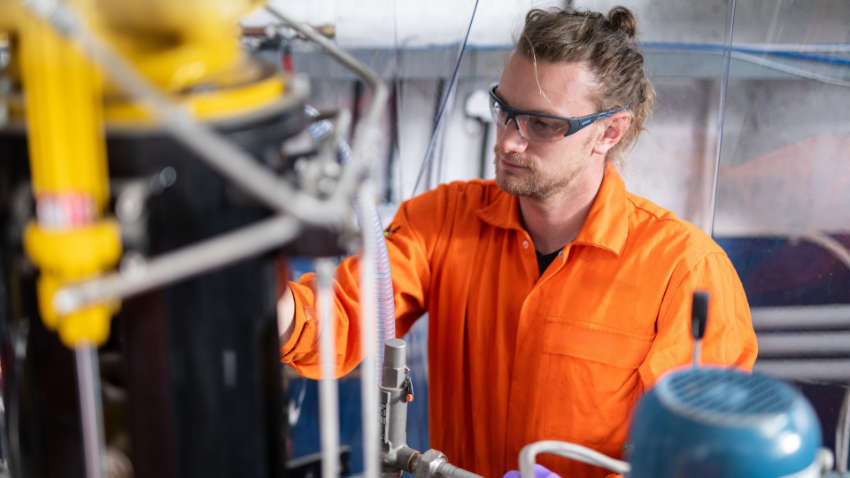
Second, we can manufacture DCP® composites or complete dry-coated electrodes for customers to use directly in their cell manufacturing processes, providing enhanced support for those earlier in their dry coating journey. Our technology platform works across all current electrode chemistries including NMC, LFP cathodes, and silicon-graphite anodes, with flexibility to adapt formulations for performance, cost, and sustainability requirements. Protected by granted and pending patent families, our DCP® production delivers 70-80% reduction in electrode production energy and 20-25% lower cell production costs. This translates to a 2% saving of vehicle pack cost.
Do you have any updates on new products/services?
J.S: We’re actively scaling DCP® production and dry coating capabilities at our Bristol facility to validate manufacturing processes for commercial deployment. We’re demonstrating performance equivalence of Anaphite materials through both internal and customer testing programmes, with detailed business case quantification underway.
Beyond current applications, we’re developing our technology platform for emerging battery technologies including solid-state batteries, expanding our addressable market significantly. Independent lifecycle assessment by Minviro has verified our technology delivers 3.57kg CO₂ reductions per kWh of cell capacity – equivalent to 7 million tonnes if applied to annual global battery production.
We’re working toward first full-scale deployment in 2028 with current automotive partners. Our pilot-scale equipment now handles multiple products and formulations, enabling rapid scale-up from grams to kilograms as we prepare for GWh-scale manufacture of DCP® products across cathode and anode applications.
What is the current, and future state of the market where you are currently active?
J.S: The battery manufacturing market is experiencing unprecedented growth and transformation. Global battery demand is forecast to reach 1.9 TWh in 2025, doubling to 3.9 TWh by 2030, driven overwhelmingly by electric vehicle adoption and the growing need for battery energy storage systems.
However, the industry faces acute pressure to reduce costs and carbon emissions. Currently, the vast majority of electrode production uses energy-intensive wet coating, but dry coating sits on every major manufacturer’s technology roadmap. Industry commitment is demonstrated by Volkswagen’s PowerCo targeting dry coating production from 2027 (expecting to save hundreds of millions of euros annually) and LGES targeting 2028.
The EU Battery Passport will soon be mandatory and requires carbon footprint declarations for all batteries placed in the EU market. When emissions thresholds are introduced, battery makers must cut CO2 emissions to meet them or face potential market access restrictions and fines. This regulatory pressure, combined with cost imperatives creates enormous demand for proven dry coating solutions. We’re not creating demand; we’re enabling an industry ready for transformation but facing significant industrialisation barriers.

What estimations do you have for the year ahead?
J.S: In 2026 we’re focused on three critical areas: deepening customer collaborations, scaling our Bristol operations, and advancing toward commercial deployment. We expect to complete additional customer validation programmes demonstrating that DCP® electrodes match or exceed wet coating performance across multiple chemistries and cell formats.
A recent series-A follow-on investment round, facilitated via the Innovate UK Investor Partnership Programme, raised £1.4 million which will be deployed for a specific programme to progress dry coating Lithium Iron Phosphate (LFP) electrodes. These have enormous market potential and we’re already seeing promising results with our approach. We’re expecting to make serious progress with it this year.
Our pilot facilities will increase production volumes significantly as we validate manufacturing processes at larger scales, progressing from kilograms toward the capabilities needed for GWh-scale production. We anticipate several automotive partners moving from technical evaluation to detailed commercial discussions and potentially early deployment planning for the 2028 timeline.
Financially, the runway from our £10.4m Series A, and enables aggressive scaling whilst we position for future funding linked to commercial milestones and customer commitments.