
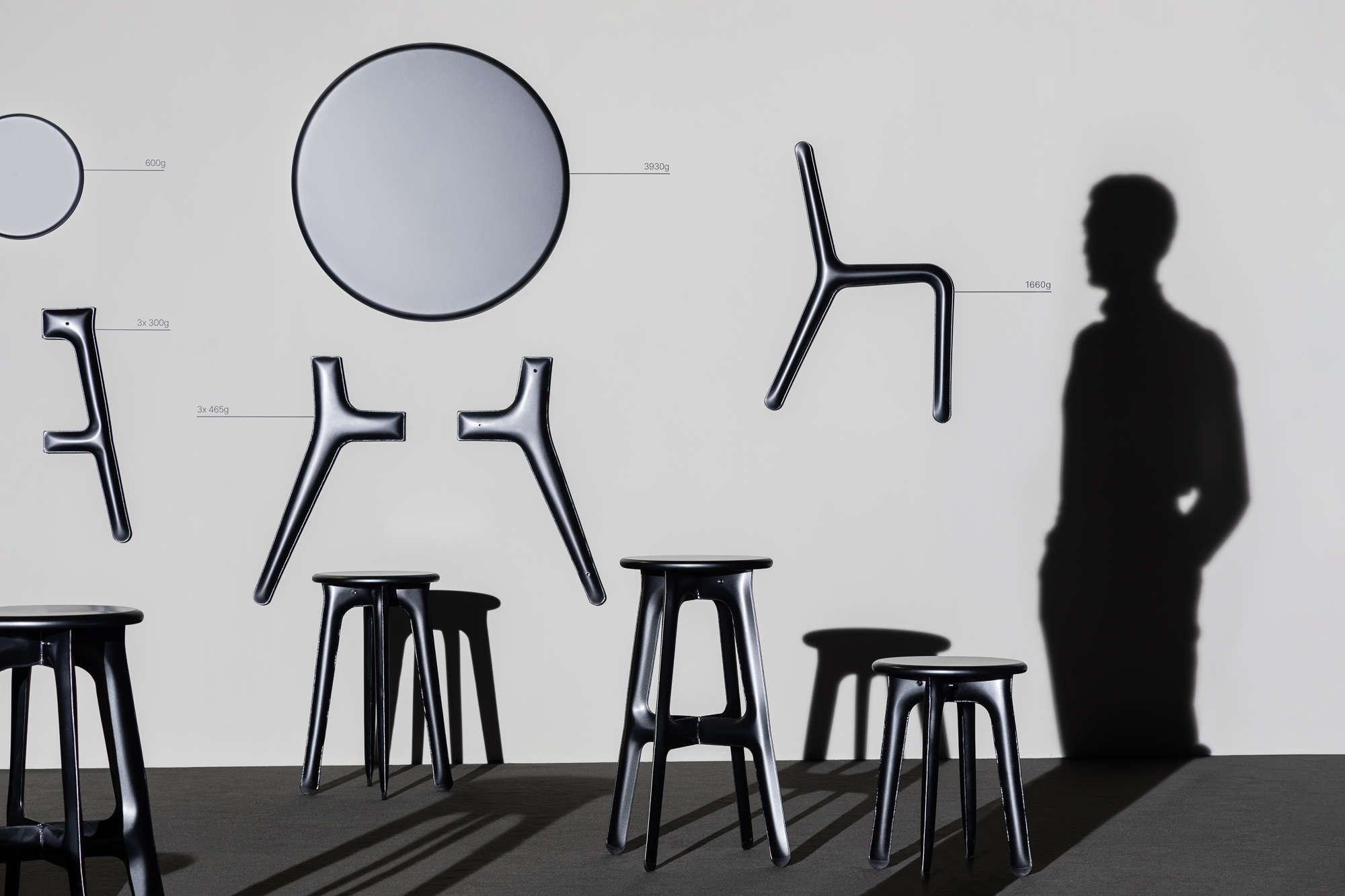
Zieta Prozessdesign is a research-driven engineering and design company built around the proprietary technology FiDU (from German Freie Innendruck Umformung, meaning Free Inner Pressure Forming). Since 2005, they have been developing this method for shaping thin-walled metal using controlled air pressure, eliminating the need for heavy tooling or traditional forming matrices.
Interview with Oskar Zięta, Owner of Zieta Prozessdesign.
A brief description of the company and its activities.
Oskar Zięta: At the core of the company operates the FiDU Lab – an internal R&D environment focused on weight reduction, structural resilience, and material optimisation within air-formed metal systems. The lab functions as both a testing ground and a knowledge generator, where engineering hypotheses are verified through prototyping, destructive testing, and real-scale implementation.
The company operates at the intersection of material science, structural engineering, and design. Zieta Prozessdesign is the technological backbone – the “mother company” – behind Zieta Studio, focused on collectible and architectural-scale objects, and Ultre™ Mobility, which applies FiDU to ultralight electric vehicles. What connects all these activities is not typology, but process: air as a structural tool and a bottom-up approach as a design strategy. What unites these worlds is material intelligence – learning from metal, not forcing it.
What are the main areas of activity of the company?
O.Z: Our core activity is the development and implementation of FiDU technology across multiple scales, meaning researching and developing ultralight metal structures across disciplines. We work simultaneously in experimental engineering, applied material science, architecture, design, and mobility.
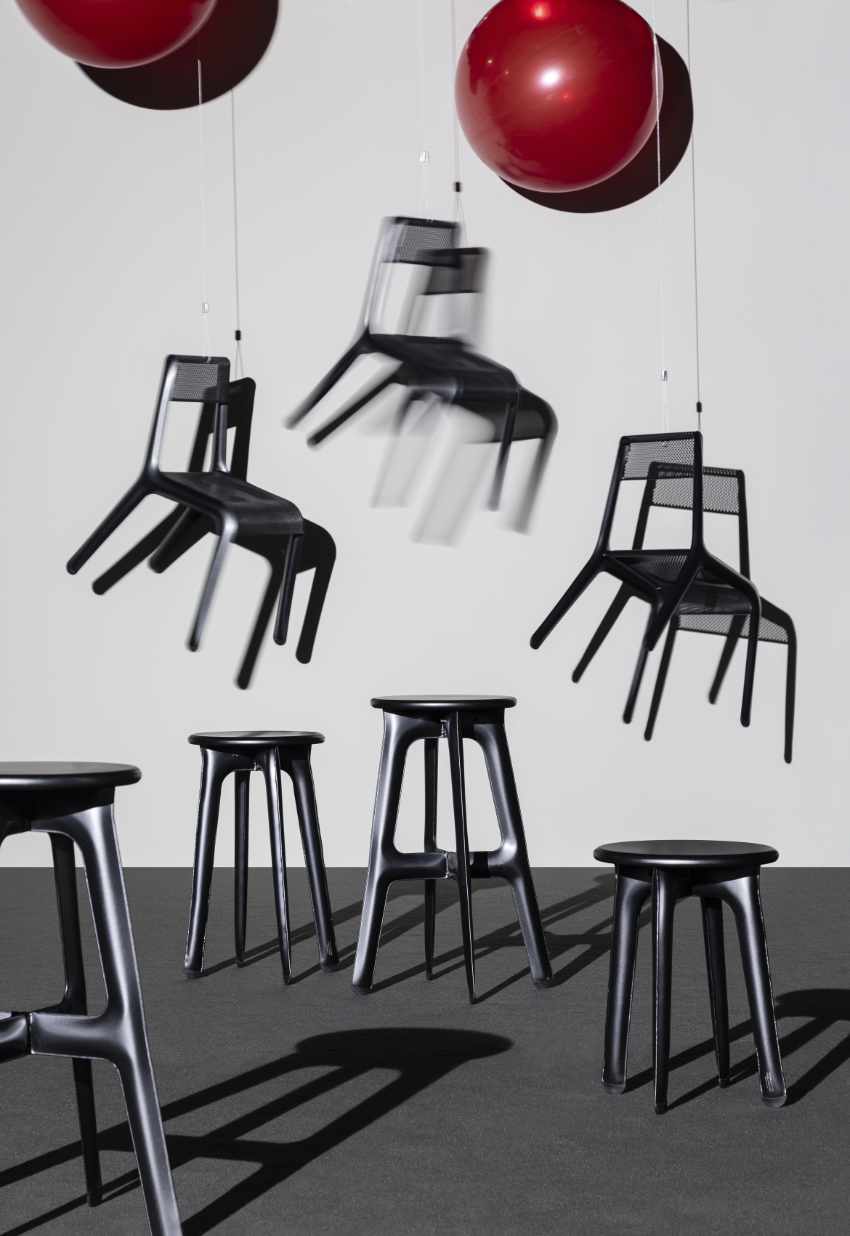
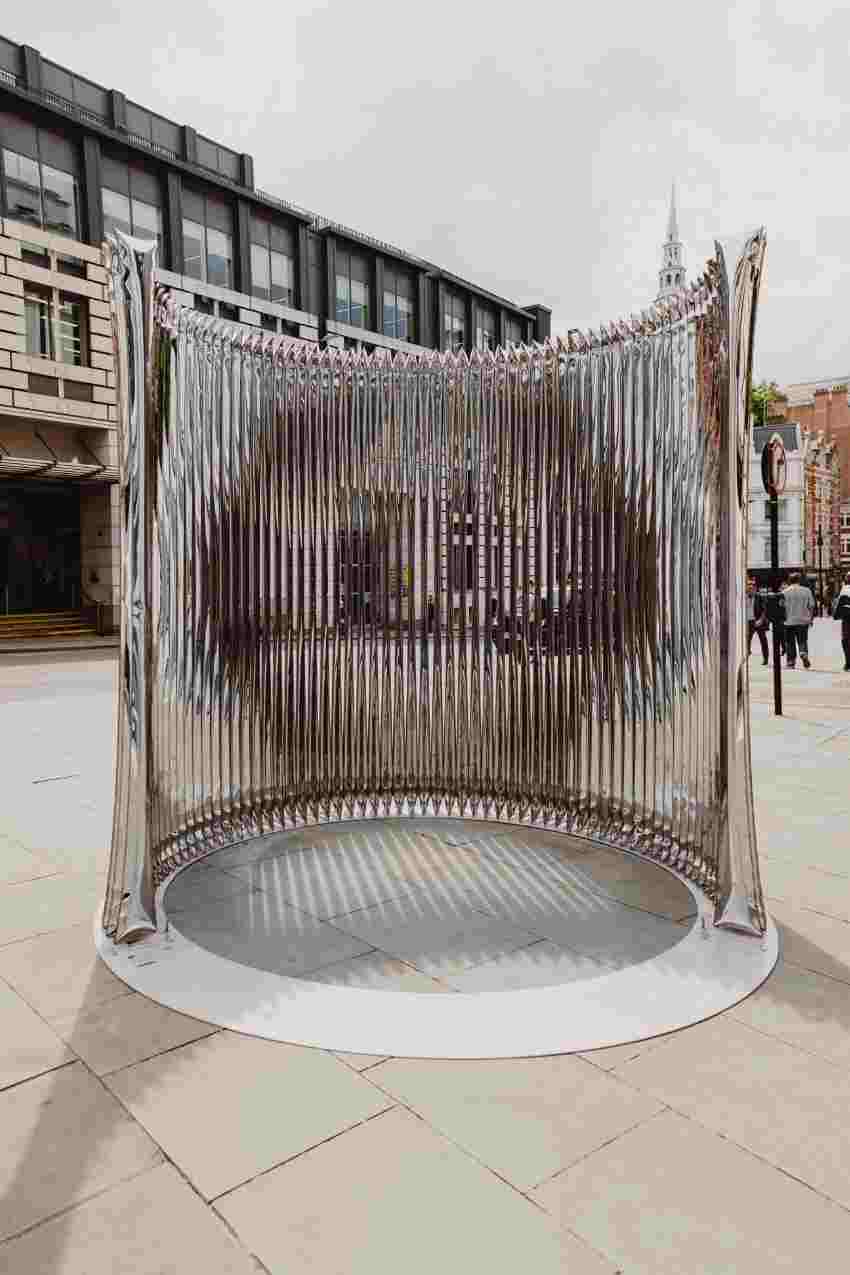
This includes furniture and collectible design (metal mirrors such as Rondo and Tafla, the iconic Plopp stool, the lightest aluminium chair in the world – Ultraleggera, and Zieta Lighting), architectural large-scale public sculptures (such as the Nawa pavilion or Whispers in London), load-bearing structures, and ultralight frames for mobility solutions.
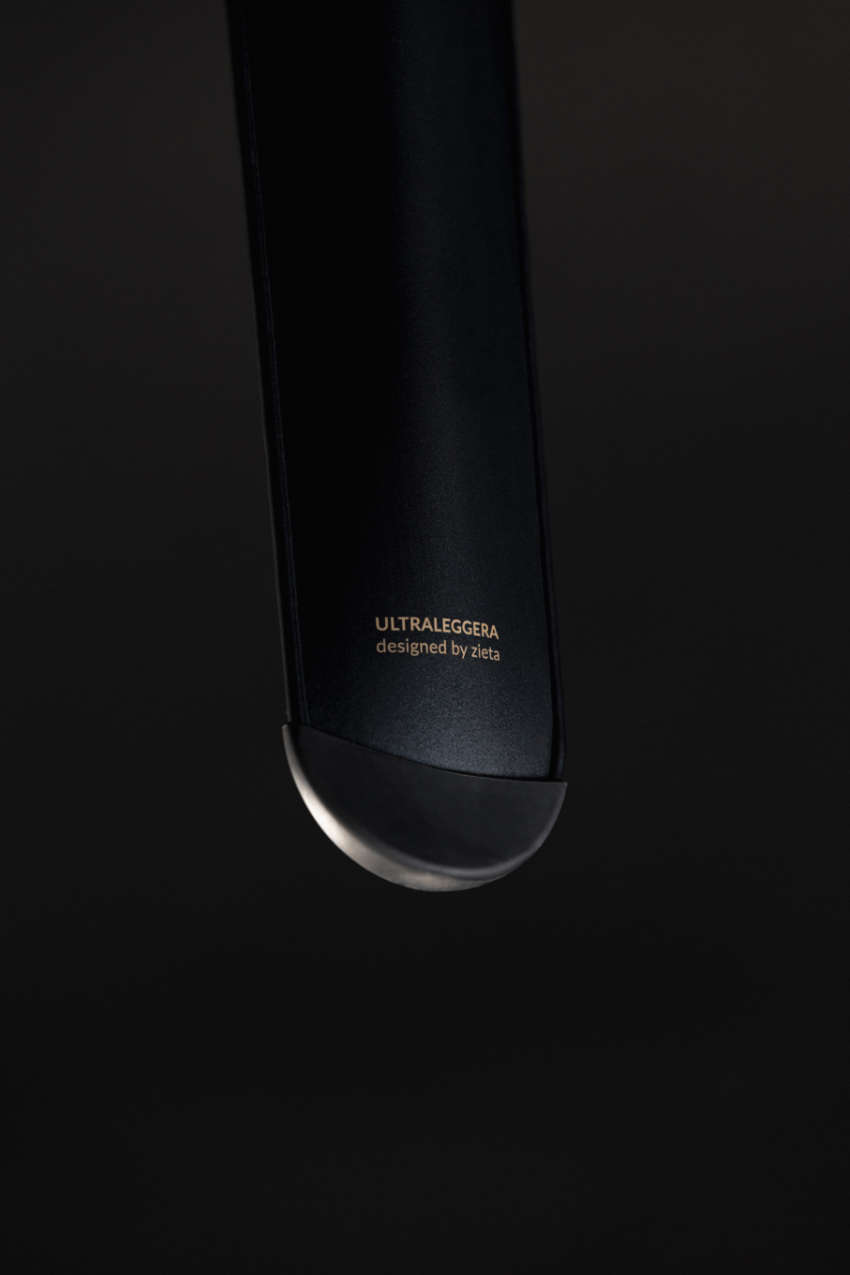
A key role in this process is played by FiDU Lab, where we systematically study the relationship between weight, strength, and material behaviour. The Ultraleggera Chair functions as a manifesto of this research: not only as the lightest aluminium chair in the world, but as a proof-of-concept for a technology capable of radical weight reduction without loss of structural integrity. In this sense, Ultraleggera is a furniture object, and even more, it is a compressed engineering statement.
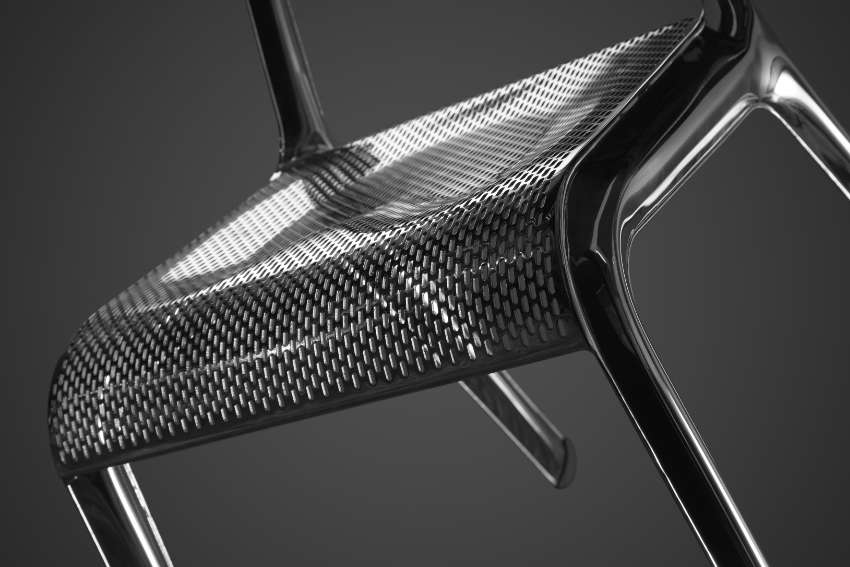
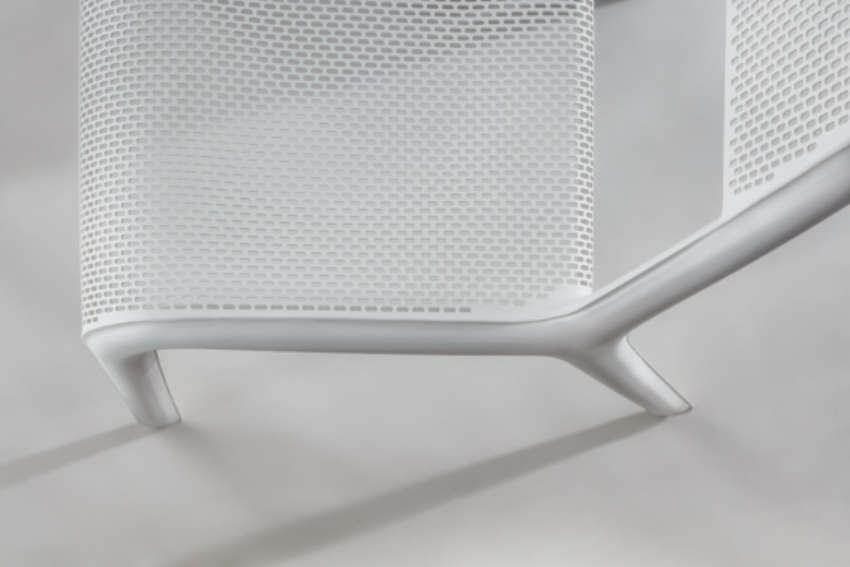
We work intensively in R&D, prototyping, structural testing, and small- to mid-scale industrialisation. Increasingly, we also collaborate with industrial partners interested in adapting FiDU for their own products, from construction elements to transport and infrastructure systems.
What’s the news about new products/services?
O.Z: FiDU increasingly acts simultaneously as both structure/form and surface, eliminating the traditional division between the load-bearing core and the applied skin. In the field of design, this has opened a new phase of exploration within Zieta Studio, particularly in lighting. The Zieta Lighting collection investigates ecological and renewable lighting solutions, where ultralight air-formed metal structures reduce material consumption, enable efficient heat dissipation, and extend product life cycles through durability and monomaterial construction.
In parallel, the development of FiDU-based table constructions functions as architectural research at an XS scale. These objects test spatial logic, load distribution, and structural efficiency in a domestic context, allowing principles normally reserved for architecture to be verified through everyday objects.
In mobility, Ultre™ has introduced Ultre 4 Cargo™ and Ultre 3 Sharing™ – electric micromobility tools built around the FiDU Frame™, designed for last-mile logistics and future autonomous scenarios. These vehicles are a direct outcome of long-term FiDU Lab research focused on the research and development of key stages of FiDU technology for innovative, matrix-free, robotic manufacturing of ultralight structures made from multi-chamber steel profiles. Here, FiDU transitions from experimental design into a certified, industrial automotive application.
Across all these fields, sustainability is approached not as an add-on, but as a measurable engineering parameter. We focus on lightweight index optimisation – studying the ratio of weight to strength – combined with monomateriality and radical weight reduction. Ultralightness, in this sense, is not an aesthetic choice, but one of the most effective solutions for the future of responsible production.
What are the ranges of products/services?
O.Z: The range spans from small, collectible thin-walled metal objects weighing only a few kilograms, through furniture and lighting, to multi-meter public sculptures and structural elements exposed to wind, snow, and dynamic loads. In mobility, the FiDU Frame™ forms complete vehicle structures meeting homologation and crash requirements.
Services range from concept engineering and material optimisation, through FiDU Lab–based prototyping and testing, to preparation for serial or micro-factory production.
What is the state of the market where you are currently active?
O.Z: Across design, architecture, and mobility, we see strong pressure toward material efficiency, local production, and reduced energy use. Traditional heavy tooling and long supply chains are becoming less viable, both economically and geopolitically. At the same time, markets are increasingly fragmented: instead of one global solution, there is demand for adaptable, scalable systems.
This is precisely where FiDU fits – as a low-tooling, flexible technology that allows fast transitions from prototype to production. We observe a growing awareness that traditional, heavy, over-engineered solutions are no longer sustainable. However, worldwide implementation still lags behind ambition. FiDU answers this gap by offering real, tested reductions in material, weight, and tooling – not as theory, but as built reality.
What can you tell us about market trends?
O.Z: The dominant trend is reduction understood as intelligence, not compromise. Less material, less mass, less energy, fewer parts – but higher performance. Another strong trend is decentralisation: microfactories, local production, and short supply chains.
In mobility, ultralight electric vehicles and last-mile platforms are growing rapidly within automotive segments. In architecture and public space, there is a growing interest in expressive structures that combine function, art, and engineering in a single element.
What are the most innovative products/services marketed?
O.Z: FiDU itself is the most innovative element – a technology that replaces heavy presses and molds with information, algorithms, and air. In Zieta Studio, public sculptures made of thin-walled steel demonstrate how minimal material can occupy monumental space.
In Ultre™ Mobility, the FiDU Frame™ proves that an ultralight steel structure can meet safety and durability requirements. This translation from art-scale freedom, through manifesto objects such as Ultraleggera, to certified automotive and lighting precision remains a key innovation and is still one of a kind on the market.
What estimations do you have for the beginning of 2026?
By early 2026, we will focus on participating in the most core international trade fairs and events, both in mobility and design. We are planning several design premieres in the first quarter, including a February/March premiere of our Polish product in San Francisco.
At the same time, we continue intensive prototyping and optimisation work within FiDU Lab. For Zieta Prozessdesign, the priority remains unchanged: to deepen the technology, expand its alphabet, and demonstrate that air-deformed metal is no longer an experiment, but a mature engineering answer to the future of tailor-made lightweight structures.