
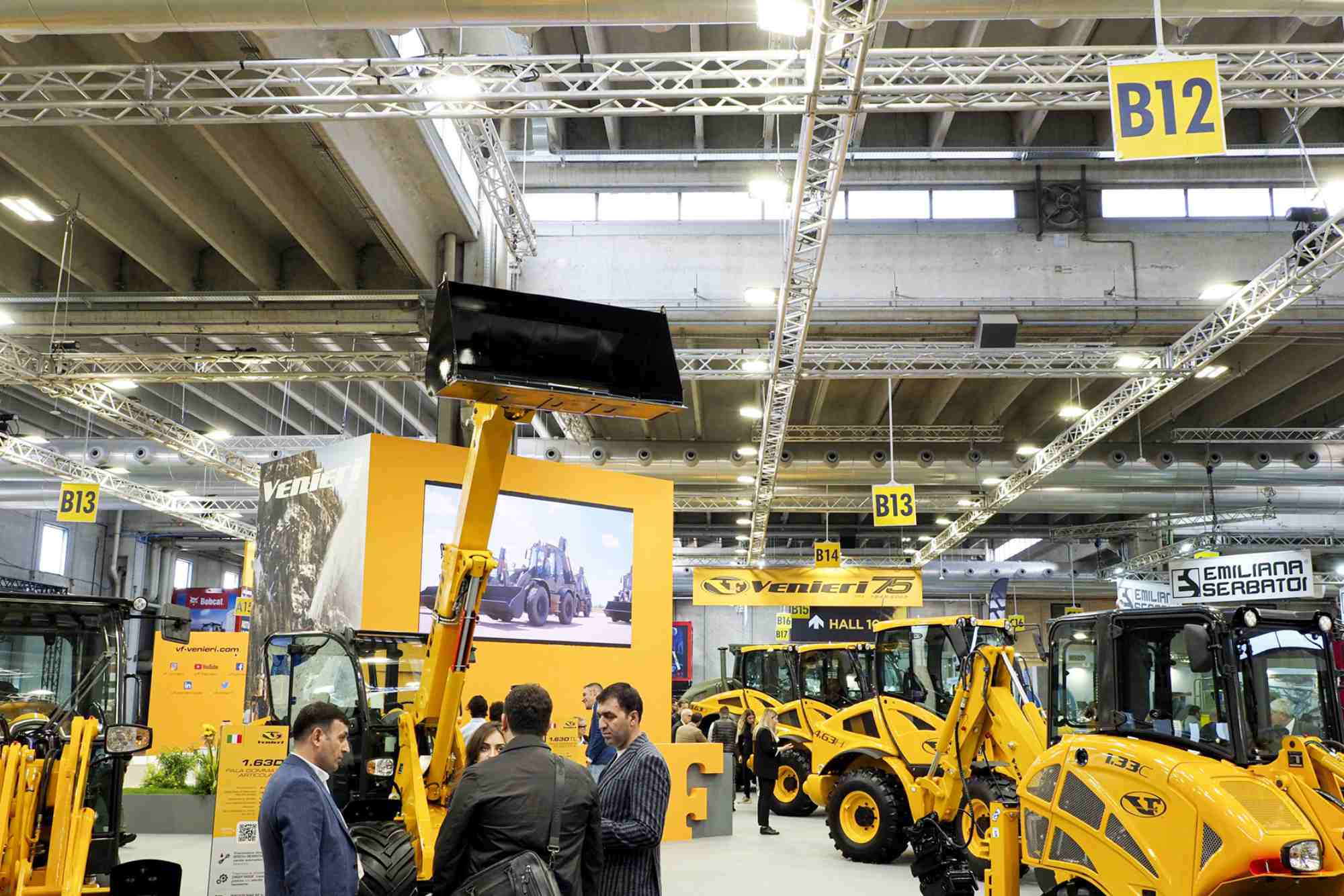
In 2025, Italian exports in the sector remain stable (–0.5%). Growth in earthmoving machinery supports the sector, while global uncertainties and less dynamic demand weigh on performance. Positive signals come from some foreign markets, while the sector awaits the start of the 32nd edition of SaMoTer, the International Triennial Construction Machinery Exhibition, scheduled at Veronafiere from 6 to 9 May 2026.
Italian exports of construction machinery reached a total value of approximately 3 billion and 226 million euros in 2025, recording a slight decline of 0.5% compared to the previous year. This confirms the substantial stability of the sector, despite the challenges of international markets, global economic uncertainty and ongoing trade tensions that continue to weigh on exports.
This emerges from the data of the third 2026 Foreign Trade Report prepared by Unacea (the Italian Construction Equipment Association) in collaboration with Cer (Centro Europa Ricerche), ahead of SaMoTer 2026, the International Triennial Construction Machinery Exhibition scheduled at Veronafiere from 6 to 9 May 2026.
“Despite a complex international context – explains Luca Nutarelli, director of Unacea – the construction machinery sector shows significant resilience. Exports remain solid, mainly thanks to the momentum of earthmoving machinery, which confirms the sector’s ability to face global challenges. This result highlights the strength of Made in Italy, supported by technological innovation, attention to sustainability and targeted investments in new markets. Even in the presence of geopolitical uncertainties and fluctuations in international demand, the sector continues to represent a strategic driver for the Italian economy, capable of combining quality, efficiency and competitiveness in the main foreign markets.” The Italian construction machinery sector represents a strategic segment of the national mechanical industry and a key enabler of infrastructural development and the sustainable transition of the construction sector, generating around 0.3% of GDP, over 21,000 machines placed on the market annually and about 85,000 jobs considering the entire supply chain.
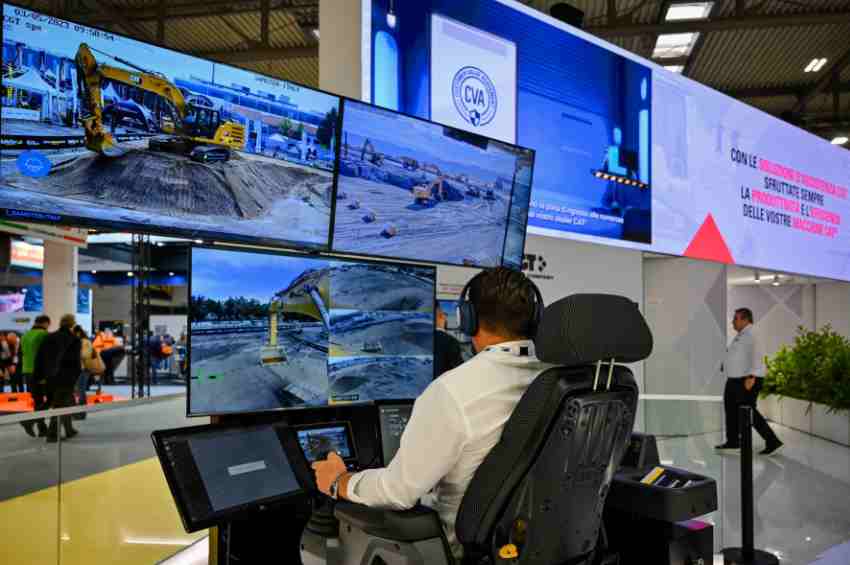
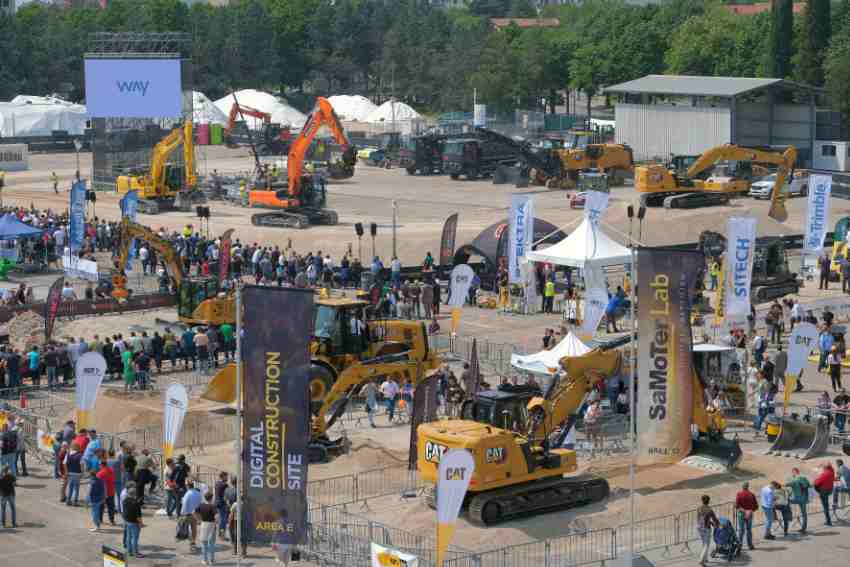
In this scenario, the 32nd edition of SaMoTer represents a strategic appointment to support the sector in this phase of transformation, offering a business platform and a place for discussion on the main development drivers: innovation, sustainability and digitalization. With 6 halls and 3 outdoor areas covering a total surface of more than 50,000 square meters and with more than 500 exhibitors already registered, the exhibition (organized by Veronafiere in partnership with Unacea and Cece) confirms itself as a European reference hub for companies, operators and stakeholders of the entire construction supply chain: from earthmoving to lifting, from demolition to drilling, including crushing and vehicles for quarries and construction sites, but also from concrete to the road sector, without forgetting equipment, engine components, spare parts, logistics, services and ICT solutions. For four days, Verona will become the center of gravity of a sector that significantly impacts employment, innovation and infrastructural development. The exhibition will therefore not only be a product showcase, but also an economic-industrial observatory capable of interpreting market dynamics and guiding the choices of the entire supply chain.
The picture highlighted by Unacea shows differentiated trends among the main destination markets, with signs of resilience and growth in some areas helping to offset difficulties recorded in other international contexts still affected by geopolitical uncertainties, trade tensions and a global demand that is less dynamic compared to previous years. In particular, alongside the solidity of more mature markets, the dynamism of some expanding areas emerges, where infrastructural investments and development programs continue to support the demand for construction machinery, confirming the ability of Italian companies to adapt to diversified and constantly evolving scenarios.
The sector’s prospects nevertheless remain linked to several key factors: from investments in infrastructure expected in Europe and in the main international markets, also in light of economic recovery programs and public development policies, to the technological transition towards machines that are increasingly efficient, safe and sustainable, in line with decarbonization objectives and the reduction of environmental impact. Added to this is the growing digitalization of construction sites and production processes, with the integration of innovative solutions that are progressively transforming the entire construction supply chain, improving productivity, safety and competitiveness of the sector on a global scale.
Looking at the details of the product categories, Italian exports last year showed heterogeneous dynamics. Driving the sector are earthmoving machinery and equipment, which confirm themselves as the most relevant segment with 1 billion and 550 million euros in foreign sales, up 7.1% compared to 2024. Positive signals also come from tower cranes, reaching 158.1 million euros (+3.2%), and road machinery, with 101.8 million euros (+3.6%). On the other hand, declines were recorded in other segments of the supply chain: machinery for aggregates preparation reached 633.3 million euros (–6.7%), drilling machinery 485.6 million euros (–9.4%), while concrete machinery recorded 296.9 million euros in exports (–9.8%). Among the foreign countries where exports increased the most between January and December 2025 are Central-Eastern Europe, the Middle East, the United States, Brazil, North Africa and other African countries. The sector’s trade balance in 2025 stands at almost 911 million euros, recording a decline of 14.1% compared to the previous year, confirming an international context that remains complex despite the overall resilience of exports.