

We have always believed that CO2 is a great refrigerant with a massive untapped potential, offering a potentially large economic incentive for the end customer. CO2 heat pumps present a sustainable, efficient, and versatile heating and cooling solution that is aligned with the global shift towards reducing carbon footprints and mitigating climate change.
Not only are CO2 heat pumps and chillers the absolute best choice with regard to climate considerations, it also becomes the absolute best choice purely in terms of economic savings.
So, whether or not the environment is your concern, a chiller or a heat pump from Tequs is a solution that not only saves you money but also preserves nature.
How do your products or solutions contribute to greater operational efficiency for your clients or end-users?
Tequs delivers all-in-one CO₂ heat pumps designed for commercial and industrial applications.
Our systems provide heating, cooling, and domestic hot water simultaneously, with a market-leading compact footprint and high temperature capability up to 90 °C – making them ideal for retrofit projects as well as new installations.
By using components such as Ejector technology, and internal/external heat exchangers we utilize higher return temperatures to an advantage. This makes the product ideal where other similar products might struggle.
This combined with seamless machine regulation between 15 – 100% makes our product range very versatile.
Today, we offer five standardized models, which can also be connected in parallel to meet larger capacity needs – covering everything from 20 kW to 2.8 MW

Which key technologies or design principles have most improved the efficiency of your latest product generation?
The use of Ejector technology, semi flooded evaporators and Internal heat exchangers has a high impact in terms of efficiency.
Standarized and cost-effective
We deliver a standardized, cost effective and modular heat pump platform that is capable of heating, cooling and domestic hot water – all in one unit.
Perfect Fit
Our system is compact and modular, making it ideal for both retrofits and new-builds. With a design focused on efficiency and flexibility, we ensure minimal on-site time (MOST), reducing installation complexity and project duration
How do you define and measure “efficiency” within your organization or product portfolio?
All our Products go through extensive Factory efficiency tests, to confirm performance within our whole machine range. This means that the COP we state in our data sheets is based on practical results, not only on theoretical calculations.
In what ways has digitalization (IoT, data analytics, AI, etc.) influenced your approach to improving efficiency?
Digitalization means that we can get more data from components. When analyzed correctly it helps us improve the product.
Our Integrated monitoring and remote control with 5G/4G , and BMS ready – Modbus and BACnet gives us the possibility to perform optimalization and monitor the state of the system via remote access.
Can you share a recent project or case study where efficiency gains led to significant performance or sustainability benefits?
Customer: Statkraft Varme
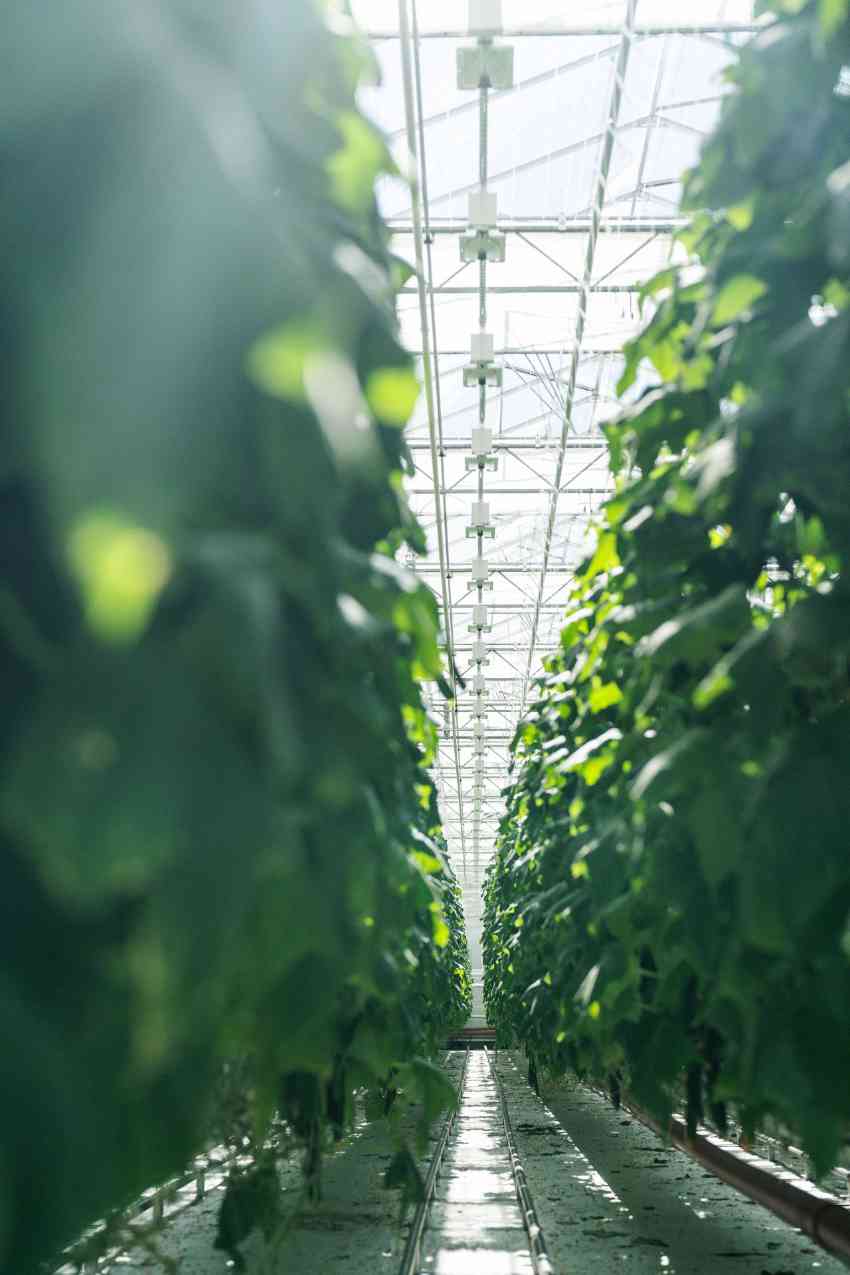
Project: Meråker Grønt (Greenhouse)
Prize: HVAC project of the year 2025 (Norway)
https://www.statkraftvarme.no/kunnskapssenter/nyheter/2025/verdens-viktigste-agurknytt
https://www.statkraftvarme.no/kunnskapssenter/nyheter/2025/statkraft-varme-mottar-pris
We’re proud to have contributed to Norway’s first zero-emission energy system for greenhouses – an innovative setup that uses CO₂ heat pumps, active dehumidification and heat recovery to reuse energy that would otherwise be lost.
💡 Performance highlights:
- 3xTCHP 7 Heat pumps with COP = 5.4
- 750 tons of CO₂ saved annually
- Approximately 26,400 gallons (100,000 liters) of hot water produced per week
- Total energy use reduced by several GWh per year
- Stable climate control and reduced, predictable energy costs
- Heat, cooling, and CO₂ reduction—all in one system
See pictures used from our linkedin. Remember to give statkraft credit if you use the pictures. https://www.linkedin.com/feed/update/urn:li:activity:7394630169698840577

How do you balance efficiency improvements with other priorities, such as reliability, quality, or environmental impact?
We are continuously trying to improve on all the above. But it is important that we don’t compromise on for example, quality when doing efficient upgrades. Also, very often a more efficient product means less environmental impact.
What role do your suppliers or partners play in helping you achieve higher efficiency across your value chain?
We work closely with our suppliers to make sure the components we use are up to date and as efficient as possible
How do you ensure that efficiency improvements are maintained over the full lifecycle of your product or solution?
We make sure that our customers follow the service interwall. And give them feedback on the state of the machine through Remote monitoring

What challenges or barriers do you face when implementing efficiency-driven innovations in your industry?
The main challenge is that high-efficiency innovations often come with a higher upfront cost, while many customers focus on capex instead of lifecycle savings. Helping them understand the long-term economic and operational benefits—and trust the data—remains the biggest barrier.
Looking ahead, which emerging technologies or trends do you believe will most unlock new levels of efficiency in your field?
Using AI in terms of optimization and condition-based monitoring in the field will help producers to get a even better understanding of what and how to improve efficiency in the future
Photos Credit: statkraft https://www.linkedin.com/feed/update/urn:li:activity:7394630169698840577