
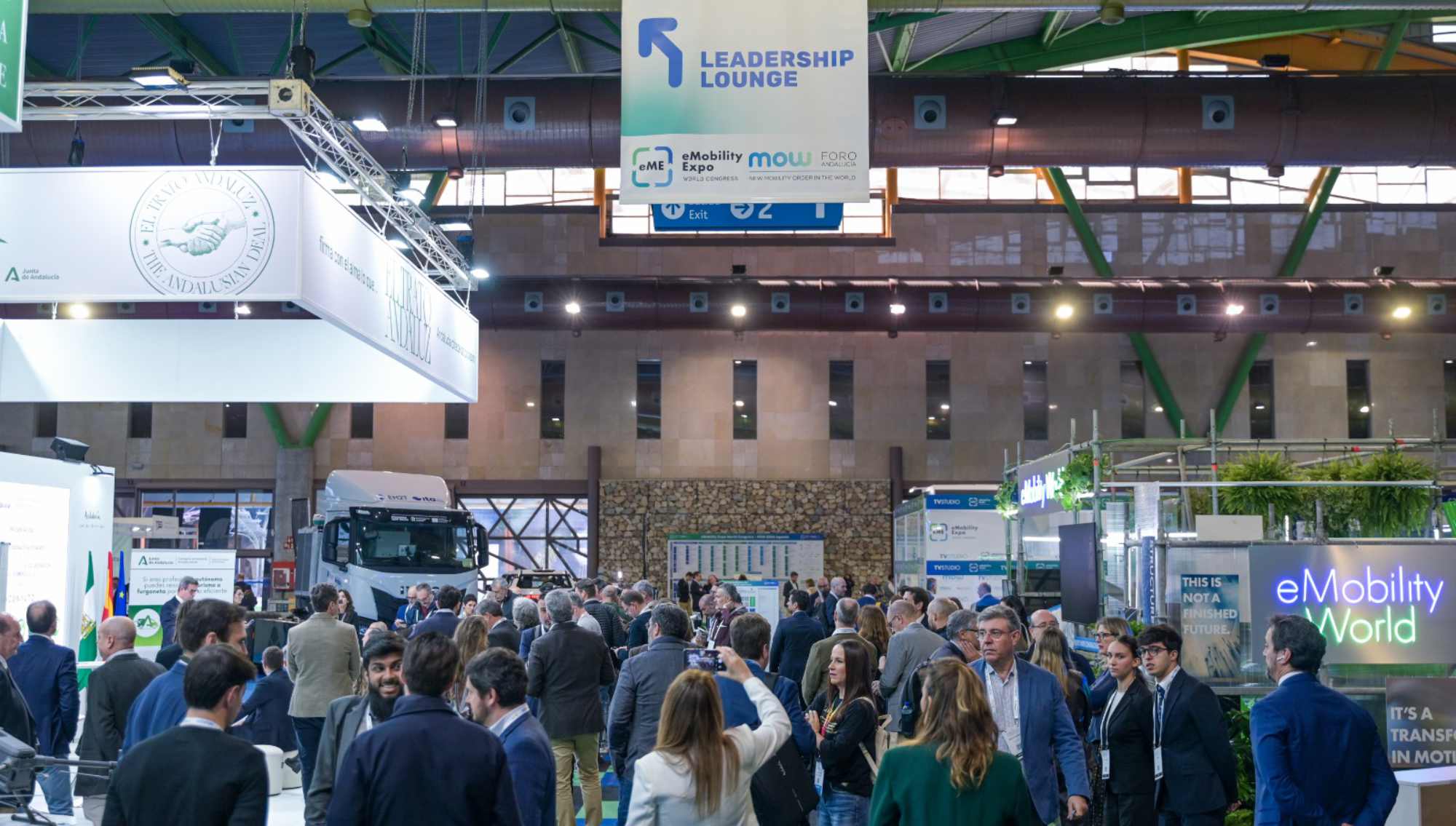
eMobility Expo World Congress – MOW 2026 sets out the roadmap towards sustainable and decarbonized mobility through the strategic combination of batteries, hydrogen and hybrid systems, with a focus on electrification and infrastructure innovation
Battery electric vehicles are gaining ground in Europe, while traditional combustion vehicles are losing market share. According to data from the International Council on Clean Transportation, registrations of battery electric cars in Europe recorded a market share of 19% in January 2026, representing an increase of three percentage points compared to the same month in 2025, while registrations of conventional combustion engine cars fell by 10 percentage points to a market share of 31%.
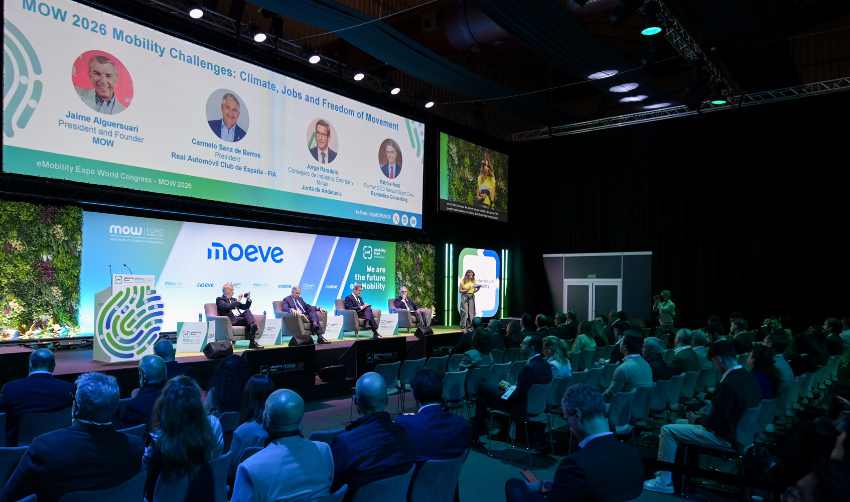
This evolving landscape raises important strategic questions: for example, how Europe can remain globally competitive and what the optimal pace of transition should be to balance environmental goals with economic stability and employment. To address these issues, eMobility Expo World Congress – MOW 2026 has brought together industry experts to discuss the latest strategies in electrification.
In terms of sustainability, Acciona Energía advisor and CEO at Silence, Rafael Mateo, envisions a greener, more electrified Europe by 2035. The executive explained that, to achieve this, “we must start with cities, since 70% of energy consumption occurs there”. In this regard, he believes that the energy transition is almost complete and that it is time to focus on public transport. “If we manage to improve urban transport, we will be able to transform the interior of cities from the point of view of vehicles”, he said.
For his part, Benjamin Krieger, general secretary at CLEPA – European Association of Automotive Suppliers, pointed out that electricity prices must come down and that bureaucracy is too costly. “We need flexibility in those areas that the market can manage. Legislation must be more realistic to achieve its objectives, and we must review European legislation to improve it”, he said.
Hydrogen as a supporting piece to the electrification puzzle
In the urban mobility arena, batteries and hydrogen are no longer seen as rivals but rather as strategic allies. Daniel Fraile, Chief Policy and Market Officer at Hydrogen Europe, explains that “in southern Spain we have cheap energy, but when a complementary energy source such as hydrogen is developed, it can be complementary and beneficial for business. I think it’s clear that electric buses are more competitive, but they also face a challenge, which is not having to be constantly recharged, and this is where hydrogen can be a complementary energy source”.
While battery-powered electric buses dominate short routes due to their energy efficiency, they face an operational bottleneck: their dependence on long charging periods that immobilize the fleet. This is where hydrogen emerges as the missing piece of the puzzle, allowing public transport to maintain an uninterrupted pace of work. By integrating as a range extender or quick-fill alternative, hydrogen ensures that service does not stop, eliminating idle hours in front of the charger and ensuring that each vehicle spends more time on the street than in the garage.
The future energy combination: batteries, hydrogen and hybrid systems
No single technology will be able to decarbonize everything on its own, which is why batteries, hydrogen and hybrid systems will coexist in segments such as passenger cars, heavy-duty vehicles, railways, maritime transport and industrial processes. In this regard, system operators are planning a more complex, flexible and distributed energy landscape to achieve a real energy mix by 2030-2040 in Europe and beyond. In this context, electrification stands as one of the fundamental pillars for decarbonization.
From a business perspective, Daniel Pérez, Director of Strategy and Innovation at KM0 Energy, points out that “electrification will not only solve the problem of decarbonization, but will also facilitate the transition to electric fleets”, thus paving the way for cleaner and more efficient mobility. However, he also pointed out that“the biggest obstacle remains the capacity of distribution networks, which require time to adapt”. This challenge highlights the need for a comprehensive approach that focuses not only on technologies, but also on the infrastructure necessary to enable their integration.
In the maritime sector, Fernando Marcos, Sales Director at EVERLLENCE, reinforced this vision by pointing out that “the electrification of the maritime sector is a complicated challenge, but we are making progress with hybrid systems that combine batteries and fuel”. While hybrid solutions are already in operation on certain ships, Marcos emphasizes that “the maritime sector also depends on innovation to overcome the range and autonomy barriers presented by fully electric systems”.
Maritime electrification, therefore, will not be a single process, but rather a gradual transition in which various technologies will complement each other, as highlighted by Montserrat Espín, Head of the Maritime Transport Decarbonization Department at Bureau Veritas Marine & Offshore, who pointed out that “batteries are already present in the maritime sector, both in fully electric ships and in hybrid solutions”. She has also emphasized the “need to pay attention to safety in the use of hydrogen, a crucial aspect for its development”, despite its potential, there are still technical and safety challenges that must be resolved for its implementation to be safe and effective in maritime transport.
For his part, Xavier Giménez, professor of Environmental Chemistry at the University of Barcelona, concludes that “we must fight climate change and decarbonize energy production. Batteries will play a key role in this process, as there are around 15 promising new technologies that could be decisive”. However, the future remains uncertain, and as Giménez points out, “it is essential to look at the big picture and be smart in our approach”, because, although technologies are advancing rapidly, we need to be strategic and flexible in order to adapt to a changing and dynamic environment.