Flexa is an Italian engineering company with over 30 years of experience, specializing in finishing equipment and solutions for the digital printing industry. The company designs, manufactures, and delivers advanced machines that help print service providers (PSPs) optimize production, improve quality, and reduce waste. In addition, Flexa supports the industrial sector with tailored applications. Their solutions span cutting, laminating, slitting, rewinding, welding, and much more.
Interview with Massimo Vettorazzo, Owner & President of Flexa.
What are the main areas of activity of the company?
Massimo Vettorazzo: Our core business focuses on two main areas:
Digital Printing / Wide-Format Professionals: We develop finishing lines, including cutting, laminating, and slitting systems, designed to handle large-format digital substrates. Our solutions serve the graphic communications market, covering signage, exhibition graphics, vehicle wraps, and murals, and are engineered to deliver precision, speed, and consistently high-quality results.
Custom Industrial Machinery: For applications requiring highly specialized solutions, we design and manufacture tailor-made machines for a variety of industries, such as glass, furniture, electronics, and pharmaceuticals. Our goal is to enhance production processes while ensuring maximum reliability and quality.
What’s the news about new products/services?
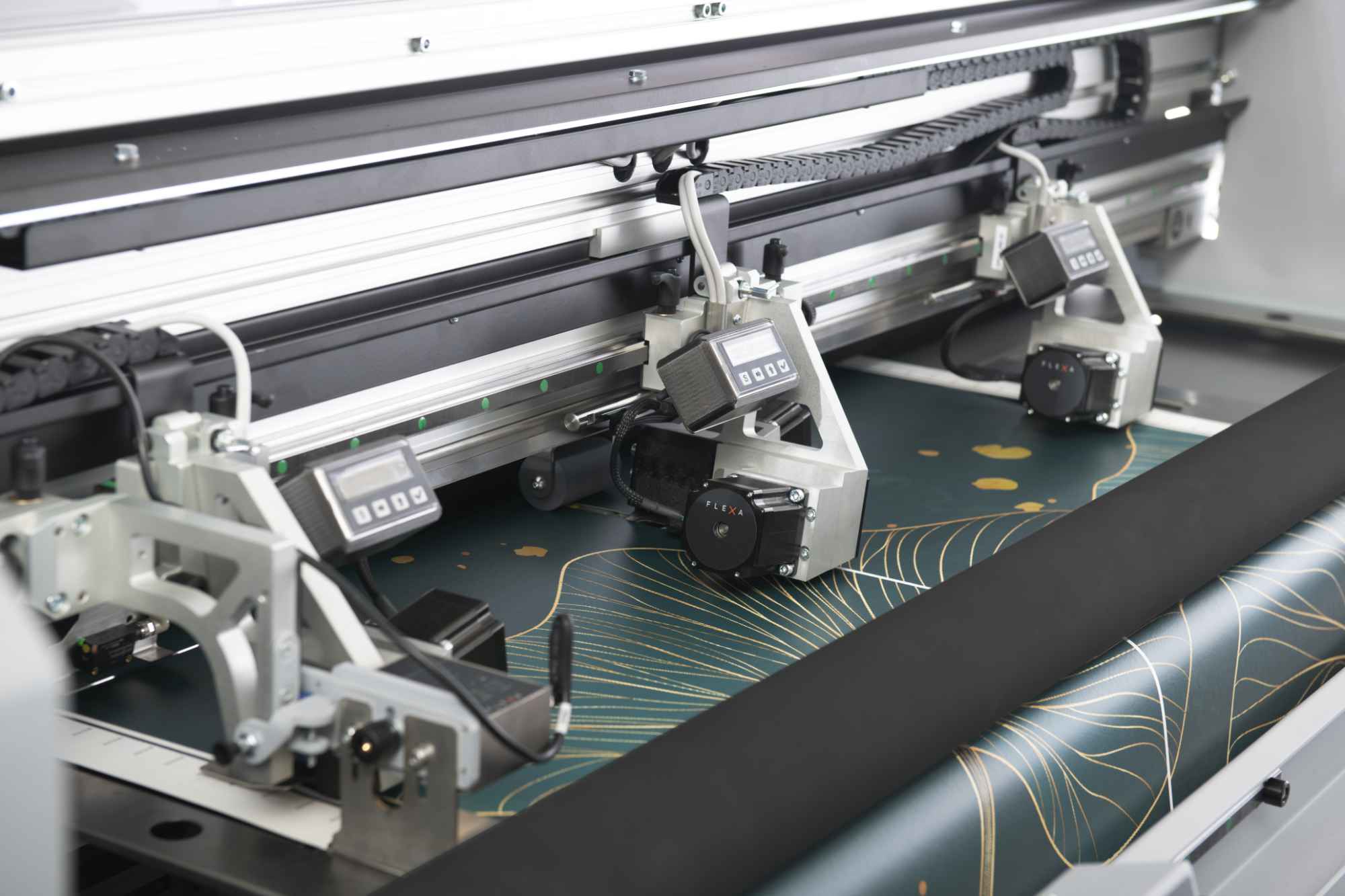
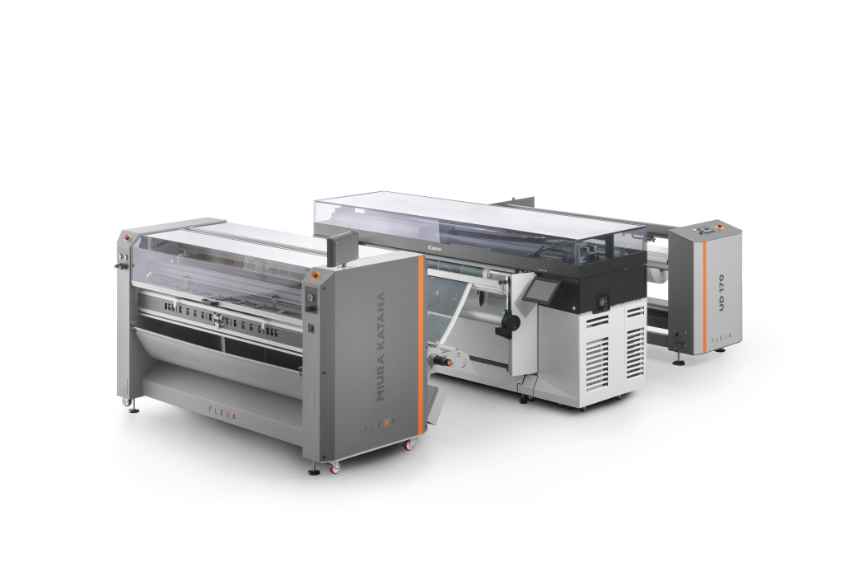
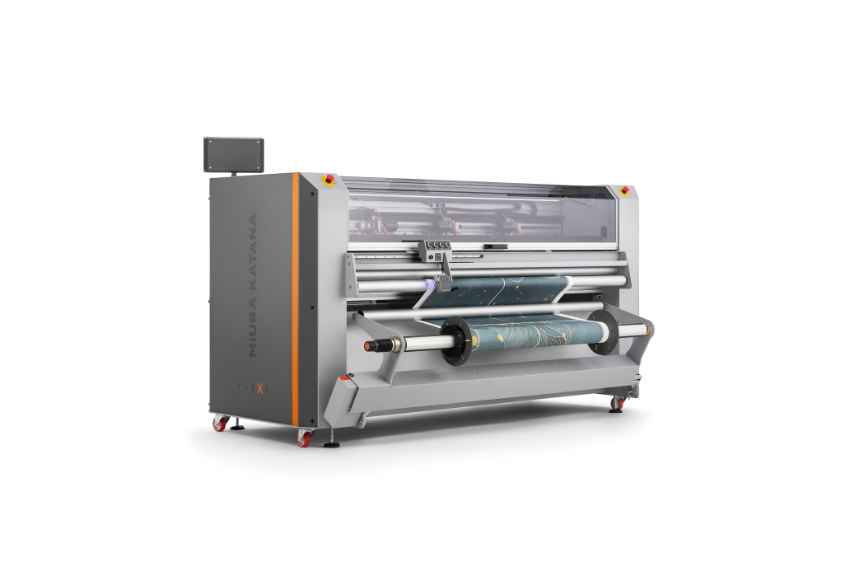
M.V: Our flagship product, Miura Katana, is designed specifically for high-end digital wallpaper production. It is the first automatic XY wallpaper cutter featuring a revolutionary patent-pending cutting system. Its innovative V-shaped angled blades eliminate the white cutting edges typically visible at panel junctions, ensuring perfect alignment without the need for touch-ups during installation.
This year, we also introduced complementary solutions that further optimize workflow for continuous production, minimize manual intervention, and guarantee absolute precision in the finished product.
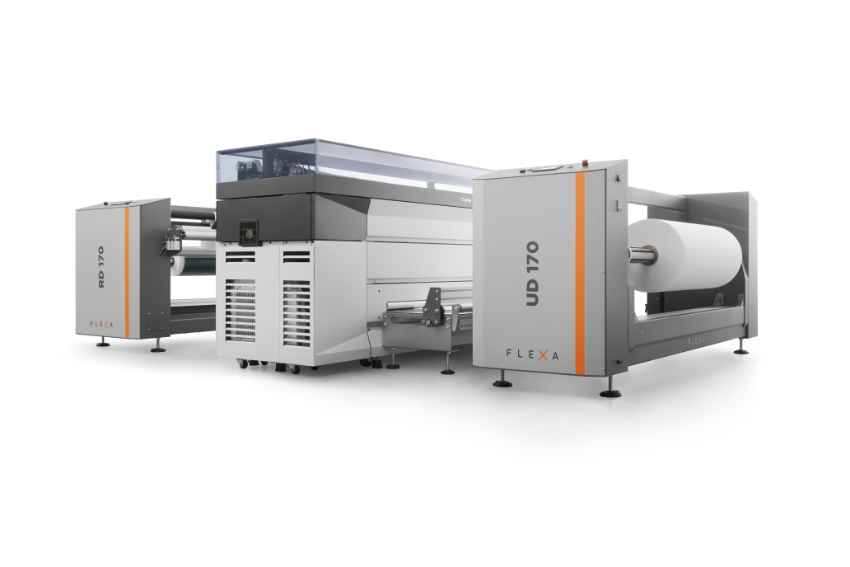
The first is an in-line system for automatic wallpaper cutting, composed of the Miura Katana working seamlessly with large-format digital printers such as the Canon Colorado. This setup can process jumbo rolls through the UD 170 unwinder, which feeds the printer continuously with maximum accuracy.
The second is an in-line system for unwinding and rewinding jumbo rolls in combination with the printer. This workflow automation enables uninterrupted production from printing to finishing. Both the UD 170 unwinder and RD 170 rewinder are unique on the market thanks to their automatic vertical alignment sensor, which ensures perfect edge alignment during unwinding and rewinding operations.
What are the ranges of products/services?
M.V: Flexa is a trusted partner for professionals in the wide-format digital printing industry, offering a portfolio of over 200 products divided into eight families to meet a wide variety of application needs. Our range includes laminators, automatic and manual cutters, roll slitters, welding and eyelet machines, heat calenders for dye-sublimation, equipment for bending plastic materials, accessories for visual communication, and custom-engineered finishing solutions.
What is the state of the market where you are currently active?
M.V: We operate in the wide-format digital printing market, which is healthy and growing. The décor segment, particularly digital wallpaper and interior murals, continues to expand. At the same time, the wider digital printing industry is maturing, with increasing demand for automation, customization, and sustainable production. There is a strong market push toward eco-friendly materials and high-quality finished output.
What can you tell us about market trends?
M.V: The interior decoration segment is experiencing significant momentum, with digitally printed wallpaper showing strong growth driven by demand for bespoke, high-quality wall coverings in both residential and commercial environments.
Sustainability is becoming essential. Eco-friendly inks, recyclable substrates, and energy-efficient equipment are now widely required, especially in Europe, where environmental regulations are particularly stringent.
Automation and smart workflow integration are also shaping the future of the sector. Finishing is no longer seen as a standalone step; instead, seamless connections between printing, cutting, and material handling enable PSPs to reduce waste, boost consistency, and increase overall productivity.
What are the most innovative products/services marketed?
M.V: The Miura Katana is our most innovative solution. It solves one of the most persistent challenges in wallpaper finishing — the appearance of white cutting lines at panel seams. Its patent-pending V-shaped blade configuration ensures flawless alignment, even on dark or complex designs, without the need for manual corrections.
The system also offers exceptional precision: its dual-roller traction mechanism stabilizes the material perfectly, while the dual-blade architecture produces clean, repeatable cuts over long production runs.
What estimations do you have for the end of 2025?
M.V: 2025 has been a year marked by significant global challenges, with cautious investment trends in both domestic and international markets. In this environment, our priority has been to remain at the forefront by developing innovative, distinctive technologies recognized as unique within the wide-format digital printing finishing sector.
Despite the slower pace of equipment investments, we observed a positive rebound in orders toward the end of the year. This renewed market confidence supports a strong finish to 2025 and positions us for continued growth in 2026, driven especially by automation, digital décor, and high-precision finishing systems.