
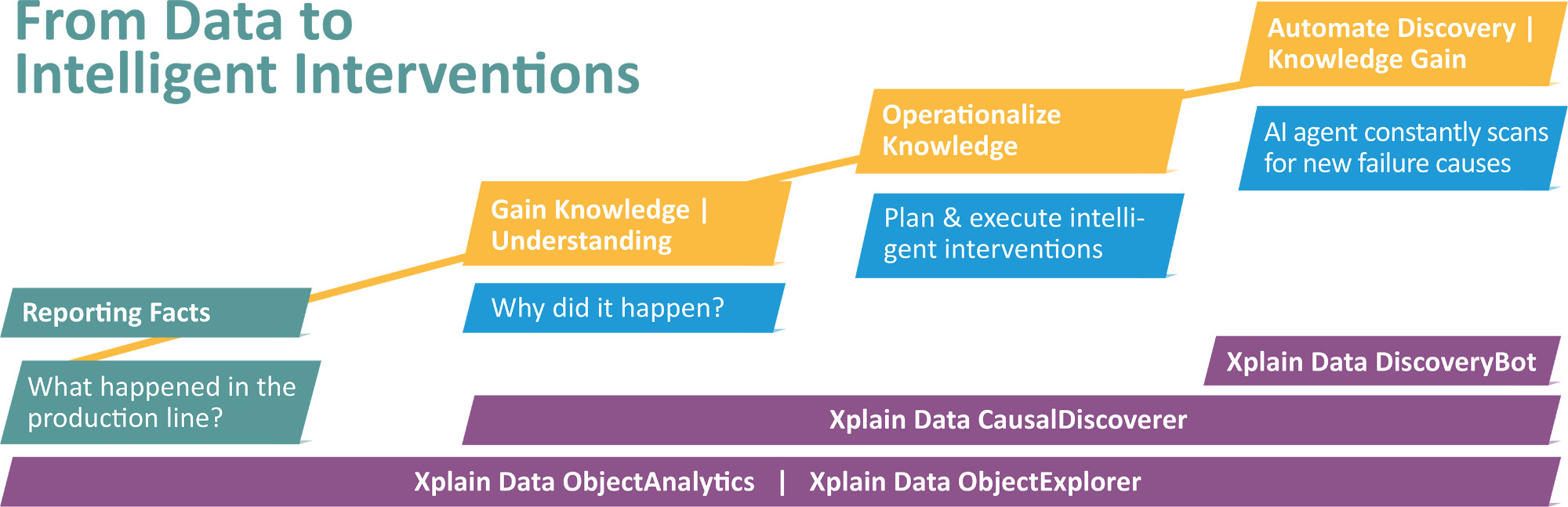
The potential of Industry 4.0 hinges on the ability to convert sensor and process data into reliable, actionable insights. However, conventional machine learning (ML) models often fall short because they are primarily correlation-based and do not capture underlying causal mechanisms. To address this analytical limitation, Xplain Data, a German deep tech firm, has developed an approach that identifies the causal factors – the ‘why’ – behind industrial failures, rather than merely predicting when they might occur.
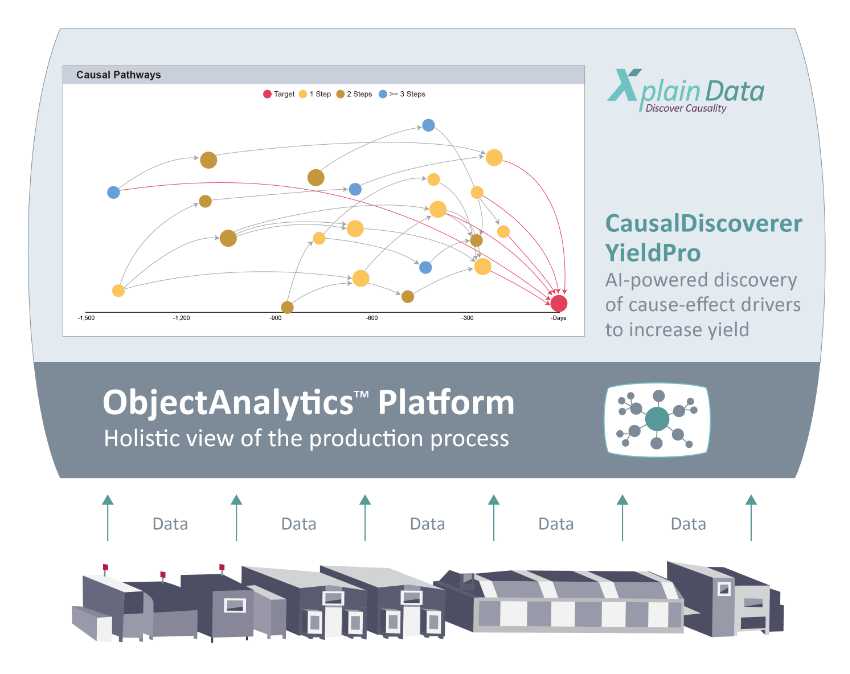
The company’s patented ObjectAnalytics platform provides a holistic view of complex, multi-step production lines, enabling shop-floor process experts to easily analyze process steps in relation to one another.
Building on this holistic view, Causal AI algorithms uncover cause-and-effect relationships within the complexity of data generated across the entire line – for example, identifying the upstream causes of failed end-of-line tests that are hidden in data from earlier process steps.
For manufacturing and mechanical engineering organizations, this approach enables analyses that go beyond descriptive and predictive insights.
It reliably identifies the root causes of quality deviations and provides transparency into production processes, establishing a verifiable, causal foundation for systematic yield optimization.
In addition, the method eliminates the need for manual feature engineering.
Interview with Dr. Michael Haft, CEO & Founder of Xplain Data GmbH.
What are the main areas of activity of the company?
Michael Haft: Xplain Data focuses on applying Causal AI to high-value industrial manufacturing. Core activities include:
- Root Cause Analysis & Quality Management: CausalDiscoverer precisely identifies drivers of yield loss, equipment failure, and product defects.
- Process Optimization & Yield Enhancement: “What-if” scenario simulations to predict the impact of interventions and guide targeted improvements.
Specific, preconfigured solutions are available for discrete and electronics manufacturing (including SMT and THT processes).
What’s the news about new products?
M.H: At productronica trade show 2025, Xplain Data introduced CausalDiscoverer YieldPro, which won the productronica Award for innovation, efficiency, and system integration.
YieldPro identifies the true root causes of quality and yield issues in electronics production by analyzing all process- and design-relevant factors together.
Range of Products/Services
- With Xplain Data Causal AI, manufacturers can:
- Automatically uncover root causes of production issues
- Simulate “what-if” scenarios before implementation
- Detect anomalies early to reduce downtime, scrap, and rework
- Continuously monitor lines for new emerging failure drivers
The solution suite includes:
- CausalDiscoverer: Highlights key causal factors for quality management.
- Causal DiscoveryBot: Always-on RCA automation with proactive alerts.
- ObjectAnalytics Database (incl. ObjectExplorer): A 360° object-centric view across machines, parts, and processes.
What are the ranges of products?
M.H: According to the 2025 State of Smart Manufacturing Report (Rockwell Automation), 95% of manufacturers have already invested in or plan to invest in AI/ML – including Generative and Causal AI – within the next five years. AI is shifting from experimentation to operational deployment, expected to deliver cost savings, efficiency gains, and improved production reliability by 2027.
Causal AI is gaining particular attention because it reveals cause-and-effect relationships rather than simple correlations. It supports proactive, explainable decision-making in production, supply chain optimization, and energy management.
AI-powered quality control remains the leading use case for the second year in a row, with half of manufacturers planning to use AI/ML for product quality by 2025. Investments in Causal and Generative AI are growing at 12% year-over-year. Since 2023, Causal AI has also appeared on the Gartner AI Hype Cycle as a high-potential emerging technology.

What can you tell us about market trends?
M.H: Overall AI in Manufacturing
The AI in Manufacturing market is expanding rapidly, driven by Smart Factory and Industry 4.0 initiatives:
- High Growth & Immediate ROI: Global CAGR estimates range from 35–46% through 2030, with strong demand for Predictive Maintenance and advanced Quality Control (Source).
- Edge AI & IIoT Integration: Increasing adoption of real-time analytics on the factory floor.
- Emerging GenAI Applications: Early use in documentation and human-machine interaction.
- The Specific Trend: Causal AI
In this context, Causal AI signifies a pivotal evolution in industrial analytics.
From predicting “what” to understanding “why”: Traditional ML algorithms predict the risk of a failure. Beyond that, manufacturers require to understand the cause for failures, an explainable AI delivering root-cause – the “why” behind the “what”.
Targeted Optimization: Causal AI identifies specific upstream process parameters responsible for downstream defects, enabling precise interventions.
High Growth Potential: The Causal AI market is projected to grow at 38–42% CAGR, outpacing the GenAI in Manufacturing segment and becoming a core analytical layer for industrial operations.
(e.g., MarketsandMarkets projects a CAGR of 41.8% [Source]; Fortune Business Insights forecasts 42.52% [Source]). This demonstrates its faster growth rate compared to the GenAI in Manufacturing market, validating its role as a critical next-generation technology.
What estimations do you have for 2026?
M.H: By late 2026, Causal AI is expected to move from early adoption toward broader operational use, especially in sectors where explainability and traceability are essential. As data infrastructures mature, industries will increasingly rely on causal models for decision support, process optimization, and trustworthy automation.