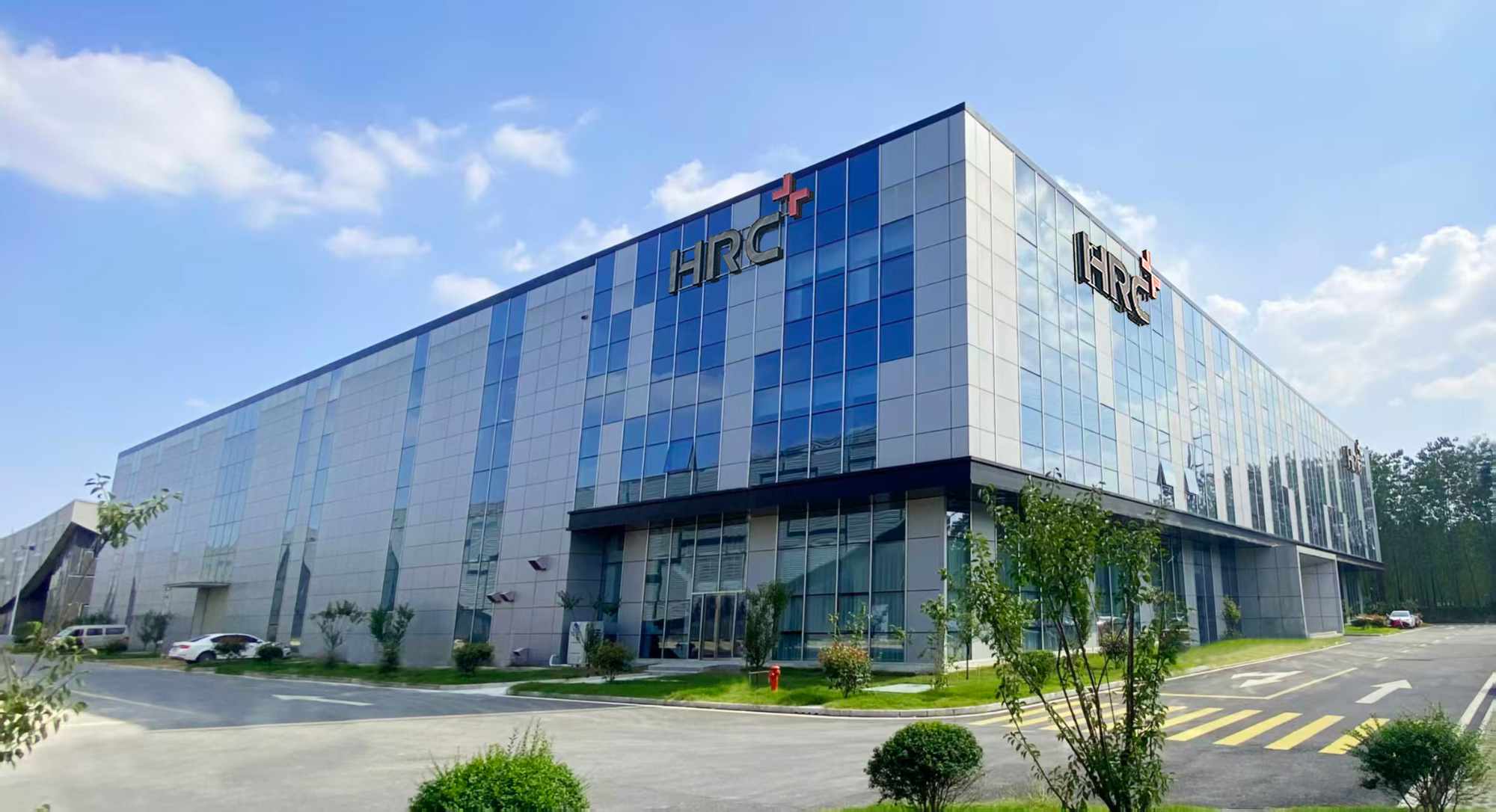
HRC Group is one of the global leading composite solution providers. With their 2,000 employees across five countries in Europe and Asia, the company manages the entire lifecycle of carbon fiber composites. HRC delivers cutting-edge solutions tailored to key industries such as automotive, aerospace, renewable energy, construction, and robotics. By integrating technological innovation with commercial strategies adapted to each region, they support clients in achieving lighter, more sustainable, and efficient outcomes for the future.
Interview with Giacomo Dal Busco, CTO at HRC.
What are the main areas of activity of the company?
Giacomo Dal Busco: HRC’s core activities span the full carbon fiber composite value chain, including R&D, engineering design, industrialized serial production, and end-of-life recycling. This integrated approach allows us to optimize materials, processes, and component performance across the entire product lifecycle.
In automotive and aerospace sectors, we support leading OEM´s with lightweight structural and decorative composite solutions, ranging from complex assemblies to high-volume components for new-energy vehicle and aviation platforms.
Beyond mobility, our activities extend to construction, robotics, and other industrial applications where lightweight design, durability, and performance consistency are essential, allowing composite technologies to be applied across a broad range of functional and industrial contexts.
What’s the news about new products/services?
G.D.B: One of our most significant recent developments is the industrial scaling of recycled carbon fiber solutions. We are broadening our rCF portfolio to include intermediate materials suitable for thermoplastic processing as well as expanding recycling services that integrate directly into customer production cycles.
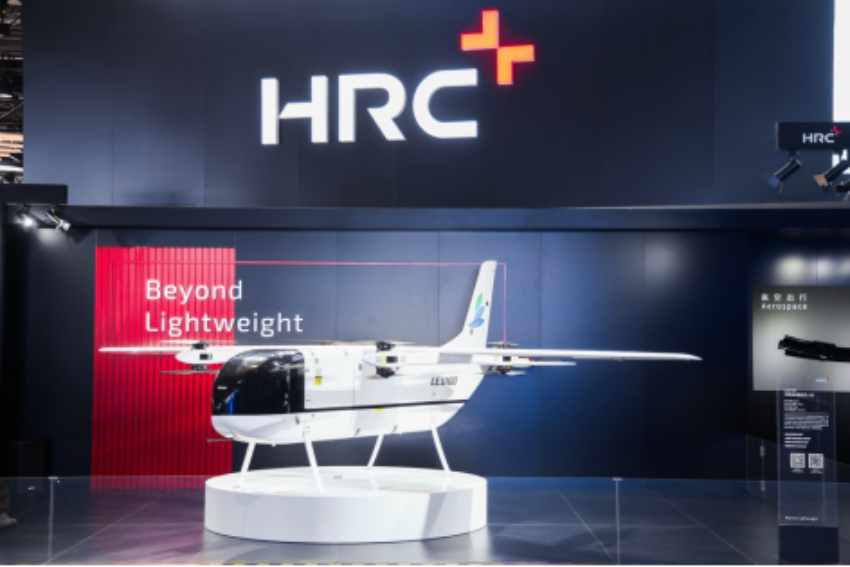
With the low-altitude economy emerging as a dynamic field of aviation innovation in China, we are proud to be at the forefront of this growth.
Building on this foundation, our current focus is on developing a more diversified range of composite products for broader industrial adoption, balancing performance requirements with scalability and sustainability.
What are the ranges of products/services?
G.D.B: HRC´s portfolio extends from early-stage concept development to high-volume industrial production of complex composite components. We design and manufacture interior, exterior, and structural parts, including highly integrated assemblies such as monocoques and multi- material structures.
Beyond component production, we provide comprehensive services, including tooling, process development, automation, and industrialization. Importantly, we also support customers with end-of-life strategies, ensuring carbon fiber materials are recovered and reused within new product cycles. This lifecycle-oriented approach enables customers to align technical performance, cost efficiency, and sustainability objectives.
What is the state of the market where you are currently active?
G.D.B: The markets we serve are evolving rapidly, driven by requirements for lightweighting, energy efficiency, and sustainability. Automotive and aerospace remain core sectors, while demand is growing strongly in emerging aviation and mobility segments.In particular, we see increasing momentum in eVTOL platforms, drones, and low-altitude flight systems, where composite materials play a critical role in achieving weight reduction, structural efficiency, and functional integration. These markets require advanced materials that can transition from development to scalable production without compromising performance.
What can you tell us about market trends?
G.D.B: The aerospace sector continues to set high technical standards, while automotive is experiencing the fastest growth in composite adoption driven by new vehicle architectures, electrification and the need for lightweighting solutions.
Geographically, Asia-Pacific continues to expand rapidly, while Europe and North America are pushing strongly on sustainability and circular material models. Across all regions, advances in manufacturing automation and material recycling are reshaping how composites are designed and produced, and qualified for large scale applications.
What are the most innovative products/services marketed?
G.D.B: Our core strength lies in delivering a complete and integrated range of composite services within a single development framework. We support customers through end-to-end composite product development, linking material testing and validation, structural design, process definition, tooling development, and serial production. This approach enables complex composite concepts to be translated into manufacturable and scalable industrial solutions.
Complementing this approach, we are applying the same level of technical discipline to material reuse. Through our patented recycling technology, recycled carbon fiber materials can be reintroduced in a controlled manner into new industrial applications, while maintaining defined performance, reliability, and cost targets.
One of HRC’s key innovations lies in its integrated composite development model, which connects material engineering, structural design, industrial processes, and serial production within a single technical framework. This approach allows complex composite solutions to be efficiently translated into scalable industrial applications.
In parallel, HRC has developed patented recycling technologies that enable recycled carbon fiber to be reintroduced into new products in a controlled and reliable manner. By maintaining defined performance, quality, and cost targets, these recycled materials can be applied across a growing range of industrial applications, supporting circular composite solutions.
What estimations do you have for the beginning of 2026?
G.D.B: As we look into 2026, our priorities are focused on international expansion and technology diversification. In addition to strengthening our established presence in Asia & Europe, we are further developing our engagement with the North American market, particularly in sectors where advanced composite solutions and sustainable material technologies are gaining strategic importance.
At the same time, we will continue to extend our recycling technologies into a broader range of industries, enabling customers beyond traditional mobility sectors to benefit from circular composite solutions. These initiatives will support long-term growth while reinforcing HRC’s position as a global technology partner in advanced and sustainable composites.