

Incipientus develops non-invasive, in-line rheology and flow imaging solutions that give manufacturers real-time process insight, without disrupting production.
Interview with Johan Wiklund, CEO of Incipientus.
A brief description of the company and its activities.
Johan Wiklund: Incipientus develops smart, non-invasive sensor systems that transform raw industrial data into real‑time, actionable intelligence. Our mission is to help manufacturers with the AI-assisted digital transformation and to shift from reactive, operator‑dependent processes to predictive, self‑optimizing production. Using advanced algorithms and touch‑free ultrasound technologies, we provide in‑line rheology, flow imaging, and multi‑parameter monitoring without disrupting operations. We serve industries such as food & pharma, battery production, paper & pulp, and more—enabling higher efficiency, reduced waste, consistent quality, and more sustainable production. Positioned at the intersection of Industry 4.0, AI, and sustainability, we supply critical real-time factory data for the next generation of autonomous and environmentally responsible smart factories.
For more information visit Incipientus website: https://incipientus.com or our Company LinkedIn: https://www.linkedin.com/company/27053824
What are the main areas of activity of the company?
J.W: Our core activities include smart sensing, industrial analytics, and real-time factory data for AI‑assisted automation. We deliver high‑resolution data on viscosity, yield stress, flow behaviour, velocity profiles, energy levels, acoustic properties, temperature, flow rate, pressure and more. A key focus is real‑time flow visualization and rheometry for non‑Newtonian liquids that are difficult to measure using convential techniques, offering continuous process insight for improved performance and sustainability. Traditional systems react after issues occur; our approach provides early warnings and optimizes decision‑making. We also support sustainability initiatives by enabling edge AI, reducing environmental impact through continuous process optimisation and actionable insights.
What’s the news about new products/services?
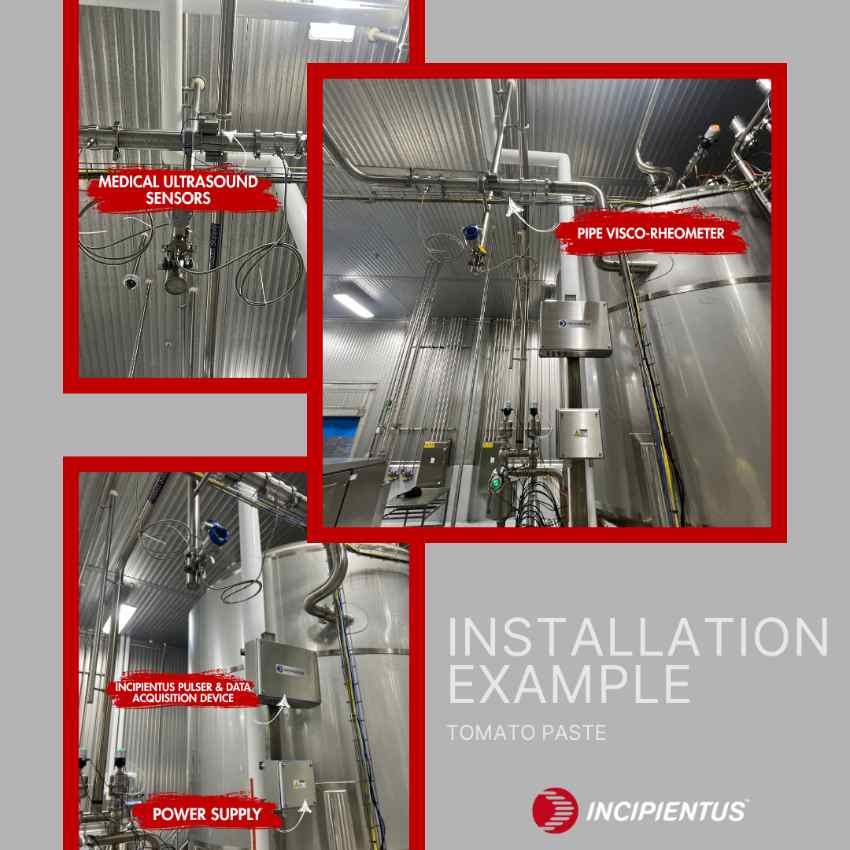
J.W: Incipientus is participating in innovative projects like AI-PRO – Enhancing Processing Industry Efficiency and Insights with AI and Smart Sensors, driving the future of data-informed, intelligent manufacturing. We are installing our smart sensor platforms in major production facilities within EU and North America to support AI‑driven digitalization. Customers currently rely on outdated, operator‑dependent methods; our touch‑free multi‑point solutions replace slow lab sampling with real‑time measurements at the source, reducing latency and infrastructure costs. Our data also gives better traceability and contributes to safer production with less human errors. We are also launching new real‑time monitoring tools and modular analytics that allows customers to deploy AI models tailored to their production needs, incorporating data from a wide range of sensors. These scalable solutions integrate seamlessly across single or multi‑site operations.
What are the ranges of products/services?
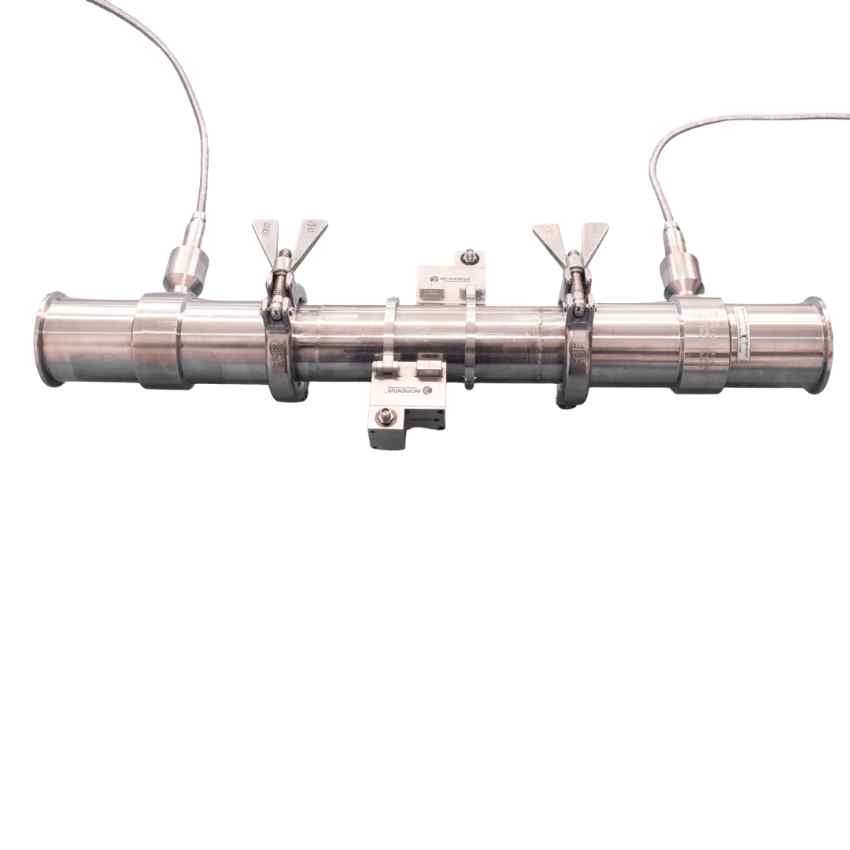
J.W: Our portfolio includes smart sensors, hardware, software, and integrated intelligence services. Hardware solutions consist of high‑performance, touch‑free sensors built for harsh industrial environments and capable of measuring through SS316L stainless steel. Our electronics platforms are IP65 rated, certified (UL/FCC/CE), and designed for real‑time data acquisition in harsh processing conditions, both indoors and outdoors. Our software delivers real‑time flow visualization, inline viscosity measurements, anomaly detection, optimization tools, and customized dashboards. Solutions can run on‑premise, typically on VMs, and data can be streamed to hybrid, or cloud architectures. Beyond technology, we offer analytics, consulting, system design, deployment, and lifecycle support, focusing on delivering measurable performance outcomes.
What is the state of the market where you are currently active?
J.W: The industrial AI and smart sensor market is rapidly accelerating. Manufacturers face rising energy costs, supply chain instability, stricter regulations, and growing demands for transparency. Legacy systems cannot meet these pressures. Many companies still use outdated sensors and fragmented infrastructures, leaving valuable data unused. This gap creates strong demand for integrated sensing and analytics platforms like ours. Growth is particularly strong in food, pharma, pulp & paper, battery manufacturing, energy, and heavy industry — sectors moving toward intelligent automation.
What can you tell us about market trends?
J.W: Key trends include:
- A shift from reactive quality control and maintenance to real-time adjustments of processing parameters and predictive and prescriptive operations.
- The rise of industrial AI, enabling faster decision‑making, improved security, and reduced human error. Continuous, multi‑point real‑time data is essential for training next‑generation AI models—something legacy systems cannot provide.
- Sustainability becoming a strategic priority. Companies must reduce energy, chemicals, and raw material usage. Smart sensing with AI provides quantifiable pathways for efficiency improvements.
What are the most innovative products/services marketed?
J.W: Our touch‑free sensors designed for pulsed‑ultrasound measurements represent a major innovation by measuring flow and rheological properties through pipe walls without any part of the sensor being in contact with the liquid. They install without cutting pipes, require no calibration, and provide continuous real‑time multi‑point high-resolution data. Imagine having access to a non-invasive video camera that can visualize flows inside stainless steel pipes. Our next‑generation platform includes onboard edge processing and support for more sensors, enabling scalable digitalization. Our advanced software analyzes multi‑variable data, assist with anomaly detection and feeds data to the customers existing process monitoring and control systems. As part of the AI-driven digital transformation this allows optimization recommendations and direct interventions to maximize throughput and minimize waste. These innovations position Incipientus as a transformative force in industrial intelligence. Incipientus Team is successfully exceeding customer expectations.
What estimations do you have for the beginning of 2026?
J.W: By 2026, we expect strong growth through new customer discovery projects, expanded sensor installations, and to initiate strategic partnerships. Growth will increasingly come from system rollouts, subscriptions, and data‑driven service layers, including support for additional sensors within our platform. We plan long-term to scale across multiple industrial sectors and expand internationally. Our goal is to become a global supplier of actionable in‑line multipoint process data, enabling customers to transition toward semi‑autonomous, AI‑driven production. The convergence of smart sensors, AI, sustainability mandates, and digital transformation creates a unique opportunity for Incipientus to become a foundational platform for intelligent and sustainable manufacturing.