
Royma Industrial CT is a one-stop provider of advanced X-ray and computed tomography (CT) inspection systems for industrial quality assurance. The company’s solutions cover both laboratory and fully automated inline inspection and support customers from initial development through to high-volume production. Headquartered in Suzhou with production and R&D sites across China and a presence in Europe, the US, Korea and India, Royma serves leading manufacturers in batteries, automotive, semiconductors, electronics, aerospace, medical and rail.
Interview with Adrian de Riz, Marketing Manager at Royma Industrial CT Europe.
What are the main areas of activity of the company?
Adrian de Riz: Royma focuses on several key application fields:
New energy batteries (cylindrical, prismatic and pouch cell inspection across the full production chain). Automotive and e‑mobility components, including die casting and safety‑relevant parts. Semiconductor and electronics, including high‑density assemblies and precision components. Aerospace, medical devices and rail, where internal quality and traceability are critical. Across these industries, Royma delivers inline and offline CT systems, turnkey automation, and AI‑driven analysis software for non‑destructive testing.
What’s the news about new products/services?
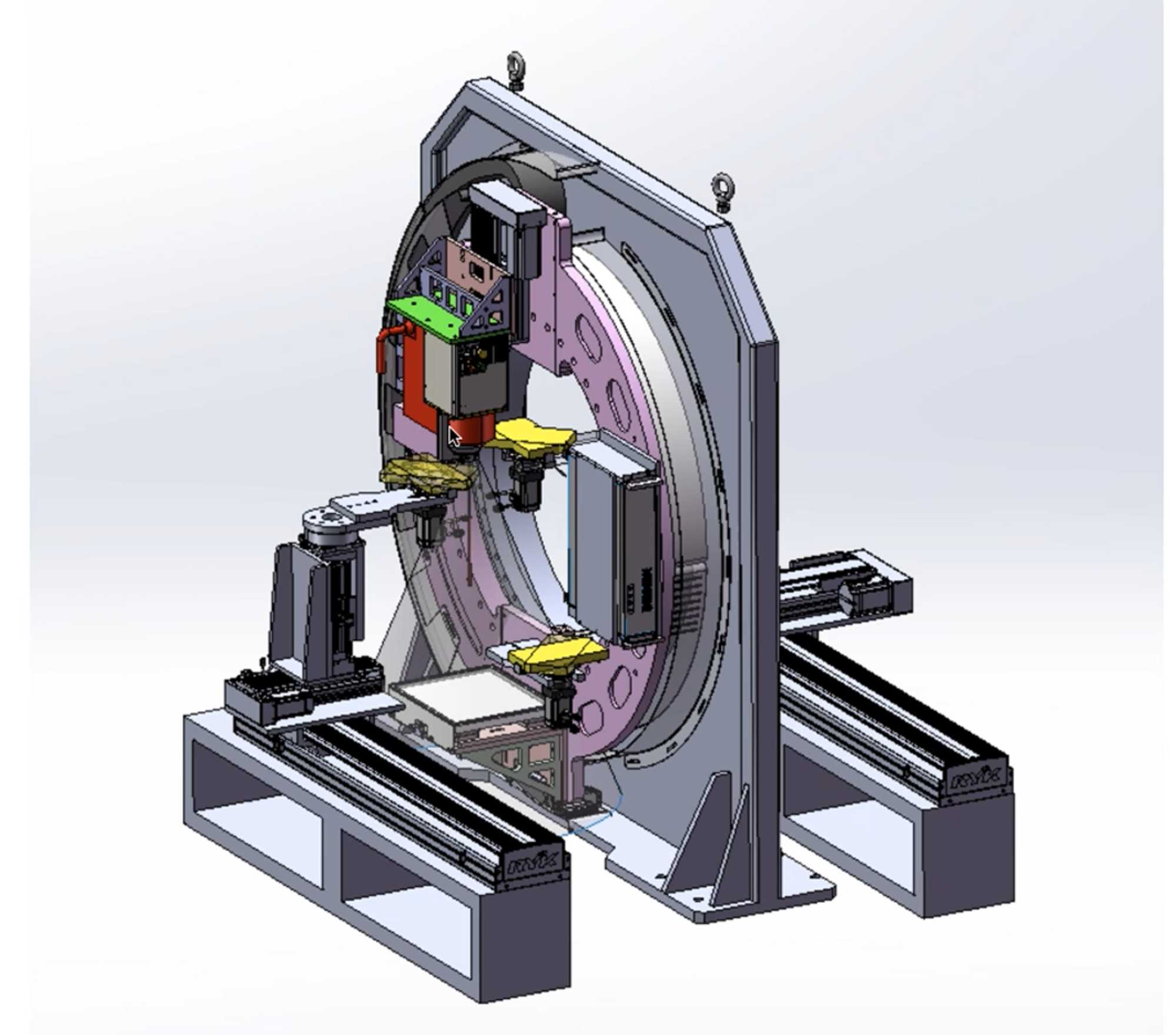
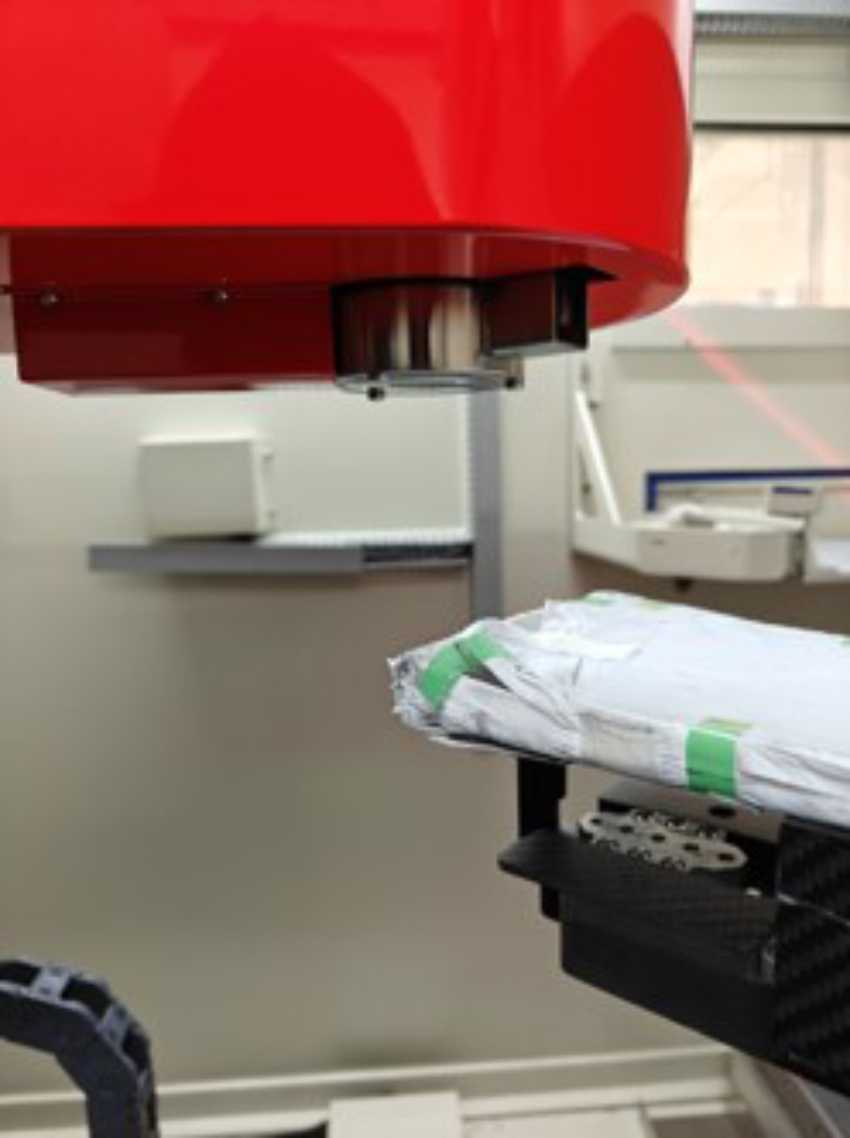
A.d.R: Our newest innovation is the RMLCT7500, it represents a new generation of inline CT systems dedicated to high‑speed overhang inspection of prismatic battery cells. The machine was developed together with leading Chinese battery manufacturers like CATL, CALB and Sunwoda. It combines a gantry‑style CT architecture with AI‑based overhang analysis and proprietary material handling to deliver full 3D inspection of all electrode corners at true production throughput, enabling 100% inline inspection on all four battery corners with excellent GRR. This solution significantly enhances yield and safety by detecting subtle overhang deviations, internal defects, and assembly issues that conventional 2D X‑ray cannot reliably capture.
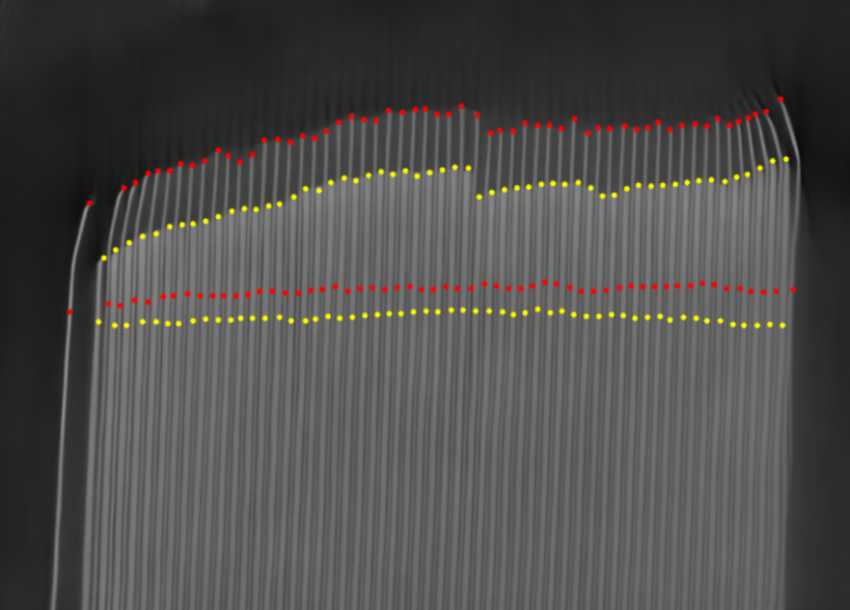
The reason electrodes cannot be adequately measured with 2D inspection lies in the sub‑200‑micron overhang range and the inherent limitations of a single projection. A 2D view can only capture the apparent electrode length at the very corner peak, but fails to reveal damage or incorrect length parameters along the electrode sheet edges, for example when a sheet is shifted or twisted.
The need for precise electrode overhang inspection goes far beyond preventing battery fires. By controlling overhang, battery manufacturers protect their cells against dendrite growth, substantially improving battery performance and lifetime. In addition, CT data can be fed back into the manufacturing system to fine‑tune process parameters and shorten production ramp‑up. Finally, all future stakeholders of the battery benefit from documented safety, higher bankability, lower insurance premiums, and improved performance.
What are the ranges of products/services?
A.d.R: Royma offers a broad portfolio of X‑ray and CT systems for different battery formats and industrial use cases:
Inline CT systems for prismatic, cylindrical and pouch cells, including high‑throughput gantry CT for full 3D inspection. Laboratory CT and at‑line systems for R&D, failure analysis and process optimization. 2D X‑ray inspection systems for fast screening and positioning tasks. Turnkey automation, material handling, and analysis software, including AI algorithms for automated defect and overhang detection. This range allows Royma to cover everything from early prototype analysis to fully automated gigafactory‑scale inspection.
What is the state of the market where you are currently active?
A.d.R: China remains the world’s largest and most mature lithium‑ion battery market, with leading cell manufacturers operating large‑scale gigafactories and a strong, export‑oriented supply chain. Domestic demand from EVs and stationary storage, combined with global exports, is driving continued investment in scales far exceeding the combined rest of the world in new lines, higher throughput and stricter safety requirements.
In Europe, the battery industry is in a rapid build‑up phase, with multiple gigafactory projects under construction or ramping up, supported by industrial policy and the push for local, resilient supply chains. While production volumes are far below China’s, European manufacturers are strongly focused on high quality, traceability and compliance with sustainability and regulatory requirements.
What can you tell us about market trends?
A.d.R: Several key trends are shaping the battery market:
Cell‑to‑pack and cell‑to‑chassis concepts: OEMs are integrating cells more directly into the vehicle structure to increase energy density and reduce system cost, which increases the importance of cell‑level dimensional control and internal quality.
“Made in Europe”: There is a strong push to localize battery production in Europe to strengthen supply security, meet sustainability goals and comply with new regulations on carbon footprint and responsible sourcing.
Solid‑state batteries: R&D and pilot lines for solid‑state cells are accelerating, promising higher energy density and improved safety, while at the same time introducing new inspection challenges for interfaces, layer uniformity and defect detection.
These trends all increase demand for advanced CT‑based inspection and data‑driven quality control across the cell lifecycle.
What are the most innovative products/services marketed?
A.d.R: Royma’s most innovative solution is the RMLCT7500, an inline CT system designed specifically for prismatic cell electrode overhang and internal defect inspection at full production speed. The system uses a cell‑stationary gantry CT concept with high‑precision motion control and advanced reconstruction algorithms to deliver full 3D data of every cell, including all four corners, at throughputs in the tens of cells per minute. Integrated AI analysis modules automatically measure anode overhang, detect defects and provide closed‑loop feedback to the production line, improving yield and safety while enabling true 100% inline inspection. This machine is installed in the most recent CATL production lines as well as the new gigfactory by ElevenES.
What estimations do you have for the beginning of 2026?
A.d.R: For 2026, we expect strong growth in the European battery industry, driven by continued gigafactory investments, EV adoption and regulatory initiatives that favor local, high‑quality production. The emerging alignment between European and Chinese requirements around the so‑called “battery passport” and life‑cycle traceability is set to raise safety and transparency standards along the value chain. In our view, this common framework will accelerate electrification in Europe and further increase the need for reliable, high‑throughput CT inspection as a backbone of quality and data integrity in battery manufacturing.