
VINUITY was founded in 2024 with a clear mission: to accelerate Europe’s transition toward a net-zero energy system. As a German-based company, they develop and supply advanced proton exchange membrane (PEM) fuel cell solutions that combine high performance, scalability, and cost efficiency. While VINUITY is a young and agile company, they are backed by Vision Group, a global energy technology provider with nearly 30 years of experience in batteries and fuel cells.
This partnership allows VINUITY to draw on proven technologies and established production capacities, while building European engineering, service, and R&D capabilities. The company’s goal is to provide reliable, field-tested, and economically viable fuel cell systems for mobility, material handling, and stationary power — made for Europe, from within Europe.
Interview with Dr.-Ing. Carsten Pohlmann, Chief Technology Officer at VINUITY.
What are the main areas of activity of the company?
Carsten Pohlmann: VINUITY covers the entire PEM fuel cell value chain: from metallic and graphitic stacks to complete modules and plug-and-play gensets. Our product range builds on Vision Group’s strong foundation in energy storage and fuel cell applications for buses, trucks, and forklifts in Asia, where over 600 systems are already in operation.
In Europe, our focus extends to stationary power generation and backup systems, applications that can be deployed today without relying on large-scale hydrogen infrastructure. This includes compact fuel cell gensets from 12 kW up to 1 MW. VINUITY’s role is to localize and adapt these technologies for the European market: building customer proximity, engineering capability, and compliance with EU standards while preparing for future production capacity in Germany.
What’s new about your products or services?
C.P: We have recently expanded our stationary power portfolio with a new 500 kW fuel cell genset, closing the gap between our 100 kW and 1 MW systems. It is designed for grid support, data centers, and critical backup applications.
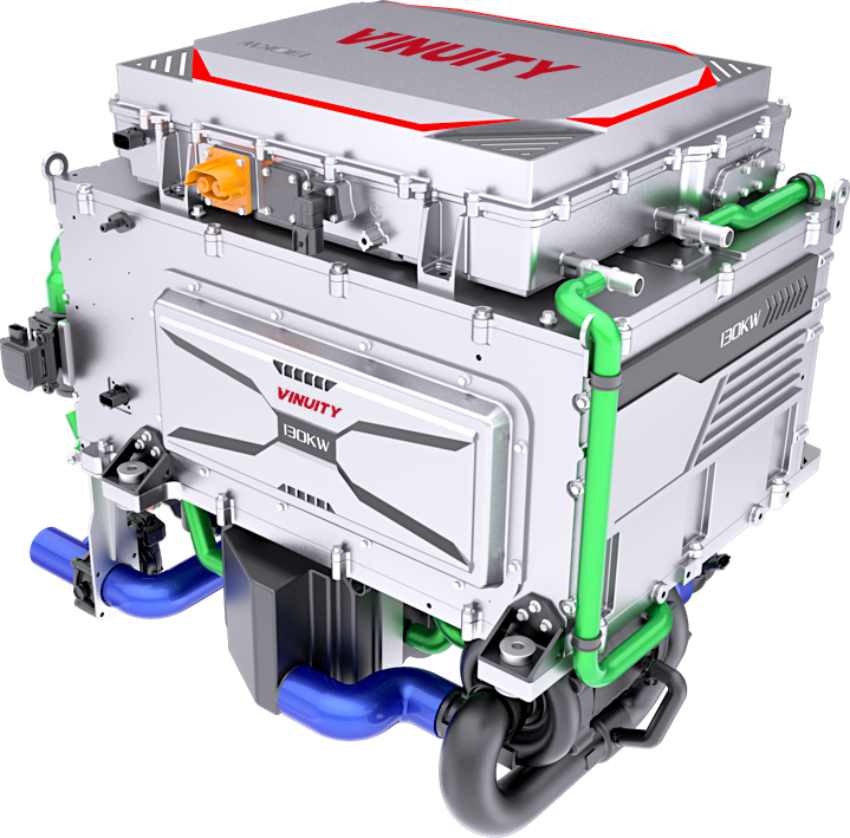
In parallel, our R&D team is developing the Paperstack platform. A next-generation fuel cell stack that merges the advantages of graphitic and metallic bipolar plates. By achieving the durability of graphite with the thinness and manufacturability of metal plates, Paperstack enables high-power density and scalable, low-cost production. A 130 kW prototype has already been validated. Once industrialized, it will support both stationary and mobile applications, harmonizing production across multiple power classes.
What are your ranges of products and services?
C.P: Our PEM fuel cell offering follows a modular structure: stacks, modules, and gensets.
The stack is the electrochemical core, converting hydrogen into electricity. Multiple stacks form a module, which includes air, hydrogen, and cooling subsystems, as well as control electronics. Adding power conditioning, batteries, and thermal management transforms a module into a fully functional genset.
This scalable approach allows us to serve customers at different integration levels, from OEMs integrating stacks into their own systems to end-users requiring turnkey solutions. Our systems cover outputs from 5 kW to over 1 MW, ensuring scalable, efficient power for a wide range of applications, from forklifts and city buses to data centers and grid support. All built on standardized, cost-effective architectures.
What is the state of the market where you are currently active?
C.P: Europe’s energy transition is entering the implementation phase. Fuel cell technology is proven, cost levels are improving, and the need for reliable, decentralized power is growing. VINUITY’s strategy is to focus first on applications that can operate independently of a hydrogen pipeline, such as stationary generators and logistics vehicles, while preparing for large-scale mobility and industrial deployment.
Our next step is to establish an R&D and service center in Chemnitz to strengthen local engineering and application development. As hydrogen availability expands across Europe, we will be ready to serve sectors like heavy-duty transport, marine, and grid balancing – ensuring that European customers have direct access to proven, scalable fuel cell solutions.
What market trends do you see?
C.P: The main challenge – and opportunity – lies in hydrogen availability. Fuel cell adoption depends on both production and distribution, which are advancing but uneven across Europe. The creation of the European Hydrogen Backbone and the ramp-up of electrolysis capacity will unlock large-scale deployment after 2030.
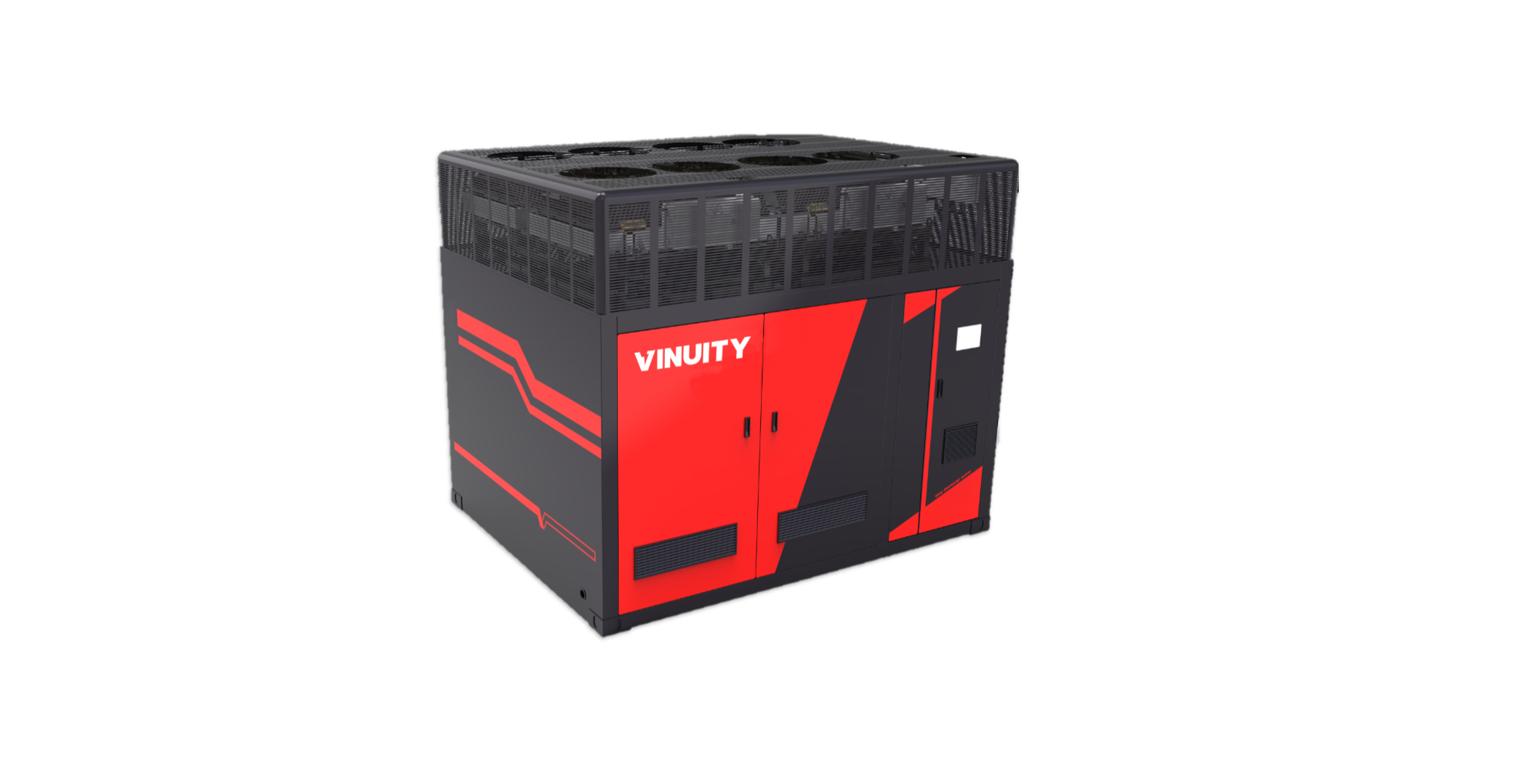
Meanwhile, we see strong potential in off-grid and hybrid power systems, EV charging support, backup energy for telecom and data centers, and energy storage for SMEs. These sectors demand resilient power without CO₂ emissions, exactly where our technology excels. We already operate a 1 MW containerized system and are ready to scale deployment as hydrogen infrastructure grows.
What are your most innovative products or services?
C.P: Our innovation lies in combining mature, field-proven technology with flexible system integration. VINUITY offers a unique level of modularity – from stack to genset – allowing customers to choose the optimal level of integration for their application. This scalability minimizes cost while ensuring technical consistency across products.
The Paperstack platform further enhances this by unifying materials and production processes, paving the way for next-generation fuel cell manufacturing. Together, these innovations enable VINUITY to deliver high-performance systems at competitive cost, fully aligned with Europe’s decarbonization and energy security goals.
What are your expectations for the end of 2025?
C.P: 2025 will be VINUITY’s first full business year in Europe. Our priorities are to complete initial product deployments, expand our customer base, and build long-term partnerships in key markets such as stationary power and industrial mobility.
We aim to demonstrate our reliability through real-world projects and strengthen trust in our technology and service capability. By the end of 2025, VINUITY will have established itself as a credible European fuel cell supplier: small in size, but strong in performance, partnerships, and purpose.