
In industrial and commercial rooftop solar, “reliability” is no longer a secondary criterion. Building owners, EPCs, and asset operators are under pressure to deploy quickly, maximize self-consumption, and avoid technical risk over the long term. In that context, reliability means more than certification compliance: it means proven durability, stable output, and confidence that the system will still perform after years of exposure to UV, humidity, wind, hail, and thermal stress.
This is exactly where HELIUP positions STYKON®.
The company’s approach is clear: lightweight should not mean fragile. While many low-weight rooftop solutions have focused primarily on low weight and LCOE consideration, HELIUP has built its proposition around a more demanding equation—lightness, industrial scalability, and long-term robustness in real operating conditions. STYKON® panels are designed for buildings with limited load-bearing capacity, while keeping the reliability standards expected from professional PV assets — Video – Stykon® Heliup: Lightweight photovoltaic solution for building rooftops.
For HELIUP’s customers, reliability is fundamentally tied to long-term value. It is about performance guarantees over 25 years and beyond, resistance to harsh environments, and a solution that reduces risk for the building owner. In other words: a system that remains bankable and operationally predictable over time.
As Julien Gaume, Chief Technical Officer and co-founder of HELIUP, explains: “For our customers, reliability is not a marketing claim. It is the assurance that the roof remains safe, the system remains stable, and energy production remains predictable for decades.”
That positioning is especially relevant in the low-load rooftop segment, which represents a major untapped market. Traditional PV systems are often too heavy for many existing commercial and industrial roofs. HELIUP’s lightweight design directly addresses this constraint while preserving the protective and durability functions usually associated with more conventional module architectures. The company highlights a key differentiator here: its STYKON® solution relies on thin glass and an innovative bonding-based installation concept, rather than a fully composite/polymer approach that has, in some market cases, raised concerns around long-term reliability.
The performance of STYKON® under stress conditions is central to the reliability narrative. Panels are monitored in HELIUP’s own R&D laboratories and in independent French and European labs, through both accelerated aging chambers and outdoor rooftop exposure. HELIUP reports indoor results that go significantly beyond IEC 61215/61730 standard qualification thresholds. The modules maintain performance after 4x UV exposure and 3x damp-heat testing, resists 55 mm hailstones (vs. 25 mm IEC benchmark), meets BRoof (T3) fire requirements, mechanical challenges, and achieves IEC 61701 Class 5 for salt-mist resistance. Its “no-wind-catching” fixing system also enables installation in Zone 4 wind areas, reinforcing reliability in harsh environments. The combined methodology—indoor accelerated testing plus in-situ real-world monitoring—enable HELIUP to support a performance guarantee above 89.4% after 25 years, a level the company positions as highly competitive for the photovoltaics segment.
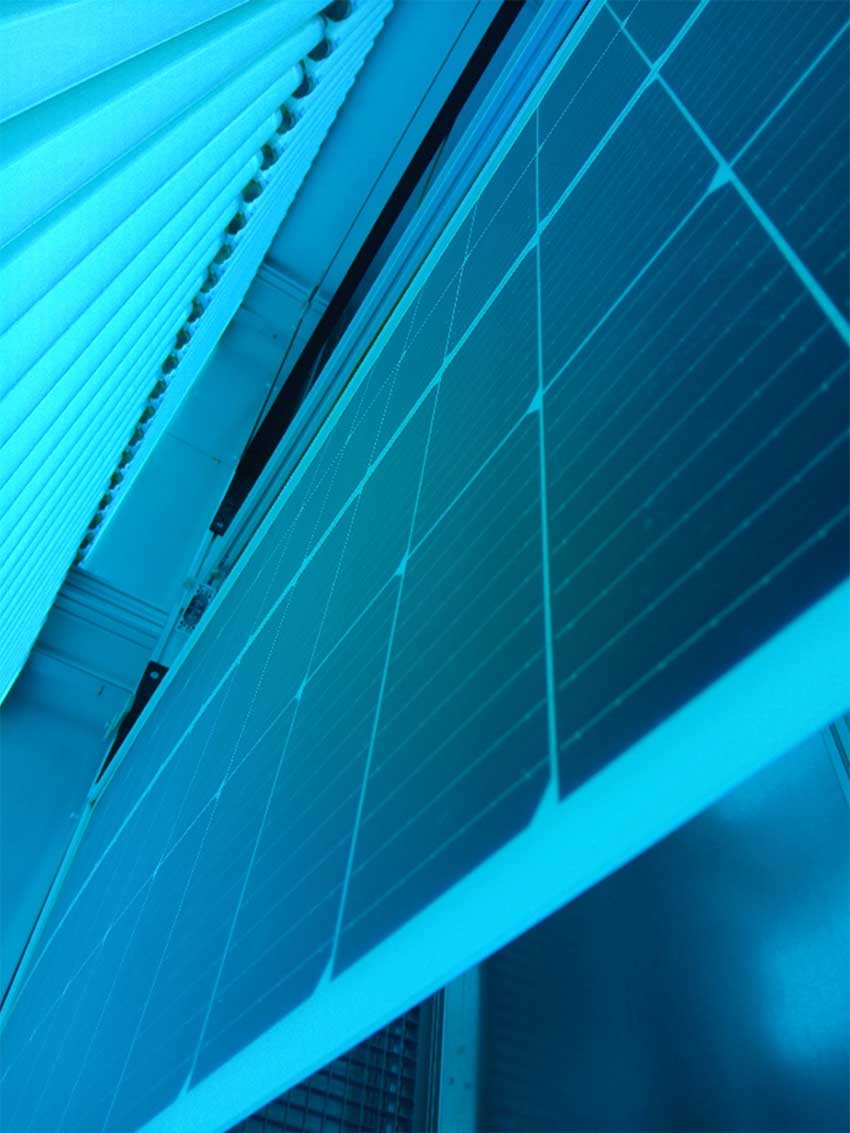
Credit: CERTISOLIS
Julien Gaume summarizes this approach in practical terms: “Monitoring is essential because reliability is a trajectory, not a snapshot. We need to understand how a technology evolves over time, in the lab and on real roofs, to guarantee what matters most to customers: stable performance.”
This emphasis on robustness is not accidental. HELIUP states that STYKON® is the result of three years of R&D and several patents, with the reliability objective embedded from the earliest design stages. The logic is industrial: reliability is not added at the end through testing; it is designed into materials selection, panel architecture, and manufacturing processes from the beginning.
HELIUP’s reliability approach is also reflected in its industrialization strategy. Rather than moving directly from prototype to mass deployment, HELIUP followed a staged industrialization path. After three years of R&D, the company launched a 10 MWp pilot line to certify the technology and enter the French market. This intermediate step allowed HELIUP to collect customer feedback, validate installation practices, and strengthen product maturity before scaling. Building on that experience—and on growing market demand—the company moved to industrial scale with a 100 MWp factory in France, a milestone also reflected in HELIUP’s company timeline and recent institutional communications.
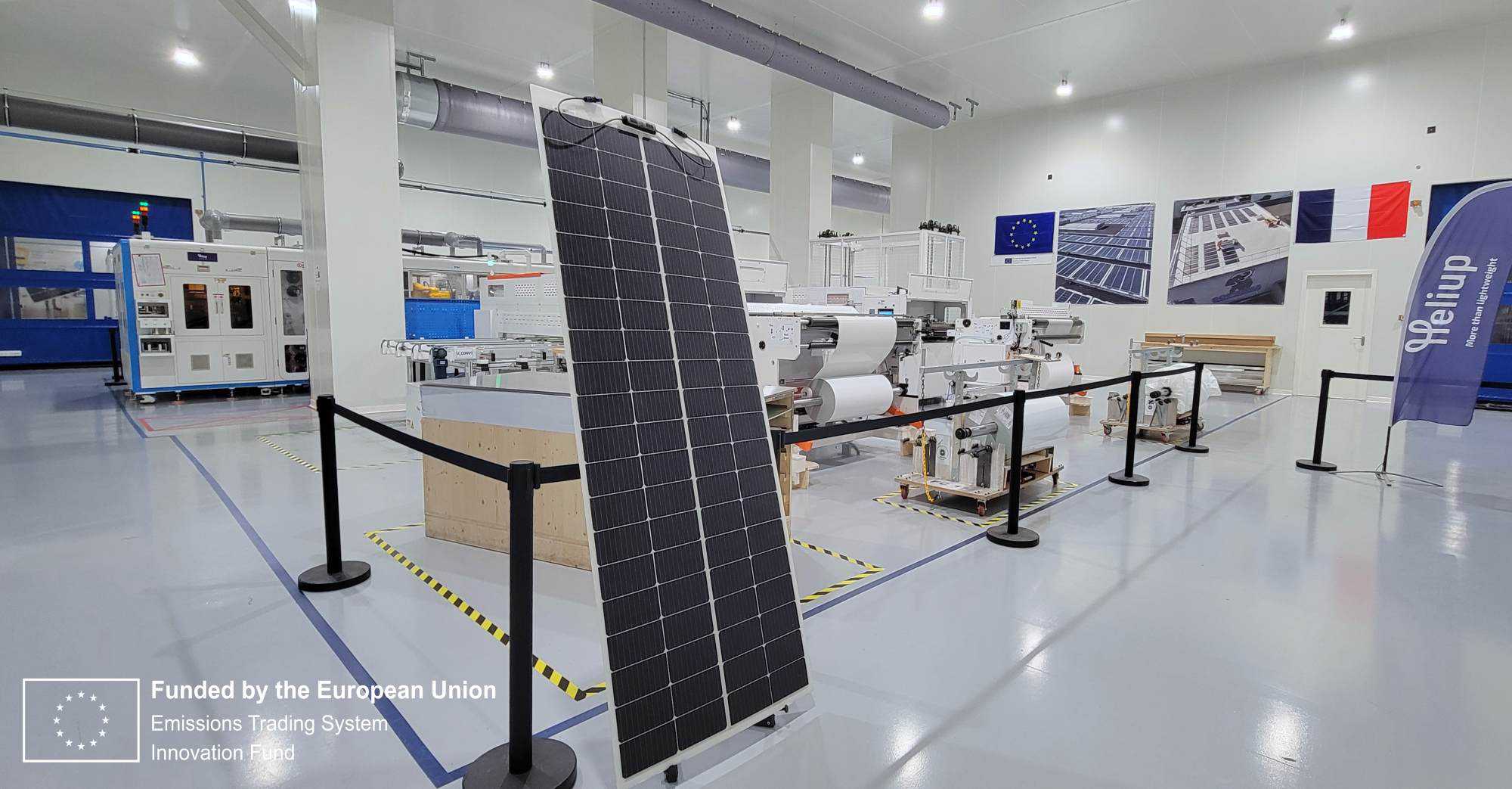
Credit: HELIUP
Ultimately, HELIUP’s message on reliability is not limited to module survivability. It is broader: reliability as a condition for accelerating rooftop solar in segments that have historically been difficult to equip. If the industry wants to unlock more commercial and industrial roofs, lightweight solutions must be both easy to deploy and engineered for decades of operation.
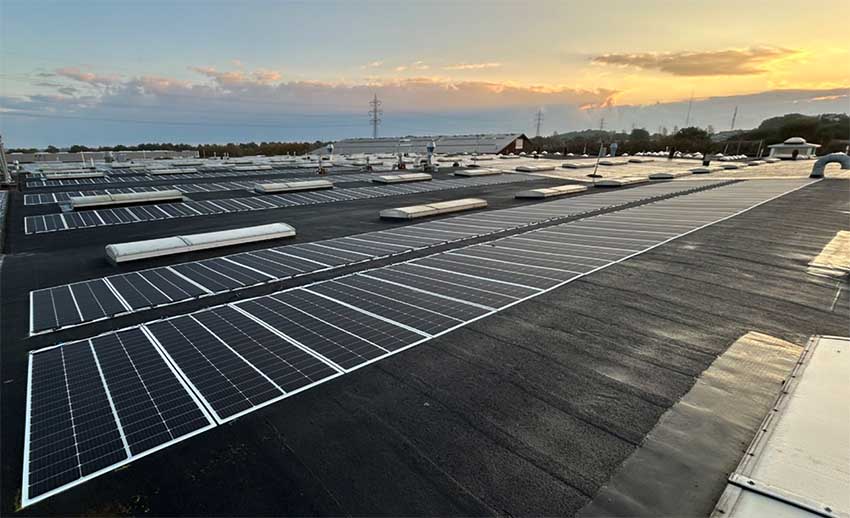
Credit: RISSKOV TEKNIK & SOLAR APS – MUNICIPALITY OF AARHUS
As Julien Gaume puts it: “The challenge was never just to make a lighter panel. The challenge was to make a lighter panel that professionals can trust for 25 years and more.”
In today’s solar market, that distinction is decisive. Reliability is no longer a passive expectation. It is the product.