
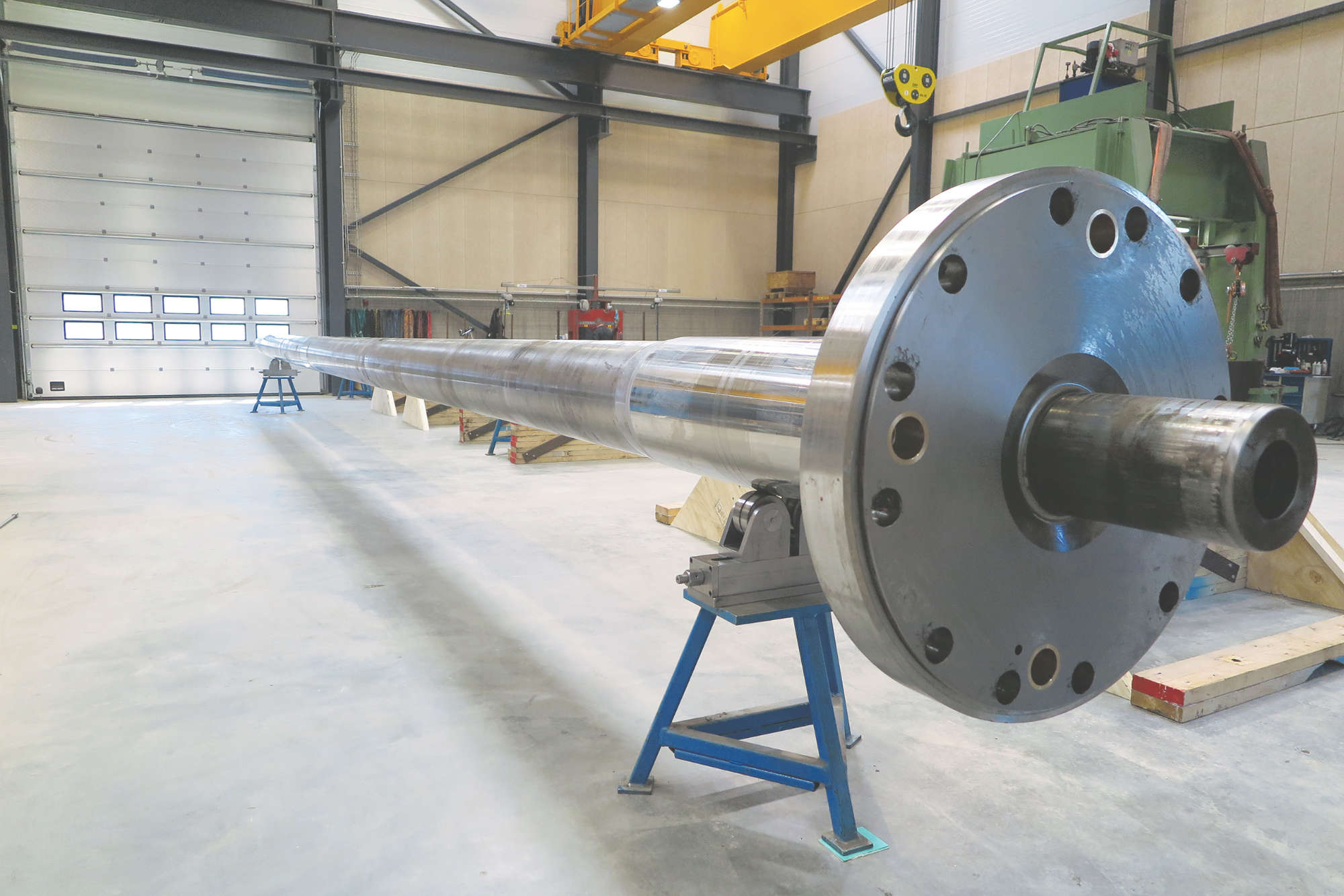
When a vessel suffers damage to its propulsion shaft line or rudder arrangement—often due to grounding or impact—the immediate assumption is often replacement. However, this is not always the most efficient or commercially viable solution.
In damage scenarios, time is critical. Off-hire periods and operational delays can result in significant financial losses for shipowners and operators. Cold straightening offers a fast and reliable repair alternative that minimizes downtime while restoring full functionality.
Cold straightening should therefore be considered as a first-line repair option. As a fully class-approved method, it provides a permanent solution—significantly reducing both repair time and cost compared to manufacturing new components.
Damage to shafts and rudder stocks is not only caused by external impacts. In some cases, deformation can occur due to operational conditions, such as insufficient maintenance. Overheating caused by bearing failure or inadequate lubrication can introduce thermal stress into the shaft, leading to distortion over time. In such cases, cold straightening provides an effective method to restore geometry without compromising material properties.
MarineShaft A/S, based in Denmark, is a recognized specialist in cold straightening of propeller shafts, intermediate shafts, and rudder stocks. With approximately 100 skilled employees and decades of experience, the company supports shipowners, shipyards, and operators worldwide with both workshop-based and on-site repair solutions.
All cold straightening is carried out in a controlled workshop environment using specially designed hydraulic presses. We can straighten shafts from Ø20 to 1,500 mm in diameter, with no limitation on length. Our cold straightening technique has been class-approved since 1972, reflecting decades of proven performance and continuous development.
Components are transported to MarineShaft workshop by road, sea, or air, ensuring a significantly faster turnaround compared to new manufacturing, where material sourcing and production can take months.
A common concern when considering cold straightening is whether the repair meets the same standards as replacement. In practice, the method is fully approved by all leading classification societies, and each repair is certified individually in close cooperation with class.
As the process is performed without heat, material stress is kept to an absolute minimum, preserving the component’s original mechanical properties. To ensure full integrity, all components undergo comprehensive inspection, including non-destructive testing (NDT) for crack detection both before and after straightening. Ultrasonic testing is carried out when required, and all inspections are performed in collaboration with an independent third-party inspection company, Force Technology, ensuring full transparency and compliance with class requirements.
MarineShaft has successfully carried out straightening of severely damaged components, including propeller shafts with deviations of up to 1,000 mm from the centerline. Following repair, alignment tolerances of less than 0.05 mm are achieved—demonstrating the precision and reliability of the method, even in extreme cases.
For operators facing high replacement costs and critical downtime, cold straightening represents a proven, technically sound solution that restores vital components quickly and safely—while maintaining full compliance with class requirements.
For further industry perspective from insurance company GARD, you find a link below:
https://gard.no/en/insights/cold-straightening-bent-shafts-may-save-time-money
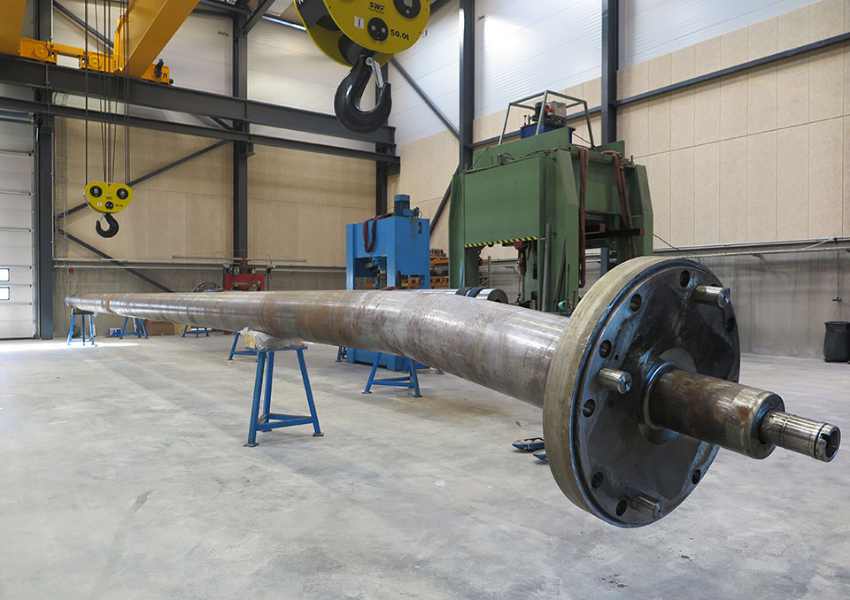
Case: Severe Shaft Damage Restored to Class-Approved Condition
A nearly 19-meter-long propeller shaft experienced a deflection of 7.7 degrees—equivalent to approximately 250 mm deviation from the centerline at its most critical point. The extent of the damage raised significant doubts about whether repair was feasible.
The case involved the ferry M/F Paglia Orba, operated by Corsica Linea SAS, which sustained damage during port entry in Bastia in January 2021. As a result, the vessel was taken out of service and drydocked at CMR Tunisia Ship Repairs.
Inspection confirmed severe damage to both the propeller shaft and the intermediate shaft. Based on documented repair experience and technical capability, MarineShaft was selected to carry out a complete cold straightening and repair of both components.
The shafts were transported to Denmark, where non-destructive testing (NDT) was conducted by an independent third party under supervision of a Bureau Veritas (BV) surveyor. The inspections confirmed that the material integrity remained intact, allowing the repair process to proceed.
The scope of work included:
- Cold straightening and repair of one intermediate shaft (Ø390 x 7,450 mm)
- Cold straightening and repair of one propeller shaft (Ø1058/421 x 18,875 mm), including twin tube
- Restoration of bearing journals using laser cladding
Following straightening, repair, and reassembly, a pressure test of the twin tube was carried out and witnessed by the original equipment manufacturer, Kongsberg.
Despite the severity of the initial deformation, both shafts were successfully restored to full class-approved condition.
Learn more about MarineShaft at their website www.marineshaft.com