
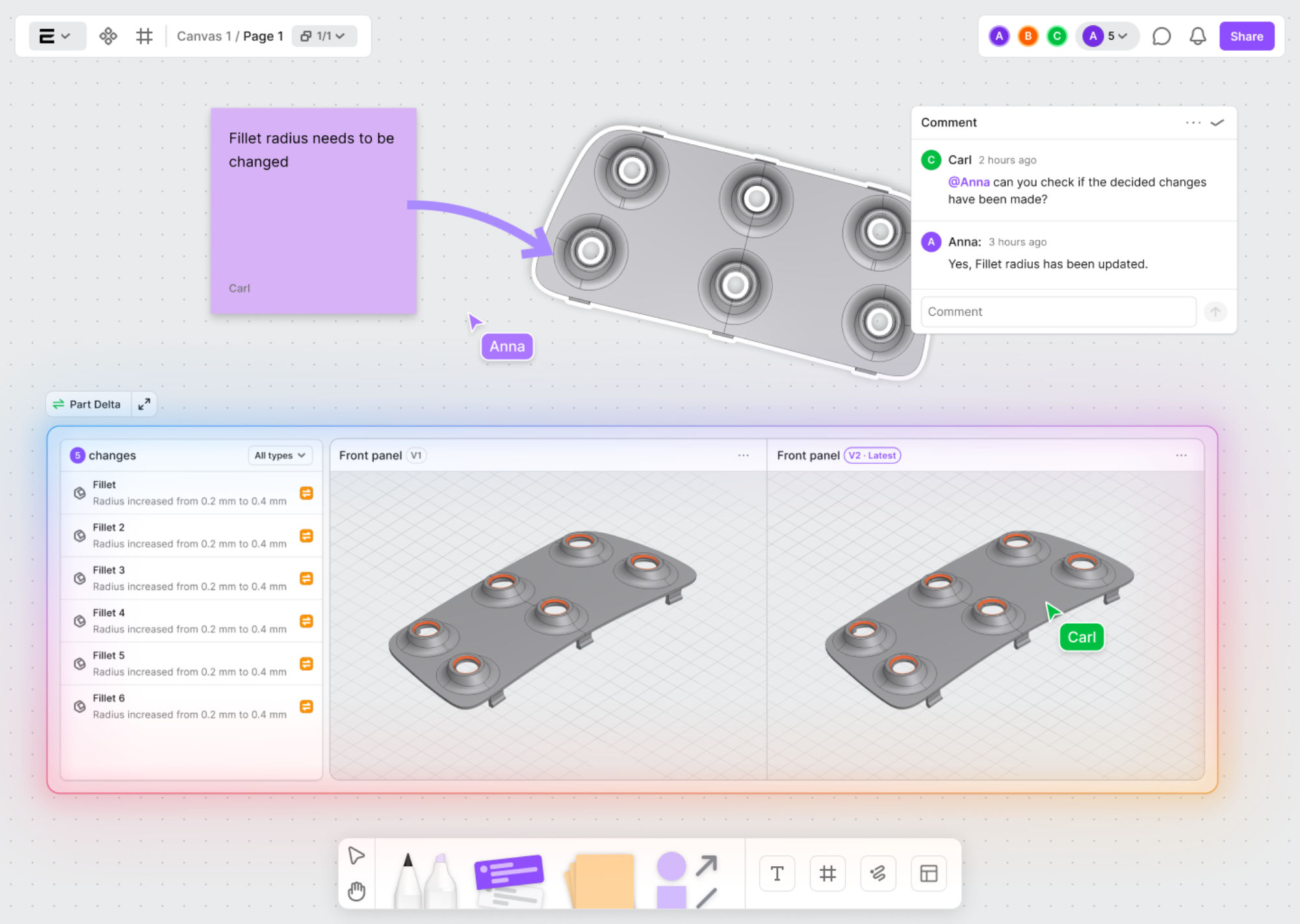
Encube is an AI platform where hardware teams come together to analyze designs, gain insights and shape ideas to invent better products faster.
Interview with Hugo Nordell, Co-Founder & CEO of Encube.
A brief description of the company
Hugo Nordell: Since up to 80% of a product’s cost gets locked in during the design phase, we help hardware teams surface the tradeoffs between form, fit, function and cost before the design is frozen.
Europe is attempting to rebuild an industrial base it spent decades outsourcing, at a time when the engineers who carry the deepest manufacturing knowledge are retiring faster than they can be replaced. The pressure on companies has never been greater. Getting products to market faster and at the cost the business case demands are the two factors that determine whether a company stays competitive or falls behind. The software that exists today was built for a world that no longer exists and the companies that close that gap now will be the ones that define what hardware development looks like for the next decade.
What are the main areas of the company’s activity?
H.N: At the core of what we do is AI built specifically for hardware development. Where most AI learns patterns in data, ours reasons from physics and manufacturing constraints to deliver outputs hardware teams can actually depend and rely on. It analyzes 3D models and technical drawings, flags manufacturability risks and cost drivers across design revisions and generates clear actionable next steps the entire team can act on. The result is shorter time to market, lower cost of production and more room to explore design directions that would otherwise never get considered.
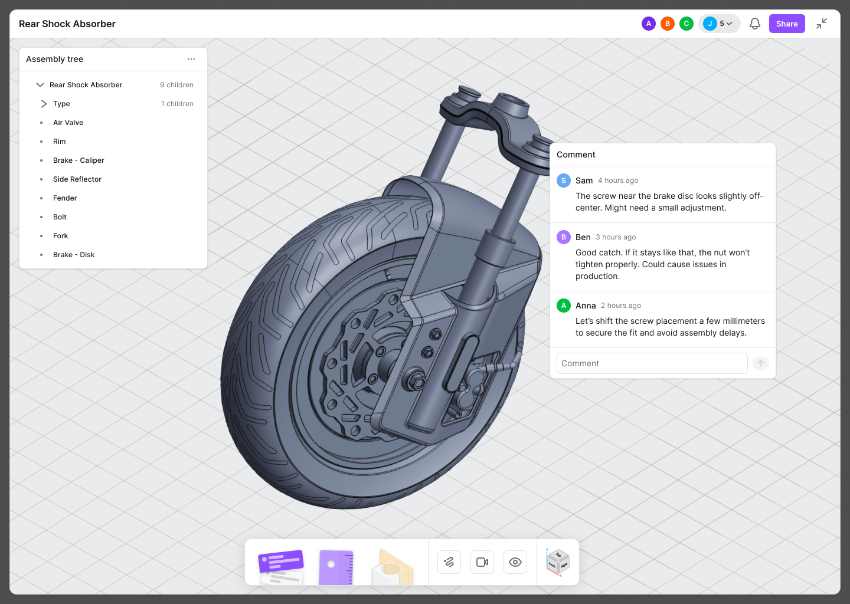
Hardware development has always demanded that many disciplines work in concert, but the tools teams rely on were never built with that in mind. Encube gives everyone involved, from mechanical design engineers and manufacturing leads to cost engineers and suppliers, a shared environment where the right people are always in the same conversation with the information, they need to make better design decisions faster.
What’s the news about new products/services?
H.N: The most significant step forward this year has been in agentic AI. Too much of a hardware engineer’s time goes into manual and time-consuming work that drives up costs and slows things down. Our AI takes that off their plate so engineers can spend their time on the problems they are actually passionate about and where their judgment makes a real difference.
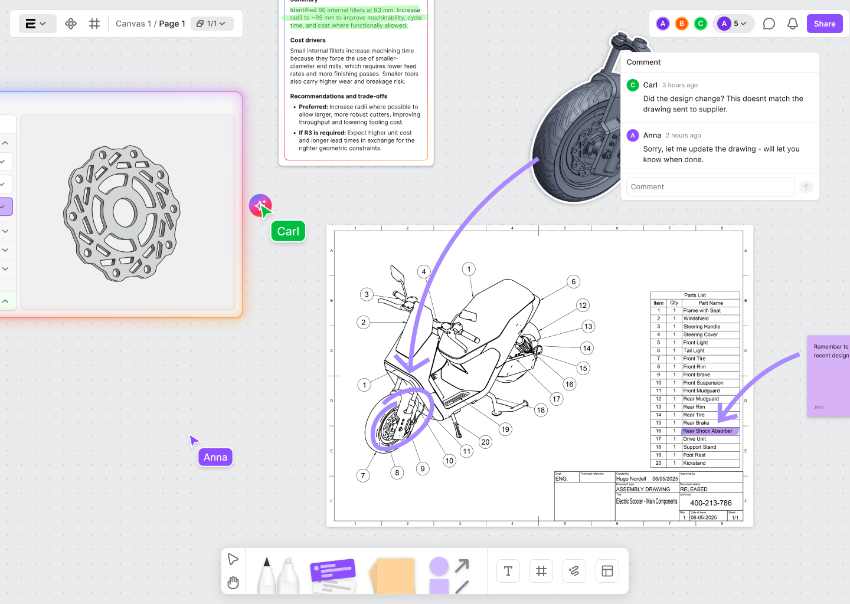
In practice that means AI that autonomously analyzes designs across revisions, identifies how changes affect the balance between form, fit and function, flags manufacturing risk and excess cost before designs are frozen and generates clear actionable next steps the entire team can act on. A major Swedish truck manufacturer we work with reduced manual design review and manufacturing handover time by more than 70% with Encube.
What I am most encouraged by is not the technology itself but how customers are using it. Teams are not treating Encube as a periodic check or a handoff tool. They are using it as a shared decision surface in their day to day work, which is exactly the behavior we set out to create from the beginning.
What are the ranges of products/services?
H.N: As covered above, Encube operates as a single integrated platform combining AI built for hardware with a shared visual canvas where hardware teams develop products together. We come in early in the design phase because that’s where the ability to act on insight is highest. Without that early visibility, teams only discover how their design decisions affect manufacturability and cost once the design hits the shop floor, at which point they are left choosing between absorbing production costs that were never part of the business case or going back to the drawing board and putting the market launch at risk. We go deep on the bottlenecks where getting it wrong drives the most cost and delay and solve them in a way that scales across teams, organizations and industries.

What is the state of the market where you are currently active?
H.N: Manufacturing is being reshaped by three structural shifts that are converging at the same time. Geopolitical realignment is incentivizing countries to rebuild supply chains and manufacturing capabilities they spent decades outsourcing. The talent carrying the deepest manufacturing knowledge is retiring faster than it can be replaced, and one third of open job positions across the industry are never filled. Tightening European sustainability regulations are requiring manufacturers to rethink how products are designed and built at a time when the complexity of what needs to be built is only increasing while release cycles are getting shorter.
Yet the software that hardware teams rely on to make that happen has not meaningfully changed since the 1990s. It was built for a world where a single expert controlled access to design data and that bottleneck shapes everything downstream. Every company I talk to has more work than they can handle so the challenge is not a lack of orders. It is the lack of people and tools capable of keeping up with the pace modern hardware development demands.
What can you tell us about market trends?
H.N: The single biggest shift I am seeing in hardware development is that AI has moved from being a narrative to being a measurable lever for companies under real pressure. When you cannot fill a third of your open positions and your most experienced engineers are approaching retirement, the willingness to try something fundamentally different grows considerably.
Today, the building blocks needed to actually close the feedback loop in hardware development are finally mature enough to apply. In software, the feedback loop has always been tight. You have a compiler, automated tests and an execution environment that tells you whether something works. Hardware has never had that equivalent and in its absence the industry has had to rely on the knowledge living in the heads of the people doing the work. AI that reasons from physics and manufacturing constraints can now start to fill that role, not by replacing the engineers who remain but by giving them the leverage they need to do more of the work that actually matters.
What estimations do you have for the beginning of 2026?
H.N: Since January 2026 we have quadrupled the speed of activating new customers on the platform and cut the time from lead to live by 50%. Enterprise logos make up more than 90% of our funnel which tells us that we are solving a problem that matters at scale and not just for early adopters willing to take a bet on new technology. One clear milestone for us is moving into general availability before the end of 2026 and beyond that our goal is to establish design-time manufacturing intelligence as a standard layer in the hardware development workflow. The companies that move now will be the ones that define what hardware development looks like for the next decade and that sense of urgency is something we feel every day.