
Industrial innovation is often measured in patents, performance curves or production capacity. At HELIUP, it is measured in a more tangible way: in projects that can finally happen. Across Europe, thousands of commercial, logistics and industrial buildings have roofs large enough to produce renewable electricity, yet too technically constrained for conventional photovoltaic systems. The paradox is striking: some of the most relevant surfaces for solar energy — already artificialized, close to consumption and free from land-use conflict — remain largely untapped.
HELIUP was created to remove that bottleneck. Its STYKON® lightweight photovoltaic module reduces system weight by 60% compared with conventional panels while preserving high standards of performance and durability. Designed and manufactured in France, it can be installed quickly on large flat roofs, without structural reinforcement and without interrupting the building’s operations. For customers, this turns solar from a theoretical opportunity into an executable industrial project.
“We do not define innovation by novelty alone. We define it by the number of projects we unlock: roofs that were excluded from solar can now become energy-producing assets without compromising reliability, safety or the building envelope,” says Julien Gaume, Technical and Innovation Director at HELIUP.
The impact is practical, measurable and immediate. Every kilowatt-peak installed with HELIUP is capacity made possible by innovation. Every megawatt-peak deployed on an existing roof helps preserve an hectare land that would otherwise be needed for ground-mounted solar. Customers can reduce electricity bills through local self-consumption, stabilize operating expenditure against volatile energy prices, generate long-term revenue from electricity sales and improve the carbon performance of their real estate.
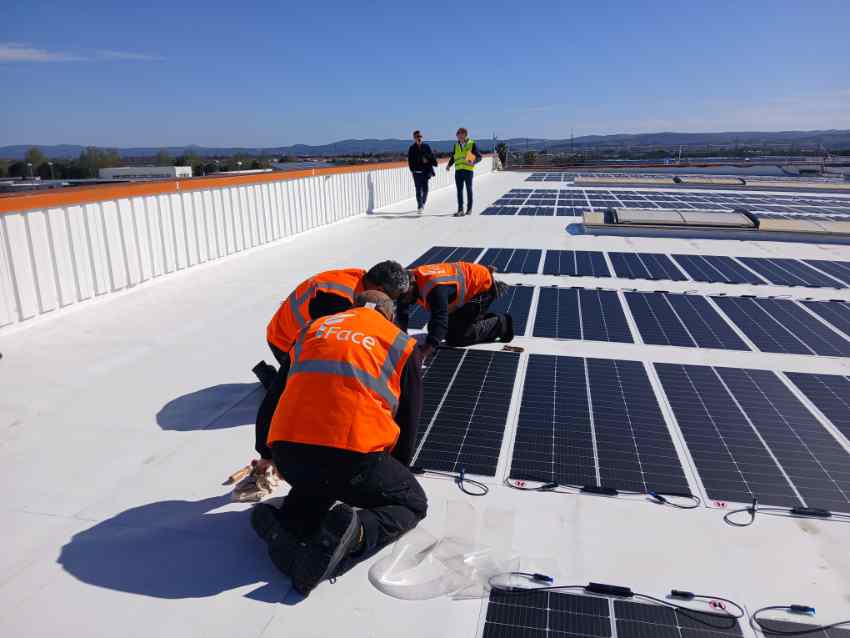
A recent project on a commercial store in Clermont-l’Hérault, South of France illustrates this approach. HELIUP’s Stykon® solution played a key role in the success of an innovative solar retrofit project. The challenge was clear: equipping a flat roof with limited load-bearing capacity, without structural reinforcement nor interrupting the building’s activity, while replacing a failing waterproofing and photovoltaic systems originally installed in 2010. The result is striking: just 600 m² of Stykon® panels now deliver the same energy output as the previous 1,300 m² installation. And with the remaining roof area still available, a second photovoltaic project is already being considered for the building.
“This is the very first time I’ve used this solution… and it won’t be the last,” says Christophe Lacouche, Project Manager at EREA INGENIERIE
This is where HELIUP’s industrial innovation creates customer value. It does not ask building owners to choose between energy performance and operational continuity. It brings together lightweight design, robust certification, fast installation and compatibility with the building envelope. Stykon® is designed for simple bonding directly onto the building, with adhesives adapted to the roofing system. The module is certified for key photovoltaic standards and integrated within assessed roofing processes, supporting the insurability and reliability that industrial customers require.
“For our customers, impact means lower electricity bills, controlled OPEX, regulatory compliance and the decarbonization of their buildings. But it also means something more strategic: turning an existing roof into a long-term energy asset, enhancing the value of their real estate, without adding complexity to their operations,” says Maryline Joanny, Sales Director at HELIUP.
The sustainability benefits also go beyond energy production. HELIUP’s approach reduces material use in the solar plant (up to 75% less than conventional photovoltaic systems), limits the need for heavy structural works and prioritizes artificialized surfaces rather than new land. In the company’s view, a low-carbon solar solution only reaches its full value when it is durable, insurable and economically competitive over time. Sustainability is therefore not a marketing layer; it is part of the business case.
Customer collaboration is central to this model. From the first feasibility studies, HELIUP works with building owners, engineering offices, waterproofing specialists, installers and insurers to align technical constraints with economic objectives. This ecosystem approach is essential because rooftop solar is not just an energy project: it is also a building, safety, insurance and operations project. By working with its partners, HELIUP connects photovoltaic innovation with the expertise of the building envelope.
Digitalization further reinforces the impact. Monitoring systems make it possible to supervise installations, anticipate maintenance needs and maximize performance over time. Field feedback, customer satisfaction surveys and on-site experience are fed back into product and process iterations, ensuring that innovation remains grounded in operational reality.
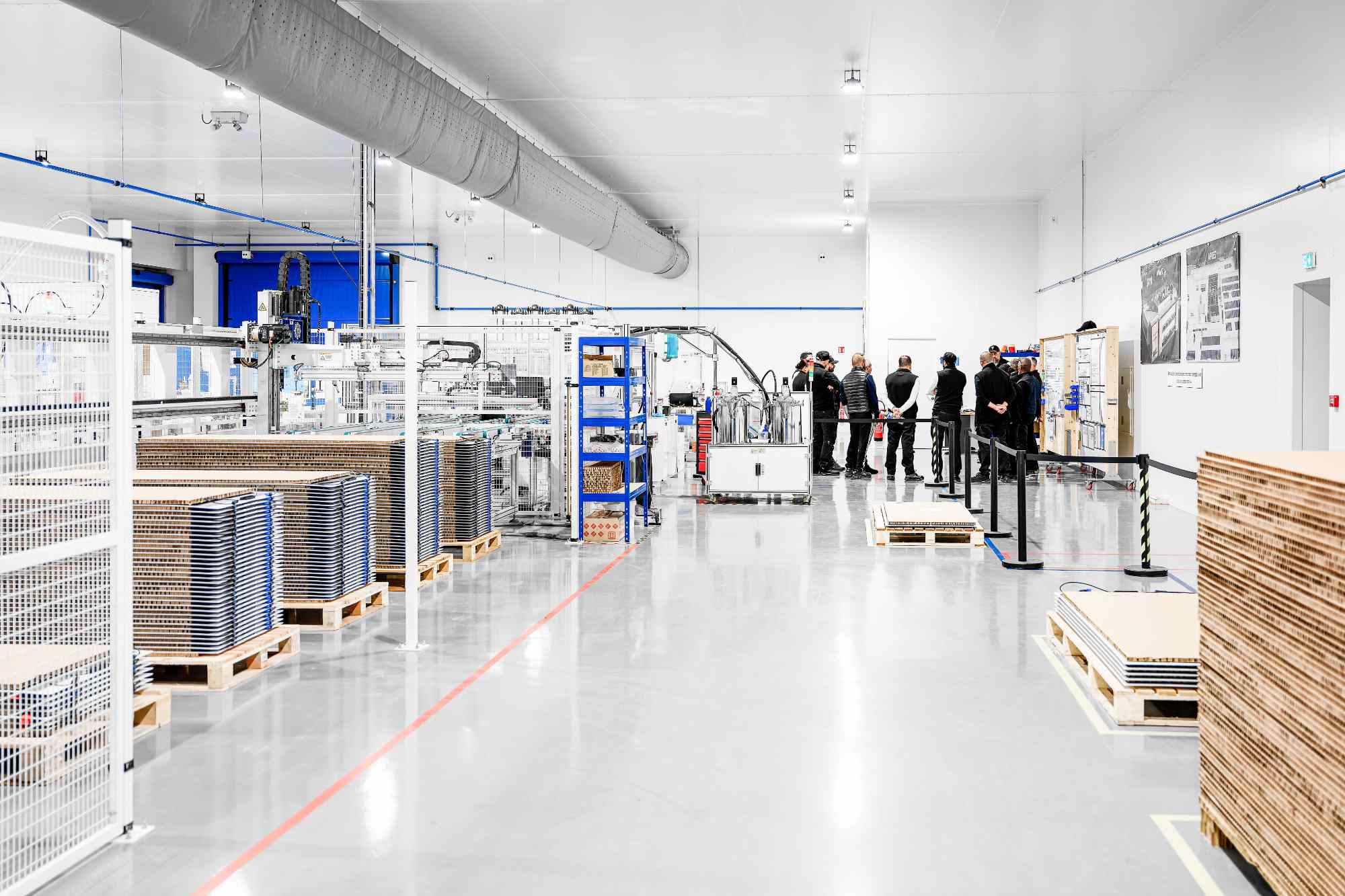
Looking ahead, the trends are clear: self-consumption will become more widespread, collective energy models will accelerate, storage will improve the value of surplus production, and regulatory pressure to decarbonize buildings will intensify. With its 100 MWp factory, HELIUP is preparing expanding use cases and building strategic partnerships to scale deployment in Europe.
In a market where many solar projects still stop at the feasibility stage, HELIUP’s contribution is to make the impossible installable. That is real industrial impact: unlocking existing roofs, preserving land, lowering energy costs and helping customers turn their buildings into productive assets for the energy transition.