Since 1991, tbm has specialized in safety technology for industrial trucks, operating under strict manufacturing inspections by TÜV Bayern.
Stefan Weiand, Sales Europe at tbm hightech control GmbH, outlines how the German industrial safety pioneer delivers long-term durability and risk reduction across demanding warehouse and intralogistics environments. Weiand explains how integrating advanced technologies, such as 3D image evaluation, Ultra-Wideband (UWB) tracking, and dynamically adapting protection fields, allows solutions like the GM-107cpu narrow-aisle personal protection system to safeguard personnel without hindering material flow or operational productivity.
How do you design your solutions to deliver reliable performance over the long term, particularly in demanding industrial environments?
Stefan Weiand: Our products are developed for everyday industrial use, so reliability has to be part of the design from the very beginning. Many of our systems are installed on industrial trucks and operate every day under demanding conditions.
For us, it is important to develop solutions that are robust, practical and reliable over the long term. Our experience in industrial safety technology since 1991 plays a major role here. We know the environments our customers work in and take these real operating conditions into account during development.
What are the key factors that determine the durability and service life of your products or solutions?
S.W: There is not one single factor. It is the combination of good engineering, reliable components, proper manufacturing and thorough testing.
But experience is just as important. Over the years, you learn what really matters in daily operation. Feedback from our customers and service technicians helps us understand where products are exposed to particular stress and where we can improve them.
How do you ensure that your solutions can withstand challenging operating conditions such as heavy loads, continuous operation, temperature variations or other demanding factors?
S.W: Our systems are designed specifically for industrial environments. Warehouses and production facilities are not laboratory conditions. There can be dust, vibration, temperature changes and intensive operation over many hours.
That is why our products and electronic components are tested before they are put into use. We also pay close attention to the actual application. A system has to work reliably where the customer needs it, not just under ideal test conditions.
How do your engineering and development processes contribute to improving the long-term reliability of your solutions?
S.W: Development, production and service work closely together at tbm. This is important because practical experience from the field can flow directly back into product development.
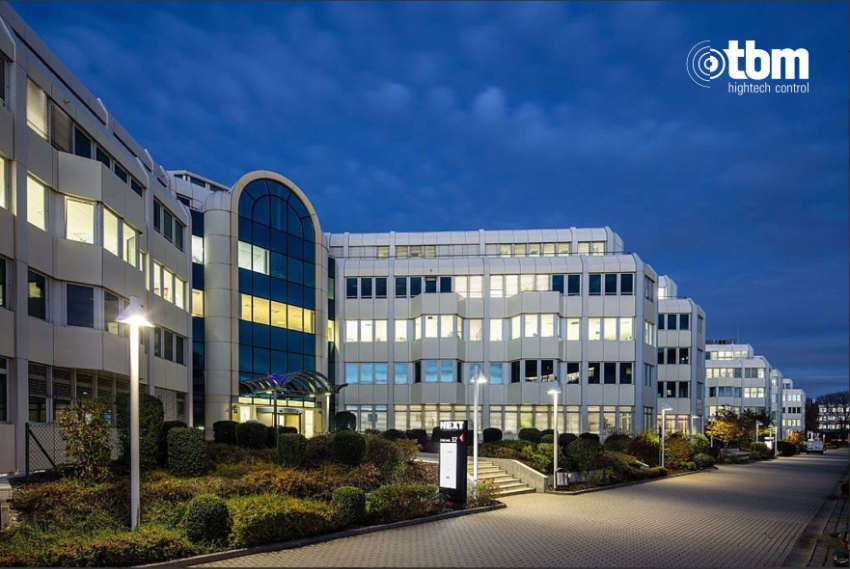
When our technicians or customers identify something that can be improved, this information is valuable for us. We can use it for further development of existing products as well as for new solutions.
In my view, this continuous exchange between development and real-world application is one of the reasons why our systems have proven themselves over many years.
What role do material selection, component quality and manufacturing standards play in ensuring durability?
S.W: A very important role. Especially with safety-related products, we cannot compromise on component quality or manufacturing.
We have established quality processes covering our production and customer service. Our manufacturing is also subject to regular inspection by TÜV Bayern.
At the end of the day, customers need to be able to rely on our systems every day. That starts with the components we use and continues through manufacturing, testing and final installation.
How do you approach maintenance and serviceability to help customers extend the operational life of your solutions?
S.W: For us, good service does not end when the system has been installed.
We have experienced service technicians who support our customers with installation, maintenance, troubleshooting and repairs. Our technical support can also analyse many issues remotely, which often saves time and avoids unnecessary downtime.
This is particularly important for customers operating larger fleets. If a problem occurs, they need a quick and practical solution.
How do you balance initial investment with long-term value, reliability and total cost of ownership for your customers?
S.W: From a sales perspective, this is something we discuss with customers quite often. The cheapest solution at the time of purchase is not necessarily the most economical solution over several years.
Our systems are intended to protect people, vehicles, infrastructure and goods. Preventing even one serious accident or collision can already make a considerable difference.
We therefore look at the complete picture: reliability, service life, maintenance, availability and, of course, safety. The aim is to provide a solution that makes economic sense for the customer over the long term.
What technologies or innovations are you implementing to improve the durability, reliability or lifecycle performance of your solutions?
S.W: We continuously develop our systems and also integrate new technologies where they provide a real benefit for the customer.
This includes intelligent sensor technology, 3D image evaluation, Ultra-Wideband technology, dynamic protection zones and communication between different safety systems.
An important point for us is that innovation must solve a real problem. A new technology is only useful if it makes an application safer, more reliable or easier for the customer to operate.
How do you gather feedback from customers and real-world applications to continuously improve the long-term performance of your products?
S.W: We are in direct contact with our customers through sales, technical support and our service technicians. This gives us a lot of feedback from real applications.
For me personally, customer visits are particularly valuable. You see how the systems are actually being used and often understand requirements much better when you are standing directly in the customer’s warehouse or production facility.
We take this feedback back to our technical departments. This close connection between customers, sales, service and development helps us continuously improve our products.
Can you share an example of how one of your solutions has delivered long-term value or reliability in a particularly demanding industrial application?
S.W: A good example is our mobile personal protection system for industrial trucks in narrow aisles.
Narrow-aisle warehouses are demanding environments. Trucks and people operate in confined areas, and the safety system has to work reliably every day without unnecessarily restricting the customer’s material flow.
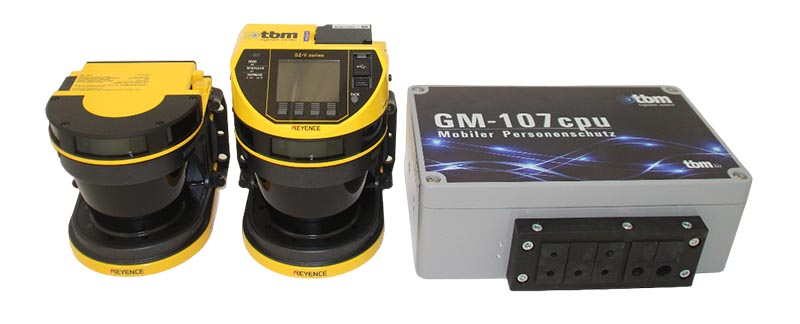
Our GM-107cpu was developed specifically for this type of application. The system uses dynamically adapting protection fields and can react to the operating situation of the truck.
For the customer, the important point is that safety and productivity work together. A good safety system should protect people reliably, but at the same time it should allow the operator to continue working efficiently. That is exactly what we try to achieve with our solutions.
Can you share an example of how one of your solutions has delivered long-term value or reliability in a particularly demanding industrial application?
S.W: A good example is our mobile personal protection system for industrial trucks in narrow aisles.
Narrow-aisle warehouses are demanding environments. Trucks and people operate in confined areas, and the safety system has to work reliably every day without unnecessarily restricting the customer’s material flow.
Our GM-107cpu was developed specifically for this type of application. The system uses dynamically adapting protection fields and can react to the operating situation of the truck.
For the customer, the important point is that safety and productivity work together. A good safety system should protect people reliably, but at the same time it should allow the operator to continue working efficiently. That is exactly what we try to achieve with our solutions.