
For over 30 years, Minus K Technology has engineered 0.5 Hz passive mechanical vibration isolators designed to safeguard sensitive instrumentation—including Atomic Force Microscopes (AFM), Scanning Electron Microscopes (SEM), and optical interferometers—from low-frequency environmental noise. Operating entirely without electricity, compressed air, magnetic fields, or internal fluids, these negative-stiffness systems deliver superior isolation compared to active electronic force cancellation. Backed by Finite Element Analysis (FEA) and conservative engineering, Minus K isolators rely on frictionless flexural movement to achieve zero maintenance and decades of operational reliability, as proven in extreme scientific missions like NASA’s James Webb Space Telescope (JWST) ground testing, the GEO600 gravitational wave detector, and the CUORE/CUPID cryogenic neutrino experiments.
Vibration isolators are shock absorbers for sensitive instruments such as Atomic Force Microscopes (AFM), Scanning Electron Microscopes (SEM), Micro-Hardness Testers, Interferometers, Stitching Scopes, Spectrometers, Satellite Testbeds, etc.
Minus K Technology has been a manufacturer of 0.5 Hz passive mechanical vibration isolators for over 30 years. 0.5 Hz refers to the resonant frequency of the isolator. The lower the resonant frequency is, the better the isolation performance will be.
Our isolators DO NOT use any electricity, air, electronic components, magnets or fluids. They provide better isolation performance than active (electronic force cancellation) or air systems.
There are no motors, pumps or chambers, and no maintenance because there is nothing to wear out. Minus K’s vibration isolators operate purely in a passive mechanical mode. There is nothing to oil or replace and there are no consumables or power requirements.
Conservative Design
Minus K designs our isolator parts very conservatively. Many of the parts are simple, oversized or specified at a standard, widely available, material thickness. This keeps machining time and costs down to minimum.
Minus K works with our shops to implement slight revisions of parts, should it become obvious that a small change could make a part easier to make, and/or less costly. This is an ongoing effort and part of the sustaining engineering that is done at Minus K Technology.
The isolators and the parts within have gone through extensive testing, using hand calculations, Finite Element Analysis (FEA) as well as real-world transmissibility tests. The FEA testing allows Minus K to make sure that the parts, and ultimately the entire system be more robust, lasting for decades.
The key components, springs and flexures are also designed conservatively.
Minus K works with spring manufacturers to come up with springs that will be operating in a range that gives them essentially limitless life.
Flexures are elements that control how the isolator moves and also allow the control of the isolator’s stiffness. While they take large loads, the flexures are designed with a readily available alloy and are heat-treated to make them incredibly strong while still remaining flexible.
As the isolators are working, there is no translational (rubbing) motion occurring. This means essentially zero friction on the parts taking the load. It is flexural motion, not translational or rotational (angular rubbing). When the isolators are being used, they are barely moving, most vibrations they are removing are not even visible to the naked eye.
The only part that moves with friction is the drivetrain that controls the support spring. This however, is a very low duty cycle adjustment and is permanently lubricated when built. There are no “user-serviceable” parts in the isolator.
Multiple Direction Isolation
Minus K’s negative-stiffness isolators achieve a high level of isolation in multiple directions.
The company is proud to offer an array of very high performance, robust standard vibration isolators, that have proven to be consistent performers, delivering the best isolation possible for years, and for many more to come.
Minus K can customize these systems to be made vacuum compatible. This allows for vibration isolator without the introduction of heat, magnetic or electrical fields within the vacuum environment, up to Ultra High Vacuum (UHV).
Long Term Reliability
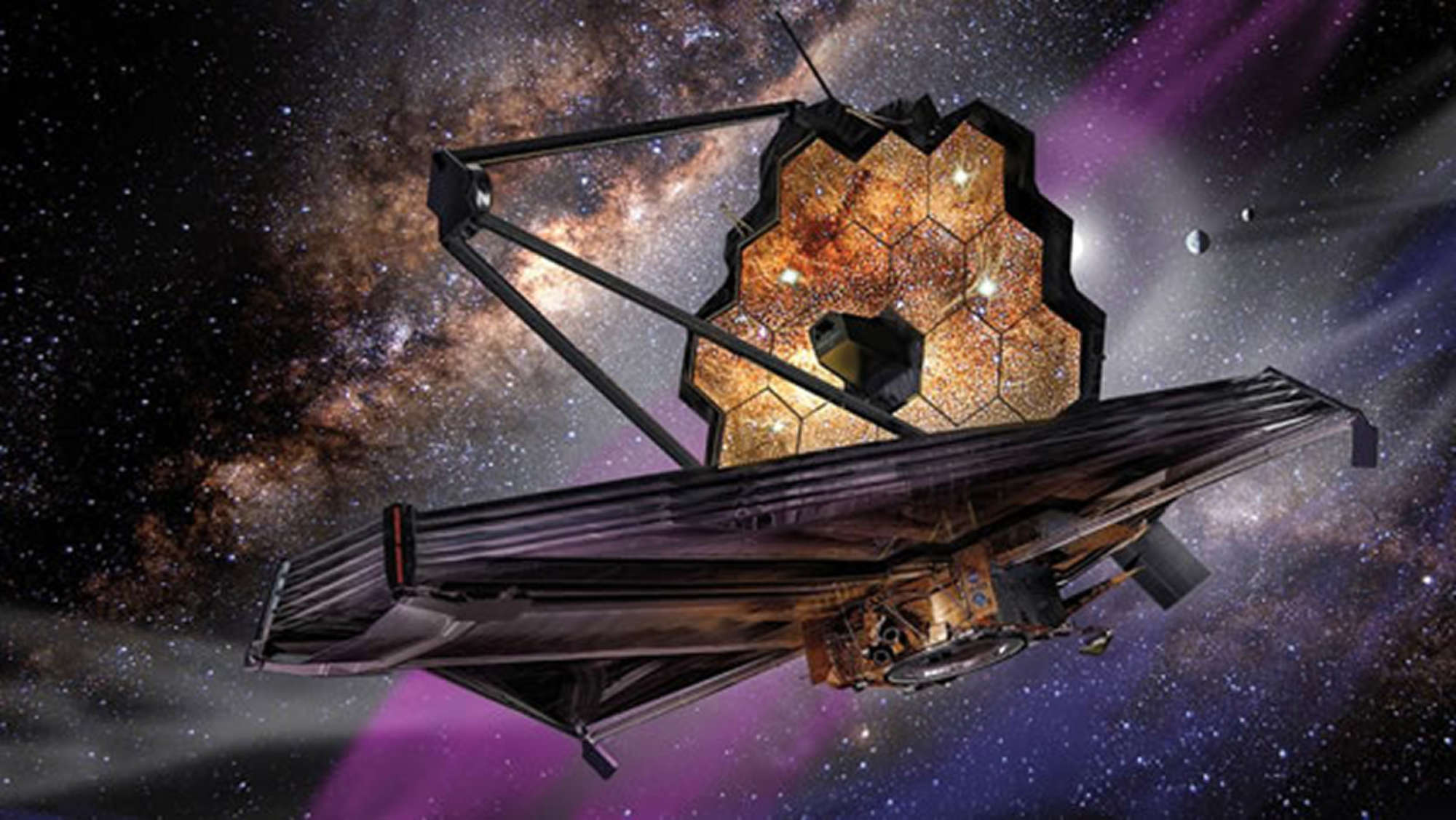
James Webb Space Telescope
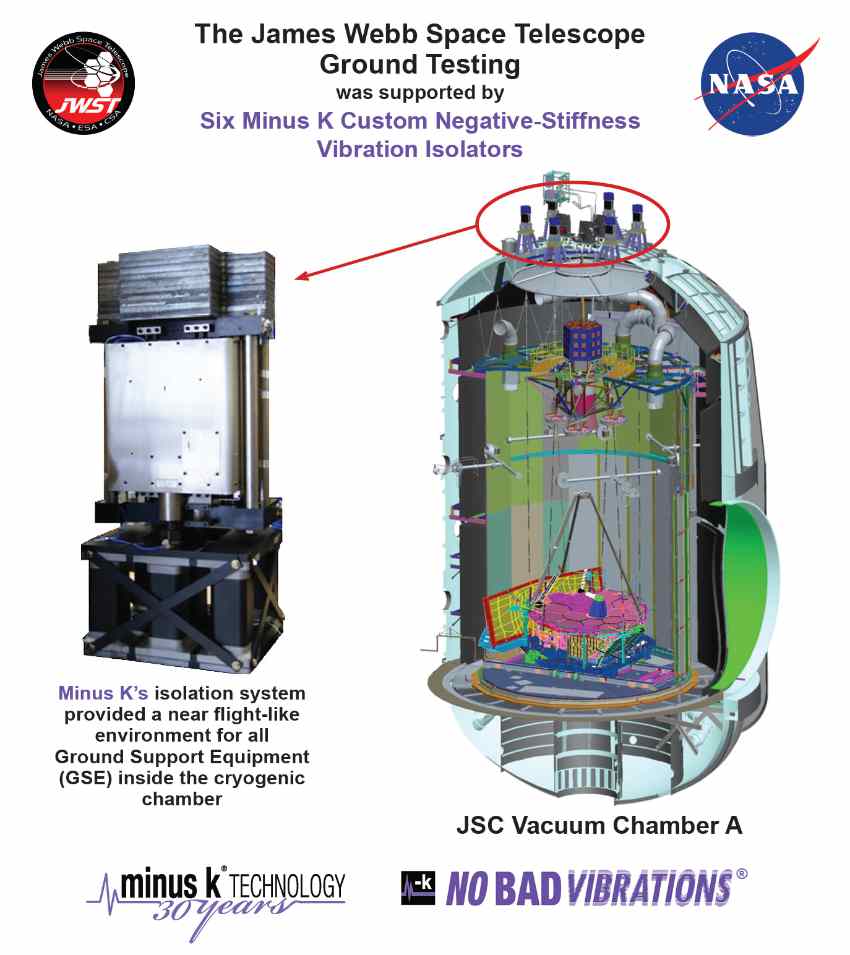
Minus K Technology provided custom isolators that were used for the ground-based testing of the James Webb Space Telescope (JWST) at NASA’s Johnson Space Center. The parts were designed and analyzed in-house, using hand calculations, and FEA. Two outside groups also reviewed the design to make sure there were no oversights.
The isolator design was subject to a third-party FEA analysis that looked at stresses, load, margins of safety, and other internal resonances. There was also an “all-up” modal test in which many accelerometers were placed all over the isolator being tested. These measured the main resonant frequency as well as looking for anything that the FEA analysis might have missed. The results of both were strongly correlated. That gave confidence that it was a solid design.
These isolators had a 10,000 pound capacity. Six of them were used for the testing, each one was loaded with 10,000 pounds using a custom load gantry and frame to allow ease of testing and safety.
Read more here: https://www.minusk.com/content/in-the-news/JWSTPress_0122_cryogenic-optical-vacuum-chamber-vibration-isolation.html
GEO600 LIGO
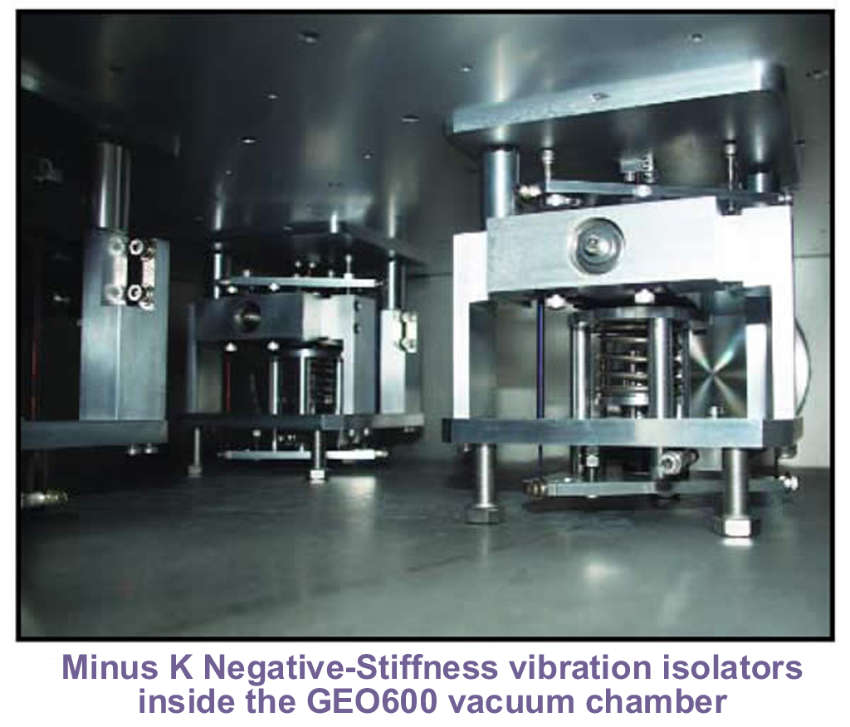
GEO600 is a ground-based interferometric gravitational wave detector located near Hannover, Germany. GEO600 is also the first gravitational wave detector that uses squeezed laser light to improve sensitivity. Three vacuum compatible negative-stiffness vibration isolators (purchased from Minus K in 1995), were used for the GEO6000 because they are very simple to use, compact and operate without the need for compressed air or electronic cabling.
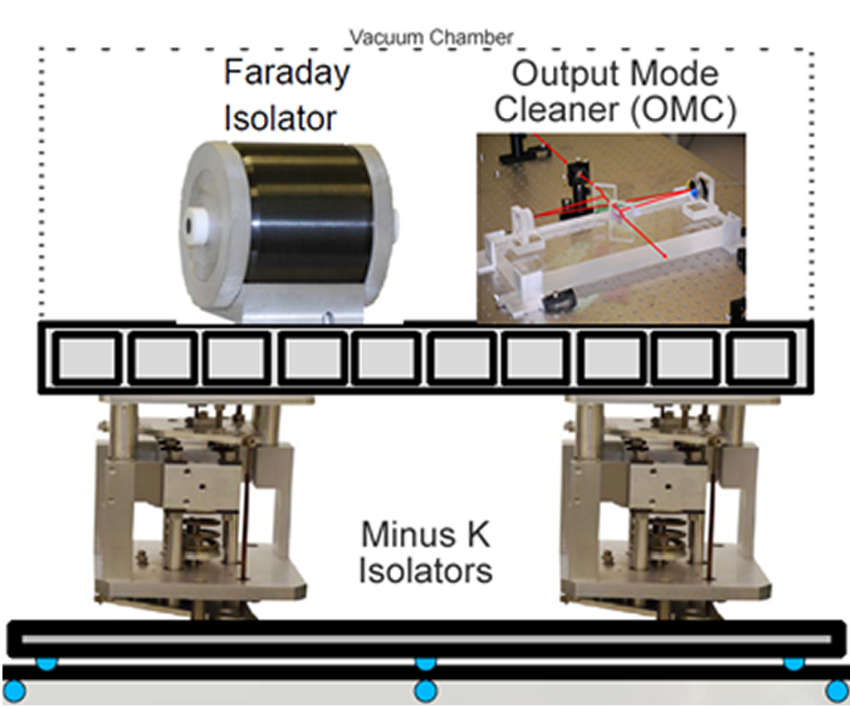
The GEO600 detection bench, carrying mode matching optics, a Faraday isolator, an output mode cleaner, the photo diode are situated on a breadboard, sitting upon three Minus K negative-stiffness vibration isolators to isolate from ground motion, entirely enclosed within a vacuum chamber.
Read more here: https://www.minusk.com/content/in-the-news/USTech_0323_vibration-isolators-support-gravitational-waves-research.html
CUORE/CUPID
The Cryogenic Underground Observatory for Rare Events (CUORE) is a 1-ton scale bolometric experiment that looked to examine a property of ghostly neutrinos by looking for a phenomenon called neutrinoless double beta decay.
The detector suspension was designed to minimize the transmission of mechanical vibrations both due to seismic noise and to the operation of cryocoolers and pumps The suspension is made up of three Minus K negative-stiffness vibration isolators (sold in 2008) and the Y-beam positioned on top of them which is mounted on top of the Main Support Plate (MSP). The detector is suspended by the Y-beam through three composite rods. The system formed by the Minus K isolators and the rest of the detector will behave like a spring-mass system with a cut-off frequency of 0.5 Hz.
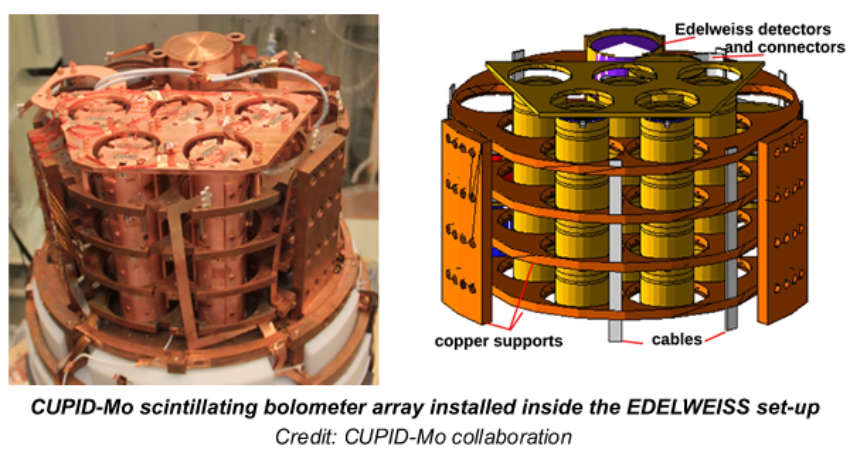
The 0.5 Hz natural frequency Minus K isolators were customized to include snubbers to limit the maximum acceleration load from a severe earthquake to an acceptable level for the detector. To ensure this level of performance, Minus K simulated a 0.6 g earthquake (multiple times) to ensure that when supporting the detector the isolators reduced the force of an earthquake to well below the acceptable limits required by the National Institute for Nuclear Physics (INFN).
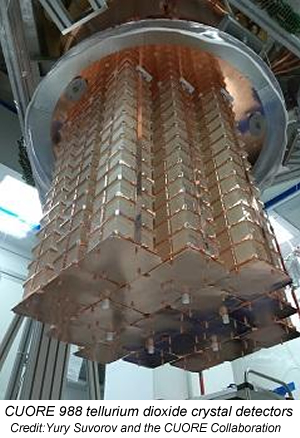
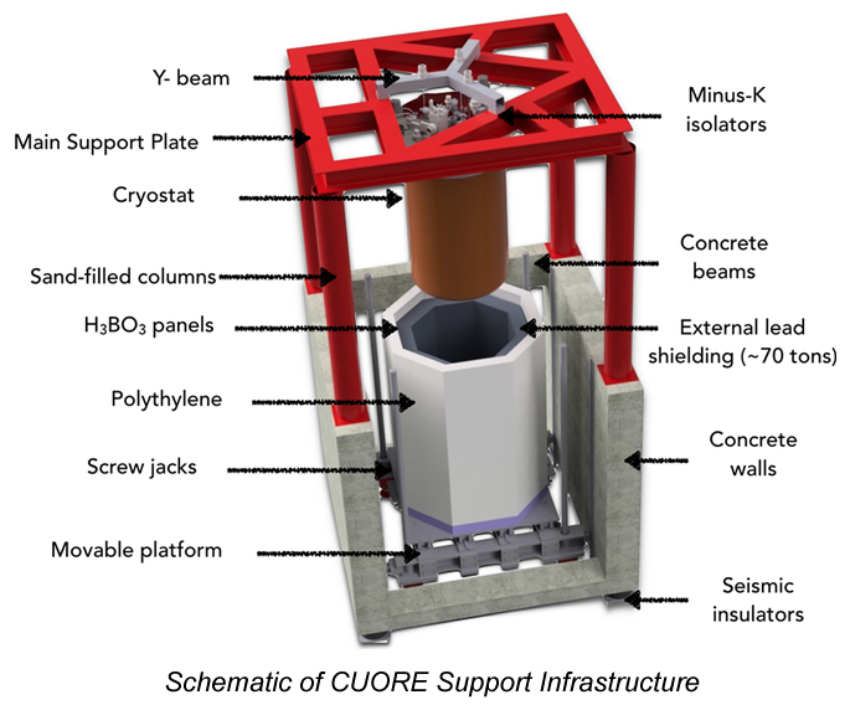
In 2026, CUPID the “CUORE Upgrade with Particle Identification” is housed in the cryogenic facility where CUORE was, including the shielding against environmental radiation, the cryogenic system, the detector calibration systems and the Minus K vibration isolation system. This isolation system supported CUORE’s operation from 2017 through 2025 and will continue support CUPID throughout its operation.
Read more here: https://www.minusk.com/content/in-the-news/CUORE_Roman_Lead_1017.html
Minus K isolators have been supporting sensitive instruments in the field for more than 30 years and continue to work as designed. The company has many happy long-term returning customers and get referrals from word-of mouth recommendations regularly.