
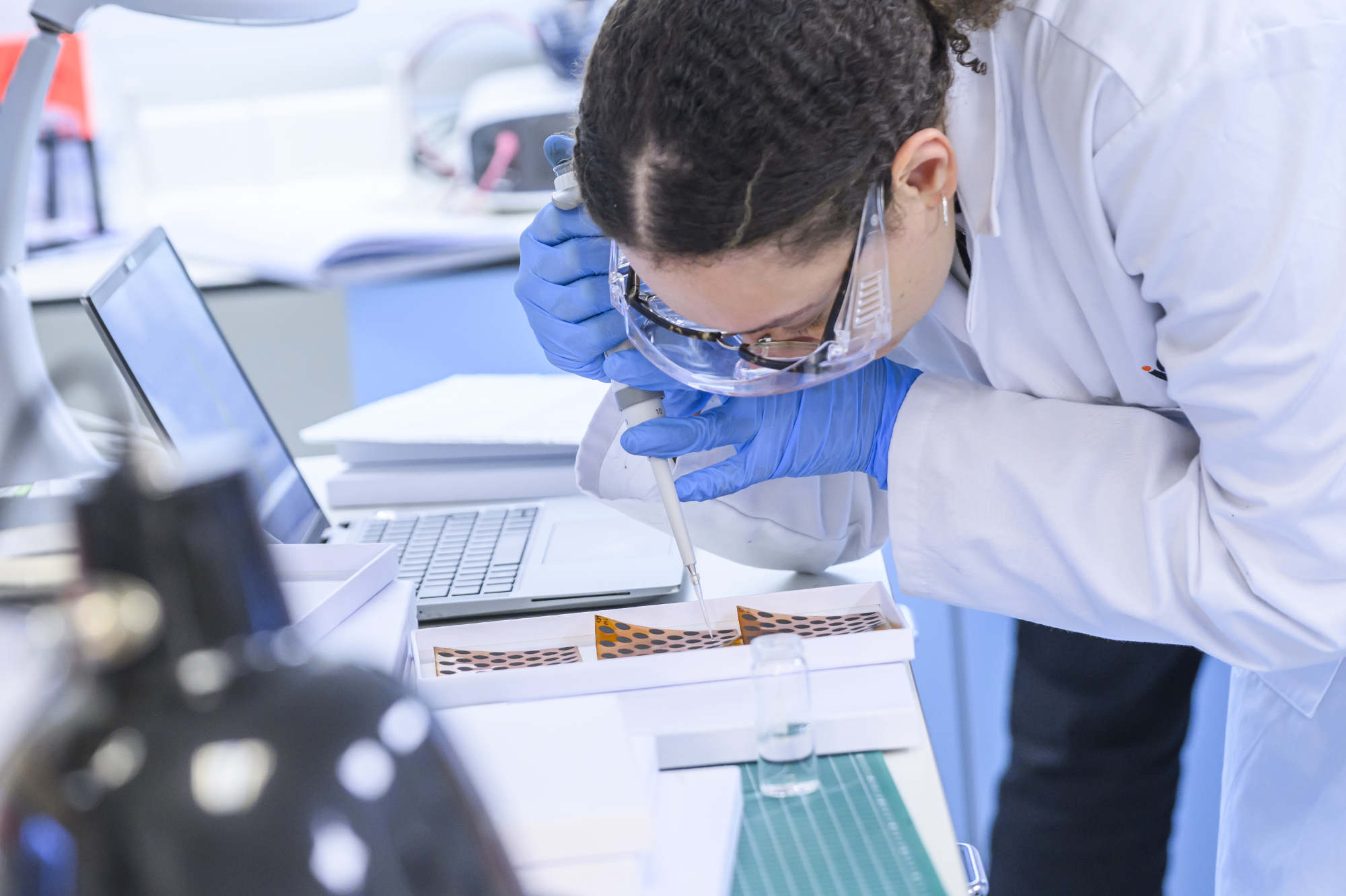
To overcome the limitations of mined carbon compounds and reduce dependence on constrained supply chains like platinum and gold, iGii is scaling industrial production of its proprietary carbon nanomaterial.Founded in Stirling, Scotland, in 2016 and backed by the Scottish National Investment Bank, PXN Ventures,Archangels, and Scottish Enterprise, iGii employs a team of 62—including 17 PhDs—to develop and manufacture Gii, a three-dimensional porous carbon nanomaterial that is grown rather than mined at room temperature. In an interview with Co-founder and Chief Scientific Officer Dr Marco Caffio, the company highlighted recent momentum following its £22.7m funding round and Master Services Agreements signed with Merck and Midea Group. With an established production capacity of 62 million units annually and over 35 patents, Gii serves as a versatile material platform, free of binders or additives, deployed across blood-glucose test strips, lead-detecting water sensors, IoT printed batteries, precision micro-heaters, and advanced thermal management systems.
Interview with Dr Marco Caffio, Co-founder & Chief Scientific Officer at iGii
A brief description of the company and its activities?
Marco Caffio: iGii is a deep-tech advanced materials company creating the material foundations for the next generation of products. Founded in Stirling, Scotland, in 2016, iGii has developed Gii, a proprietary three-dimensional porous carbon nanomaterial. Gii is grown rather than mined or compounded, using a process that runs at room temperature and scales to industrial volumes. The team of 62 includes 17 PhDs, and the company is backed by the Scottish National Investment Bank, PXN Ventures, Archangels and Scottish Enterprise.
What are the main areas of activity of the company?
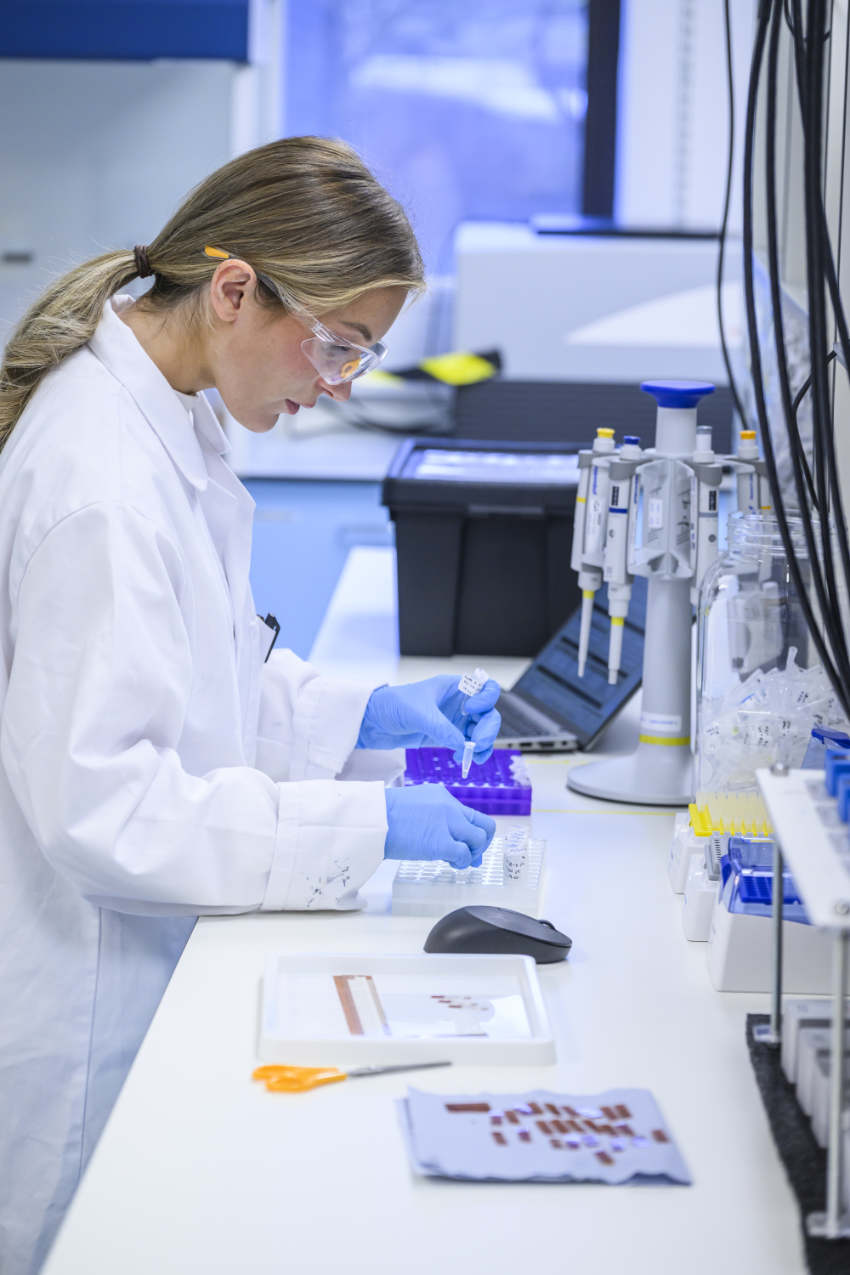
M.C: We develop and manufacture Gii, and we work with global companies across a range of industries to evaluate, develop and ultimately embed Gii within their future products. That requires our scientific, engineering, manufacturing and commercial teams to work together, connecting the capabilities of the material with the customer’s requirements and the practical demands of integration. Gii can be manufactured once and deployed in many ways, so its value isn’t tied to any single application, industry or product category. Today our work spans sensing, diagnostics, thermal systems, energy storage and future intelligent hardware applications.
Picture Phil Wilkinson / SNIB
What’s the news about new products/services?
M.C: Last month we announced the signing of a Master Services Agreement and development programme with Merck, establishing a collaboration framework between the companies. We also signed a Master Services Agreement with Midea Group, establishing a framework for joint evaluation and programme development, with initial focus centred on environmental testing and advanced thermal system applications enabled by Gii.
Both follow our £22.7m funding announcement in September. That total is made up of an £11.7m Series B led by the Scottish National Investment Bank, with additional backing from PXN Ventures and Archangels, alongside £11m of funding from Scottish Enterprise.
What are the ranges of products/services?
M.C: Our core offer is Gii. It’s around 98% pure carbon, with no binders or additives, and it can be customised to suit different applications. Real-world uses include blood-glucose test strips, water-quality sensors that detect lead, printed batteries for IoT and wearable tech, and precision micro-heaters. The same material can be deployed across multiple applications and industries, reducing the need for manufacturers to rely on multiple specialised materials. We also work with manufacturers to accelerate the journey from breakthrough material to commercial product.
What is the state of the market where you are currently active?
M.C: Every industrial revolution has been enabled by a breakthrough in materials. Yet today manufacturers are constrained by the limitations of existing materials, while many promising alternatives have struggled to move beyond the laboratory. The UK is brilliant at invention but has historically struggled to capture value through industrialisation, and we exist to bridge that gap.
At the same time, access to critical materials such as platinum and gold is restricted by concentrated supply and geopolitical uncertainty, and the UK Government’s industrial strategy places advanced materials at the centre of rebuilding domestic manufacturing capability. Together, that raises the value of materials that can deliver greater performance while reducing reliance on constrained supply.

What can you tell us about market trends?
M.C: We’re seeing major global organisations recognise that next-generation product performance increasingly depends on breakthroughs at the material layer. For manufacturers, that creates opportunities to differentiate both consumables and hardware, and to pursue product roadmaps that are less constrained by the materials they use today.
What are the most innovative products/services marketed?
M.C: What makes Gii stand out is that its value isn’t tied to a single use. Gii is a material platform rather than a single-application technology, so its potential spans multiple industries. The applications it has been proven in so far, including sensing, energy storage and micro-heating, show what the material can do, not the limit of it. That’s backed by how Gii is made: it’s grown at room temperature and designed to integrate with existing manufacturing lines. We have a production capacity of 62 million units a year, and the technology is backed by more than 35 patents.
What estimations do you have for the second half of 2026?
M.C: As industries push toward smarter, smaller, more integrated and more sustainable systems, we expect enabling nanotechnologies like Gii to become increasingly strategic within future product architectures.
Quantum computing is one example. Quantum systems can’t scale without the physical inputs beneath them: sensors, conductive and thermal-management materials, and manufacturing that works at industrial rather than lab scale. Supply chains are another. The debate around material sovereignty has sharpened, which puts more value on production that can be regionalised rather than concentrated in a single supply chain.
For us, the focus is on deepening our engagement with some of the world’s biggest manufacturers, expanding what Gii can enable while scaling the capability required to support adoption.