
To provide continuous environmental tracking and tamper-evident acoustic compliance across complex property estates, UK specialist KP Acoustics Group is re-platforming its proprietary IoT hardware and cloud software ecosystem. Founded in 2012 by Director Kyriakos Papanagiotou, the group operates across four core divisions—KP Acoustics consultancy, KP Monitoring, KP Acoustics Research Labs, and the eNView™ IoT monitoring platform—with offices in London, Manchester, Southampton, and Limassol. By unifying bespoke acoustic design, environmental monitoring (noise, vibration, dust, air quality, and structural movement), and heritage conservation tracking into one connected architecture, KP Acoustics supports assets from planning through operation. Following its appointment to a national heritage-sector indoor monitoring framework and an ongoing Knowledge Transfer Partnership with the University of Salford on directional sound-masking technology, KP Acoustics is deploying automated breach-dossier generation and AI-assisted source attribution within eNView to simplify environmental compliance for construction, healthcare, and property managers.
Interview with Kyriakos Papanagiotou, Founder & Director of KP Acoustics Group.
A brief description of the company and its activities.
Kyriakos Papanagiotou: KP Acoustics Group is a specialist acoustics, environmental monitoring, testing and research organisation, founded in 2012 and headquartered in the UK, with offices in London, Manchester, Southampton and Limassol.
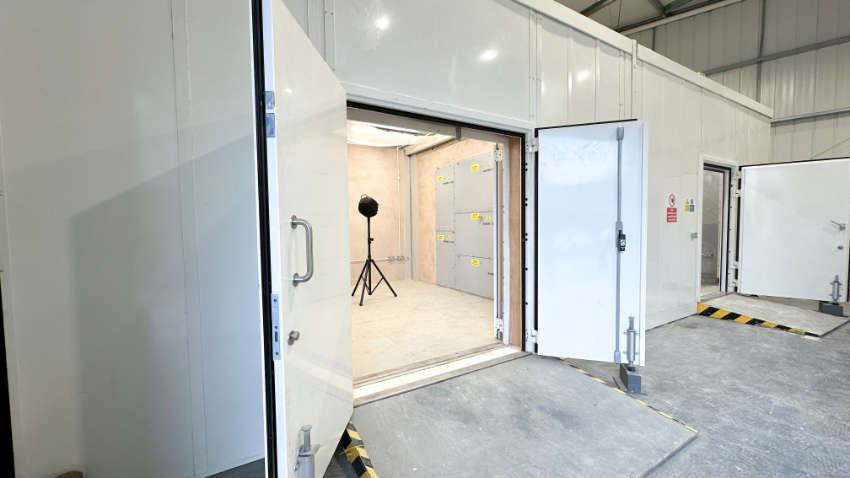
Three operating units and one technology platform: KP Acoustics (consultancy and bespoke acoustic design), KP Monitoring (noise, vibration, dust, air quality, structural movement and indoor conditions) and KP Acoustics Research Labs (accredited testing, applied research and education), plus eNView™, our own IoT monitoring hardware and cloud platform.
Bringing design, measurement, technology, testing and research together lets us support a project across its whole life, from planning into operation. Few consultancies of our size own that chain.
What are the main areas of activity of the company?
Kyriakos Papanagiotou: There are four main areas of activity.
Bespoke acoustic design and consultancy. No two buildings sound alike, and we do not work from templates. We shape how a space sounds and how clearly speech carries in it; isolate one room from the next, and the building from the world outside; and keep plant and services quiet. That runs from concept through commissioning, and extends to planning and EIA assessment, workplace noise and expert witness work.
Environmental and structural monitoring. Instrumentation for noise, vibration, dust and air quality, with crack, tilt and settlement movement, on one platform with live data, configurable alerts and automated reporting against planning conditions, consents and permit limits.
Heritage and indoor environment monitoring. Temperature, relative humidity, illuminance and ultraviolet exposure across museum, gallery and archive estates, and increasingly healthcare, offices and residential portfolios.
Testing, research and education. Accredited laboratory and on-site testing, product development and collaborative research, with Institute of Acoustics qualifications, CPD-certified courses and bespoke training.
Sectors: construction and property, infrastructure, transport, healthcare, education, workplaces, culture and heritage, industry.
What’s the news about new products/services?
K.P: Two developments matter this year.
The first is heritage environmental monitoring, now a defined service line with its own technology stack. With our European IoT technology partner we were appointed this year to a national heritage-sector framework for indoor environmental monitoring, alongside four other suppliers, after a demanding evaluation of the platform and our ability to support multi-site estates. The architecture is being extended to healthcare, facilities management and building-performance markets.
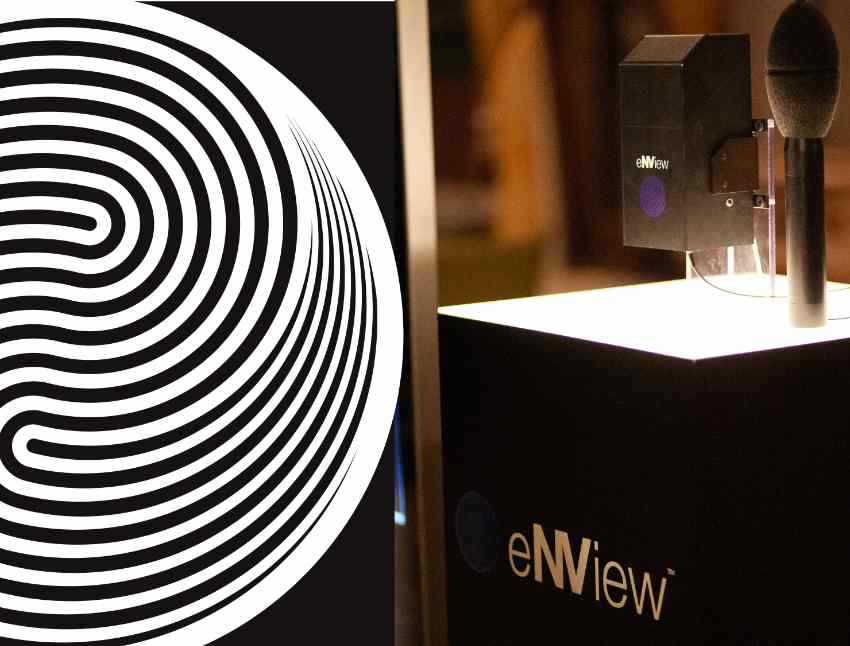
The second is eNView. We are completing a full re-platforming of its cloud backend, opening a faster route to new capability. The programme aims at a practical problem: making environmental evidence easier to interpret, defend and communicate. The clearest example is an exceedance dossier that assembles itself, tamper-evident, the moment a limit is breached, alongside work on attributing an exceedance to its probable source rather than only recording it.
What are the ranges of products/services?
K.P: Our services follow the life of a project or asset: consultancy, impact assessment and design advice on insulation, façades, services and room acoustics at planning stage; surveys, management plans and continuous monitoring with real-time alerting during construction; accredited testing, commissioning, investigation and long-term indoor-condition monitoring in operation.
Monitoring comes hire-only or at several levels of managed service, up to installation, maintenance, alert management, technical review and compliance reporting. KP Acoustics Research Labs adds laboratory testing, product-development support, applied research and professional education.
Each can be commissioned alone; the strength is combining them.
What is the state of the market where you are currently active?
K.P: More encouraging than the headline construction figures suggest: the market is sorting itself in a way that rewards depth.
AI, automation and accessible tools have lowered the barriers to entering consultancy, and routine assessment work is commoditising. Used well they are powerful and we use them ourselves, but they do not supply judgement, experience or accountability, which is what recognises an unusual problem or a standard approach that does not apply. A growing share of our commissions involve complex design, sensitive environments and high-risk projects where those qualities decide the outcome.
Monitoring is our clearest growth area: recurring rather than one-off, scaling with an estate rather than a single project, and now standard for public, heritage and healthcare clients. Training demand is strong, supported by a shortage of qualified acousticians.
Construction remains difficult, with slow projects and fee pressure. But measurement is becoming a commodity while interpretation and evidence quality carry the value. That is where we have invested.
What can you tell us about market trends?
K.P: Five shape our planning.
Continuous data is replacing periodic surveys; clients and regulators expect a defensible record, not a snapshot.
Convergence. Noise, vibration, dust, air quality and indoor conditions sit on one connected platform, squeezing single-parameter suppliers.
Rising evidence standards. Recording a measurement is not enough; its calibration, traceability and integrity must survive challenge.
AI and automation are making routine analysis accessible, improving efficiency while complex work stays dependent on judgement and accountability.
Wellbeing framing. Acoustics is argued on productivity, privacy, recovery and learning, not compliance alone.
What are the most innovative products/services marketed?
K.P: eNView™ is our clearest differentiator. Developed in-house by acousticians and engineers who face these problems directly, it combines field instrumentation, live data, alerts and reporting. Its current development answers an expensive problem: when a complaint or enforcement action arrives months later, evidence is reconstructed manually and often contested. Assembling a tamper-evident record automatically at the moment of breach changes the cost and outcome of those disputes.
Our indoor environmental monitoring platform extends that approach from construction compliance to conservation and asset condition, a field historically served by data loggers read once a quarter, with visibility from a whole estate down to one asset.
Third, soundscaping: designing what an environment should sound like rather than only removing what it should not. Through a Knowledge Transfer Partnership with the University of Salford we are developing a highly directional, personalised sound-masking system supporting privacy and concentration without flooding a floorplate with broadband sound. It remains a research programme, but one central to our longer-term approach to human-centred acoustic design.
What estimations do you have for the second half of 2026?
K.P: Continued growth, with consultancy the foundation while monitoring and technology take an increasing share. Priorities: the next phase of eNView, converting our heritage framework position into delivered work, and taking the indoor environmental platform into wider facilities-management and building-performance markets.
The challenges are real: fee competition, slow public-sector procurement, and technology that demands investment before it returns. Against that, demand for continuous monitoring, reliable evidence and expert interpretation keeps growing.