
As industrial manufacturers across Central and Eastern Europe accelerate plant modernization, family-owned industrial software developer COPA-DATA is advocating for software-defined automation to decouple plant operations from proprietary control hardware. In an interview, Jean-Baptiste Quiqueran-Beaujeu, Head of International Business Development CEE, compares the current evolution of operational technology (OT) to the server virtualization shift that transformed IT over two decades ago. By inserting a hardware-agnostic software layer between physical controllers and supervisory applications, manufacturers can tender hardware purchases based on price and lead times rather than vendor lock-in. COPA-DATA’s flagship platform, zenon, connects natively to over 300 controller families and protocols, enabling brownfield plants to integrate disparate SCADA islands, standardize data models, and satisfy NIS2 security mandates under IEC 62443-4-1 standards. Supported in Romania and CEE through distributor Kreatron Automation, COPA-DATA’s hardware-independent architecture was recently demonstrated at Budapest Airport, where six standalone SCADA systems were unified into a single control interface without altering underlying power hardware.
Interview with Jean-Baptiste Quiqueran-Beaujeu, Head of International Buisness Development CEE.
What is the biggest industry shift you see right now?
Jean-Baptiste Quiqueran-Beaujeu: The factory is turning into a software system. For decades, what a plant could do was fixed by the hardware in it: the controllers, the panels, the proprietary systems each vendor brought along. Changing anything meant a project, a shutdown and a specialist. Today, more and more of what defines a plant lives in a software layer above the hardware: how machines are connected, how data flows, how quickly a line can be reconfigured. IT went through exactly this twenty years ago, when virtualization put a thin layer between servers and applications and the hardware underneath became interchangeable. OT is at that point now. We call it software-defined automation, and it has been the direction of our own platform development for years.
For Romania the timing matters. A lot of capacity is being built and modernized right now, and those decisions will set the base for the next twenty years.
How does this “shift” translate into opportunities for companies?
J.B.Q.B: The first opportunity is that hardware becomes negotiable. Once the software above it no longer cares which controller brand sits underneath, every hardware decision can be tendered, on price and on delivery time. The sidebar explains why this is the same move IT made.
The second is engineering done once. If you model a filler, a pump or a robot cell once, as a reusable object with a defined data structure, you can roll it out across lines and sites regardless of which PLC sits underneath, and reserve your scarce engineers for the problems that need them.
The third is that brownfield stops being a dead end. A layer that speaks to a twenty-year-old controller and to the newest machine lets you modernize step by step without writing off what you have. And once that layer exists, energy transparency, quality data and OEE stop being separate projects; they become views on the same data.
SIDEBAR: What the server room can teach the shop floor
Twenty years ago every application in a company ran on its own server, bought from one vendor, administered with that vendor’s tools by the one person who knew that box. Most servers sat idle most of the time, and every new application meant a purchase order, weeks of waiting and a specialist. The application was welded to the metal.
Then a thin software layer was inserted between hardware and application, and the application stopped caring which server it ran on. VMware started it around 2001; by the end of the decade Microsoft’s Hyper-V and the open-source Proxmox had made it a commodity, and storage and networks followed. IT didn’t buy it because it was elegant. It bought it because the hardware underneath became interchangeable, and interchangeable means negotiable. Servers were bought on price and delivery time, administered one way regardless of brand, replaced on the company’s schedule instead of the vendor’s, and consolidated to a fraction of the boxes.
Walk through a typical plant today and you are standing in the server room of 2003. One line runs on one controller brand with its own screens and engineering tool; the next on another; packaging on a third; utilities on something installed in 1998. Industry analysts describe the same picture: automation hardware and software have historically been tightly bundled, applications cannot be moved from one vendor’s system to another, and the skills involved don’t transfer, which is why ARC Advisory Group argues OT would gain from imitating IT with a standardized automation layer that is portable across vendors.

The economics are the same as well. The two biggest cost blocks in an automation project are the hardware you buy and the engineering that welds it to one vendor’s world. Research on automotive production lines put engineering at 20 to 25 percent of the total line investment and at 55 percent of the control system, with an upward trend. A hardware-agnostic layer attacks both blocks: the hardware can be tendered, because the layer above no longer cares, and the engineering is done once instead of once per brand. The leverage is real; in McKinsey’s survey of the sector, component suppliers were seen as holding switching effort and cost as a strategic control point.
Two caveats. The controller doing the actual control stays physical, real-time and safety-certified for now; what gets abstracted first is everything above it, which is where fragmentation costs money anyway. And the point is not cheap hardware; industrial hardware earns its price in reliability. The point is who sets the terms. Virtualization didn’t make server vendors disappear. It changed who wrote the price list. The OT name for that layer is software-defined automation.
What is the biggest challenge facing the industry today?
J.B.Q.B: Fragmentation, and the shortage of people to fight it. Our local partner in Romania puts it plainly: AI isn’t the topic yet, general digitization is. Most manufacturers here run systems from several vendors, installed at different times by different integrators, and they are still working to make them behave as one plant. Each island has its own screens, its own engineering tool, its own data format and its own specialist, and there are fewer of those specialists every year.
That is a solvable problem, but it has to be solved deliberately, while production keeps running and while NIS2 obligations arrive in national law, turning secure identities, audit trails and patchable systems into a licence to operate.
Which technology is having the greatest impact today: AI, automation, or systems integration?
J.B.Q.B: Integration, and in Romania it isn’t close. Automation is the base; most plants already have it. AI is the application everybody talks about, and for most plants here it is a question for later. The impact available today comes from connecting what already exists into one system with one vocabulary. Nobody ran analytics across a data centre before its servers were virtualized and administered one way, and nobody will run AI across a plant before its lines can be read and operated one way. Get the integration right and AI becomes an application you add. Skip it and AI becomes a very expensive way to be confused faster.
What is the biggest mistake companies make when embarking on a digital transformation process?
J.B.Q.B: Letting the hardware choose the software. A line is bought, the controller brand comes with it, and the visualization, the data recording and the engineering tool follow from that choice by default. Repeat it five times over ten years and you have the scattered landscape our partner describes, without anyone ever having decided to build it. The second version of the same mistake is the pilot factory: many proofs of concept, each with its own bespoke integration, none of which can be rolled out.
The remedy is a decision about the layer, made once and for the whole plant. Choose software that speaks to every vendor, natively or through open standards. Give the plant one vocabulary: a simple model from site to line to equipment, consistent names and units, and context attached at the source, so that a temperature value knows which order and shift it belongs to. Model each equipment type once as a reusable object.
And the non-technical mistake: treating transformation as something done to operators rather than with them. The best layer in the world fails if the people on the shop floor don’t trust the screens.
How does your company help clients respond to these changes?
J.B.Q.B: Mostly by being that layer, and by being independent. COPA-DATA has been a family-owned software company since 1987 and we don’t sell controllers, so we have no interest in locking anyone into a particular hardware world. zenon connects natively to more than 300 controller families and protocols and presents one way to operate, record and report across all of them. That is what turns five vendor islands into one plant, and it is what makes the hardware underneath negotiable.
The layer itself is hardware-agnostic too: the same project runs on a Windows server, in a Linux container on an edge device or in the customer’s own data centre, which matters to companies that want to keep production data in their own hands. The guiding principle is to parameterize rather than program, so that smaller teams can run demanding plants, and the software is developed under a process certified to IEC 62443-4-1, so security is not a bolt-on.
We don’t do this alone. More than 500 certified partner companies implement zenon, and in Central and Eastern Europe we have been building that network from Salzburg with the help of our local distributor Kreatron for many years. Local integrators who understand the plant and its people are usually the difference between a pilot and a working system.
Can you give us an example of a project where technology generated concrete results for a client?
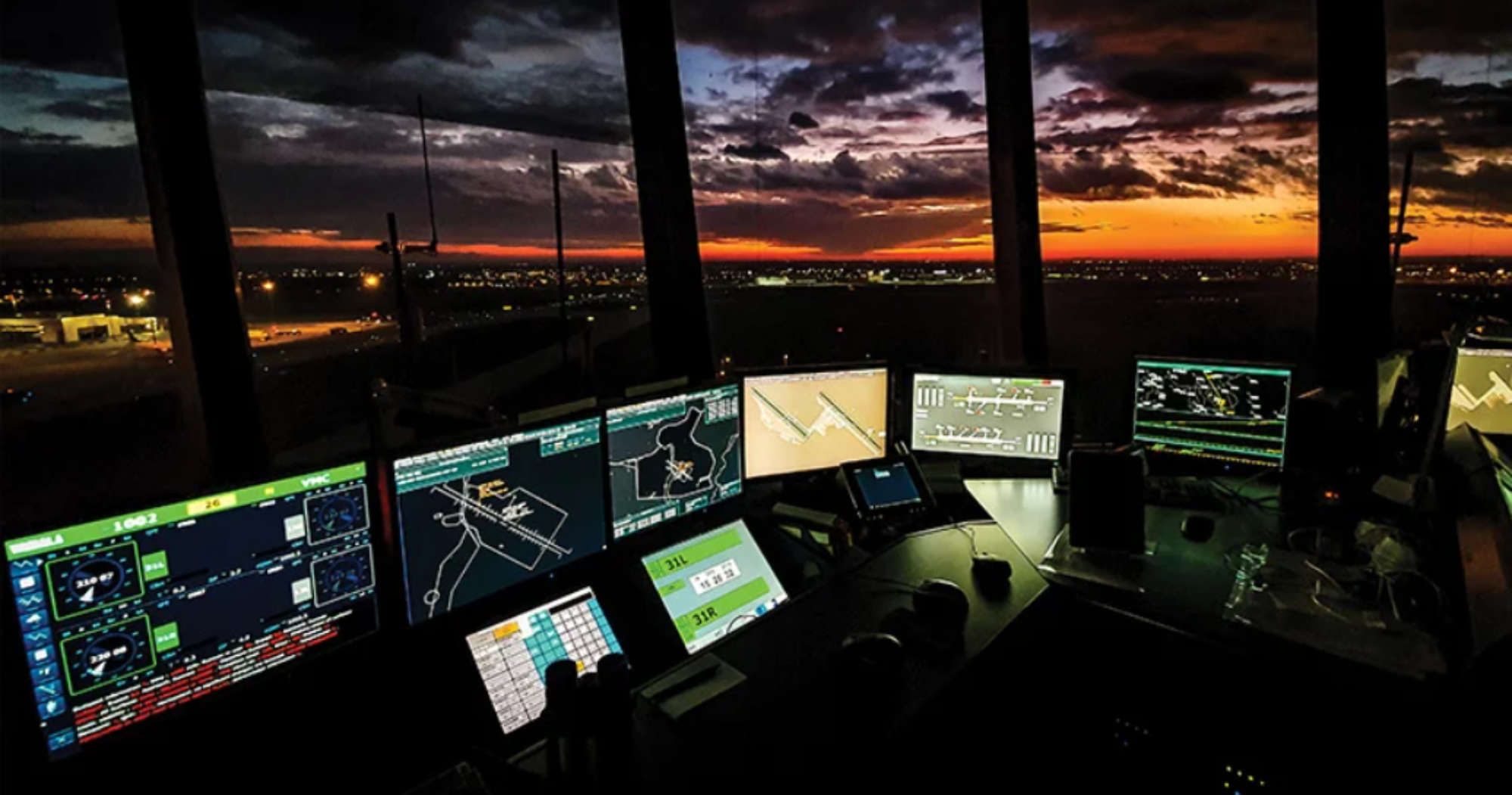
J.B.Q.B: Budapest Airport, because it started exactly where many Romanian plants are today. Extended and modernized in stages since 1950, with contracts awarded years apart to different contractors, the airport ended up running six separate SCADA systems, four of them for baggage handling alone. Each had its own screens and its own narrow interfaces, staff had to be trained on all of them, and for modifications the airport depended on integrators, some of which had gone out of business. Even operating system updates had become a challenge.
The control systems team did not try to integrate everything at once. They compared the systems they already ran, picked the approach that had proven most stable, and unified two critical systems, airfield lighting and baggage handling, on one hardware-independent layer. In the lighting system they replaced the controllers, twelve redundant PLCs, left the power electronics untouched and put zenon on top for some 30,000 datapoints. The switchover and go-live took six hours, done by the airport’s own people. The baggage visualization, more than 1,000 conveyors, was configured in two weeks without writing a line of code. Commissioning a change now takes about a quarter of an hour, can be rehearsed in simulation, and can be reversed within two minutes.
What matters to a CEO is autonomy. A team of seven now holds all of that technology in its own hands, stability rose to a level the airport had not seen before, and building automation and power supply are next on the list. It is an airport, not a factory, but any plant manager will recognize the pattern.
More information on this project to be found here: https://www.copadata.com/en/success-stories/smooth-operation-at-budapest-airport-hungary/
How do you view the role of artificial intelligence in the industry: as a tool or a paradigm shift?
J.B.Q.B: For most plants in Romania, AI is a 2029 question; making the plant legible is a 2026 question. The paradigm shift under way today is the software layer between hardware and operations, and AI will arrive as an application on top of it, the way analytics arrived on top of virtualized IT once the foundation was there. When it does, the rules are simple: AI advises, deterministic control decides; models run where the data lives; and every recommendation stays explainable. But that is the second chapter. The first chapter is a plant whose lines can be read and operated the same way.
What do you think the industry will look like over the next five years?
J.B.Q.B: OT in 2031 will look like IT in 2013. Controllers and industrial PCs bought by tender rather than by default. One console for the whole plant, whatever the brand underneath. Teams of capable generalists supported by good tools, rather than one specialist per vendor. Plant software increasingly virtualized and containerized, managed with IT-grade lifecycle tools while keeping OT-grade determinism and safety. That last step is already leaving the pilot stage: Audi is replacing thousands of shop-floor industrial PCs with data-center servers and has taken virtual PLCs from pilots into safety-critical, high-volume production.
The plants that have done this groundwork will then add analytics and AI cheaply, as applications on a layer that already exists. The plants that haven’t will still be aligning systems.
For Romania the message is simple. The choices that matter most in the next two or three years are not which AI vendor to pick, but whether you build on open standards, give your plant one vocabulary and keep the option to change your hardware. The shift is not a technology decision. It is the decision to treat the factory as a software system, and to buy accordingly.