
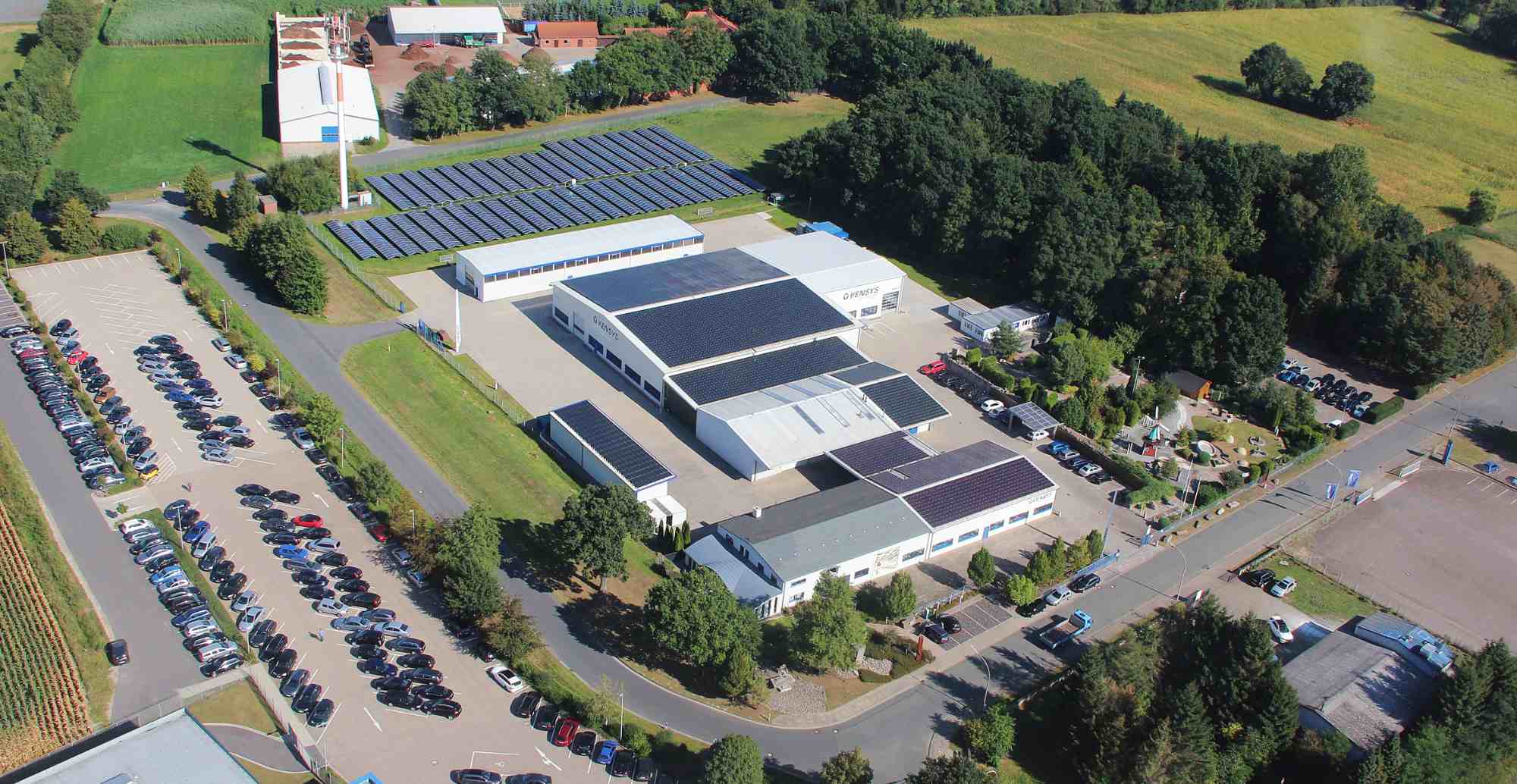
In high-demand industrial environments, the long-term economic value of a battery energy storage system (BESS) relies far more on integrated system engineering than on individual component specifications. Speaking on the design philosophy behind their VENSTORE platforms, the engineering team at VENSYS Elektrotechnik outlines how holistic thermal management, precise battery management systems (BMS), dynamic operating strategies, and rigorous testing protocols (FMEA, FAT, SAT) directly combat both cyclic and calendar aging. From peak shaving and self-consumption optimization to compliance with harsh outdoor environmental conditions, VENSYS details how aligning initial capital investment with lifecycle maintenance and predictive analytics ensures reliable, decade-plus operational performance for industrial operators.
How does VENSYS Elektrotechnik design battery storage systems for reliable long-term operation?
For us, a battery storage system is much more than the sum of its individual components. We consistently approach it as an integrated system. In addition to the battery itself, this includes the inverter, transformer, protection technology, cooling, fire protection, communication systems and energy management.
At the beginning of each project, we analyse the load profile, required charging and discharging power, expected number of operating cycles, environmental conditions and grid connection. It is equally important to understand the tasks the storage system is expected to perform, such as peak shaving, optimising self-consumption or participating in energy markets.
Based on this analysis, we coordinate all components to ensure that they work together effectively. We consider not only current requirements, but also appropriate power reserves and potential future operating strategies. Our objective is to provide a system that operates reliably while remaining flexible enough to respond to changing requirements.
Which factors determine the service life of a battery storage system?
The service life of a battery storage system is primarily influenced by cell chemistry, operating temperature, state of charge and the way the system is operated. Depth of discharge, charging and discharging power, and the number of cycles also play a decisive role.
We distinguish between two main ageing mechanisms. Cyclic ageing results from repeated charging and discharging. Calendar ageing, by contrast, continues even when the battery is used only occasionally. Persistently high temperatures, extended periods at a very high state of charge and frequent deep discharges place particular stress on the battery.
For this reason, we do not design the operating strategy solely around maximum available power. Instead, we define suitable state-of-charge windows, power limits and temperature ranges for each application. The battery’s condition, known as its State of Health, is continuously evaluated. This enables us to achieve an appropriate balance between available power, economic efficiency and service life.
How do your systems cope with high loads and demanding environmental conditions?
Demanding operating conditions must be considered from the very beginning of the design process. For high loads and continuous operation, we dimension the battery, inverter and other power components accordingly and assess their thermal behaviour.
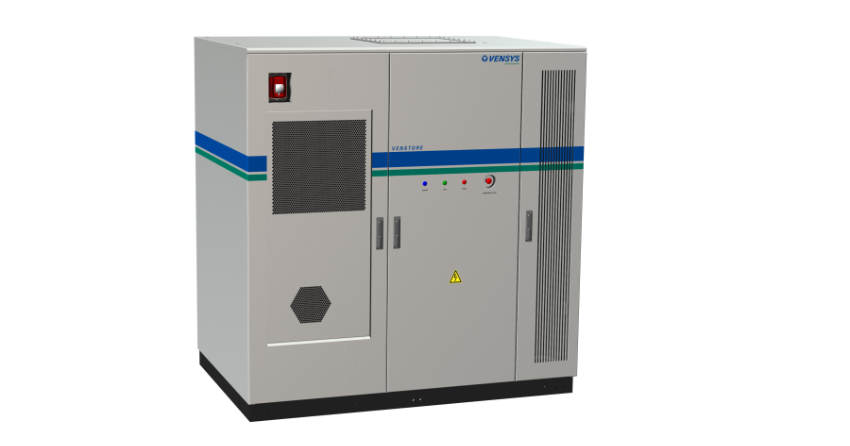
Temperature management plays a central role. Our VENSTORE systems are designed as climate-controlled outdoor solutions. The cooling system ensures that the battery modules remain within their permitted temperature ranges and that temperature differences between individual cells are kept to a minimum. This is essential for both safety and service life.
We also consider external influences such as humidity, dust, frost, direct sunlight, saline air and mechanical loads. The battery management system continuously monitors cell voltages, temperatures, currents and states of charge. If defined limits are reached, the system reduces power in a controlled manner or brings the storage system into a safe operating state.
How important are engineering, development and testing for system reliability?
Reliability does not begin with commissioning. It is established during the engineering and development process. We therefore consider the complete life cycle of a battery storage system. Our development activities include requirements analyses, electrical design, simulations and technical risk assessments. Using methods such as Failure Mode and Effects Analysis, or FMEA, we systematically examine potential failures, their causes and their possible consequences.
We pay particular attention to the interfaces between the battery, power electronics, cooling system, fire protection, plant control and grid connection. Many technical issues do not originate within an individual component but arise from the interaction between different systems. Our objective is to identify and manage these dependencies as early as possible.
Before delivery and again at the installation site, we carry out comprehensive testing. Depending on the project, this can include wiring, insulation, protection and communication tests, as well as alarm and shutdown tests. Factory Acceptance Tests and Site Acceptance Tests may also be performed. The documented results provide a reliable basis for commissioning, final acceptance and subsequent service activities.
What role do material selection and component quality play?
The quality of the components used has a direct impact on the safety, maintainability and service life of the system. We therefore consider not only the battery cells, but also cables, connectors, seals, enclosures, cooling systems and electrical protection components.
When selecting components, we evaluate factors such as temperature and voltage reserves, mechanical strength, corrosion protection and suitability for the intended installation environment. We also work with defined supplier requirements, qualified components and documented manufacturing processes.
For us, quality assurance means identifying deviations as early as possible. This includes checking torque values, wiring, insulation, enclosure integrity, communication connections and protection functions. Component selection is therefore not based on purchase price alone. Technical suitability, availability, maintainability and long-term operational reliability are equally important.
How do you support operators with maintenance and long-term system operation?
Ease of maintenance begins with the system layout. Components that require regular inspection or replacement must be readily accessible. For this reason, we provide sufficient working space, clear labelling and structured technical documentation during the planning stage.
During operation, the monitoring system records key data such as cell voltages, temperatures, State of Charge, State of Health, charging and discharging power, operating hours and alarm history. The condition of the cooling system, inverters and other power components can also be monitored. This makes it possible to identify irregularities at an early stage and plan maintenance activities more effectively.
We recommend that VENSTORE systems undergo maintenance at least once a year. This may include determining the current State of Health and Round Trip Efficiency, as well as checking system calibration and cell balancing. Depending on the agreed scope of services, we can also support customers with remote monitoring, maintenance plans, spare-parts concepts, training and regular inspections.
How do you balance investment costs, reliability and economic efficiency?
The most economical solution is not automatically the smallest or the most powerful system. The decisive factor is whether the battery storage system is precisely matched to the intended application. We therefore analyse the load profile, grid connection, expected number of cycles, availability requirements, revenue or savings model and planned operating life.
An undersized system may be exposed to consistently high loads and could therefore age more quickly. An unnecessarily large system, on the other hand, ties up capital without automatically delivering a corresponding benefit. Our task is to identify the technically and economically appropriate system size.
We consider not only the initial investment, but the complete system life cycle. This includes energy losses, degradation, maintenance, spare parts, availability and potential future expansion. Depending on the application, additional redundancy may also make economic sense because it reduces the impact of a component failure. Our recommendations are therefore based on long-term system value rather than solely on the lowest purchase price.
Which technologies contribute to the long-term performance of your systems?
Long-term performance results from the coordinated interaction of hardware, software and the operating strategy. The battery management system monitors individual cells and modules and protects them against impermissible voltages, currents and temperatures.
The energy management system provides the higher-level control of the installation. It processes information such as grid requirements, load profiles, state of charge, generation forecasts and weather forecasts. Based on this information, it determines the appropriate charging and discharging strategy.
Depending on the project, condition-based or predictive maintenance methods can also be used. The operating strategy may adjust power limits, state-of-charge windows or depth of discharge to the battery’s current condition. This helps to avoid unnecessary load peaks and preserve available performance throughout the system’s operating life.
How do experiences from customer projects contribute to continuous improvement?
Every installed system is also a valuable source of information. We use operating and diagnostic data, maintenance reports, commissioning experience and feedback from operators and service technicians.
Our analysis is not limited to individual faults. The key is to identify recurring patterns, for example in temperature distribution, communication connections, cooling, power electronics or operating strategies. We use these findings to define specific technical improvements.
The resulting insights are incorporated into hardware, software, system parameterisation, documentation, training and test plans. All changes are assessed, tested and documented in a controlled process. This ensures that an improvement in one part of the system does not unintentionally introduce new risks elsewhere.
Can you illustrate the value of your system expertise using a typical industrial project?
A typical application is a battery storage system installed at an industrial site with continuous production. In such a setting, the system can simultaneously reduce peak loads, optimise self-consumption and support the site’s energy supply.
This type of application places high demands on dynamic response and availability. The storage system must react quickly to changes in load without placing unnecessary stress on the battery. We therefore base the system design on actual load data. The battery and inverter are dimensioned with suitable reserves and controlled by an energy management system that balances production reliability, load management and battery service life.
The long-term value is not created solely by avoiding demand peaks or reducing energy costs. Stable operation, early detection of deviations, predictable maintenance and transparent performance documentation are equally important.
This is where our strength as a system integrator becomes particularly clear: we combine individual components, control technology, grid integration and service into a coordinated technical solution. Specific statements regarding performance, availability and service life are always defined on a project-specific basis and linked to the agreed operating conditions.