
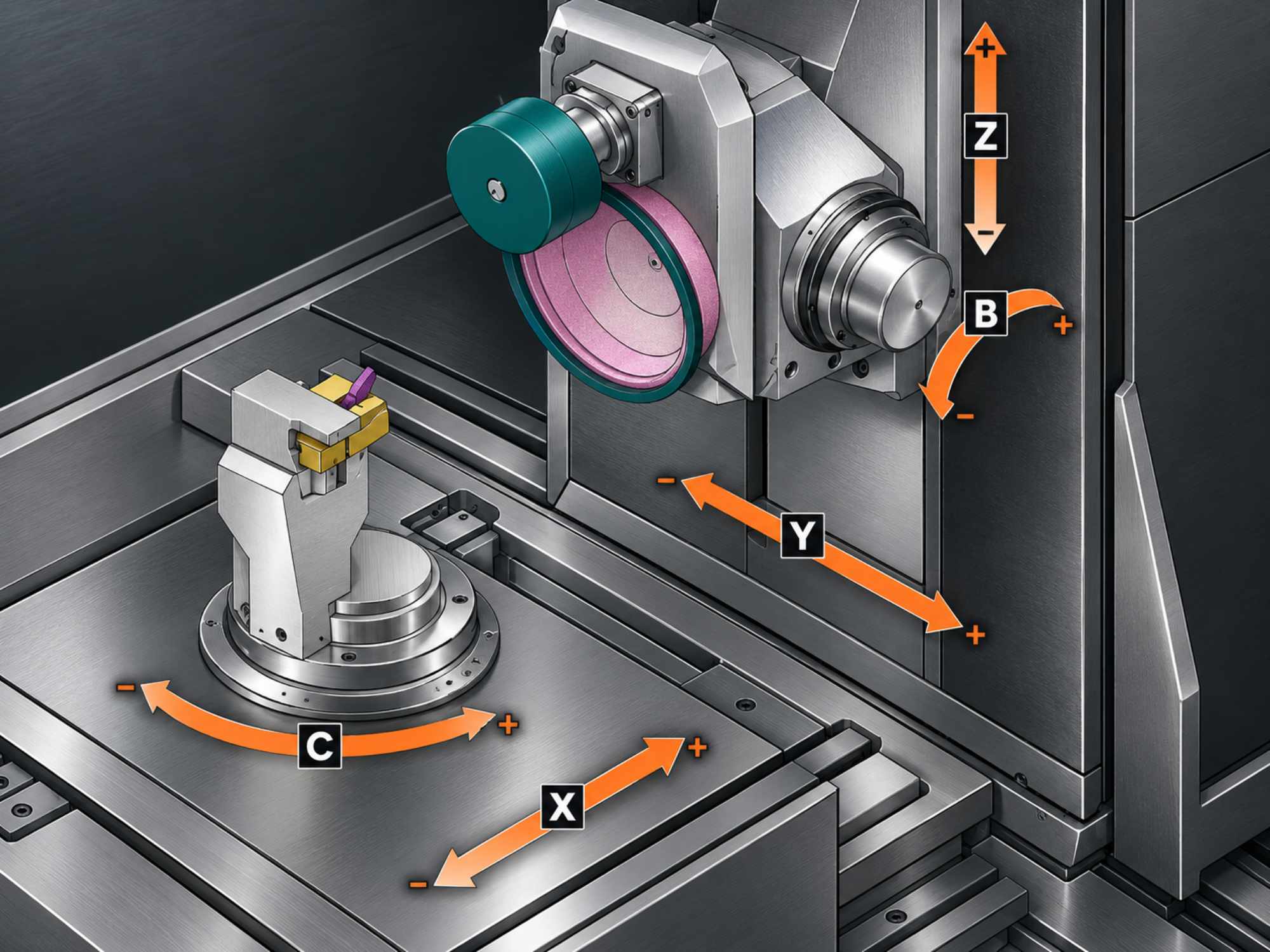
In high-precision tooling production, technology investments generate sustainable economic value only when they directly lower the total cost per accepted component. German machine tool specialist Pollux Präzisionstechnik GmbH is transforming the production of indexable inserts by combining energy-efficient machine design, closed-loop process control, and long-term autonomous handling. Rather than evaluating productivity across individual manual tasks, Pollux optimizes the complete manufacturing lifecycle, reducing energy consumption per finished part through direct-drive linear systems, intelligent peripheral controls, and stable machining conditions. To enable reliable unattended operation during night and weekend shifts, Pollux integrates automated 16-pallet stacking systems with vision-guided part recognition and inline dimensional measurement. By detecting process deviations before scrap is produced, this integrated architecture maximizes productive machine hours, minimizes raw material waste, and expands output from existing floor space without requiring additional headcount.
In industrial manufacturing, innovation only creates real value when it improves the economics of production. New technology alone is not enough. It must reduce operating costs, increase productive machine hours, improve process reliability and allow manufacturers to produce more with the same resources.
In industrial manufacturing, innovation only creates real value when it improves the economics of production. New technology alone is not enough. It must reduce operating costs, increase productive machine hours, improve process reliability and allow manufacturers to produce more with the same resources.
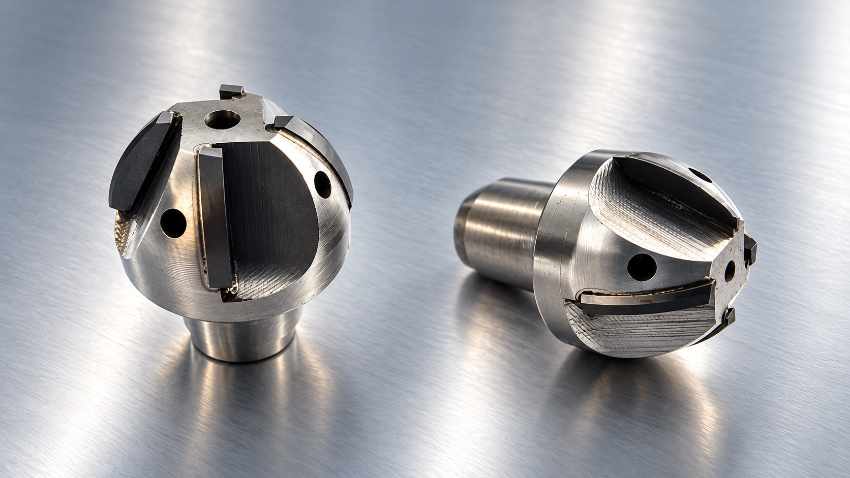
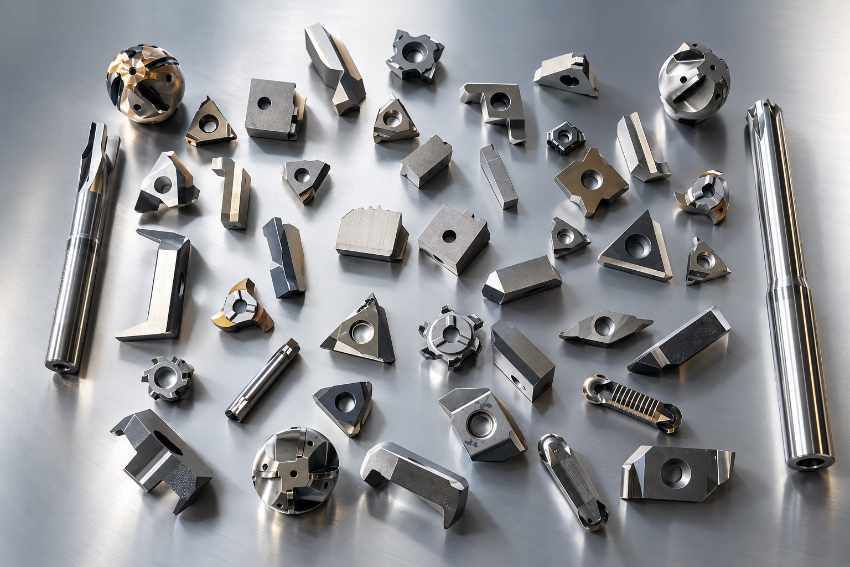
At Pollux Präzisionstechnik GmbH, this is the principle behind the development and selection of its manufacturing solutions. Particularly in the production of indexable inserts, Pollux focuses on reducing the resources required for every finished component – including energy, operator time, machine capacity and raw material.
For Pollux, the return on investment of automation is therefore not based on a single improvement. It results from optimizing the complete manufacturing process.
Energy efficiency starts with the process
Energy consumption is becoming an increasingly important factor in industrial production. However, simply comparing the installed power of two machines does not provide a meaningful picture.
The relevant figure is the energy required per finished, accepted component.
Modern machine concepts can significantly reduce this value. Today’s electrical and electronic components operate more efficiently than previous generations, while modern drive technologies allow energy to be converted into productive machine movement with considerably lower losses. Modern linear drive systems, in particular, can achieve high levels of efficiency by transmitting force directly, without many of the mechanical transmission elements required in conventional drive concepts.
Energy efficiency also extends beyond the machining process itself. Optimized cooling, extraction, compressed-air systems and intelligent control of auxiliary equipment can substantially reduce unnecessary consumption. Instead of operating every peripheral system continuously at full capacity, energy can be supplied according to the actual requirements of the process.
At the same time, shorter and more stable processes increase the number of accepted components produced from the same amount of energy. This becomes particularly important during long periods of autonomous manufacturing, where the objective is to keep the machine producing efficiently rather than consuming energy during unnecessary idle periods.
For Pollux’s customers, energy efficiency and productivity are therefore not separate objectives. A highly productive, stable and well-designed process reduces not only the energy consumed per component, but also the energy wasted on idle time and rejected parts.
From automated production to long autonomous operation
Automation has traditionally been associated with replacing individual manual operations. Pollux takes the concept further.
Its automated solutions for indexable insert production can be equipped with a pallet stacking system accommodating up to 16 pallets. This provides sufficient capacity for long periods of autonomous production and can allow the machine to continue manufacturing beyond normal staffed production hours.
But capacity alone is not enough.
A vision system identifies the position and orientation of the individual inserts. This removes the need for every workpiece to be presented to the machine in an exactly defined position and makes automated handling considerably more flexible.
The combination of pallet storage, automated handling and vision-based part recognition enables genuinely long periods of autonomous production.
This changes the economic calculation of the machine.
Instead of measuring productivity only during staffed shifts, manufacturers can utilize evenings, nights and weekends. The objective is not simply to replace an operator. It is to increase the productive hours of an expensive manufacturing asset while allowing skilled employees to concentrate on tasks where their expertise actually adds value.
Automation without process control is not enough
Running a machine unattended for many hours only makes economic sense if the process can also be trusted.
This is why process control is one of the most important elements of Pollux’s automation concept.
In precision manufacturing, small deviations can eventually result in components outside tolerance. If such a deviation remains unnoticed during several hours of autonomous production, automation can simply produce scrap more efficiently.
That is exactly what Pollux aims to avoid.
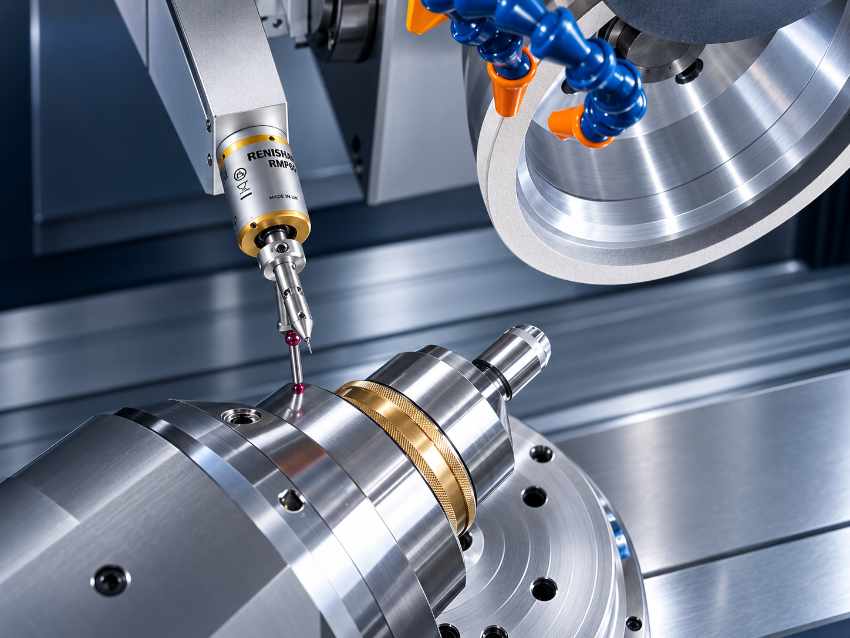
Measurement and process monitoring therefore form an integral part of the manufacturing concept. Critical dimensions can be checked during production and deviations identified before they develop into a larger quality problem.
Where appropriate, measured values can also be used for process compensation.
The objective is a closed and controlled manufacturing process, rather than simply an automated sequence of movements.
Less scrap has a much greater value than it appears
Reducing scrap has an immediate impact on manufacturing costs, but its effect goes much further than the value of the rejected component itself.
Every rejected insert has already consumed material, energy, machine time, tooling and production capacity. Depending on when the deviation is detected, additional operations may already have been performed on the component.
This makes process stability one of the most underestimated factors in calculating ROI.
Accurate positioning, controlled machining conditions and continuous measurement help maintain the process within the required tolerances. The result is not only better quality, but also more predictable production.
And predictability has an economic value of its own.
More output without simply adding more machines
When demand increases, the traditional response is often to add equipment, operators or additional shifts.
Before making that investment, however, it is worth asking another question:
How much unused productive capacity already exists?
A machine that requires frequent manual intervention may only produce during a fraction of the theoretically available hours of a week.
Long-term autonomous manufacturing can fundamentally change this equation.
If loading capacity, part recognition, process monitoring and reliability allow production to continue unattended, significantly more output can be generated from the same floor space and capital equipment.
This is particularly relevant in Europe, where qualified technical personnel are increasingly valuable and difficult to recruit.
Automation therefore does not simply reduce labour cost. It allows manufacturers to use their skilled employees more effectively.
ROI must be calculated over the complete process
When evaluating a manufacturing investment, purchase price is naturally important. But it is only one part of the calculation.
Pollux encourages customers to consider the complete cost per accepted component:
energy consumption + machine time + tooling + labour + maintenance + scrap + unproductive time.
An investment that initially appears more expensive can become the considerably less expensive solution when these factors are evaluated over several years.
This is where automation, energy efficiency and process control come together.
A machine producing autonomously for long periods, consuming less energy per finished component and detecting process deviations before significant scrap is generated creates value in several areas simultaneously.
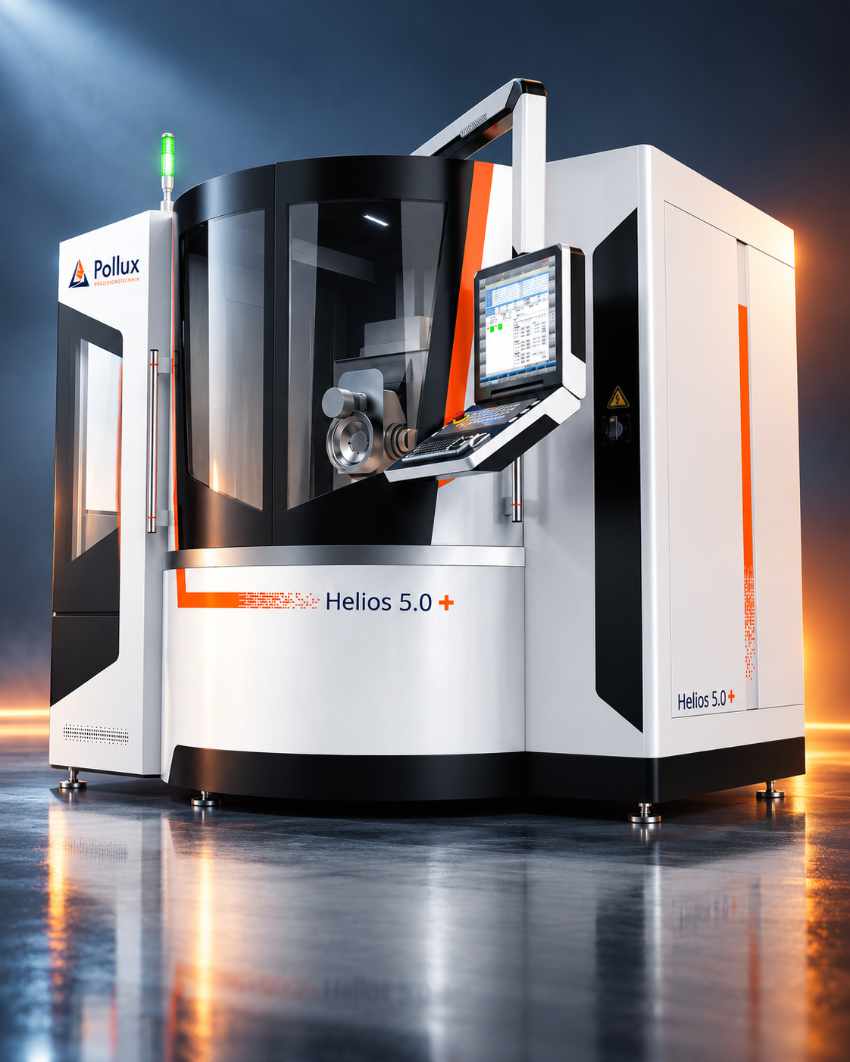
Innovation must ultimately produce a measurable result
Pollux does not advocate innovation simply because a technology is new.
For Pollux, useful innovation must provide a practical and measurable advantage to the customer.
It may mean producing more components with the same machine. It may mean extending production into unattended hours. It may mean reducing energy consumption, lowering scrap rates or making production less dependent on the availability of operators.
Ideally, it achieves several of these objectives simultaneously.
That is where Pollux sees the real ROI of innovation: not in having the newest technology, but in achieving more reliable output from every kilowatt-hour, every machine hour, every working hour and every piece of raw material invested in the process.