
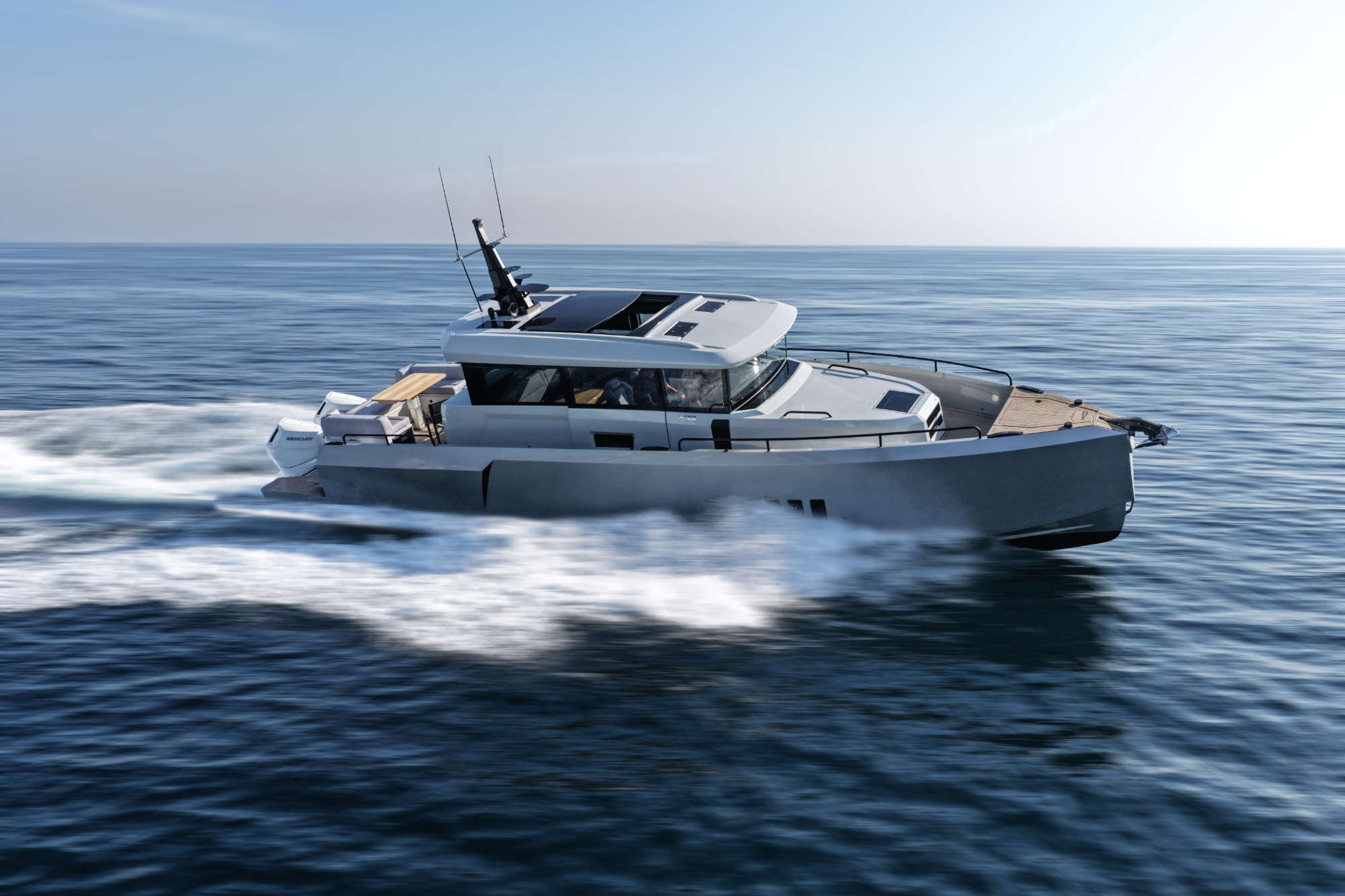
Leveraging over two decades of in-house engineering, XO Boats combines its signature Deep-V hull geometry with aerospace-grade adhesive bonding alongside traditional welding to reduce structural stress and maximize corrosion resistance. Through its specialized XO PRO division, the company’s engineers bespoke platforms for patrol, rescue, and OEM programs, integrating serviceability into early-stage design to minimize operational downtime and reduce long-term total cost of ownership.
Henrik Thelen, Sales Director at XO Boats Oy, outlines how the Finnish shipbuilder applies Scandinavian naval architecture and marine-grade aluminium construction to build vessels for demanding commercial, defence, and adventure environments.
How do you design your boats to deliver reliable performance over the long term, particularly in demanding industrial environments?
Henrik Thelen: Long-term reliability starts with designing for the real conditions in which a boat will operate. At XO Boats that rests on more than 20 years of designing and building high-performance aluminium boats for demanding marine environments. We begin with the operational requirement itself: weather, continuous saltwater exposure, changing temperatures, comfort on board, equipment, usage profile and serviceability. These decide the hull geometry, structural reinforcement, materials, components and systems we select, rather than a one-size-fits-all platform.
Our Scandinavian engineering philosophy emphasises seaworthiness, structural integrity, safety and predictable performance, backed by in-house aluminium expertise and full product development from engineering and prototyping through manufacturing, assembly, testing and final sea trials. Through XO PRO we apply the same principles to defence, patrol and rescue, commercial and specialised marine applications, and OEM programmes.
What are the key factors that determine the durability and service life of your products or solutions?
H.T: Durability comes from four things working together: engineering, materials, manufacturing quality and a correct understanding of how the boat will actually be used. The structure comes first. Hull geometry, structural design, reinforcement, weight distribution and load paths have to match the intended operating conditions, so the boat holds its performance when wind, sea and temperature are extreme.
Marine-grade aluminium gives us strength, corrosion resistance, low weight and long service life, but the material alone does not determine durability. How it is designed, cut, formed, joined, finished and assembled decides the result. Electrical, hydraulic, mechanical and communication systems have to work together just as reliably, and our in-house technical team gives us full control over the production process. Our boats are designed to work without compromises from the beginning.
How do you ensure that your boats can withstand challenging operating conditions such as heavy loads, continuous operation, temperature variations or other demanding factors?
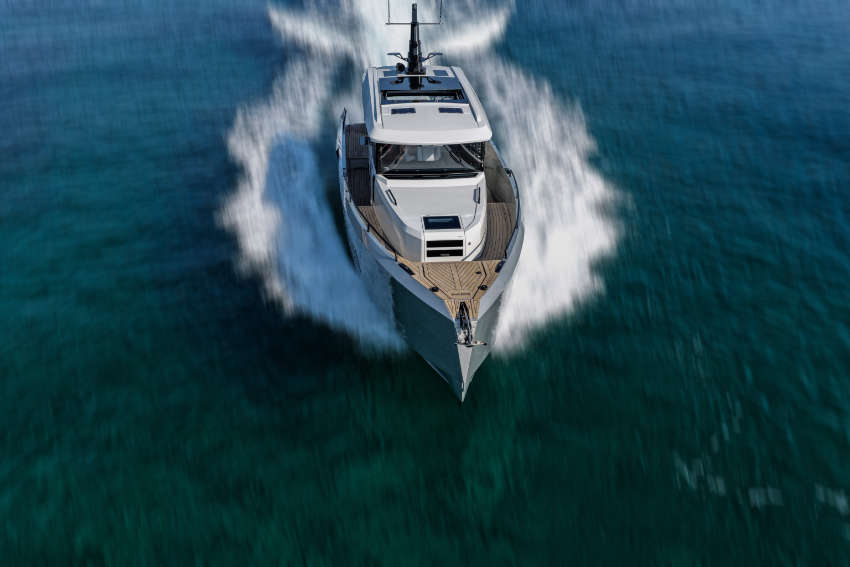
H.T: We design the boat around the actual operating profile. Professional boats face heavy loads, continuous operation, rough seas, temperature variation, saltwater and constant acceleration and manoeuvring, and those demands enter the engineering at the earliest stage. Our in-house naval architecture team translates them into the structural and technical design, so hull geometry, structural reinforcement, weight distribution and system configuration follow the intended mission. That matters most on professional boats, where equipment, crew, mission systems and payload significantly change the loads carried by the structure.
Verification then closes the loop. Specialised quality teams inspect every boat, often with customer representatives present, and sea trials confirm performance under real operating conditions before delivery.
How do your engineering and development processes contribute to improving the long-term reliability of your boats?
H.T: Engineering is the foundation, and our strength is the people behind the designs. Our in-house team combines naval architecture, marine engineering and aluminium construction, and many of our engineers and technicians bring 20 to 25 years of practical experience in their own disciplines. That architecture is externally recognised: the XO EXPLR 44 won Best Big Boat at the 2025 Best of Boats Awards in Berlin, and the XO Crossover DFNDR 9 was named Adventure Boat of the Year at the Motor Boats Awards at boot Düsseldorf in 2023.
Both awards reward the same hull and structural philosophy that now underpins XO PRO. Professional users may require customised hulls, layouts, equipment, mission systems or structural solutions, and our engineering experience allows us to adapt proven architecture to a new mission without giving up reliability or structural integrity.
What role do material selection, component quality and manufacturing standards play in ensuring durability?
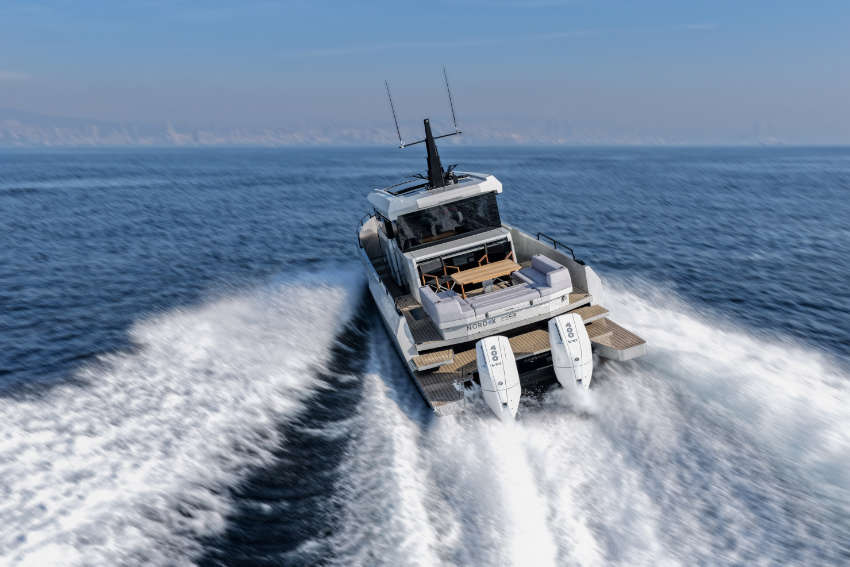
H.T: They are fundamental. Combined with salt, temperature variation, UV exposure, mechanical loads and continuous operation, water places constant demand on every part and component of the boat. Marine-grade aluminium sits at the centre of our construction philosophy, but its properties only deliver if they are correctly applied, and that is where craftsmanship decides the outcome.
Precision cutting, forming, welding, adhesive bonding and assembly are all done in-house by people who have spent their careers working aluminium, and consistency in those hands is what separates a structure that lasts from one that merely passes inspection. Components follow the same rule, chosen for the environment they will operate in and the demands placed on them. Where reliability affects operational readiness and safety, we do not look for compromises.
How do you approach maintenance and serviceability to help customers extend the operational life of your boats?
H.T: Serviceability belongs in the design phase, not at the first service interval. A boat built for demanding professional use has to be accessible, maintainable and able to stay operational for many years, so access to components and clear paths for future modification or upgrade are considered from the start.
We also do not simply build exactly what was first requested. We listen to the operational requirement, then use our experience to advise on what the solution should look like, because a different configuration or component often delivers better reliability, easier maintenance or a longer service life. For professional users, unnecessary downtime carries a direct operational cost, so good serviceability begins with good engineering.
How do you balance initial investment with long-term value, reliability and total cost of ownership for your customers?
H.T: The right investment decision cannot rest on purchase price alone. The more demanding the application, the more reliability, maintenance, operating cost, serviceability and expected lifetime decide the real figure. XO PRO lets us engage professional end users and OEM customers earlier in a project and give them the technical information to decide consciously.
We set out the advantages, limitations, risks and cost implications of each option, so the customer sees not only what the boat costs to build but what it will cost to operate and maintain across its life. Long-term value is the right balance between performance, reliability, investment and lifecycle cost. In XO PRO we are not supplying products off a shelf. We engineer boats around real operational needs.
What technologies or innovations are you implementing to improve the durability, reliability or lifecycle performance of your boats?
H.T: Innovation for us is not technology for its own sake. It is finding better ways to make a boat stronger, more reliable, more efficient and better matched to how it will be used. One example is advanced adhesive bonding used alongside welding in aluminium construction. Originally developed for demanding aerospace applications, it reduces welding stress and delivers greater precision and structural integrity.
What makes XO distinctive is the combination rather than any single technology: Scandinavian design, naval engineering, deep aluminium expertise and integrated in-house manufacturing inside one organisation. XO PRO now applies that combination to professional and OEM projects where durability, adaptability and lifecycle performance are critical.
How do you gather feedback from customers and real-world applications to continuously improve the long-term performance of your products?
H.T: The most valuable feedback comes from real-world use. Our approach to sales is not to push a purchase but to build long-term relationships and let the product speak for itself. XO PRO is opening a new source of that knowledge, as we increasingly work with professional organisations whose boats have highly specialised roles.
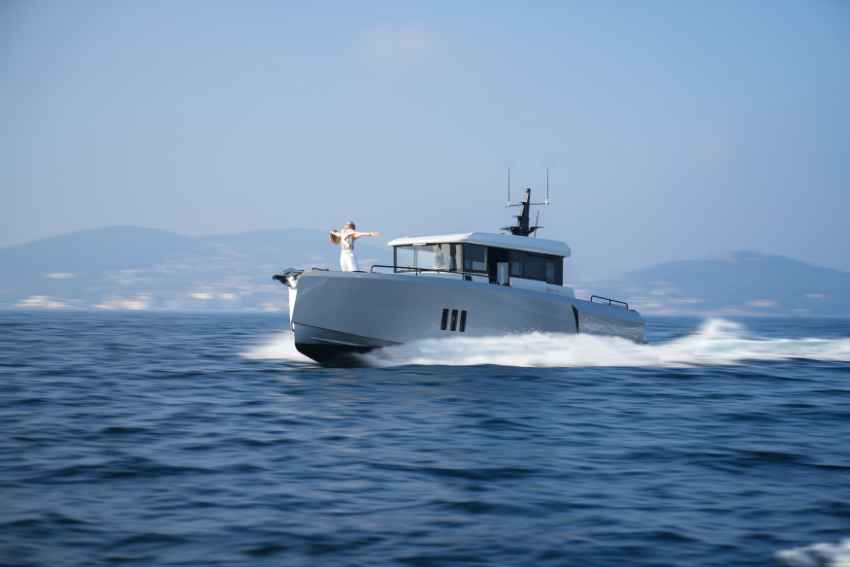
We do not publicly identify these customers unless they choose to be identified, since many projects carry operational or security-sensitive requirements. What we take from them is precise. An organisation arrives with a demanding requirement and, together, we build a boat that genuinely works for it.
Can you share an example of how one of your boats has delivered long-term value or reliability in a particularly demanding industrial application?
H.T: The clearest example is the proven performance of our Deep-V aluminium hull in demanding conditions. Over the years it has become one of the recognisable characteristics of XO and a direct expression of our approach to seaworthiness and durability. We would not credit the hull alone. Hull geometry, aluminium construction, structural reinforcement, welding and adhesive bonding, component selection, system integration, manufacturing quality and testing all have to work together.
Durability is never the result of one technology. It is the result of the whole boat being engineered and built as one integrated system. That experience is the foundation of XO PRO, where the same principle applies: understand the mission, engineer the complete boat, and build every element to perform together over the long term.
That is, ultimately, what we mean by Built to Last.
How do your boats deliver long-term durability and value in demanding industrial environments?
H.T: Built to Last is not one material, one technology or one engineering decision. It is many elements working together, from design and engineering through material selection and manufacturing to quality control, service and the relationship with the customer.
Behind all of it there are people. Engineers, naval architects, production teams, quality specialists, sales, after-sales and service all shape how the company operates and what the customer finally receives. Aluminium, engineering and technology create the physical boat. The people behind them create the quality, character and craftsmanship.
Whether we are building an XO Boats adventure boat, a specialised XO PRO platform or an OEM programme, the objective is the same: something that performs today, holds its value over time and earns the customer’s trust.
That is what we mean by Built to Last.