
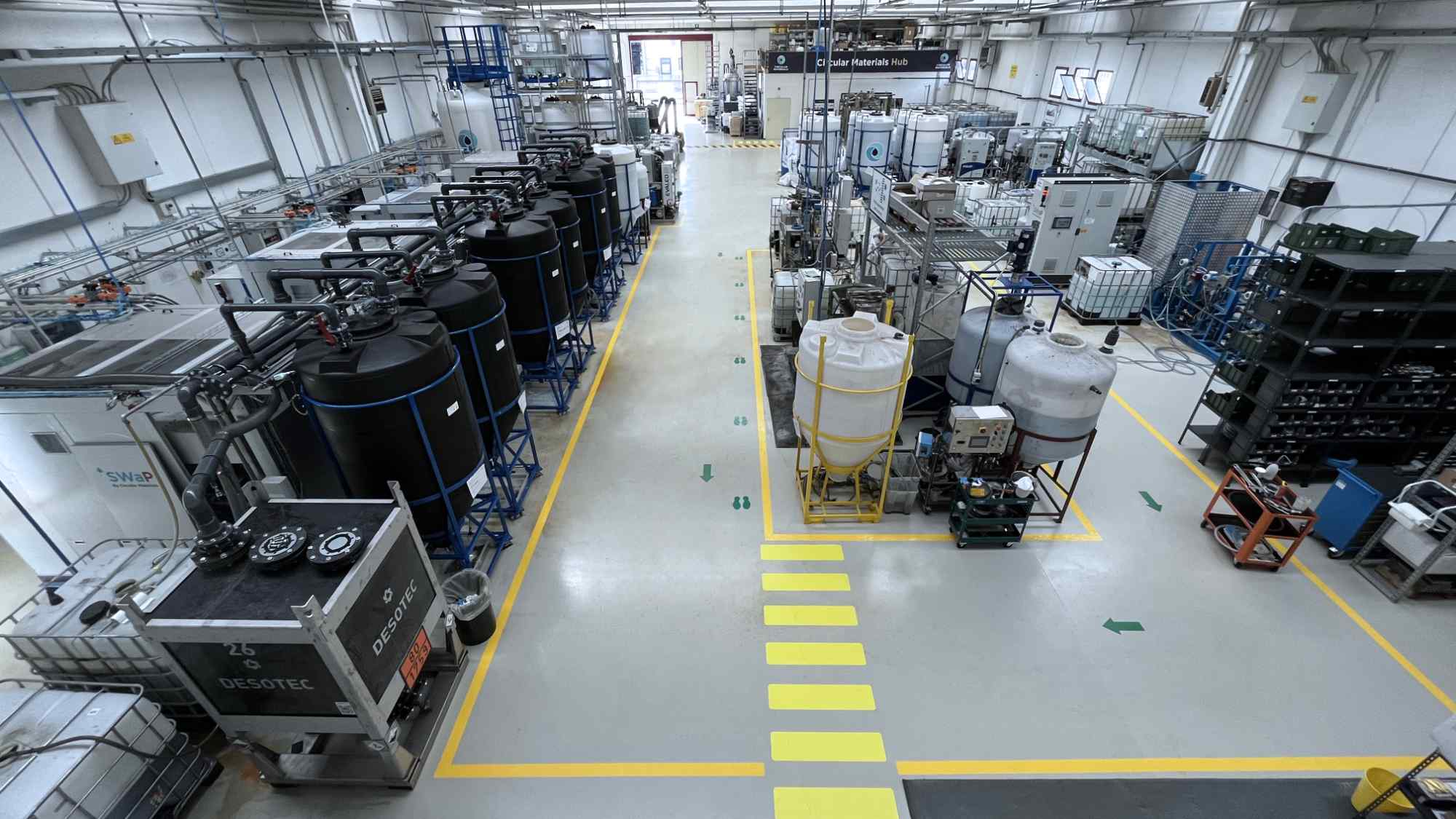
Utilizing its proprietary Supercritical Water Precipitation (SWaP™) platform, Circular Materials processes heavy-metal-laden wastewater from electroplating, chemical, semiconductor, and aerospace manufacturing. The continuous-flow process operates above water’s critical point (374°C and 22.1 MPa) to force metal precipitation, achieving recovery rates exceeding 99% for copper, nickel, chromium, tin, and precious metals.
Designated a Strategic Project under the EU Critical Raw Materials Act (CRMA), Circular Materials is scaling its operational model from its initial Padua plant toward a 20,000-tonne-per-year commercial hub in Ferrara.
Marco Bersani, CEO and Founder of Italian scale-up Circular Materials, details how the company is redefining strategic resource recovery across European industry.
A brief description of the company and its activities.
Marco Bersani: Circular Materials is an Italian scale-up focused on the recovery and valorisation of strategic and critical raw materials from wastewater generated by industrial manufacturing processes. Founded in 2019, the company has developed, built and scaled Supercritical Water Precipitation (SWaP™), a proprietary technology platform that generates streams of critical metals without the environmental impact typically associated with conventional mining and waste management, achieving recovery efficiency rates exceeding 99%. In March 2025, the European Commission selected Circular Materials as a Strategic Project under the Critical Raw Materials Act (CRMA), recognising the company’s role in building a sustainable alternative to conventional mining and strengthening supply chain resilience. Since August 2024, the first operational plant has been running in Padua, with an authorised capacity of 3,000 tons of wastewater per year. In 2027, the company will launch its second industrial hub in Italy, targeting the recovery of over 1,000 Tonnes Per Annum (TPA) of nickel, copper, chromium and precious metals.
What are the main areas of activity of the company?
M.B: Circular Materials operates metal recovery sites where it receives wastewater from its customers that would otherwise be sent through conventional disposal routes, with metals ending up either in hazardous waste landfill or surface waters. Whenever a company processes metals, it generates polluted water streams that require costly management and processing due to the hazardous nature of heavy metals. The company’s main target sectors are Surface Treatment, Electroplating & Galvanic, Chemical, Metallurgical & Refining, Pharmaceutical, Fashion, and Semiconductor Manufacturing & Electronics, as well as Defense & Aerospace. Through multiple SWaPTM units, metals are recovered and reintroduced to the production cycle as commodities and advanced materials for multiple applications, including the very same processes that have generated the initial waste streams; perfect circularity.
What’s the news about new products/services?
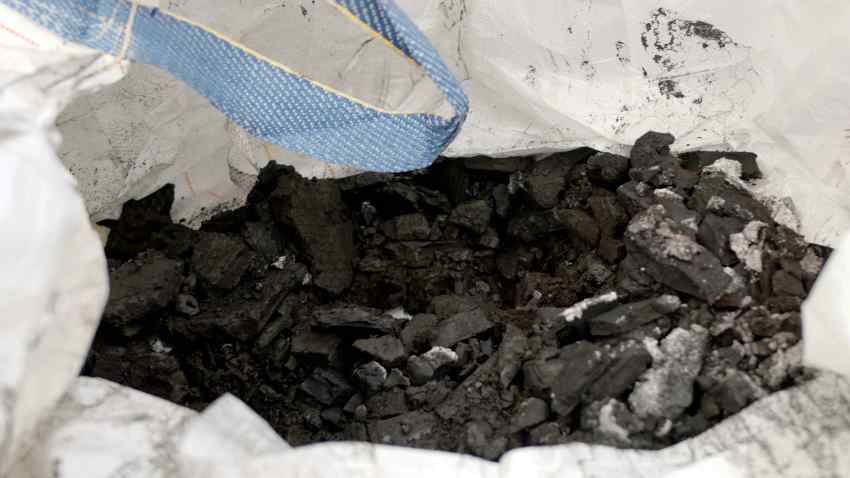
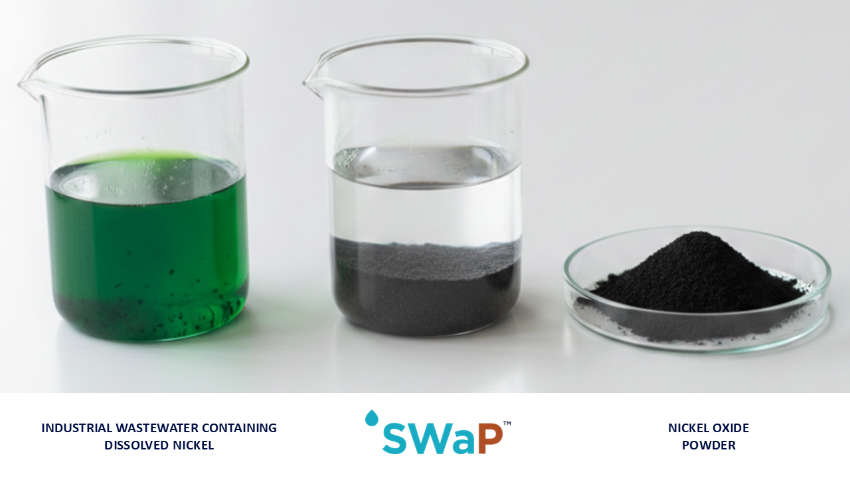
M.B: In contrast to currently-deployed treatment technology, Circular Materials’ service can simultaneously treat industrial wastewater and recover strategic metals from it. Unlike traditional waste disposal methods, which focus on returning wastewater to a dischargeable quality by locking the pollutants in hazardous sludges destined for landfill, SWaP™ focusses on clean and quantitative resource recovery, significantly reducing the environmental impact associated with disposing of this effluent. By recovering up to 99% of dissolved metals, regardless of the complexity or concentration of the wastewater matrix, SWaP™ yields reusable metal oxides as secondary raw materials, supporting client industries’ transition toward more circular processes and allowing them to recover some of their operating costs
What are the ranges of products/services?
M.B: Circular Materials’ core offering is a wastewater treatment and metal recovery service, delivered end-to-end to industrial clients through the proprietary SWaP™ platform. As a service, it works as follows: each batch of wastewater from clients is tracked and analysed at the company’s facility; internal analysis defines the optimal “recipe” to maximise recovery rate and energy efficiency; the wastewater is then mixed with supercritical water (water heated above 374°C and pressurised above 22.1MPa, creating a state of water where distinct liquid and gas phases disappear and water exhibits unique physical properties) in a continuous-flow reactor, forcing metals to cluster and precipitate; metal particles settle cleanly and rapidly for easy separation and recovery; recovered metals are converted into high-quality secondary raw materials; and the water, now freed of metals, is reused internally in the company’s own process. Clients are relieved of their wastewater and its treatment costs and can benefit financially from the recovered materials, receiving a percentage of the economic value of the metal itself. The technology has been validated on over 285 types of industrial liquid matrices, recovering metals such as copper, chromium, nickel, tin, and precious metals, whose recovery is often challenging and beyond their value.
What is the state of the market where you are currently active?
M.B: The market where we operate is at an inflection point, driven by both regulation and necessity. As it seeks to implement its energy transition, Europe is under growing pressure to create a secure domestic supply chain for critical raw materials. As our CEO Marco Bersani puts it: “Europe faces a dual challenge: securing access to critical raw materials while reducing the environmental impact of industrial processes – and industrial wastewater is a valuable resource that remains largely untapped”. This regulatory and geopolitical pressure, reinforced by the EU’s Critical Raw Materials Act (CRMA), is creating strong market pull for recovery services like ours.
Yet the US and Europe together lose over 100,000 tonnes of strategic metals every year – nickel, copper, cobalt, platinum group metals, rare earths – through industrial wastewater that flows to landfills and rivers without being recovered. As demand for transition metals accelerates and geopolitical tensions compress primary supply, the inability to recover these resources from waste streams is becoming a bigger and bigger burden , both economically and strategically.
The CRMA, as well as the US Defense Production Act (DPA), the DOE’s Critical Materials Strategy, are legislative requirements: they mandate that recoverable CRMs must be retained and not shipped abroad, not disposed of, and become structural contributors to industrial and defence needs. Circular Materials is a technological and commercial answer. We operate directly in this gap, with a unique technology and a first-mover advantage that is difficult to replicate.
What can you tell us about market trends?
M.B: This question has become increasingly relevant, as Europe’s resource challenge has changed profoundly over the past decade. Not long ago, discussions about critical raw materials centered almost exclusively on the energy transition and its hardware such as batteries, electric vehicles, wind turbines and photovoltaic cells. Those drivers remain important, but they no longer act alone: the same materials now underpin AI infrastructure, semiconductors, advanced robotics, aerospace, defence technologies and the expansion of electricity grids for a more electrified economy. Several industrial transformations are happening simultaneously, all competing for access to the same finite resources. At the same time, Europe has become acutely aware of the fragility of global supply chains. Extraction and processing of many strategic raw materials remain concentrated outside the EU, leaving manufacturers acutely exposed to geopolitical tensions, export restrictions and disruptions largely beyond their control.
What are the most innovative products/services marketed?
M.B: Our flagship innovation is SWaP™ itself; a technology that can quantitatively recover more than 99% of any metals from industrial wastewater of any complexity while also reducing the hazardous sludge generated by conventional treatment. Our RECOVER-IT initiative was selected by the European Commission as a Strategic Project under the CRMA in 2025. Our Padua facility has achieved End-of-Waste status under the EU Waste Framework Directive, allowing recovered metals to legally directly re-enter commercial supply chains – a regulatory milestone few competitors have reached.
What estimations do you have for the second half of 2026?
M.B: The trajectory points to continued scale-up. In July 2026, Circular Materials closed an €11.8 million SAFE (Simple Agreement for Future Equity) financing round, backed by CDP Venture Capital, the European Innovation Council Fund, EIT RawMaterials, 360 Capital, Corbites, and Lumar S.r.l. This fresh capital will support the company’s move from industrial validation toward broader commercial deployment of its recovery platform, with the construction and expansion of a Ferrara hub as the near-term priority. Designed for roughly 20,000 tons/year of industrial treatment capacity, the Ferrara hub represents a tenfold increase over the current Padua plant (CMH0).