
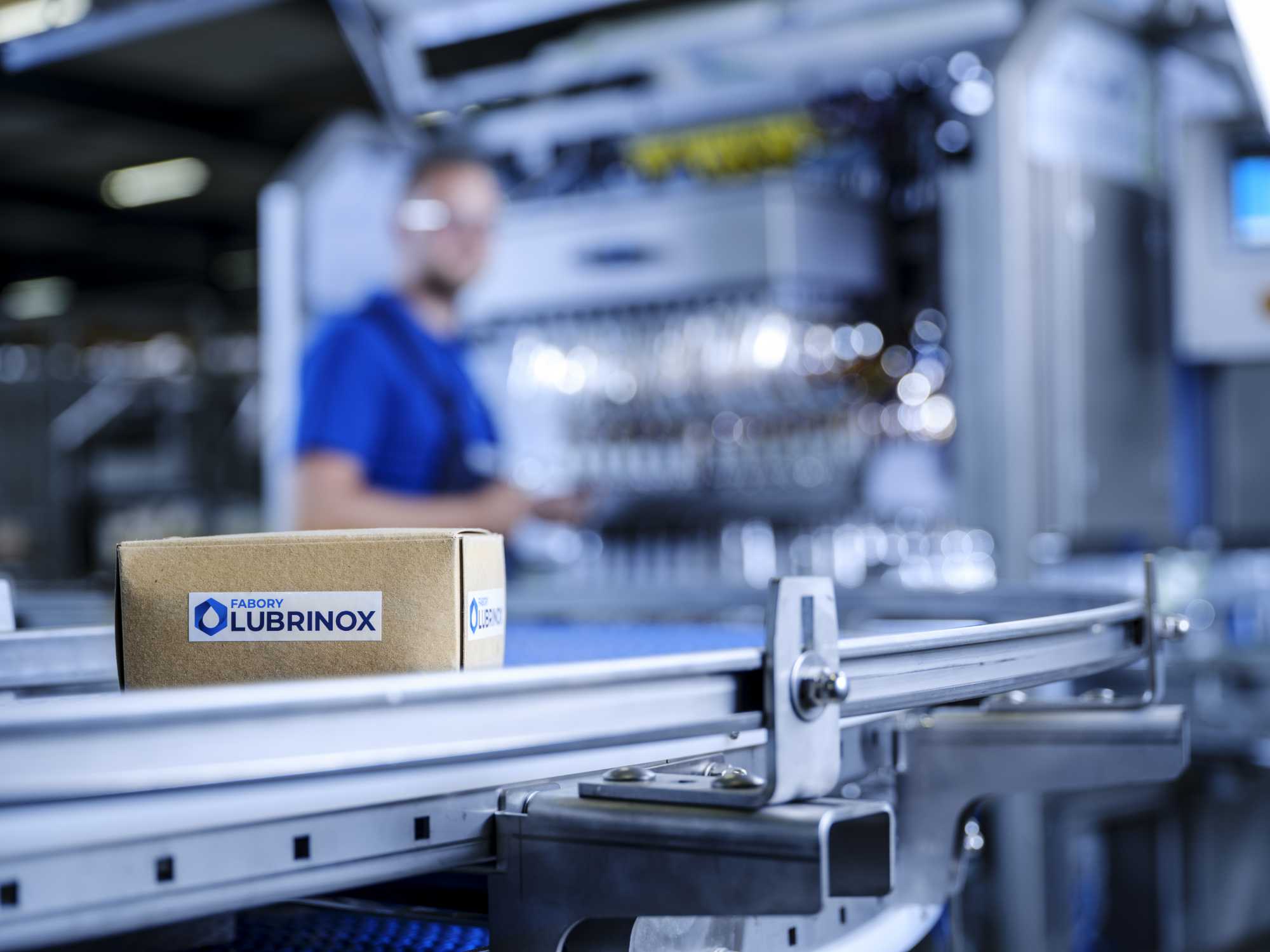
Moving beyond initial purchase price, Fabory combines technical engineering, supported by an A2LA ISO/IEC 17025 accredited laboratory, with advanced material coatings and digital inventory management.
Steven Roberts, Group Marketing Manager at Fabory, details how the European industrial fastener specialist delivers long-term value and operational reliability across demanding industrial environments. Roberts explains how solutions like Lubrinox® eliminate stainless-steel thread galling to save up to €200,000 annually per plant, while the Fabory Logic platform utilizes RFID Smart Shelves and Weight Scale Cabinets to cut total procurement and downtime costs by up to 22.6%.
How do you design your solutions to deliver reliable performance over the long term, particularly in demanding industrial environments?
Steven Roberts: At Fabory, long-term reliability starts long before a fastener is selected, it starts with understanding the application. Our engineers assess mechanical load, operating environment, corrosion exposure, temperature, material compatibility, installation method and the relevant industry standards before any product is specified.
From that analysis, we select the appropriate material, strength class, surface treatment and fastening technology. Our range spans property classes from 4.6 to 12.9, multiple stainless-steel grades and specialist finishes including zinc flake and hot-dip galvanising, backed by technical expertise, rigorous quality control, in-house testing and full batch traceability on every order.
The objective never changes: a fastening solution that performs safely, predictably and reliably for the entire intended service life of the application, not just at installation, but for years afterwards.
What are the key factors that determine the durability and service life of your products or solutions?
S.R: Durability is rarely determined by a single variable. Material selection and mechanical strength matter, but corrosion protection, temperature, vibration, friction, preload, installation quality and the surrounding environment can be just as decisive
That is why correct specification is critical. A fastener that performs perfectly in one environment may be entirely unsuitable in another. Depending on the application, stainless steel, zinc flake, hot-dip galvanised products or specialist technologies such as Lubrinox can each offer a distinct advantage.
Correct installation is equally essential. Even the highest-quality fastener will see its service life shortened if it is incorrectly tightened, installed into an unsuitable material or subjected to loads beyond its design parameters, which is why we treat specification and installation guidance as part of the same conversation with customers.
How do you ensure that your solutions can withstand challenging operating conditions such as heavy loads, continuous operation, temperature variations or other demanding factors?
S.R: We match the fastener and fastening system to the actual operating conditions. For heavily loaded applications, this may mean selecting higher-strength property classes or fastening systems manufactured to standards such as EN 14399 for preloaded structural bolting. For anchoring applications, ETA documentation, load data and our Anchor Calculator help engineers select an appropriate solution.
Environmental exposure is addressed through material and coating selection. Stainless steels, zinc flake coatings, hot-dip galvanising and other surface treatments each provide a different level of corrosion protection, so we specify to the environment rather than defaulting to a standard finish.
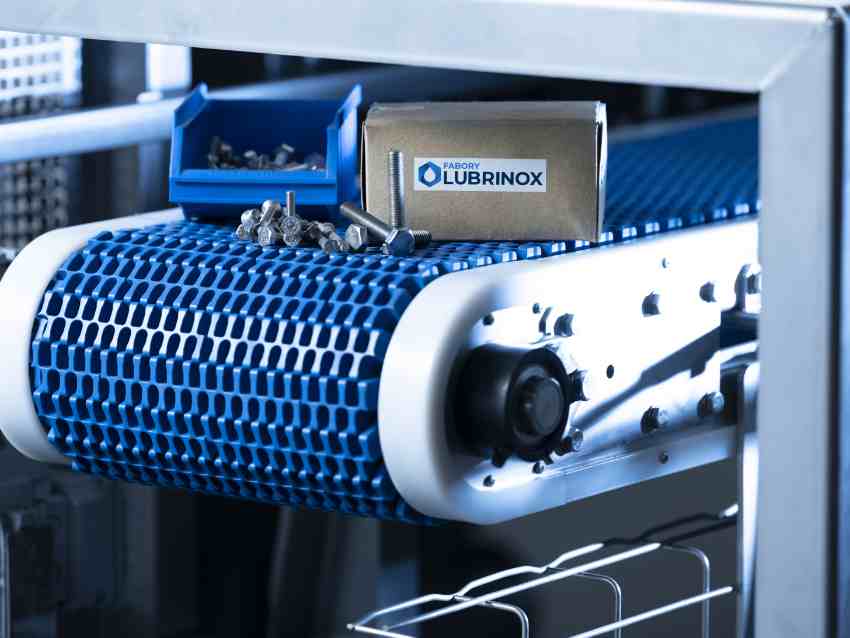
For more demanding conditions, specialist solutions come into play. Lubrinox, for example, delivers controlled friction and anti-seizing performance across a temperature range of approximately -180°C to +250°C, giving engineers consistent, repeatable performance from stainless-steel fastening even in extreme environments.
How do your engineering and development processes contribute to improving the long-term reliability of your solutions?
S.R: Engineering support sits at the core of what we do. Fabory’s laboratory holds ISO/IEC 17025 accreditation through A2LA, underpinned by our wider quality management processes. In-house testing covers hardness, thread characteristics, tensile properties and material compliance, so performance claims are backed by data, not assumption.
That testing capability is combined with supplier qualification, technical consultation and application expertise, giving customers confidence at every stage of the supply chain. Where required, we also provide documentation including material certificates, ETA, DoP and CE-related information.
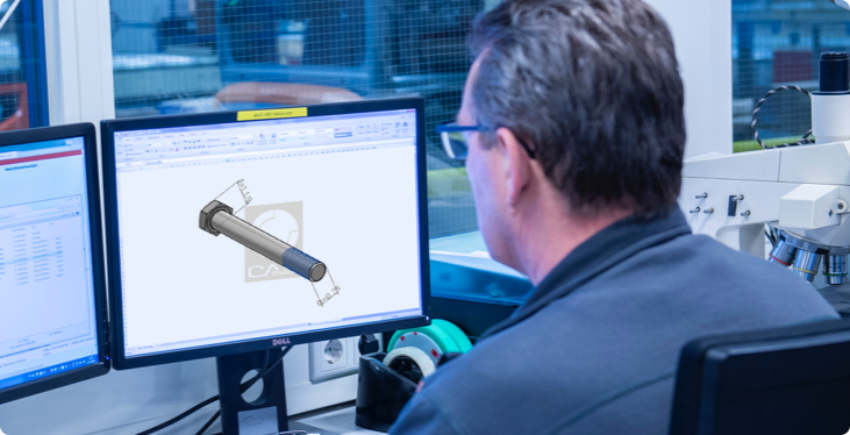
Digital engineering tools are increasingly part of that process too. Our 3D portal gives engineers access to tens of thousands of product models in more than 100 CAD formats, making it easier to specify the correct fastening components earlier in the design cycle, reducing rework and improving reliability downstream.
What role do material selection, component quality and manufacturing standards play in ensuring durability?
S.R: They are fundamental, the long-term performance of any fastening connection is only ever as strong as the specification and quality of the components behind it.
Fabory’s portfolio spans a wide range of materials, mechanical property classes and international standards, including DIN, ISO, EN, ASME, BS and other recognised specifications, so customers are rarely constrained by what we can supply. Depending on the application, we also support documentation such as 3.1 certificates, ETA and DoP.
Quality control, supplier selection and batch traceability add a further layer of assurance, giving customers not just the right product, but full confidence that it conforms to the required specification, traceable back through the supply chain whenever it’s needed.
How do you approach maintenance and serviceability to help customers extend the operational life of your solutions?
S.R: The best maintenance strategy starts before a single fastener is installed. Getting the material, coating, preload and installation right the first time significantly reduces future problems such as corrosion, loosening, seizing or premature replacement.
That’s why we support customers with technical advice, product selection and application guidance from the outset. In the right applications, technologies such as Lubrinox also make assembly and subsequent servicing easier by reducing the risk of stainless-steel galling and seizing.
Our inventory management solutions add another dimension. Fabory Logic helps ensure the correct components are available at the point of use, reducing the risk of emergency substitutions or shortages that would otherwise disrupt maintenance schedules and production.
How do you balance initial investment with long-term value, reliability and total cost of ownership for your customers?
S.R: We always encourage customers to look beyond the purchase price of an individual fastener. In most industrial environments, the component itself is a very small part of the overall cost procurement, handling, inventory, assembly time, maintenance and production downtime typically have a far greater financial impact.
That is the principle behind Fabory Logic. Depending on the customer’s situation, our inventory management solutions have delivered demonstrated reductions of up to 75% in downtime, 22.6% in total cost, 10.7% in inventory cost and 7.4% in procurement cost.
The same principle applies to product innovation. In one high-volume application using Lubrinox, saving approximately 25 seconds per fastener across 200,000–250,000 bolts a year equates to around 1,600 working hours close to one full-time equivalent freed up for higher-value work.
In other words: the lowest-cost component is rarely the lowest-cost solution over its lifecycle and that’s the conversation we have with every customer.
What technologies or innovations are you implementing to improve the durability, reliability or lifecycle performance of your solutions?
S.R: Innovation at Fabory happens on two fronts: the physical product itself, and the way customers manage and consume fastening components day to day.
On the product side, technologies such as Lubrinox deliver controlled friction and anti-seizing performance, while advanced surface treatments such as zinc flake coatings provide high corrosion resistance with a lower risk of hydrogen embrittlement than some traditional electroplating processes.
On the digital side, we continue to invest in tools such as our Anchor Calculator, 3D engineering portal, and Fabory Logic technologies including RFID Smart Shelves, Weight Scale Cabinets, Optical Bin systems, FastScan, Pick & Put-to-Light and our newest innovation, Smart Label.
Together, these technologies improve lifecycle performance from more than one direction: some strengthen the fastening connection itself, while others improve stock availability, traceability, replenishment and overall operational reliability and it’s that combination that sets Fabory apart.
How do you gather feedback from customers and real-world applications to continuously improve the long-term performance of your products?
S.R: Customer feedback reaches us through close, ongoing collaboration between our customers, sales teams, technical specialists, product management and onsite inventory management teams — it’s built into how we work, not a periodic survey.
Fabory Logic gives us an even closer view of how fastening components are actually consumed in production environments. Technologies such as RFID and weight-based inventory management let us understand replenishment and usage patterns far more accurately than traditional manual stock checks ever could.
Real-world implementations, technical consultations and customer cases then give us practical, evidence-based insight into where products, services or processes can be improved. That feedback loop is what keeps both our product portfolio and our supporting technical and digital solutions moving forward.
Can you share an example of how one of your solutions has delivered long-term value or reliability in a particularly demanding industrial application?
S.R: One example that stands out is Lubrinox, Fabory’s pre-lubricated stainless-steel fastening solution, developed to prevent galling and seizing in demanding assembly environments.
Manual lubrication adds significant time and variability to the fastening process. Fabory’s own internal time-and-motion studies show that the full lubrication and clean-up cycle can take up to 25 seconds per bolt.
By removing the need for manual greasing, Lubrinox makes assembly faster, cleaner and more consistent. In one customer application, cumulative savings from eliminating manual lubrication exceeded €200,000 a year at a single plant, with the associated anti-seize compounds representing a further potential saving of approximately €3,000 annually, depending on product and consumption rate.
The coating also delivers consistent friction characteristics of approximately 0.12 ± 0.04, making tightening behaviour more predictable while significantly reducing the risk of galling.
It’s a good illustration of long-term value precisely because the benefit isn’t limited to the price of the fastener. It reduces assembly time, simplifies the process, lowers consumable costs and cuts the operational risk that comes with seized stainless-steel fasteners, the kind of compounding value that’s easy to miss if you only look at the unit price.