
Pacoon is helping B2B and B2C brands navigate the mandatory requirements of the EU Packaging and Packaging Waste Regulation (PPWR). Peter Désilets, Co-Founder and General Manager of Pacoon, details the company’s proprietary digital compliance tools, including the PPWR Check© and the PPWR Conformity Hub© for generating required Declarations of Conformity (DoC).
Beyond regulatory alignment, Pacoon outlines major industry shifts, including recyclable fibre-based “paperization” barriers, weight-reduced reusable containers, and standardized data integration with ERP systems across European supply chains.
A brief description of the company and its activities.
Peter Désilets: Pacoon is Europe’s leading sustainable packaging expert with offices in Hamburg and Munich. For 20 years, they’ve tracked trends and monitored legislation, identifying solutions and supporting clients through implementation. The EU’s Packaging and Packaging Waste Regulation (PPWR) is key legislation. Pacoon’s web tools and expertise help companies screen, cluster and manage declaration of conformity. Their PPWR Check© web tool identifies 2030+ requirements and develops B2B/B2C solutions.
What are the main areas of activity of the company?
P.D: The consultants’ activities are divided into three pillars:
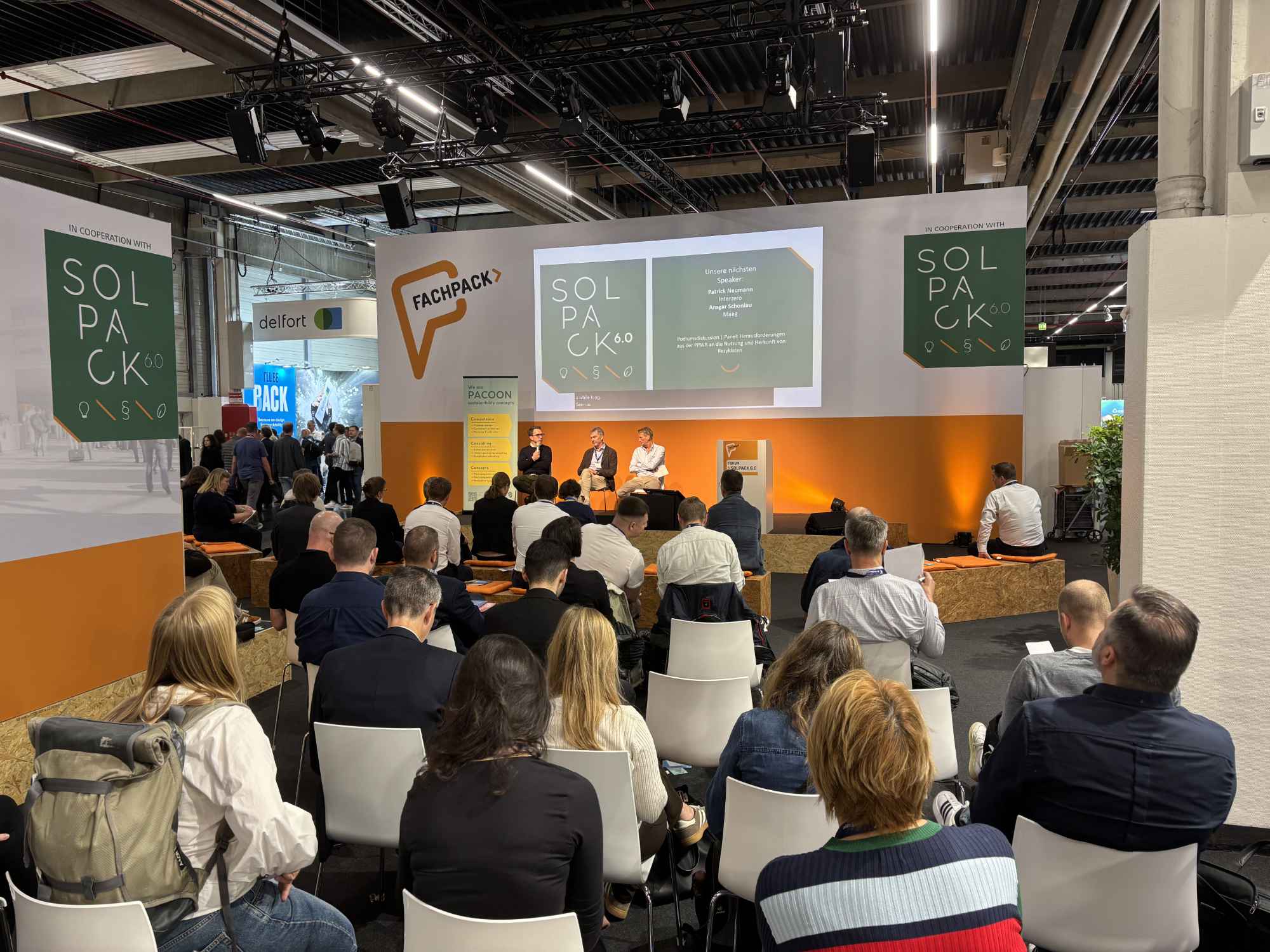
- Competence: delivering know-how via training, workshops, webinars, and organising the SOLPACK – International Conference on Sustainable Packaging.
- Conception: developing sustainable packaging solutions in 2D and 3D using various materials, with experience in reusable and single-use systems for B2B and B2C.
- Communication: pacoon has a strong background in communication and labelling of packaging for new EU-harmonised labels and the ECGT Empowering Consumers to the Green Transition.
Pacoon focuses strongly on innovative materials and concepts, guiding companies towards real circular packaging solutions that depend on the existing infrastructure of target markets. Pacoon has been actively involved in, or acted as an advisor for, more than 100 funding projects at national and EU level, and therefore has in-depth knowledge of new material and technology developments.
What’s the news about new products/services?
P.D: Drawing on our long-standing experience in packaging and sustainability, Pacoon has monitored trends and developments in fibre-based packaging. We have followed the Paperization trend via our own projects, which has been a key topic in recent years. New barriers with a high level of recyclability allow companies to achieve better CO2 goals and reduce costs. In collaboration with industry partners, we have significantly expanded the possibilities for food packaging and other products.
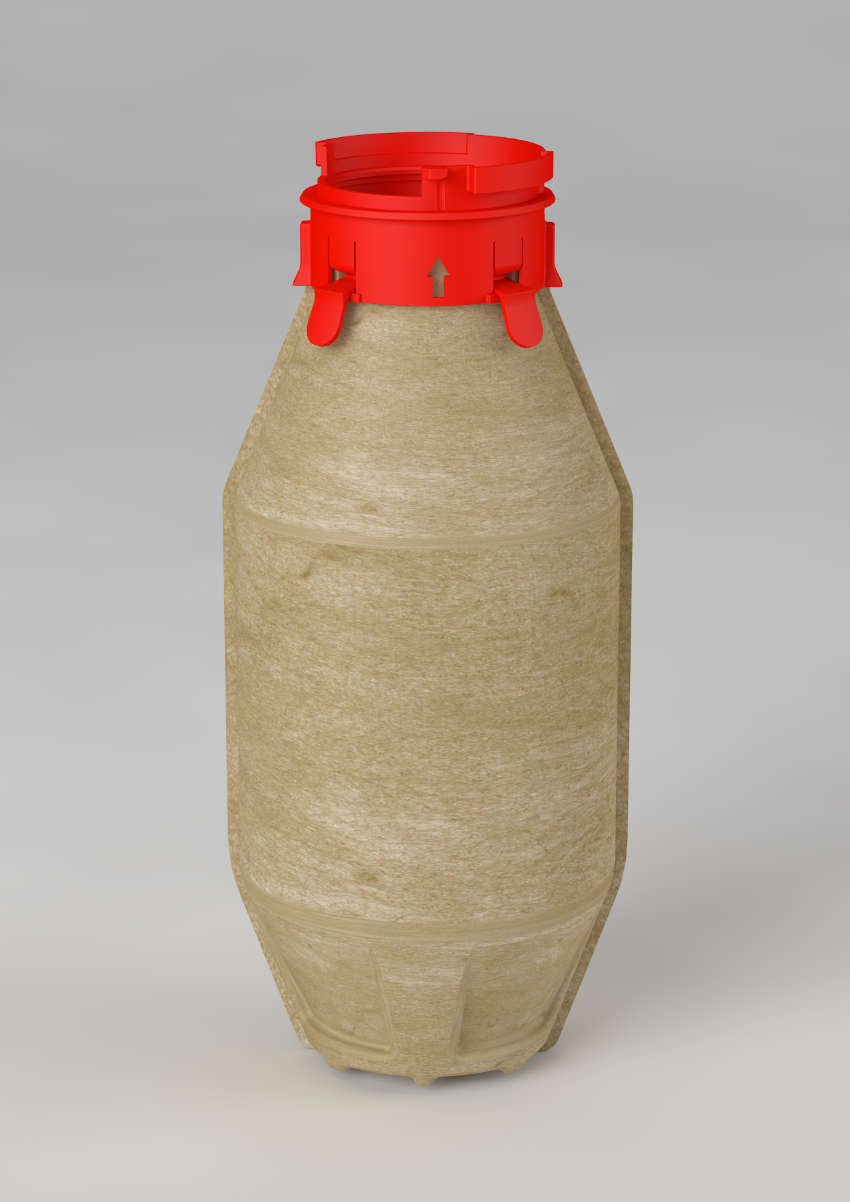
Since 2020, Pacoon has also invested in reusable packaging concepts for B2C and B2B. These are growing rapidly and will be further encouraged by the new PPWR legislation requirements until 2030 and beyond.
For B2C, Pacoon has developed a new container concept that reduces the weight of containers and transport volume of empty containers and crates by almost 50%. This is in the finalisation stage. Pacoon is a member of the ReUse Association in Germany and the European New ERA network. Since 2023, Pacoon has also been a member of ENFIT, the international organisation for supply chain safety. Peter Désilets, the general manager, is a member of the advisory board and a key member of the 360 ReUse working group, which is developing new harmonised standards for B2B reuse systems.
Since 2023, pacoon has been supporting companies to help them become compliant with the Packaging and Packaging Waste Regulation (PPWR). The company has also developed two software solutions: the PPWR Check© web tool, which automatically identifies the 2030 requirements, and the PPWR Conformity Hub©, which generates and manages Declarations of Conformity (DoCs) required from manufacturers of packaging made available on the EU market from 12 August 2026.
Currently, many SaaS solutions for calculating recyclability are also emerging, based on the minimum standard set by the Central Agency in Germany. Other established services in recent years offer EPR fee calculations in respective countries, which allow material comparisons including total cost comparisons. Other solutions currently offer supply chain data management, where pacoon is collaborating with osapiens and Tanso to manage packaging data and streamline data handling.
What can you tell us about market trends?
P.D: Pacoon is addressing the most significant challenges in the field of packaging materials and systems with these top two trends – paperisation and reusable packaging. Pacoon’s long-standing background in circular packaging, from raw materials to end of life, enables it to develop packaging concepts that comply with current legislation and align with the EU’s Green Deal goals: reducing CO2 emissions, using fewer fossil plastics, increasing circularity (from bio-based raw materials to recyclable materials), and reducing waste.
We will probably see more ‘real mono-material’ packaging, which is highly recyclable, as well as more bio-based plastics such as Bio-HDPE and Bio-PET, provided these raw materials are accepted as a substitute for mechanically, chemically or solvent-based recycled content. Compostable materials will only increase if the new infrastructure systems being built under the PPWR goals for each member state also allow for the collection and recycling of compostable packaging in a separate stream.

What are the most innovative products/services marketed?
P.D: The most innovative packaging concepts on the market are fibre-based and have a barrier function. Therefore, barriers and new application technologies are currently the most eye-catching and trendy solutions. Alongside other requirements, such as laboratory analyses and packaging composition details, companies may be able to understand the hidden obstacles to high recyclability and discover new solutions. Real barrier requirements are mostly a black box for packaging engineers, who rely on common solutions instead of real needs. Understanding the OTR and WVTR requirements of products under realistic shelf life conditions can lead to new solutions.
In plastic packaging, optimising thickness and creating mono-layered, highly recyclable solutions is key. The biggest challenge for most companies regarding the digitalisation of data will be shifting from unstructured data storage in PDFs and Excel to managed ERP systems in order to respond to the demand for proven data and proofs in the new PPWR and other legislation.
What estimations do you have for the second half of 2026?
P.D: Many companies are realising their obligation to generate and manage the Declaration of Conformity (DoC) for PPWR, with the deadline extended to 2026. The latest EU FAQs and the intention to allow companies time to comply with the regulation and make changes means that over 50% of companies will prepare their DoCs in 2026. We are receiving a high volume of requests for workshops to help companies define and clarify their roles, screen and cluster their packaging portfolios, and prepare their DoCs and related documentation. Depending on the availability of documents relating to heavy metals, PFAS, specifications, and declarations from suppliers, this can be achieved within days or weeks using our workshops, Excel templates, and PPWR Conformity Hub©. Suppliers are familiarising themselves with the PPWR obligations and have been handing over data more quickly in recent weeks.
In the last quarter, we will probably see more companies starting to prepare for 2030. The greatest challenges are integrating recycled content in plastics and reusable packaging in B2B and transport packaging, which have very high target quotas, as well as managing data for future reporting. Considering the cost-saving potential of EPR fees for fibre-based solutions and reusable packaging compared to single-use plastic packaging, as well as the rising costs of recycled content due to demand and limited availability, it is likely that new efforts will focus on alternative material concepts and the integration of reusable packaging into the production process and supply chain of consumer packaging.
B2B reuse concepts require harmonised and high-level cleaning/hygiene, as well as return logistics and adaptation to logistics/production processes. These concepts should be adapted according to the PPWR obligations, which is something the entire industry should take responsibility for, as failing to address this can result in unsuitable/expensive solutions and product safety/trademark protection problems.