
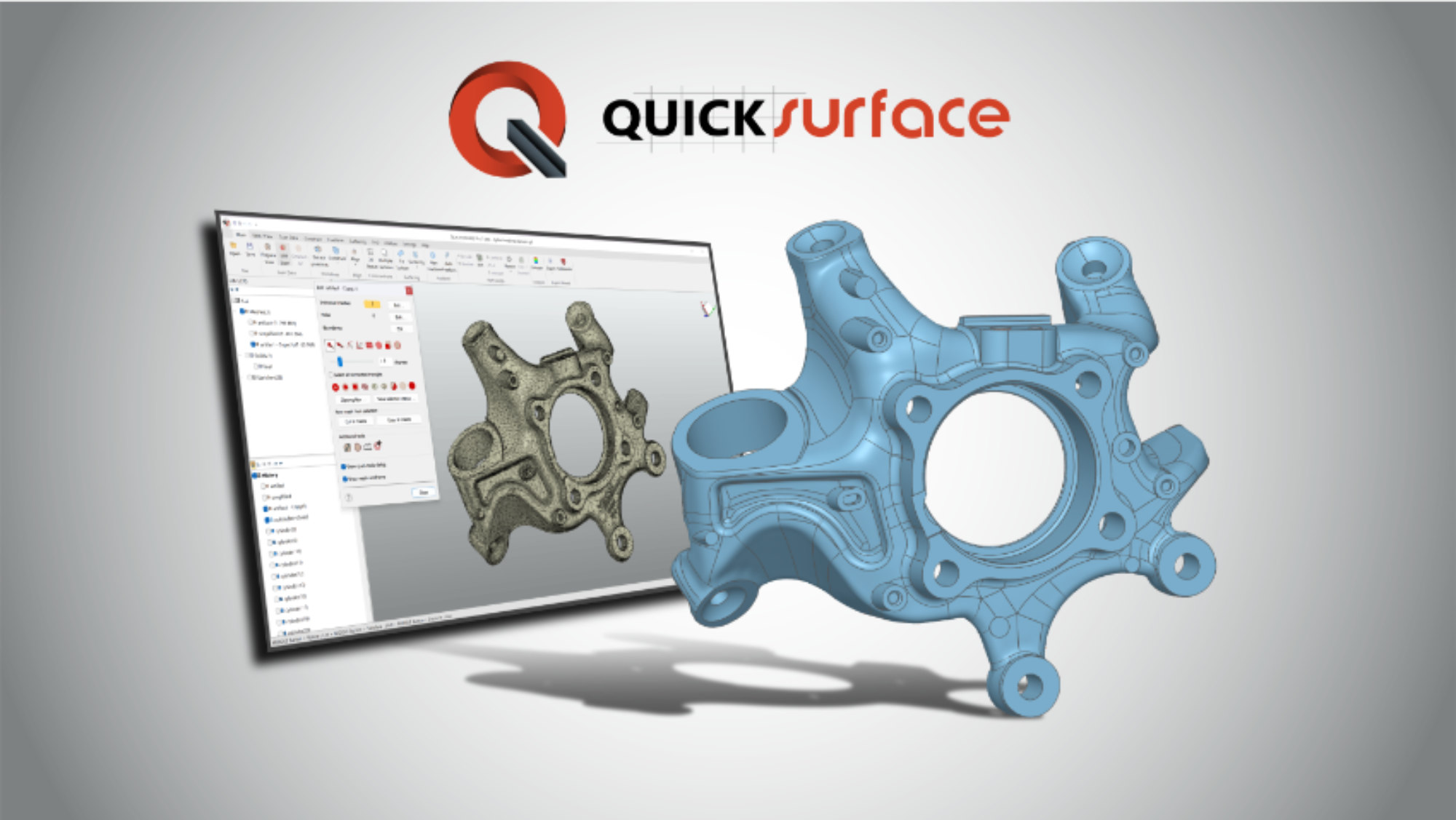
QUICKSURFACE develops professional Scan-to-CAD reverse engineering software used by manufacturers, engineers, product designers, and 3D scanning professionals worldwide. Their software converts 3D scan meshes into accurate CAD models for redesign, manufacturing, inspection, tooling, restoration, and product development.
The company focuses on practical workflows that connect 3D scanning with manufacturing-ready CAD. QUICKSURFACE supports scanner-agnostic workflows with STL, OBJ, and PLY data and helps users reconstruct both freeform and parametric geometry from scan data.
QUICKSURFACE’s philosophy is simple: reverse engineering is not just mesh conversion. It is the process of rebuilding engineering intent and creating CAD models engineers can manufacture and reuse.
Interview with Kostadin Vrantsaliev, Founder & Product Manager of QUICKSURFACE.
What are the main areas of activity of the company?
Kostadin Vrantsaliev: Our primary focus is developing professional Scan-to-CAD reverse engineering software for manufacturing and engineering applications. We continuously improve QUICKSURFACE with new features and workflow enhancements based on real engineering projects.
We work closely with industries including automotive, aerospace, industrial manufacturing, mold making, consumer products, heritage restoration, and aftermarket redesign. Many companies use QUICKSURFACE to rebuild legacy components where original CAD data no longer exists, accelerate redesign projects, prepare CAD for CNC machining, or create inspection-ready geometry directly from scan data.
We also focus on optimizing reverse engineering workflows. Engineers want software they can learn quickly and apply directly in production.
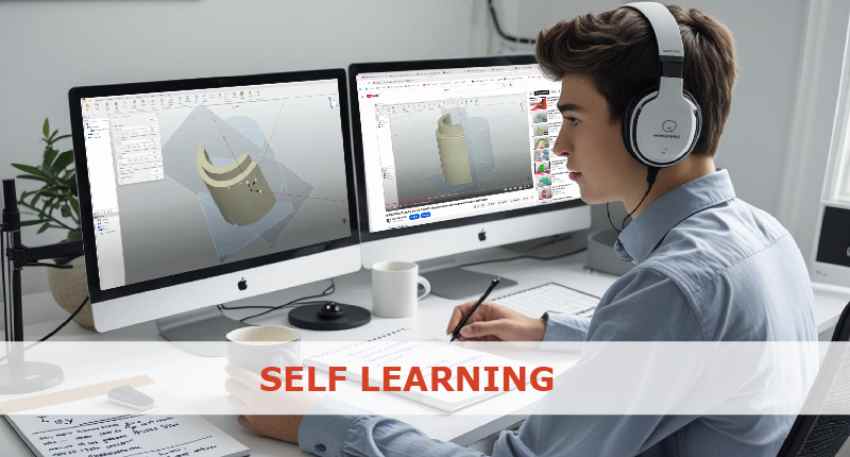
That is why we provide a large online library of tutorials, workflow videos, and technical examples focused on practical Scan-to-CAD reconstruction. We also offer a 30-day free trial so engineers and companies can test QUICKSURFACE using their own scan data and parts.
Reverse engineering software must remain technically powerful, but engineers also expect workflows that are efficient, practical, and fast to learn.
What’s the news about new products/services?
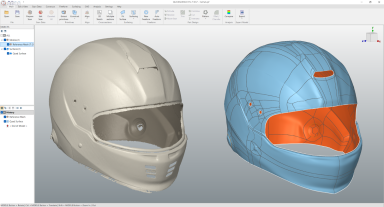
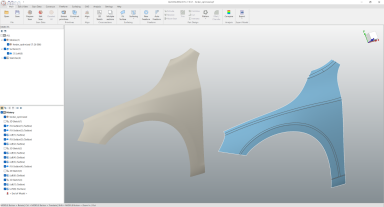
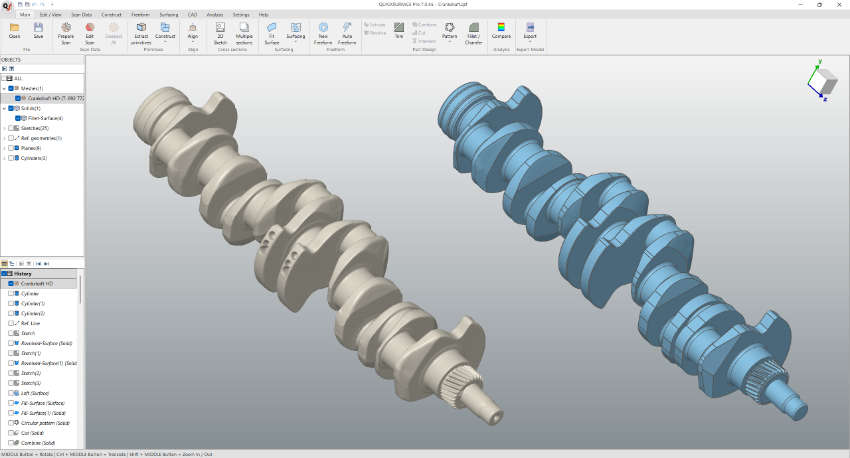
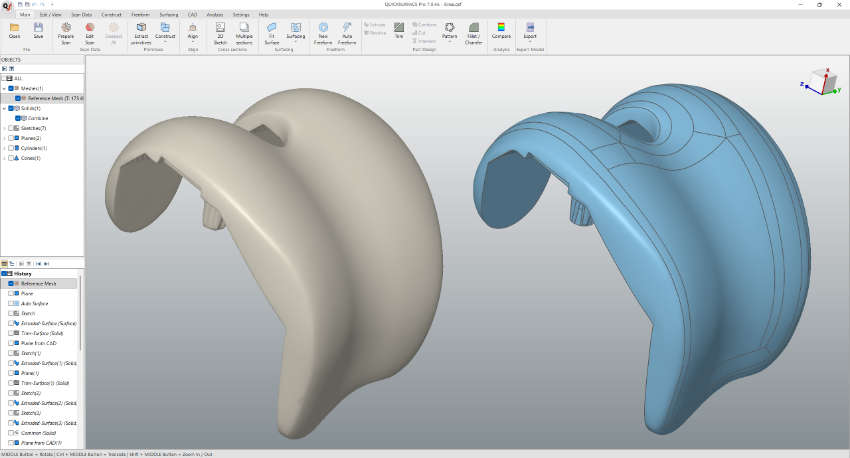
K.V: During 2026 we continue expanding QUICKSURFACE with new hybrid modelling, mesh processing, and reconstruction capabilities focused on industrial scan data.
One major direction is improving how engineers work with large imperfect meshes from scanners and photogrammetry. Real scan data is rarely clean, so we focus heavily on reconstruction stability, surface quality, and CAD creation speed.
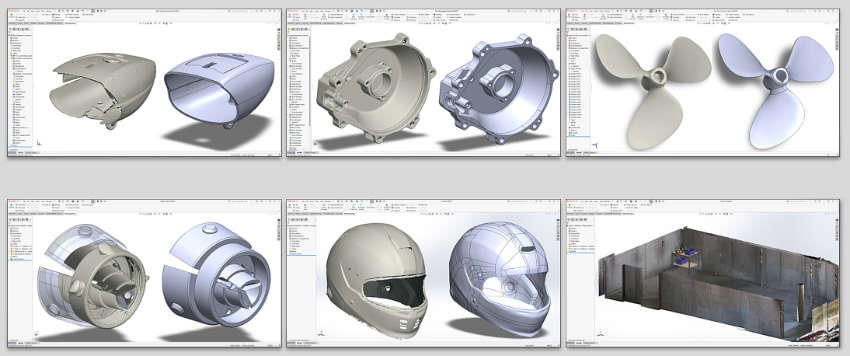
We are also improving interoperability with SOLIDWORKS and other Parasolid-based CAD systems to simplify transitions between reverse engineering, design modification, inspection, and manufacturing.
Another important development area is AI-assisted workflow acceleration. We see growing potential in using intelligent assistance for feature recognition, mesh preparation, and repetitive reconstruction operations. However, reverse engineering still depends on engineering decisions and design intent.
Our goal remains practical and production-oriented: helping engineers transform scan data into accurate manufacturing-ready CAD faster and with fewer unnecessary workflow steps.
What are the ranges of products/services?
K.V: QUICKSURFACE offers several solutions designed for different reverse engineering requirements and user experience levels.
Our portfolio includes:
- QUICKSURFACE — professional Scan-to-CAD reverse engineering software
- QUICKSURFACE for SOLIDWORKS — integrated reverse engineering inside SOLIDWORKS
- QUICKSURFACE Lite — entry-level reverse engineering
- QUICKSURFACE Personal — Scan-to-CAD solution for makers and hobbyists
- Technical support and workflow resources
The software supports:
- Sketch-based reconstruction
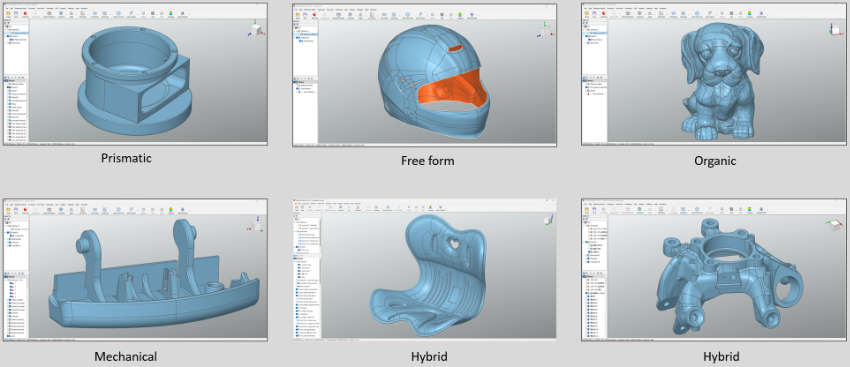
- Hybrid parametric and freeform modelling
- Automatic and manual surfacing
- Mesh alignment and sectioning
- Feature extraction
- Deviation analysis
- Manufacturing-ready export in STEP, IGES, and Parasolid formats
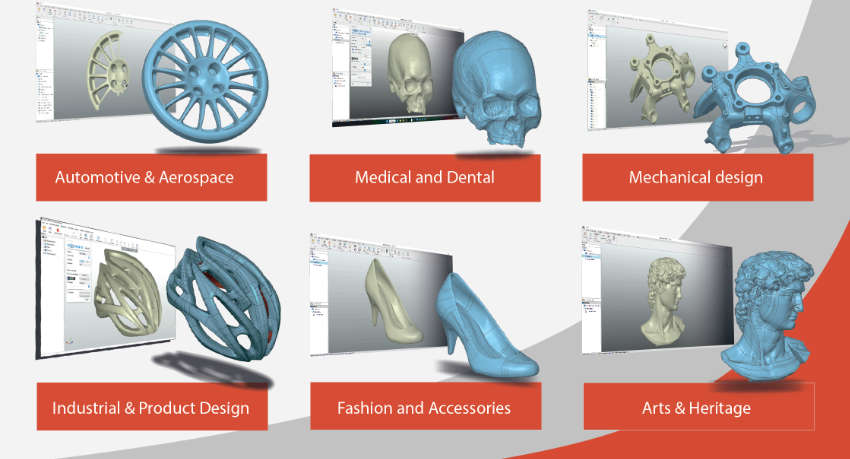
Our solutions remain scanner agnostic and support scan data from structured light scanners, laser scanners, CT systems, photogrammetry, and portable handheld scanners.
What is the state of the market where you are currently active?
K.V: The reverse engineering and 3D scanning market continues to grow strongly across manufacturing industries. More companies are integrating 3D scanning into daily engineering, inspection, maintenance, and redesign workflows.
One major driver is the increasing accessibility of scanning hardware. At the same time, manufacturers face growing pressure to shorten development cycles, modernize older products, and improve production flexibility.
However, scan data alone does not create usable CAD models. Engineers still need efficient software workflows capable of transforming raw meshes into accurate and manufacturable geometry. This is exactly where QUICKSURFACE fits into the process — as the bridge between 3D scanning and manufacturing-ready CAD.
We see strong demand for solutions that combine professional capability with workflow simplicity. Companies want powerful engineering tools without extremely long implementation and training periods.
What can you tell us about market trends?
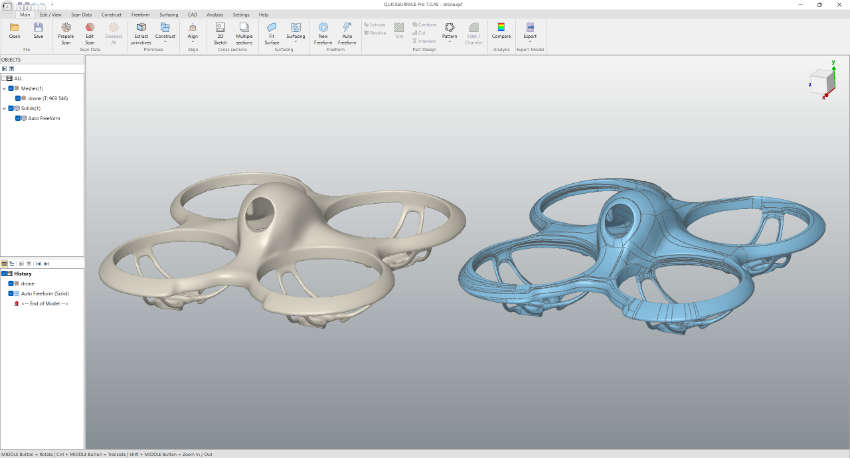
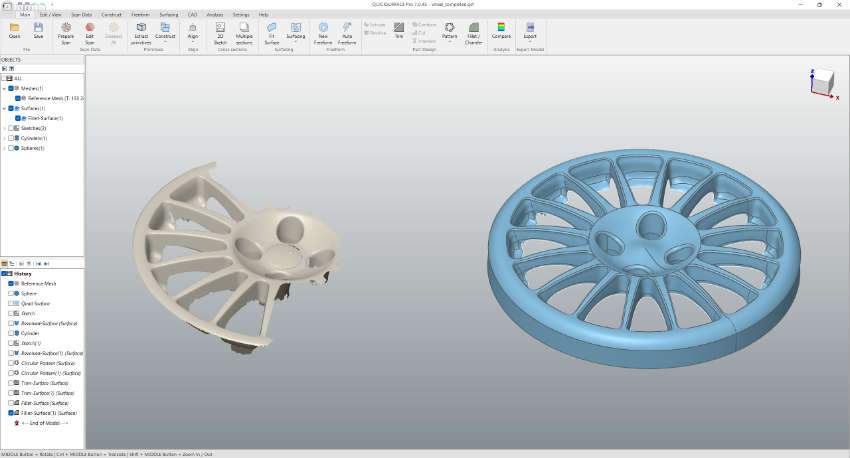
K.V: One important trend is the growing adoption of hybrid workflows that combine freeform modelling with parametric CAD reconstruction. Manufacturers increasingly need flexible tools capable of handling both organic and highly prismatic geometry.
Another major trend is tighter integration between scanning, inspection, CAD reconstruction, and manufacturing. Reverse engineering is becoming part of a connected digital manufacturing workflow rather than an isolated engineering task.
We also see growing interest in AI-assisted reconstruction workflows that help accelerate feature recognition, surface preparation, and scan data handling. However, professional reverse engineering still depends heavily on engineering expertise and design intent reconstruction.
Engineers want software that produces professional results without unnecessary complexity.
What are the most innovative products/services marketed?
K.V: One of QUICKSURFACE’s strengths is balancing advanced reverse engineering with practical usability.
Many traditional reverse engineering platforms remain highly complex and difficult to learn. QUICKSURFACE was designed differently. We focus on fast, production-oriented workflows that remain technically powerful while staying intuitive for engineers.
QUICKSURFACE for SOLIDWORKS is especially important because it allows engineers to reconstruct scan data directly inside a familiar CAD environment. This reduces workflow friction between scanning and manufacturing.
Another key innovation is our hybrid modelling workflow, where users can efficiently combine parametric features, direct modelling, and freeform reconstruction depending on the geometry requirements.
We also focus heavily on handling real industrial scan data. Scan meshes are rarely perfect, so engineers need tools capable of managing noisy areas, incomplete scans, and complex surfaces while still producing accurate CAD output.
What estimations do you have for the second half of 2026?
K.V: We expect continued growth in reverse engineering adoption during the second half of 2026, especially in manufacturing, maintenance, inspection, and product redesign applications.
Demand for Scan-to-CAD workflows will continue increasing as more companies integrate 3D scanning into production and digital manufacturing strategies.
We also expect stronger integration between scanning, CAD reconstruction, inspection, and manufacturing systems. Customers increasingly look for complete workflows rather than isolated software tools.
At QUICKSURFACE, our focus remains clear: improving reconstruction speed, simplifying advanced workflows, strengthening manufacturing integration, and helping engineers transform scan data into production-ready CAD faster and more efficiently.
Our vision remains the same — From 3D Scan to CAD: Trusted, Simple, Powerful.