

FRAMOS is the leading camera module design and manufacturing expert.
Founded in Munich, Germany over 40 years ago, FRAMOS has empowered companies worldwide to make drones fly safely, enable robots to see and think, make diagnostics faster and more affordable, boost athletic performance with AI, and countless other innovations.
The company stands for best-in-class image quality, an open-source approach, and fast, easy integration, helping customers launch products quicker and stay ahead of the competition.
With strong expertise in electronics design, optics and optical assembly, camera calibration, image tuning, and software integration, FRAMOS provides off-the-shelf camera modules and customized embedded vision solutions. At their technology campus strategically located in Europe, FRAMOS combines R&D and manufacturing services under one roof and provide scalable manufacturing capacities up to millions of pieces.
Interview with Dr. Frederik Schönebeck, Director of Growth at FRAMOS.
What does “reliability” mean for your customers today, and how has your company’s definition of reliability evolved in recent years?
Frederik Schönebeck: As vision systems become more deeply integrated into automated processes, reliability has shifted from a component-level focus to system-level consistency. Variations in imaging performance across environments can affect process stability and system predictability.
At FRAMOS, reliability means delivering consistent image output across operating conditions, production volumes and product lifecycles. By combining development and scalable production under one roof in Europe, we ensure tight control over optical alignment, calibration processes, image tuning and manufacturing consistency. This integrated approach helps customers move from prototype validation to high-volume production with stable and predictable performance.
Which specific features of your products or solutions most directly impact reliability for your customers’ operations?
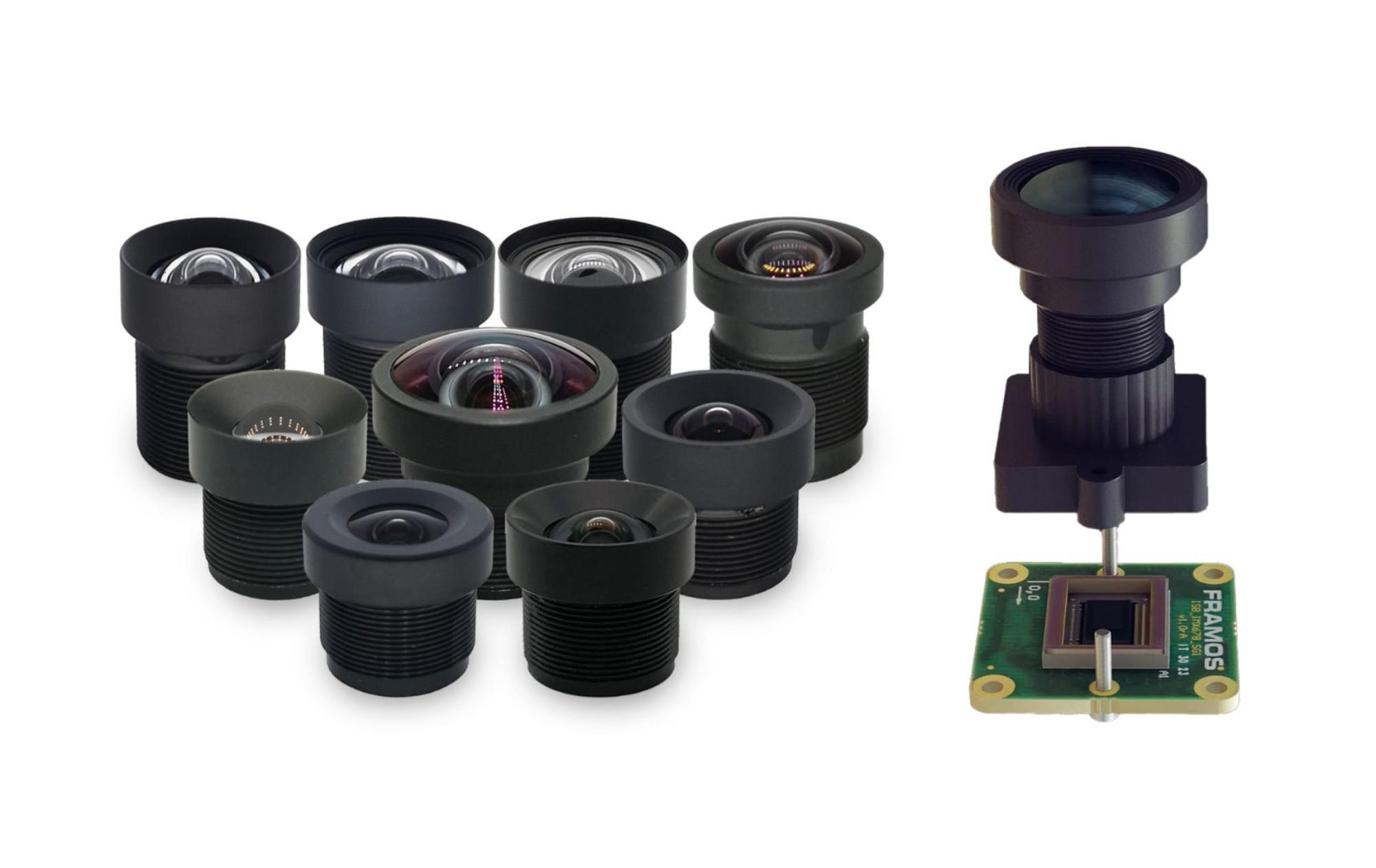
F.S: The features that most directly impact reliability are in the opto-mechanical stack – for example, the lens as a component, but also the complete optical assembly of the camera module. Designing a camera module is one thing, but delivering consistent image quality in different operating conditions and across larger volumes is another. Optimizing a professional camera module for a specific use case takes a lot of effort and budget. The automotive industry is a good example of this, where large teams develop a relatively limited number of camera module configurations for a few dedicated use cases. .
In the industrial market, we see a much wider spectrum of different use cases, where most customers require their own specific sensor, lens, and edge-compute platform combination to be successful in their niche. However, the volumes for each combination are relatively low, usually in the thousands or tens of thousands. As a consequence, most clients do not have the internal expertise and funding to develop and produce their own camera modules consistently from scratch and at scale.
At FRAMOS, we want to overcome this barrier by channeling our vast experience from many individual projects into a curated portfolio of off-the-shelf camera modules. This portfolio consists of the most demanded sensor, lens, and compute platform combinations and offers a strong starting point for our customers. If they need their own customer-specific configuration which is even more optimized to their specific use case, we can leverage our experience and proven standards to provide them with what they need to be successful.
How do you design reliability into your products from the earliest stages of development?
F.S: Reliability is built into our camera modules from the very beginning of the development process. At FRAMOS, optical design, electronics engineering, image processing optimization and manufacturing considerations are aligned early to ensure stable performance in real operating conditions.
We work closely with customers to understand application requirements, environmental constraints and expected production volumes. This allows us to define the right sensor-to-lens combination, optical assembly strategy, calibration approach and thermal concept from the start, reducing integration risks later in the project.
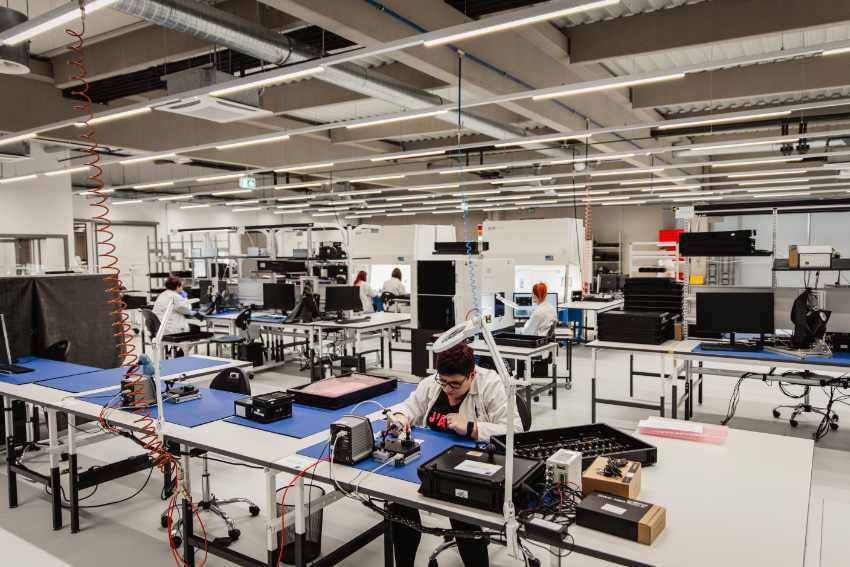
As the product development and production are combined under one roof in our FRAMOS Campus in Čakovec, Europe, we can validate design decisions through rapid prototyping, application-specific validation, and image quality evaluation. This integrated approach ensures that reliability is not added at the end, but engineered into the system architecture, supporting a smooth transition from prototype to high-volume manufacturing.
What role do data, monitoring, or predictive technologies play in improving reliability and preventing failures for your clients?
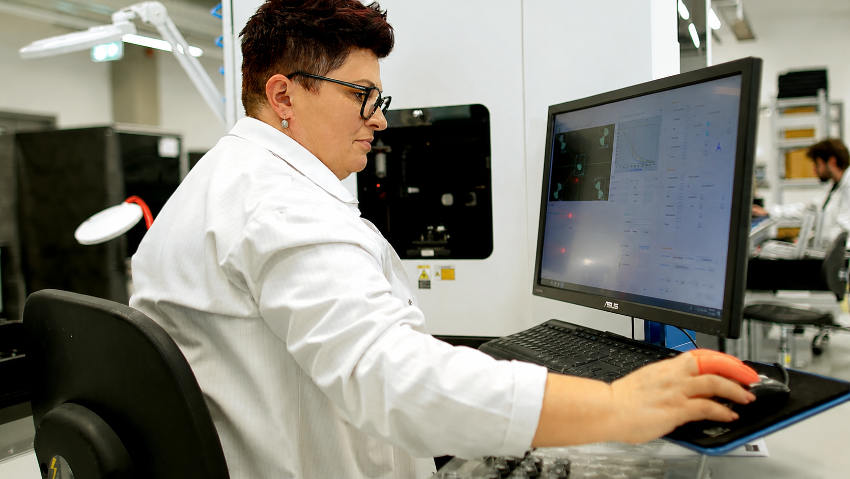
F.S: Improving reliability starts with a clear understanding of the application-specific requirements that influence it. In practice, this means getting initial demonstrator products into the field early on to begin collecting data – an approach we strongly recommend to all our customers. This data then enables an iterative alignment process, where we work together with customers to define what the “right” image quality looks like for their application. It is important to strike the right balance, as both under- and over-engineering can limit the scalability of the solution.
Another key factor is aligning quality control processes across the value chain. To maximize reliability and reduce failure rates, we encourage customers to implement their own quality control measures in line with our outgoing quality control. This becomes especially important at higher volumes, where consistency in data and processes is critical. Continuous monitoring of image quality throughout the product lifecycle further supports reliability. It allows systematic trends to be identified over time, such as lens performance degradation due to excessive manufacturing tolerances or inconsistencies in camera behavior under varying operating conditions caused by material-related effects.
In our experience, structured data collection and analysis are still often underestimated, especially when transitioning from prototype to mass production. While we address this by implementing standardized outgoing quality control measures to mitigate common issues, long-term reliability ultimately depends on customers validating performance in the field and providing direct feedback.
How do you balance innovation and speed-to-market with long-term reliability and operational stability?
F.S: To gain speed and decrease time-to-market we are investing heavily into augmenting our development workflow with simulations. With this we are able to understand the key characteristics of a particular camera module configuration a lot faster than with the classical approach, where you need to build a hardware instance first. This allows to make more informed decisions more quickly very early in the process, and it already yields valuable insights into any potential challenges around long-term reliability which can then be addressed with more thorough analyses.
Can you share an example of how your solution helped a customer reduce downtime, improve process stability, or increase operational confidence?
F.S: One example comes from a customer who had developed their own camera solution, but was facing inconsistent optical image quality across production lots.
We developed a comparable product with similar hardware design specifications, so on paper both solutions appeared very similar. The key difference, however, was the level of attention given to the optical assembly process. To address this, we introduced a software-assisted assembly procedure, which enabled a significant improvement in optical performance and consistency.
Although this resulted in a slightly higher price per unit due to the more elaborate process, the overall value of the product increased substantially. In the field, the failure rate was reduced by more than 20%, which ultimately translated into considerable cost savings for the customer.
How do service, maintenance, and after-sales support contribute to overall reliability and customer satisfaction in your business model?
F.S: The success of our customers and their solutions often depends significantly on the image quality of the entire camera stack, which makes it essential for us to deliver consistent and reliable products that are consistent and reliable – not just initially, but over time. This is also a key factor in whether customers return for follow-up projects.
At FRAMOS, we remain closely connected with our customers throughout the entire product lifecycle and provide support whenever camera-related challenges arise. This ongoing engagement ensures that issues can be addressed quickly and that system performance remains stable in real-world conditions.
A central element of this approach is our localized support structure. With Field Application Engineering teams in both North America and Europe, we are able to offer direct and localized support. We see the placement of a purchase order not as the end of the process, but as the beginning of a long-term partnership where continued support and proven reliability are essential to building trust and long term relationships.
What standards, certifications, or internal benchmarks guide your approach to ensuring consistent quality and performance?
F.S: At the company level we are ISO9001:2015 qualified and as such operate in a KPI-driven continuous improvement way. At the product level we use the EMVA1288 standard for image sensor selection and validation of our electrical designs. Furthermore, we are following common industry standards and practices to validate the key optical parameters (e.g., sharpness, distortion, vignetting, etc.) of each design we are releasing into the market. And we are tracking the most important metrics not only during product development, but also during regular mass production. Only then we are able to ensure consistent quality across large volumes.
How do you collect and use customer feedback to continuously improve the reliability of your products and solutions?
F.S: We collect and use customer feedback as part of a structured, ongoing process that starts early and continues throughout the product lifecycle.
Typically, customers begin with an existing product configuration, outlining what already works well and where they see gaps or additional requirements. Based on this input, we define the specifications for a new configuration together.
Once the requirements are clear and initial prototypes are developed, we ask customers to explicitly validate them. This includes not only lab testing, but also real field tests to ensure the solution performs under actual operating conditions.
As the product moves into mass production, we continue to monitor quality across larger volumes and share any observed trends with both the customer and, where relevant, with suppliers. At the same time, we stay in close contact with the customer to understand how the solution performs in the field as deployment scales and their operational experience grows.
In parallel, we continuously invest in our own technical capabilities and feed learnings from individual projects back into our broader portfolio wherever possible. This allows us to improve consistency over time and ensures that customers benefit from the progress and experience we build across different applications.

Looking ahead, what do you see as the next big shift in how industrial companies will need to think about reliability to stay competitive?
F.S: Reliability is often implicitly assumed to come at the cost of speed and innovation. We believe that moving forward, the key is to find the right balance between delivering reliable solutions while maintaining a sufficiently fast innovation process.
Simulations, and more specifically digital twins, offer the potential to gain key insights into solutions much faster than before. The quality of the underlying simulation models still needs to improve to reach the same level as physical implementations. However, ongoing advances in computing architectures are steadily expanding what can be simulated accurately and efficiently.
Even with the available systems today, many core aspects can already be simulated with sufficient accuracy to enable meaningful predictions. This allows data to be generated faster and more precisely, which ultimately supports improved reliability without slowing down development.

Vision AI starts here – www.framos.com and stay informed on LinkedIn, Facebook, Instagram, YouTube, and X.