
EasyMining, part of Sweden’s Ragn-Sells Group, has developed patented technologies to recover phosphorus, potassium, and other critical raw materials from waste ash and process waters, turning municipal and sewage sludge incineration byproducts into commercial-grade fertilizers and salts.
With a full-scale Ash2Phos plant under construction in Germany and plans to cover up to 50% of the country’s sewage sludge ash market, the company is positioning phosphorus recovery as key to Europe’s raw material independence.
We spoke with Dr. Christian Kabbe, Managing Director at EasyMining, about the technology behind Ash2Phos and Ash2Salt, and why regulation – not technology – is now the biggest barrier to circular economy adoption.
A brief description of the company and its activities.
Christian Kabbe: EasyMining is an innovation company within the Ragn-Sells Group, a Swedish resource management and recycling company with a history dating back to 1881. At EasyMining, we’re passionate about developing and implementing innovations to recover valuable resources, i.e. the macro nutrients N, P and K and metal salts from mineral material flows. Our patented technologies enable the recovery of defined, homogeneous, high-quality raw materials and products from heterogeneous secondary sources, like ashes or process waters.
We entirely follow the Ragn-Sells vision: “To be living proof, that caring for the earth and good business go hand in hand”.
What are the main areas of activity of the company?
C.K: There are currently four EasyMining processes in various stages of development and implementation. Capabilities have been growing rapidly over the past years. What started as a R&D unit in the city of Uppsala has maturized into a multi division company, covering all stages from idea towards engineering, implementation into industrial scale and operation of chemical plants like our Joint-Venture company Phosphorgewinnung Schkopau GmbH together with the German utility company GELSENWASSER. The core of our technology portfolio is reflected by the following flagship technologies:
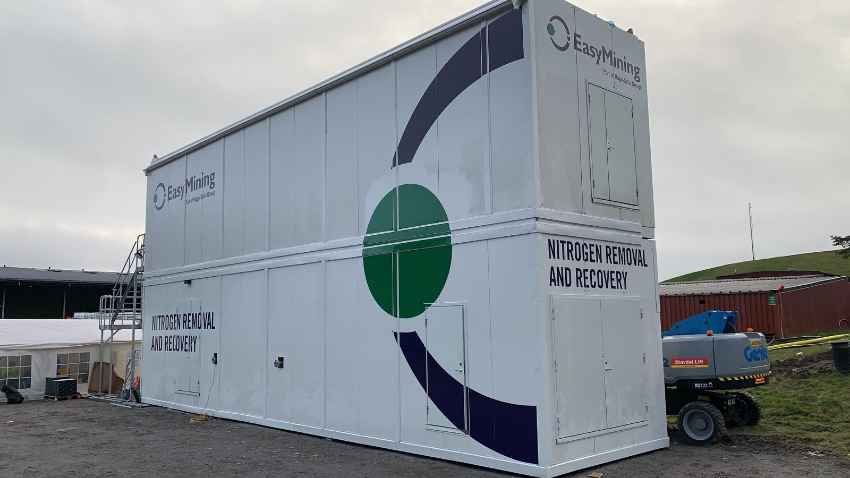
The Ash2™Salt process extracts commercial grade salts (KCl, NaCl, CaCl2) out of fly ashes from municipal solid waste incinerators. The first full-scale facility, shown in figure 1 has been commissioned in 2023 with a capacity to process 135.000 t/a fly ash and recovering several thousand tons of each of the three salts. With regards to fertilisers and given the huge volumes of these type of ashes, the potential as domestic secondary potassium source is gigantic.
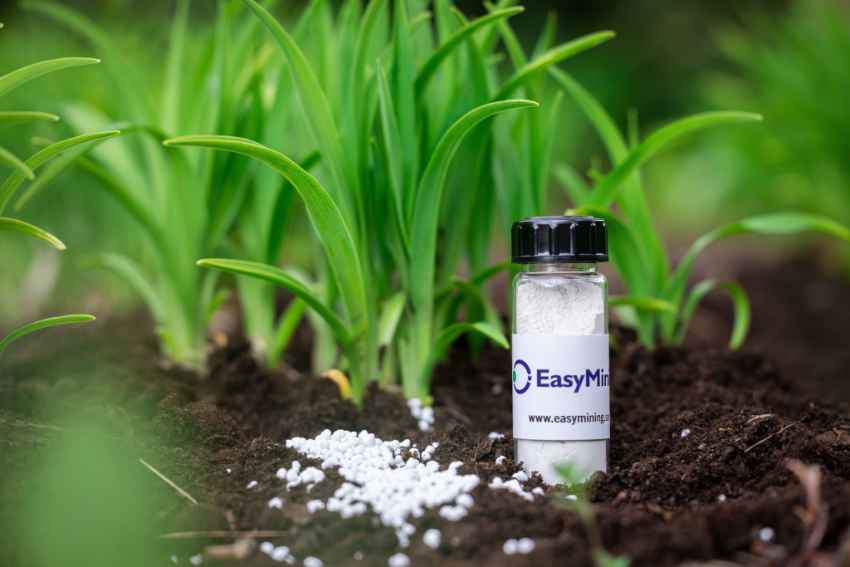
Aqua2™N is a patented innovation for the efficient removal and recovery of ammonium from aqueous flows. It has been successfully piloted in the past years and is now entering the implementation phase in sewage treatment and bears also potential in digestate and manure processing.
The CleanMAP technology extracts ammonium phosphate from mining waste or other mineral sources.
Our Ash2™Phos process has been designed to recover more than 90% of phosphorus contained in P rich ashes like from sewage sludge incineration in form of a high-grade calcium phosphate branded RevoCap™. The only way to guarantee homogeneous quality of materials after recovery is the explicit extraction from the heterogeneous ash input matrix and efficient separation from contaminants like heavy metals. Unlike to many other so-called phosphorus recovery and recycling processes, where the phosphorus is left in the ash matrix together with the iron, aluminium and many other metals in undefined ratios, Ash2™Phos is also extracting defined co-products like iron(III) chloride and sodium aluminate or aluminium hydroxide in commercial grades and leaves a heavy metal depleted sand fraction suitable for construction materials. The separated heavy metals are extracted as filter cake and provides a potential concentrate for metallurgy. With this setting, 100% of the ash matrix can be split into dedicated products and raw materials for closing several material cycles instead of only one. Here we can really speak of a true Circular Economy scheme.
What is the state of the market where you are currently active?
C.K: Not just the covid pandemic and recent geopolitical events made one thing crystal clear: dependency from raw materials mined on other continents and long or global multi-stage supply chains are increasingly risky if not even a threat for our economy and with it our society. Control of resources is becoming the major pillar of economic and society survival. Hence, control is only given for domestic resources, recovery and recycling will become essential and waste or downcycling of resources can no longer be afforded, especially for countries, poor in raw material deposits but high resource consumption like Europe.
Interestingly, the EU has put two forms of phosphorus on the Critical Raw Materials list (CRM) besides a lot of so-called tech metals but did not put it on the Strategic Raw Materials list (SRM). This indicates, that essentiality is not considered as important and relevant for European economy. But, what good is a economy for, if there is no human society behind? This perspective may change, once eurocrats and industrial lobbyists start to recognise, that besides the essential function of phosphorus as a non-replaceable nutrient, this very element is also a key pillar for the transformation of the energy and mobility sectors. For example, batteries (energy storage) like LFP need a lot of phosphorus. At current stage, they require 350 g P per kWh and the sector is starting to ramp up. For comparison, the P potential in German SSA would enable to equip around two million new electric vehicles with LFP batteries annually. On European level, about 100,000 t P will be theoretically made available for this route by 2035, adding to a potential of 4 million vehicles.
Perspectively, the non-food application for phosphorus will play a fast growing role in the years or even decades to come and we all know where this will lead to: the value of limited resources is about to grow and thus will the prices for commodities.
This will also change the view and management of secondary resources. What has been considered just waste in the past and has been disposed of has to be used as efficient as possible for the sake of society and economy. Unfortunately, the legal framework is not as fast adapting as the technology evolution evolves. A key obstacle for circular economy is represented by outdated regulations, focusing on origin of materials or products instead of quality. Waste based materials are facing heavy discrimination and exclusion from valorisation in numerous market segments, vene if they are of higher quality compared to the same or similar products based on virgin resources. Here a paradigm shift is towards “Quality over Origin” is overdue. Circular economy can only materialize, when the following trinity is enabled and fulfilled: Quality matters! Volume matters! Reliabilty matters!
What estimations do you have for the second half of 2026?
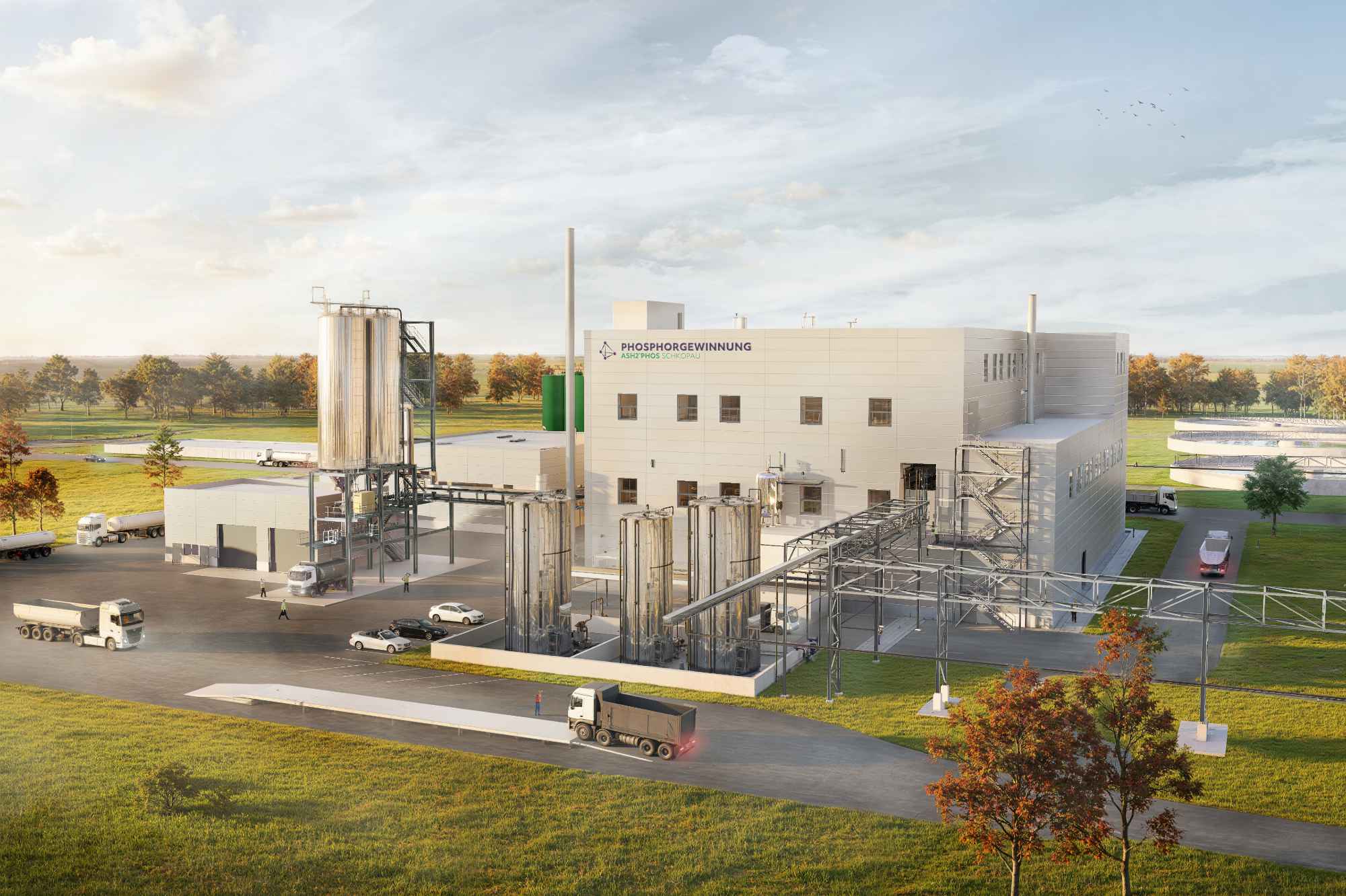
C.K: Our key project is the world`s first full-scale Ash2™Phos plant, currently under construction in the industrial park in Schkopau, Germany. The picture below features a sneak preview, how the plant will look like with a scheduled commissioning in 2027. Once in full operation, the plant will process 30,000 t of sewage sludge ash per year. The capacity compares to 5% of the predictable total SSA volumes generated in Germany. The recovered main product, the RevoCaP™ equals to 4-5% of the P content in mineral fertilisers annually sold in Germany. Together with the German utility GELSENWASSER, EasyMining is aiming for a total capacity for SSA processing of 300,000 t/a, then comparing to approximately 50% of the German sewage sludge ash market and in terms of exemplary P used in mineral fertilisers, 50% of the demand. With this, the strong dependency from a critical raw material like P can be substantially reduced and P dependent industries become more resilient in terms of security of supply.
While the first plant is still under construction, EasyMining and other co-investors are exploring the German landscape for more suitable sites and are already preparing the setup of a second Joint-Venture company aiming to build and operate in the South-Western part of Germany. The capacity roll-out is planned to be finalized by 2035 for the German market, then also opening the door for going global, entering geographic markets where resource efficiency and circular economy are considered key elements for economy and society.