
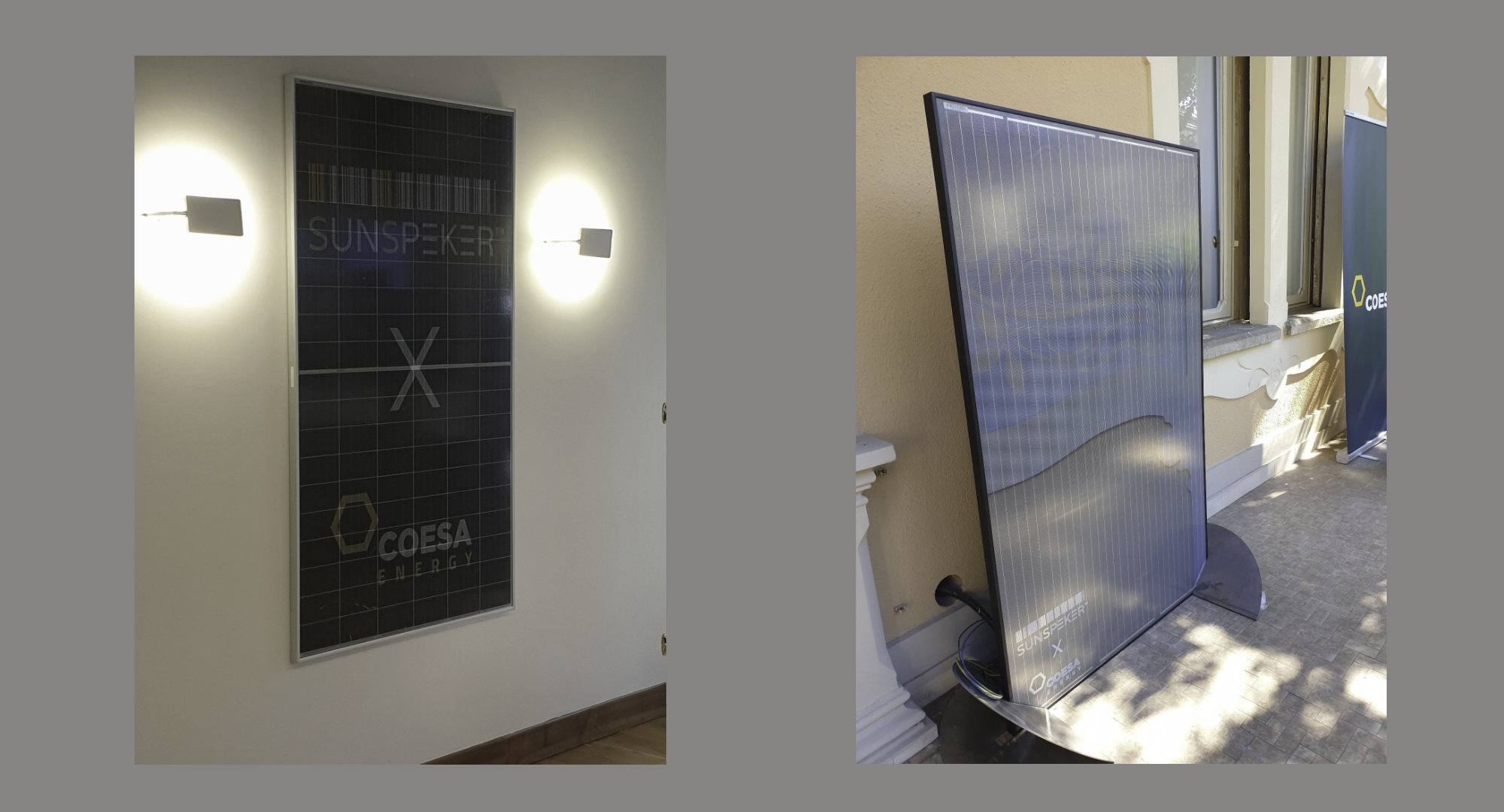
Sunspeker, founded in Turin in 2022, has developed “See Beyond,” a patented film that lets solar panels blend visually into roofs, facades, and protected historic buildings without meaningfully reducing energy output. The technology is expanding beyond architecture into automotive, defence, and smart-city advertising displays, with installations already running in Italy, Spain, and Germany. We spoke with Fabrizio Chiara, CEO & Founder of Sunspeker, about scaling production, the company’s new indoor solar coating, and where design-driven solar energy is heading in 2026.
A brief description of the company and its activities
Fabrizio Chiara: Sunspeker was born in Turin in 2022, in the same region that gave the world Olivetti, and that heritage of design-driven industry is something we still feel close to. We work on one specific problem: solar panels are effective, but they are not always welcome to look at, especially on historic buildings, in protected landscapes or in city centres with strict aesthetic rules. Our answer is “See Beyond”, a patented, fully customization film process that can be applied to any solar panel, letting it blend into its surroundings, reproduce an image, a texture, even a brand, without meaningfully affecting the energy the panel produces.
What are the main areas of activity of the company
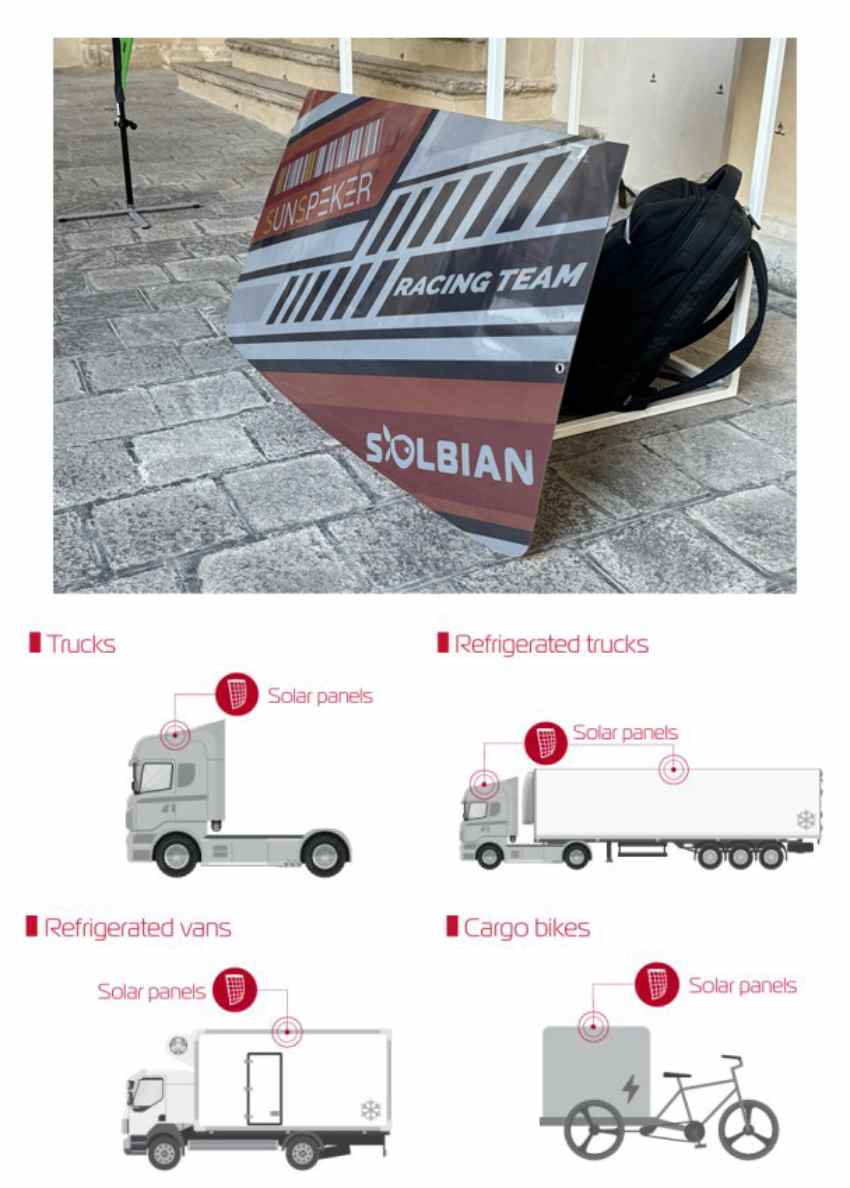
F.C: We work across four areas, all built on the same core technology. The first is architecture and construction: helping panels disappear into roofs, facades and protected buildings where photovoltaic installations would otherwise be refused on aesthetic or heritage grounds. The second is transport and automotive, where we’ve worked alongside Solbian on customisable solar modules for vehicles. The third is defence and aerospace, an area we’re developing together with MSI, where the same aesthetic and functional logic opens up applications quite different from a building facade. The fourth is advertising and smart cities: turning solar surfaces into outdoor advertising spaces or digital displays, so a billboard or a screen can generate clean energy while it communicates. Four very different worlds, but the same conviction runs through all of them, that energy production and good design don’t have to be traded off against each other.
What’s the news about new products/services
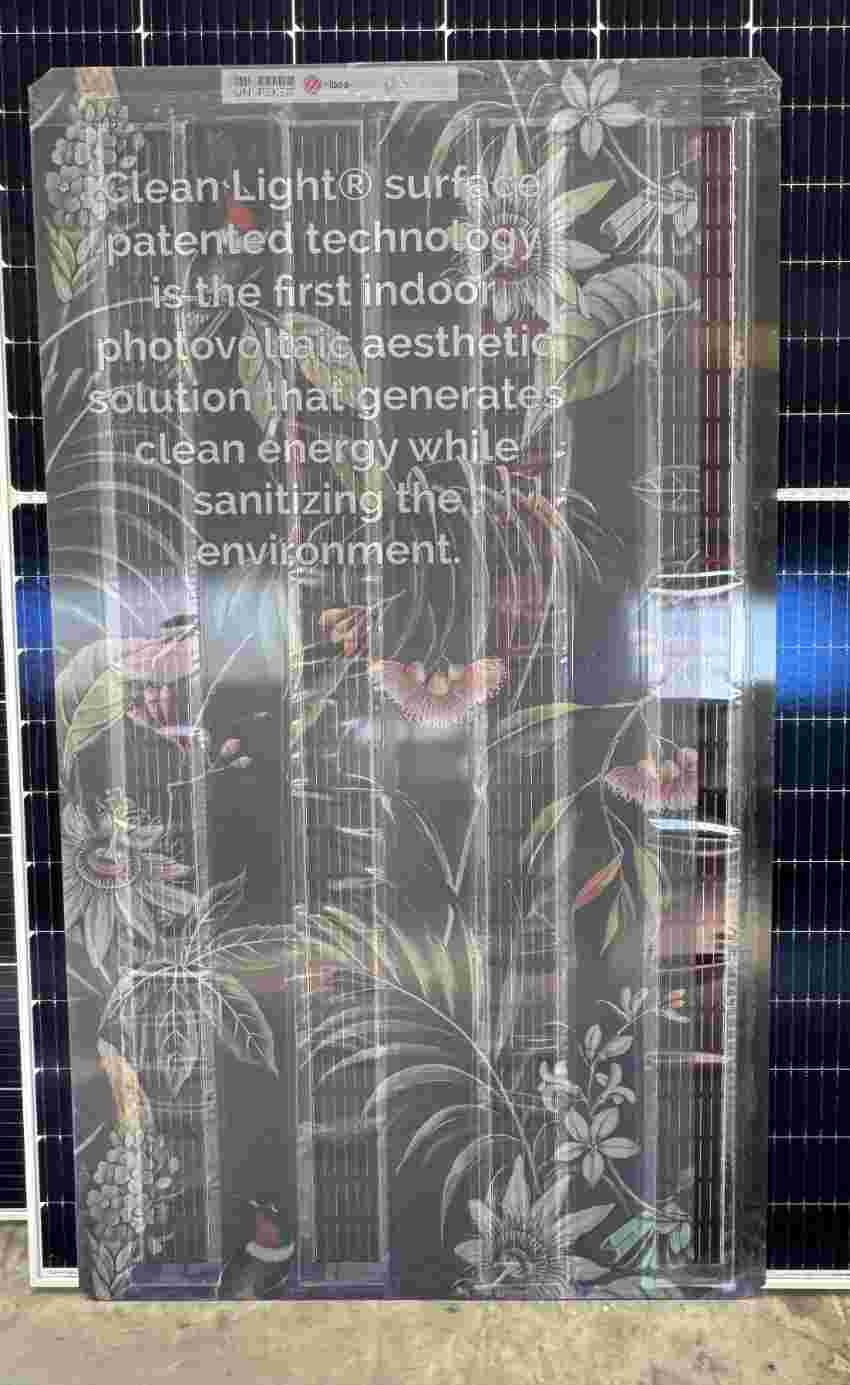
F.C: The most significant recent step has been moving from a film applied to standard panels toward a broader, more industrial offer. We’re finalising the production line that will let us scale “See Beyond” beyond pilot projects, and we’ve been developing a second patented technology, aimed at the smart-city and digital-out-of-home market: a photovoltaic digital screen that behaves like an advertising display when it’s in use and reverts to blending into the building facade the rest of the time. Alongside that, we’re now prototyping “Clean LighT”, a new patent-pending solution that brings our approach indoors, generating clean energy from light within interior spaces rather than from direct sunlight on a building’s exterior. It’s still early stage, but it opens up a whole category of applications we haven’t touched before.
What are the ranges of products/services?
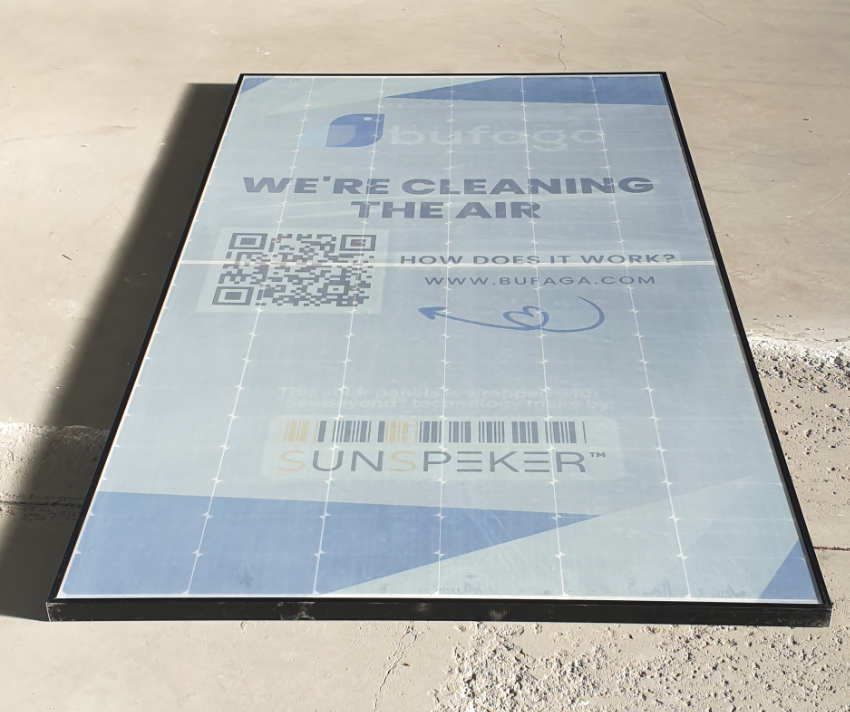
F.C: At the core is “See Beyond Static Cover”, our customisable adhesive film for standard solar panels, designed for outdoor use across roofs, facades and freestanding structures. For panel manufacturers, we also offer “See Beyond Inside”, which integrates the same aesthetic film directly into the module during the production process itself, rather than being applied afterward. Alongside these we offer dedicated solutions for advertising surfaces, where the film doubles as a printable billboard; solar modules for vehicles and mobility applications, developed with partners who bring high-efficiency cells; and, moving forward, our digital photovoltaic screen for smart-city and DOOH applications. And for indoor environments, we’ve introduced Clean Light, a customisable coating that captures energy from artificial light Tahnks to Ribes Tech harvesting technology and in combination, thanks to BioTitan Nanotechnology, also helps purify the air, bringing the same design-first approach inside buildings like hospitals and airport terminals. Everything is built around the same idea: whatever the panel’s use, its final look should be a choice, not a compromise.
What is the state of the market where you are currently active?
F.C: Building-integrated photovoltaics is still a young market in Italy, even though the conditions for it to grow are unusually good here. We have an enormous stock of historic buildings and protected areas where standard panels simply cannot be installed, and that’s exactly the gap we sit in. What’s missing so far is a clear, uniform regulatory framework for treating these products as construction materials in their own right, and that uncertainty is probably the single biggest brake on faster adoption. At the same time, we’re seeing real traction: requests worth over a million euros in a single year, installations already running in Italy, Spain and Germany, and growing interest from installers and utilities who want a differentiated offer.
What can you tell us about market trends?
F.C: Two things stand out. First, aesthetics is no longer treated as a “nice to have” bolted onto a technical product, it is becoming a genuine market requirement, especially wherever architecture, heritage or brand identity are involved. Second, the boundary between energy and communication is blurring: solar surfaces are increasingly expected to do more than one job, generating power while also carrying a message, a brand, or simply fitting into a streetscape. Analysts put the global BIPV market above 80 billion euros by 2030, and we think a good part of that growth will come from products that solve the visual problem, not only the technical one.
What are the most innovative products/services marketed?
F.C: Our own See Beyond film is the clearest example we can speak to directly: a single, recyclable, recyclable layer that turns any panel into a customised surface without giving up meaningful efficiency. Beyond that, we’d point to the wider move toward panels that are no longer sold as standalone components but as construction elements, tiles, glass, coloured facade panels, designed from the start to sit inside a building’s envelope. And looking a little further out, tandem perovskite-silicon cells are the technology to watch: still in early commercial trials, but promising efficiencies well above what silicon alone can reach, which will eventually open up new formats and applications for integrated solar, ours included.
What estimations do you have for the second half of 2026?
F.C: We expect the second half of the year to be about scaling what we’ve already proven works. Production capacity is the priority, moving “See Beyond” from pilot volumes to an industrial footprint, which is also where our recent fundraising is being directed. We’re also expecting our international push to gain pace, building on the relationships we’ve built through CES and our advisory partnership with the US market, and on fairs like Klimahouse and Intersolar where we meet the construction sector directly. On the product side, we expect the digital, advertising-capable screen to move from prototype to discover an industrial partner to scale the product in the real market None of these changes our starting point: we still think the fastest way to get more solar on more buildings is to make people want to look at it.