
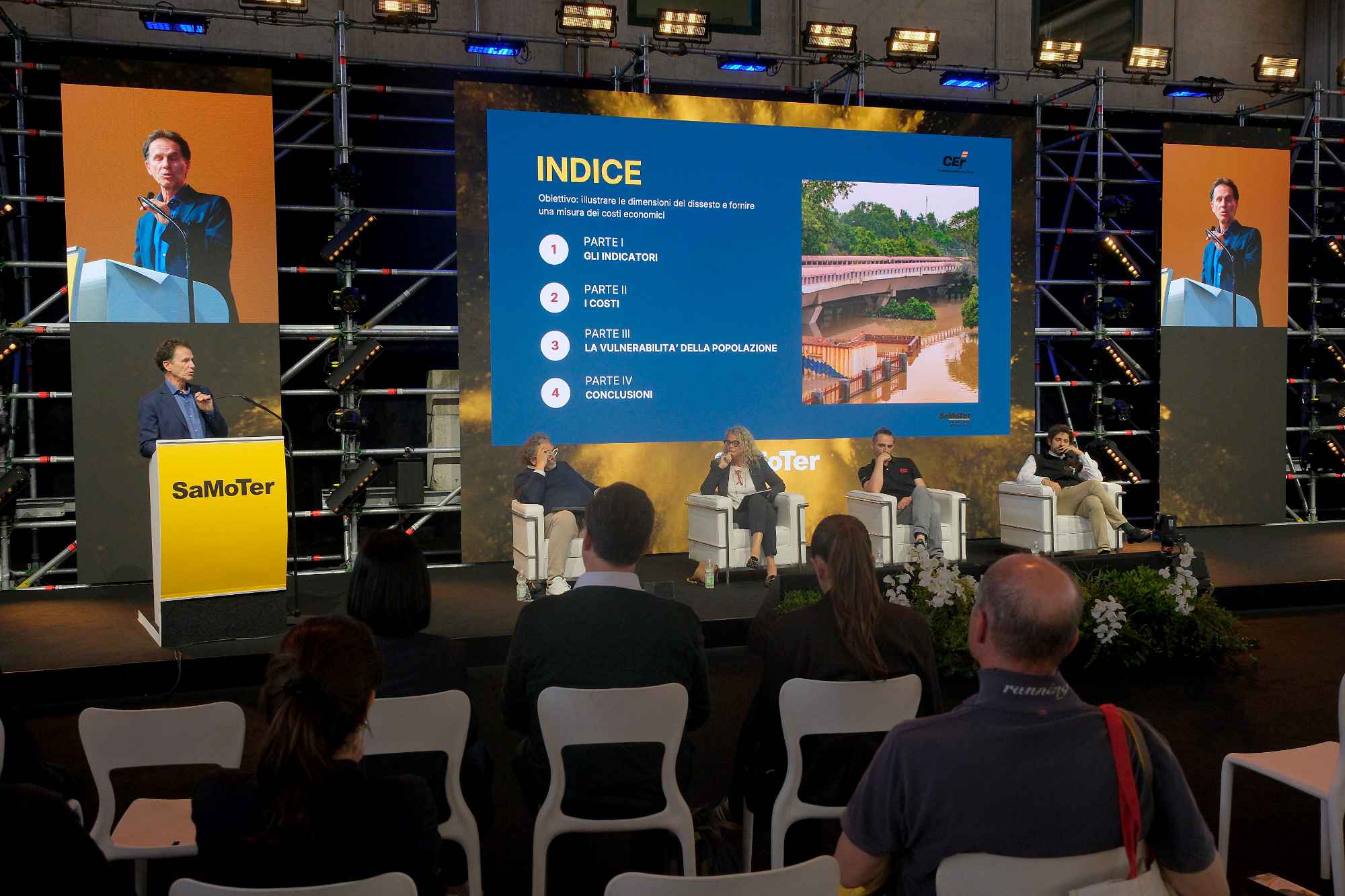
Study “Hydrogeological risk in Italy: economic impacts and necessary safeguarding investments” presented at SaMoTer 2026. Over 10 million Italians live in areas exposed to hydrogeological risk. Only 36% of planned interventions have been completed.
To secure Italian territory from hydrogeological risk, stable additional investments of between 3 and 5 billion euros per year are needed. This is one of the main findings of the research “Hydrogeological risk in Italy: economic impacts and necessary safeguarding investments”, presented yesterday by CER-Centro Europa Ricerche, on the second day of SaMoTer 2026, the international triennial exhibition of construction machinery currently underway in Verona until tomorrow, Saturday 9 May (www.samoter.it).
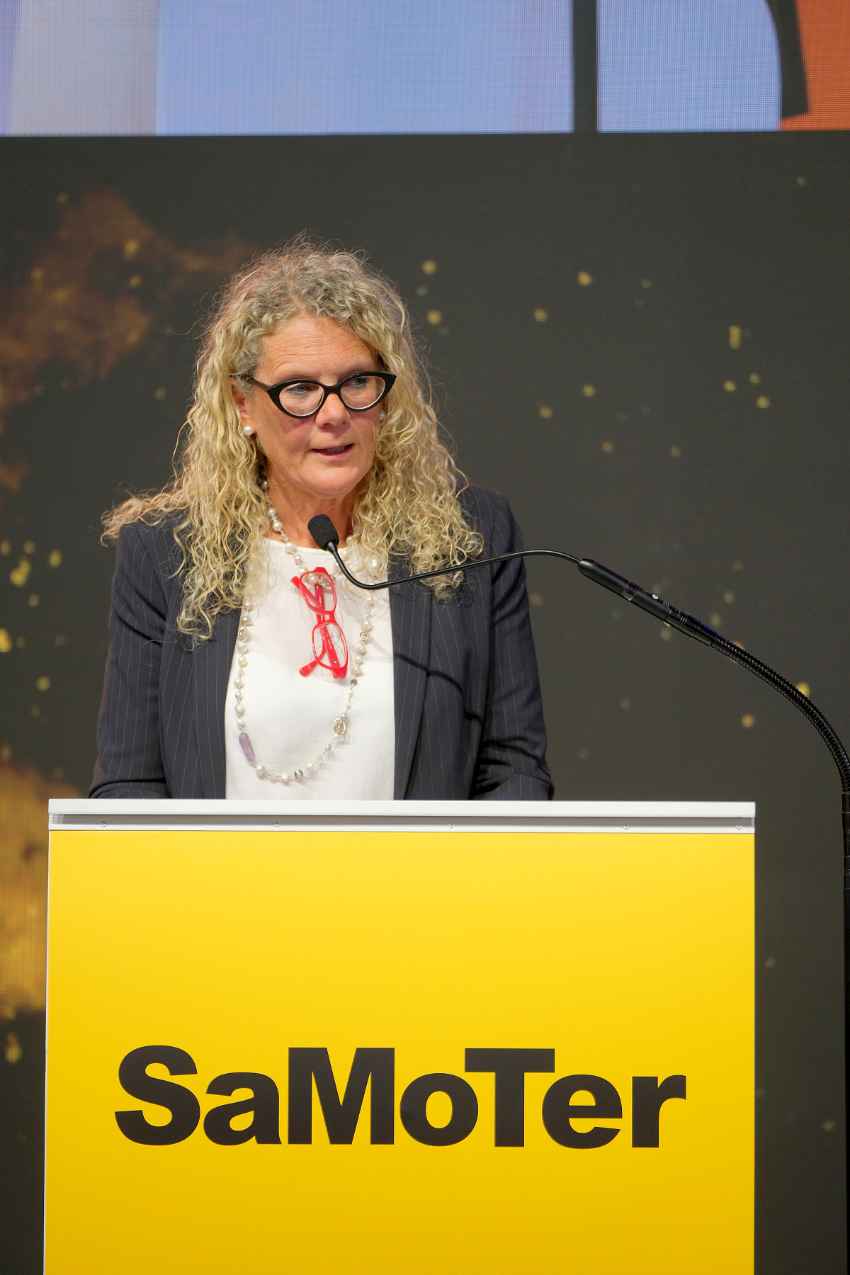
The study confirms the growing fragility of the national territory in the face of climate change. In Italy, extreme climate events have increased by 35% from 2010 to today and the probability of their occurrence is approximately one third higher than twenty years ago. A trend destined to intensify, with direct impacts on people’s safety, on the resilience of infrastructure and on the continuity of the production system. At the presentation of the research, held by Stefano Fantacone, research director of CER, the following also took part: Michele Vitulano, president of Unacea; Tatiana Bartolomei, member of the National Council of Geologists; Luca Iozzi, product manager & business development HMCD of Leica Geosystems S.p.A and Mattia Bodino, marketing dep of Merlo Group.
The event hosted within SaMoTer underlines the strategic role of the construction and infrastructure sector in the management of hydrogeological risk. Prevention, maintenance, technological innovation and the capacity to carry out effective interventions represent decisive levers for addressing the effects of climate change and reducing the economic and social costs of emergencies. At the root of the increase in extreme events is above all the temperature dynamic. According to the research, the probability of recording extreme maximum temperatures is today approximately double compared to twenty years ago, while that of extreme minimum temperatures has grown by 50%. The thermal rise also contributes to the intensification of other phenomena: the probability of extreme precipitation has increased by up to 20%, that of large wildfires by 40%. All Italian regions are affected, but with different levels of exposure.


The Tyrrhenian areas show a more intense impact on the temperature front, while for precipitation the greatest risk is concentrated in the eastern regions and the South, with Emilia-Romagna and Veneto among the most exposed territories. Climate vulnerability is particularly high also in the most industrialised areas of the country, particularly in the North-West, North-East and Friuli, where the greater probability of catastrophic events can have significant consequences also on the production system. The international picture confirms the critical nature of the Italian situation. According to the Climate Risk Index, Italy ranks fifth in the world for impacts of extreme climate events and first among industrialised countries, also due to the high number of victims recorded between 1993 and 2022, equal to approximately 38,000. The economic toll is already significant. Between 1999 and 2024 over 25,000 extreme climate events occurred in Italy, with an overall cost to the community estimated at almost 21 billion euros.
To these figures are added delays and critical issues in the implementation of interventions: not all compensation has been disbursed and only 36% of planned interventions have been completed. For approximately one fifth of the compensation and remediation measures, the design phase has not yet begun. Furthermore, 38% of construction sites funded from 2010 onwards have yet to be started and 19% are at a standstill at the design stage. The first data from 2026 indicate a further worsening of the financial situation. The budget law provided for 933 million euros for climate emergencies, but in the first months of the year the emergencies in the Centre-South alone have already exceeded 1.2 billion euros.


In this context, the allocations assigned to the “ProteggItalia” Plan, equal to 14.3 billion euros until 2030, risk proving insufficient given the dimensions assumed by the climate crisis and hydrogeological instability in the country. The risk directly concerns millions of citizens. Over 15% of the Italian population, equal to more than 9.2 million people, lives in areas at risk of flooding, while approximately 1.2 million reside in areas at risk of landslides. Overall, over 10 million Italians are exposed to hydrogeological risk.
The CER research therefore highlights the need for a change of approach: from the ex post management of emergencies, based predominantly on compensation, to a structural strategy of prevention and securing of the territory. A transition that can no longer be postponed, which requires adequate resources, greater planning capacity and more effective coordination between the central Government, Regions, local authorities and implementing bodies. According to the study, to guarantee effective safeguarding of the territory, stable additional funding of between 3 and 5 billion euros per year is needed, together with a strengthening of governance and the capacity to implement interventions. An objective that directly calls into question the construction machinery sector, at the centre of the 32nd edition of SaMoTer.