

Data and sector prospects presented by CER (Centro Europa Ricerche) on behalf of Unacea during the 32nd edition of SaMoTer, the international triennial exhibition of construction machinery, running at Veronafiere until Saturday 9 May. In 2026 the number of machines sold in Italy is expected to settle at an estimate of 25,500 units.
It is one of the most dynamic sectors of the Italian economy, characterised by notable productivity, a strong export vocation, high technological intensity and an increasingly central role in the development of infrastructure and modern construction sites. This is the picture of the construction machinery sector that emerges from the new research by CER (Centro Europa Ricerche) on behalf of Unacea (the Italian Construction Machinery Union), presented yesterday at Veronafiere on the occasion of the first day of the 32nd edition of SaMoTer, the international triennial exhibition of construction machinery, running until Saturday 9 May (www.samoter.it).
The study was illustrated during the conference “Construction machinery and Italian production supply chains: the overall economic dimension” by Stefano Fantacone, research director of CER, who underlined how the sector represents a highly specialised industrial segment, closely connected to the transformation of production processes in the construction sector and to the modernisation of the infrastructure system. The Italian construction machinery market reached 26,000 units sold in 2025, almost double compared to the 13,500 of 2017, confirming long-term structural growth. After the peak reached in 2022 (29,700 units), the sector today shows a phase of normalisation. For 2026 a slight contraction to 25,500 units is expected (-1.9%), in a macroeconomic context characterised by moderate GDP growth (+0.3%) and a slowdown in construction investments (-0.3%), as well as inflationary pressures linked to energy costs exceeding 20%.
The overall value of the sector’s production is estimated at 4 billion euros, with 6,000 direct employees that become 85,000 when considering the entire supply chain. These figures highlight not only the economic dimension, but also the sector’s capacity to generate qualified employment spread across the territory. A strong international vocation contributes to reinforcing its competitive positioning. In 2025 the sector recorded 3.2 billion euros in exports, against 2.3 billion in imports, with a positive trade balance of 900 million euros. Almost two thirds of national production is destined for foreign markets, confirming the technological solidity and the capacity of Italian companies to compete on global markets.
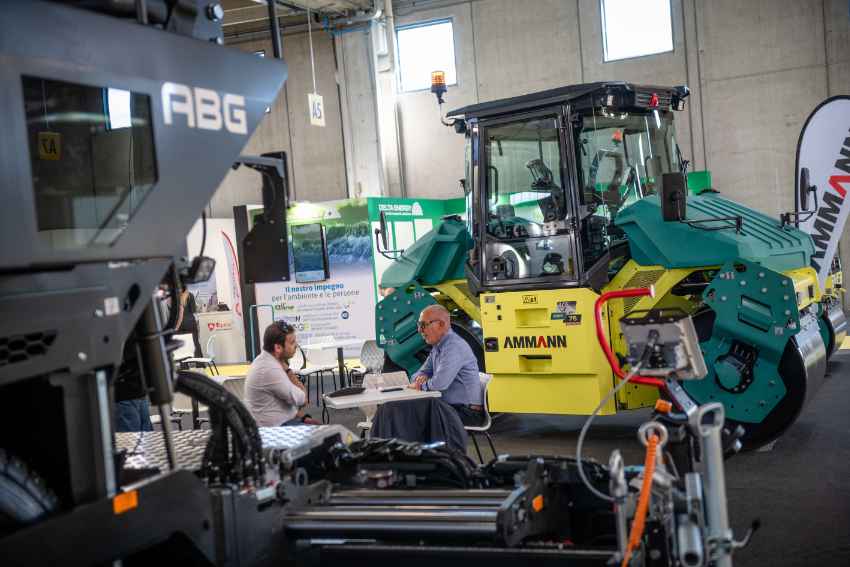
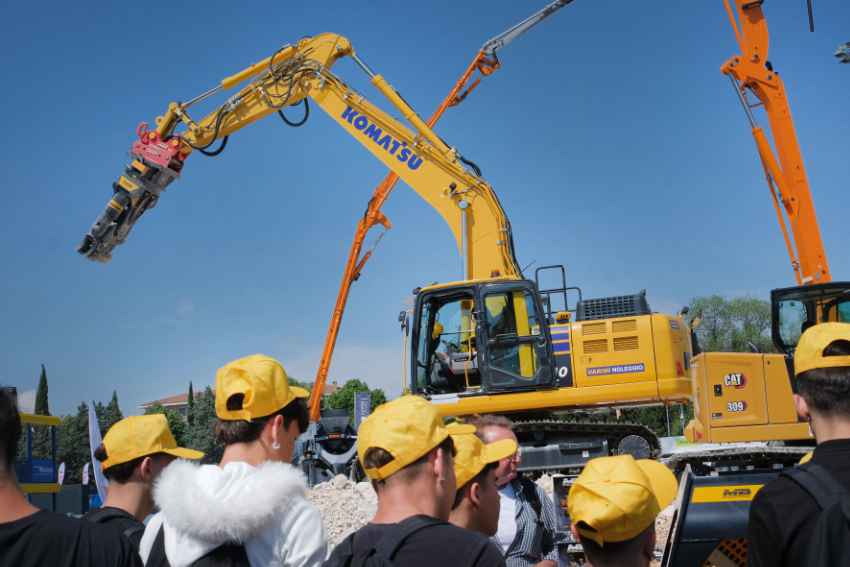
In the European context, the research clearly highlights the strengthening of Italy’s role in the construction machinery market. In 2025 the country positioned itself as the third European market by volume sold, after Germany and the United Kingdom, surpassing France and consolidating a share of the European market equal to approximately 15%, a marked increase compared to 9.6% in 2019. A result that reflects a growth dynamic running counter to the other major countries: in the period 2019-2025 the Italian market recorded an expansion of +38.8%, against a European average contraction of -9.4% and significant declines in France (-28.3%), Germany (-22.7%) and the United Kingdom (-5.8%). Italy thus confirms itself as the only one among the major European markets to have exceeded pre-Covid levels, strengthening its competitive positioning and assuming an increasingly central role in the sector’s equilibria at continental level.
The sector is also distinguished by its close ties with the construction supply chain, contributing directly to the operation of construction sites, infrastructure, civil works and specialist activities. The three related production branches (from civil engineering to demolition and site preparation through to the installation of electrical, hydraulic and other construction and installation works) collectively generate a production value of 135 billion euros and employ approximately 694,000 workers. In the four-year period 2019-23 (the last year for which Istat data are available) the production value of the three branches increased by 69%. In the same period, the overall value of Italian production is 32%. The activity that showed the greatest increase is Demolition and preparation of construction sites (+73%), followed by Installation of systems (+70%). For Civil engineering the growth was 65%. A further distinguishing element is represented by the high technological and innovative content. Over 35% of companies make medium-high investments in research and development, while shares of between 35% and 44% invest in technologies and digitalisation, in support of the progressive mechanisation and transformation of construction sites. This makes construction machinery an enabling factor for productive efficiency, workplace safety and the reduction of construction times, contributing in a decisive manner to the modernisation of the entire supply chain.
Also taking part in the presentation of the research were some of the representatives of the top brands exhibiting at SaMoTer 2026.

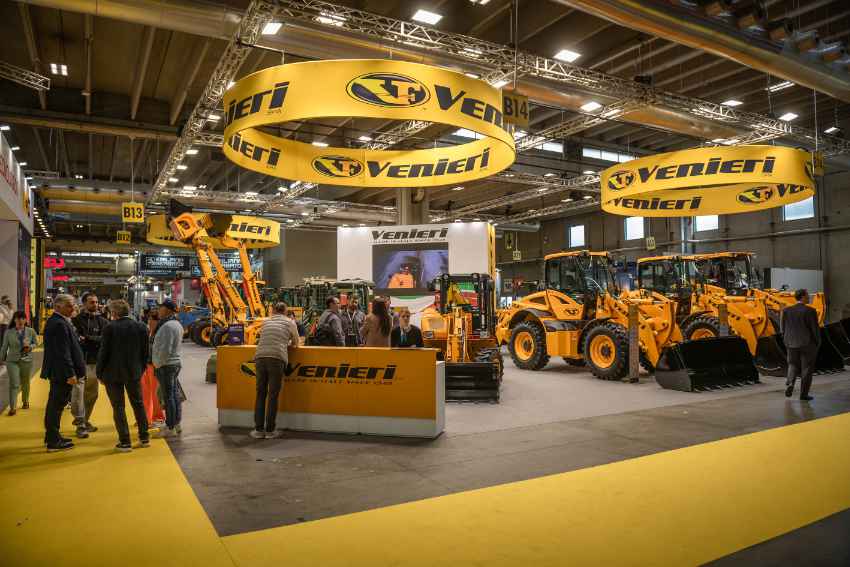
Gianluca Calì, marketing director of CGT Spa: “The performance of our market is directly proportional to that of construction. The PNRR has certainly favoured the growth of infrastructure works and, consequently, the market, in this recent period, has also recorded a positive trend. However, there are contingent factors that continue to influence customers’ purchasing decisions, as well as the various incentive schemes. Looking to the near future, the construction machinery sector can count on an important area for improvement, represented by the recovery of productivity: all operators must invest so that the customer understands that the technology introduced translates into greater efficiency and productivity.”
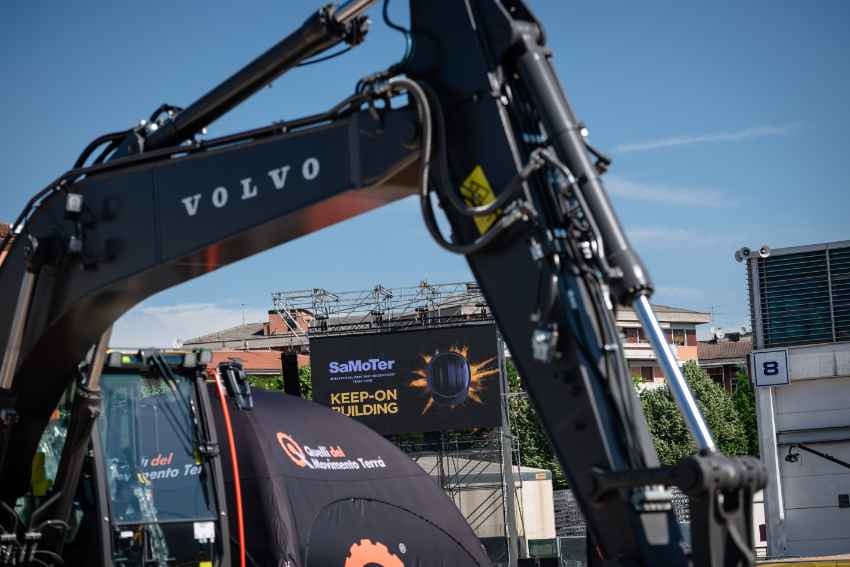
Luca Evangelista, sales director of Volvo CE: “The Italian market, compared to other European markets, is showing positive signals. The encouraging results we see today are, however, the fruit of work and a journey that began some years ago. We should not read as negative signals or moments of crisis those slight lowerings of the bar that represent rather a phase of adjustment, also linked to the economic trend with which we must live by finding the right countermeasures. In the earthmoving segment we are putting many machines on the market, while in countries such as Germany, France and the United Kingdom we have seen strong declines. This shows that Italy is producing important numbers thanks to the work carried out previously. Incentives have certainly played a role, but machines are only purchased if there is work and concrete projects. The PNRR is giving a strong push and has favoured investments in connectivity, digitalisation and sustainability, areas in which the return is always advantageous. The real challenge now is to manage to maintain this level.”
Maurizio Tosi, territory manager Plants Italy of Ammann Group: “Despite the economic crisis linked to the rise in fuel prices, energy costs and raw materials, on the part of companies there is still a strong will to improve, to invest and to grow. The Italian market continues, in fact, to record positive results while in Europe significant declines are being seen. Incentives have certainly played a driving role, from the 4.0 and 5.0 measures to other support instruments, but much also depends on the capacity of companies in the sector to continue to invest. However, there is a problem linked to regulations, especially in the road machinery sector. To install an asphalt plant, numerous authorisations are required, issued by different bodies that often do not communicate with each other. This creates enormous difficulties: a customer may obtain the go-ahead in six months or may not manage to obtain it even after three years, depending on the interpretation of the individual official. A situation that inevitably curbs the willingness to invest on the part of the end customer.”
Filippo Venieri, commercial and marketing director of VF Venieri: “The forecasts for the two-year period 2026-2027 are difficult to read, although I am seeing a great desire to invest on the part of companies in the sector and this gives grounds for optimism about the future. A message that I want, however, to launch from SaMoTer is that of investing in young people to attract the best talents and train the operators of the future.”
Marco Ferroni, business director of Kobelco Construction Machinery Europe: “2026, for our sector, having started not particularly well, could be a difficult year, but if remedies are found quickly and a way out is identified, 2027 could run counter to the figures of all other European countries.”
David Bazzi, CEO of Komatsu Italia: “The incentives that have so far been disbursed in Italy have certainly given a great advantage to construction machinery manufacturers. It is clear, however, that, in this moment of geopolitical crises, the critical issues of rising component prices and above all logistical critical issues are creating serious problems for the entire sector.”