
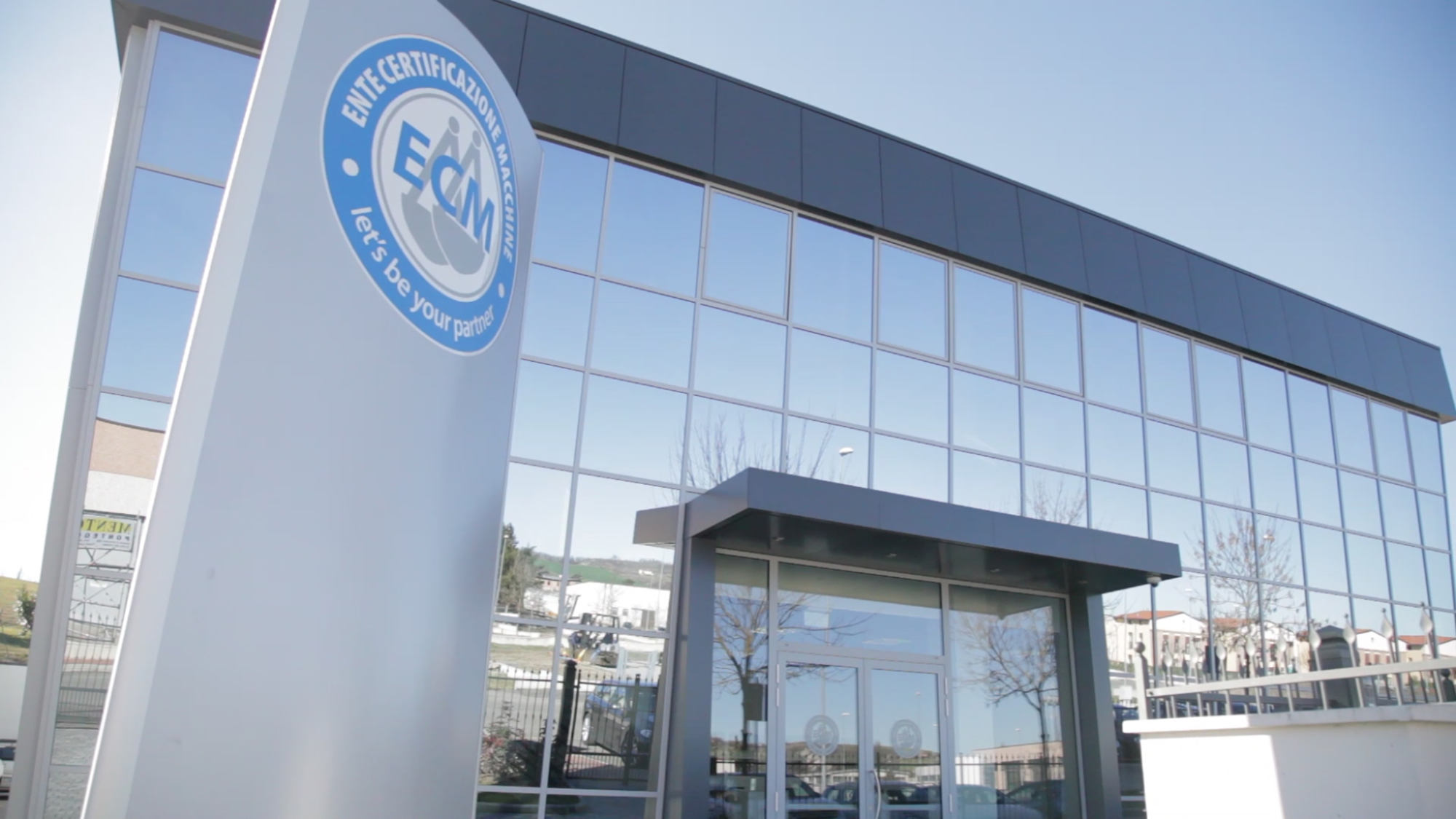
In today’s industrial landscape, regulatory compliance is no longer a simple bureaucratic requirement to be demarcated at the end of the production process. On the contrary, it has become a fundamental pillar of global competitiveness, innovation and product safety. To understand how companies are dealing with this complex transition, we interviewed Luca Bedonni, CEO of Ente Certificazione Macchine (ECM), an international reference company (Notified Body no. 1282) in the fields of testing, safety checks and certification for the machinery, automation and medical devices sectors.
Interview with Luca Bedonni, CEO of Ente Certificazione Macchine (ECM).
What are the most common industrial challenges that your customers face today and how does ECM propose to solve them?
Luca Bedonni: The main challenge is undoubtedly the fragmentation and very rapid evolution of the global regulatory framework, combined with the need to reduce time-to-market. Think of the impact of the new Machinery Regulation or the transition to the MDR (EU Regulation 2017/745) in the medical device sector. Companies often struggle to interpret these technical requirements while trying to export to complex markets such as Asia-Pacific or North America.
ECM responds to these critical issues by placing itself not as a mere external controller, but as a global strategic partner. At our headquarters in Valsamoggia and through our testing laboratories and international partners, we offer an integrated service: testing, certification and conformity verification activities. This “one-stop-shop” approach eliminates operational redundancies and allows companies to design their products already knowing, upstream, what requirements they will have to meet at an international level.
Before proposing a solution to a customer, how do you identify their specific operational needs?
L.B: There are no “standard” solutions because there are no identical production lines or devices. Our method is based on a thorough preliminary analysis (pre-assessment). Before making any proposal, our technical and regulatory experts carry out an initial audit to understand the customer’s operating context: the technologies used, the commercial target markets and the level of maturity of their quality management system. This pre-emptive dialogue allows us to map regulatory gaps and actual technical risks, calibrating testing and inspection activities to exactly what is needed to ensure safety and compliance, avoiding unnecessary costs or redundant testing.
Can you share a concrete example of how your activities have improved the efficiency, productivity or reliability of your customer?
L.B: An emblematic case concerned a major manufacturer of automated industrial machines intended for global export. The company was experiencing continuous bottlenecks caused by the need to test the machinery separately for the European market (CE marking) and for the Asian markets.
By integrating test sessions into our laboratories and leveraging our international cooperation agreements and global certification schemes, we have planned a single, unified testing protocol for electrical safety (LVD) and electromagnetic compatibility (EMC). The result? Product approval times have been reduced by 40%, allowing the customer to launch the system ahead of the competition and with the certainty of total reliability in the field, eliminating the risk of machine downtime or customs disputes.
What role does innovation play in the development of your testing and certification services for industrial applications?
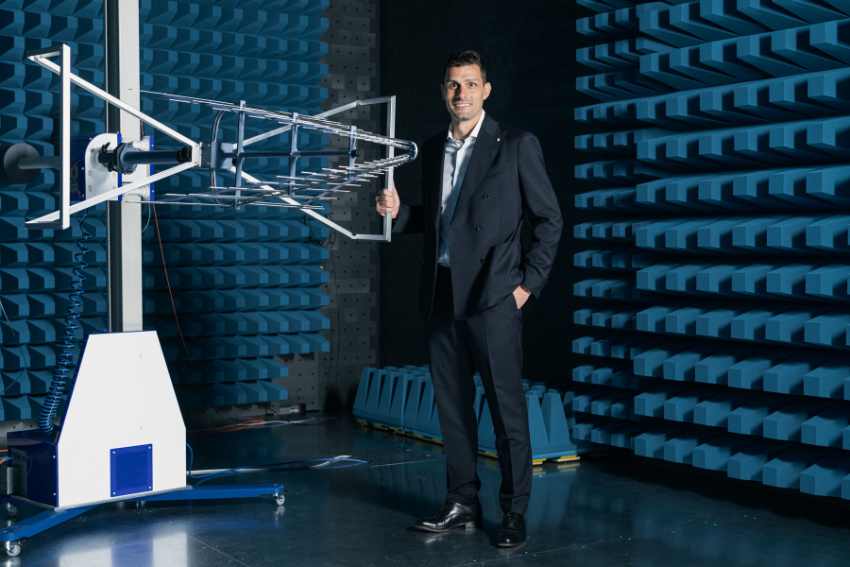
L.B: Innovation is our North Star. We cannot certify our customers’ innovation if we are not at the forefront ourselves. We are constantly investing in upgrading our test laboratories to cope with emerging technologies such as collaborative robotics, IoT systems and highly integrated medical devices. Our technicians actively participate in European regulatory working groups and workshops — I am thinking, for example, of the continuous updates on the EUDAMED platform managed by our Medical Devices division team led by Vanessa Biavati. Anticipating the norm means allowing our customers to innovate safely.
In an increasingly ESG-conscious market, how do you help companies adapt to the growing demands for sustainability and energy efficiency?
L.B: Sustainability today is a compliance requirement in all respects. We help companies interpret and meet the directives on Ecodesign, RoHS and energy efficiency, to which are added the strict constraints of the new PPWR 2025 Regulation on the reduction, reuse and recycling of packaging. Through targeted laboratory tests and the analysis of technical documentation, we measure the consumption and environmental impact of industrial technologies. Obtaining an objective validation of this performance not only protects the company from sanctions, but turns into a formidable marketing lever to demonstrate to the market a real green commitment, supported by scientific data and not by self-referential statements.
Industries have very different production environments. How do you customize your verification technologies and services?
L.B: Flexibility is one of ECM’s strengths. We operate on a very wide range of products ranging from large industrial plants (Machinery Directive, ATEX for explosive atmospheres) to advanced medical devices. We customize the service by structuring dedicated multidisciplinary verification teams. If a customer produces a printing machine for the food sector, we will support the mechanical safety expert with a MOCA (Food Contact Materials) specialist. If we are working on a complex chemical plant, our on-site inspection activities are planned to integrate with the customer’s maintenance schedules, minimizing the impact on production operations.
How important are digitalization and the data-driven approach in the solutions and services you provide?
L.B: They are fundamental. Digitalization has transformed the way we do testing. Today we collect, analyze and historicize an impressive amount of technical data during laboratory tests. This data-driven approach allows us to provide customers with detailed reports that not only tell us whether a product “passes or fails” the test, but highlights the margins for improvement of the product itself. In addition, the digitization of our certification processes guarantees maximum transparency, traceability and smooth and secure communication of documents, protecting the intellectual property of companies.
What obstacles do companies usually face in implementing new industrial technologies and how do you support them during the transition?
L.B: The biggest obstacle is the “resistance of the system” due to uncertainty: the fear that the introduction of a new robot or predictive software could compromise the safety of workers or violate some directive. This can generate operational paralysis.
We support companies by acting as facilitators of change. Through preventive technical support and targeted staff training, we help management understand how innovation can go hand in hand with the highest safety standards. We demystify regulatory complexity, turning it into a clear roadmap to technology implementation.
How do you measure, over time, the long-term success and impact of your activities for customers?
L.B: The success of our solutions is measured by the stability and growth of the customer. We monitor very concrete parameters: the absence of product recalls from the market, the immediate passing of international customs controls, the maintenance of certifications over time without critical findings during surveillance audits. When we see a client that, starting as a small local company, manages to consolidate itself in the most rigid markets in the world thanks to the regulatory passport built together with us, that is our most valuable indicator of success.
Looking ahead, what are the emerging trends and industrial needs that will guide ECM’s strategic direction?
L.B: In this context, the industrial future is traced by three macro-guidelines: Artificial Intelligence applied to manufacturing, the cybersecurity of connected industrial systems and the radical ecological transition.
The total interconnection of factories will open up new frontiers of risk and, consequently, require new testing standards. This is an epochal turning point, driven at the regulatory level by both the Cyber Resilience Act for cybersecurity and the New Machinery Regulation (EU) 2023/1230, which introduces the obligation to assess the risks related to the integration of AI and connectivity in machinery.
ECM is already moving in this direction, implementing specific skills for compliance with the new legislative framework, validation of AI algorithms in machinery and cybersecurity of industrial networks and connected medical devices. Our future goal remains the same as always: to be ready to certify tomorrow a moment before it becomes the present.
ENTE CERTIFICAZIONE MACCHINE
Tel. +39 051 6705141Fax +39 051 6705156
Email: info@entecerma.it
PEC: ecm@pec.entecerma.it