
Polar Air, part of Polar Global Group, delivers HVAC solutions with hydronic technology for all types of applications. Residential, commercial, hospitality, and healthcare.
The company started more than 35 years ago manufacturing highwalls and cassettes before moving into hydronic fan coils during the 1990s. Since then, they have grown across Europe, North America, and LATAM, building experience as a hydronic HVAC partner.
Interview with Gabriel García Azorín, Business Development Director (Global) at Polar Air.
A brief description of the company and its activities.
Gabriel García Azorín: We believe in water. Hydronic technology gives stable temperature control, efficient thermal transfer, lower energy consumption, and much more flexibility across different building types.
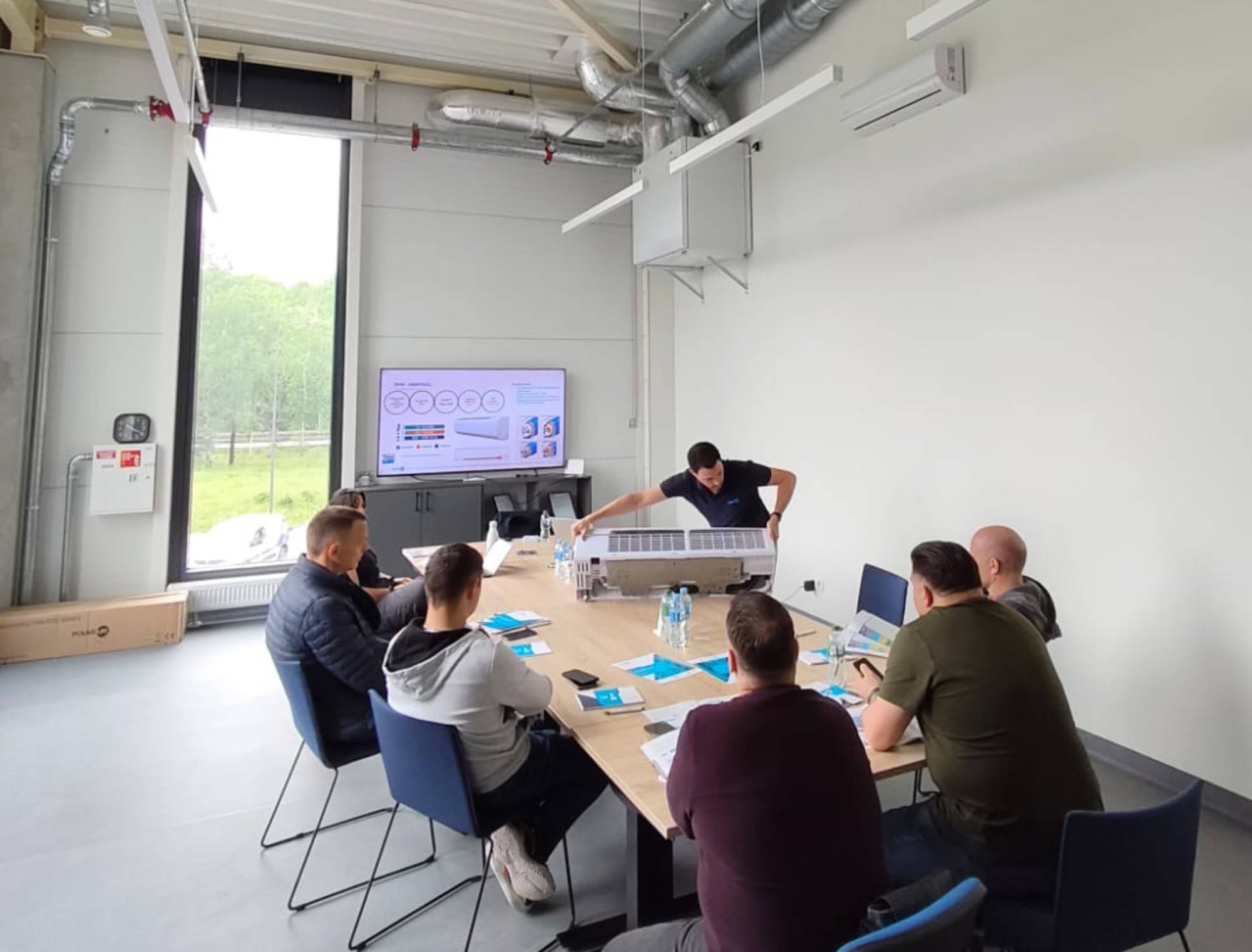
Today, our role goes beyond just supplying equipment. We support customers from product selection through to installation and after-sales support.
Our objective has stayed the same throughout our evolution: creating ideal indoor climates that last.
What are the main areas of activity of the company?
G.G.A: Our main focus is hydronic HVAC, covering both energy generation and distribution through fan coils and air-to-water heat pumps.
A big part of our work today is helping customers combine these systems more effectively as heat pump adoption grows across Europe.
We stay closely involved throughout the project process. Our pre-sales team supports product selection and application design, while our after-sales team helps commissioning and performance once equipment is installed.
That matters because every project behaves differently once it reaches site. Our team understands both the technical side and the installation side, which helps avoid problems later.
What’s the news about new products/services?
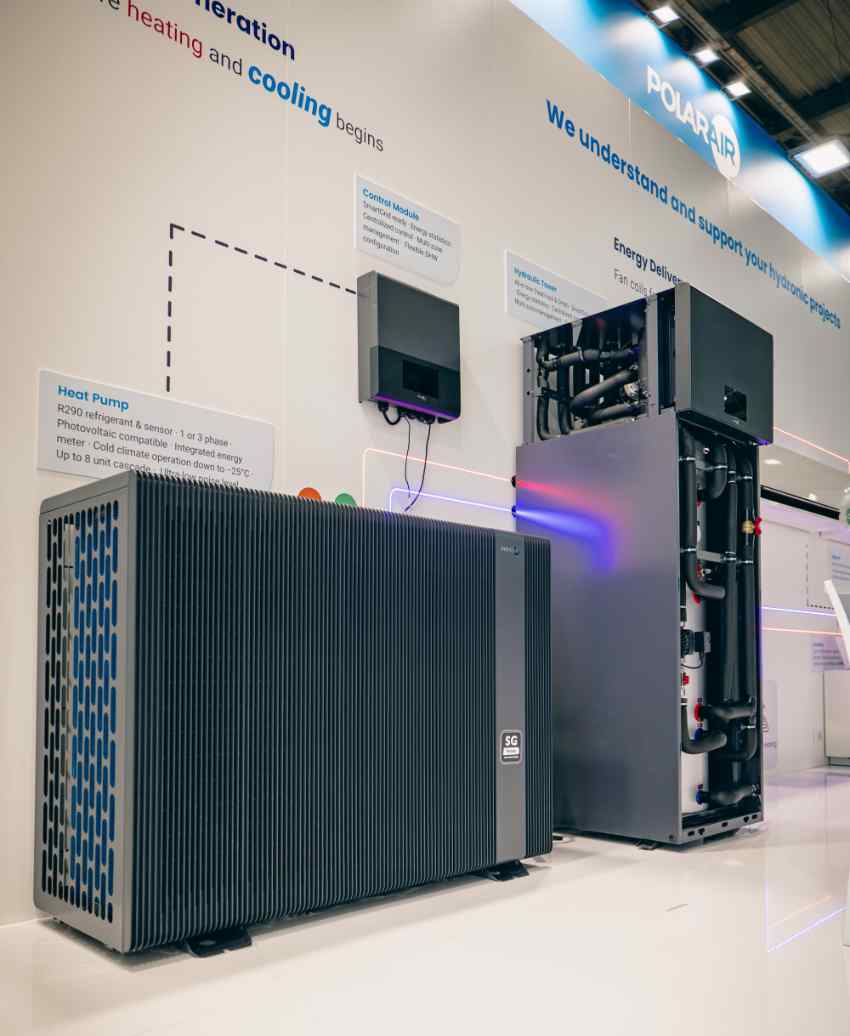
G.G.A: One of our main developments is including monobloc A2W heat pumps in the range that uses R290 refrigerant.
More projects are now combining heat pumps with hydronic fan coils instead of treating them as separate products. Across Europe, buildings are moving towards lower-temperature requirements and higher efficiency targets.
Our new A2W heat pumps can be used for both space heating and cooling, while also producing domestic hot water through a dedicated circuit. It’s a great addition, giving customers more flexibility across retrofit and new build projects.
We also continue expanding our fan coil range with products developed for real market needs. A good example is our PHW Highwall, where Polar Air became one of the first companies to introduce true 4-pipe capability into a highwall. It allows different zones to heat and cool simultaneously without losing the simplicity people expect from a highwall.
Across our ducted range, tool-free filter rack is now standard, making maintenance much faster and easier for residential and commercial applications.
What are the ranges of products/services?
G.G.A: We have hydronic fan coils like highwalls, cassettes, and ducted units, plus mini air handling units and A2W heat pumps.
For fan coils, we offer both 2-pipe and 4-pipe configurations together with a wide range of controls like WiFi thermostats.
One area where we are strong is controls integration. Our fan coil units come with Modbus already integrated as standard, which is still uncommon across much of the European market.
For BMS integration, that removes unnecessary complexity on site and makes communication with building controls more straightforward from the start.
We also develop technologies that improve hydronic performance in real projects. Our Auto-Dynamic Balancing System (ADBS) maintains a constant ΔT automatically inside the unit, helping stabilize water flow and reducing the need for external balancing components during commissioning.
A great tool we have is PASELECT Software for fan coil selection. It saves engineers time during selection and quoting, especially on larger projects where capacities, airflow, and noise levels all need to be calculated accurately.
Consultants and contractors have quick access to technical documentation and performance data in one place.
What is the state of the market where you are currently active?
G.G.A: The European HVAC market changing very quickly. One of the biggest trends is electrification as more countries move away from fossil-fuel heating and push towards heat pumps and lower-temperature HVAC.
At the same time, the market remains quite fragmented. Some mature regions are seeing slower new-build activity, while refurbishment and energy upgrade projects continue growing strongly.
Good opportunities in peripheral European markets such as Portugal and the Baltic region are emerging, because residential and commercial construction activity remains strong.
Customers are also looking more closely at long-term performance now. Reliability, maintenance access, controls integration, and energy consumption all play a much bigger role in decisions than they did a few years ago.
That’s one reason hydronic fan coils continue gaining attention, especially when combined with A2W heat pumps.
What can you tell us about market trends?
G.G.A: Across Europe, electrification and decarbonization are the main topics.
F-Gas regulations and renewable energy policies are pushing the market quickly towards lower-GWP refrigerants and more sustainable technologies.
That’s why R290 heat pumps are becoming so relevant for residential and commercial applications, especially in markets such as Spain, Ireland, and the UK.
I also see growing demand for hydronic HVAC because it offers flexibility across different building types and adapts well to future upgrades or changes in energy generation.
What are the most innovative products/services marketed?
G.G.A: A lot of companies develop products based only on specifications or market trends, but we spend a lot of time speaking with engineers, consultants, contractors, and customers about what is really happening on projects.
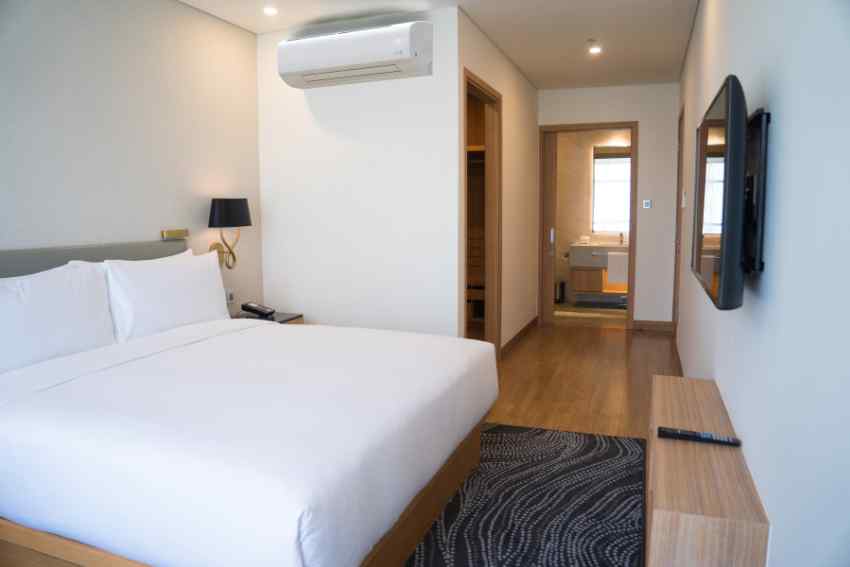
The PHW Highwall is a good example. We kept seeing demand for more flexible 4-pipe hydronic applications in spaces where traditional solutions were either too large or too complicated, so we introduced 4-pipe capability into a highwall format.
That same thinking runs through the company more broadly. We are always looking at how to make hydronic solutions easier to design, install, commission, and maintain.
Honestly, one of our biggest strengths is the team behind the business. We have people with real HVAC experience who understand what happens once equipment reaches site, and that shapes how we approach the market.
Customers do not only want products anymore. They want support, application knowledge, and partners who genuinely care about their challenges.
What estimations do you have for the second half of 2026?
G.G.A: I think the next few years are going to change the HVAC market more than the previous decade did.
Across Europe, the industry is moving very quickly towards heat pumps, lower-temperature applications, and tighter efficiency requirements. Five years ago, many projects still treated hydronic HVAC as a more specialist solution. Today, it is becoming part of the mainstream conversation.
We are also seeing a big shift in how heat pumps reach the market. The conversation is becoming much more application-driven, and engineers and project teams are looking for solutions that are practical, easy to commission, and reliable long term.
For me, that is one of the most exciting parts of where the industry is heading.
Hydronic technology is no longer competing for attention in the same way it was before. The market is naturally moving towards the kind of applications where hydronic technology performs best, especially when heat pumps, fan coils, and controls are designed to work together properly.
That gives us a lot of confidence for the future because this is exactly the direction Polar Air has been building towards for years.