
Transport & Environment (T&E) is Europe’s leading advocate for clean transport and energy. T&E’s mission is to fight for an affordable zero-emission transport system that benefits both people and the planet. Since their formation in 1990, T&E has shaped some of Europe’s most important climate and environmental laws, such as the creation of the world’s largest carbon market for aviation and the EU agreement to ban the sale of new combustion engine cars and vans by 2035.
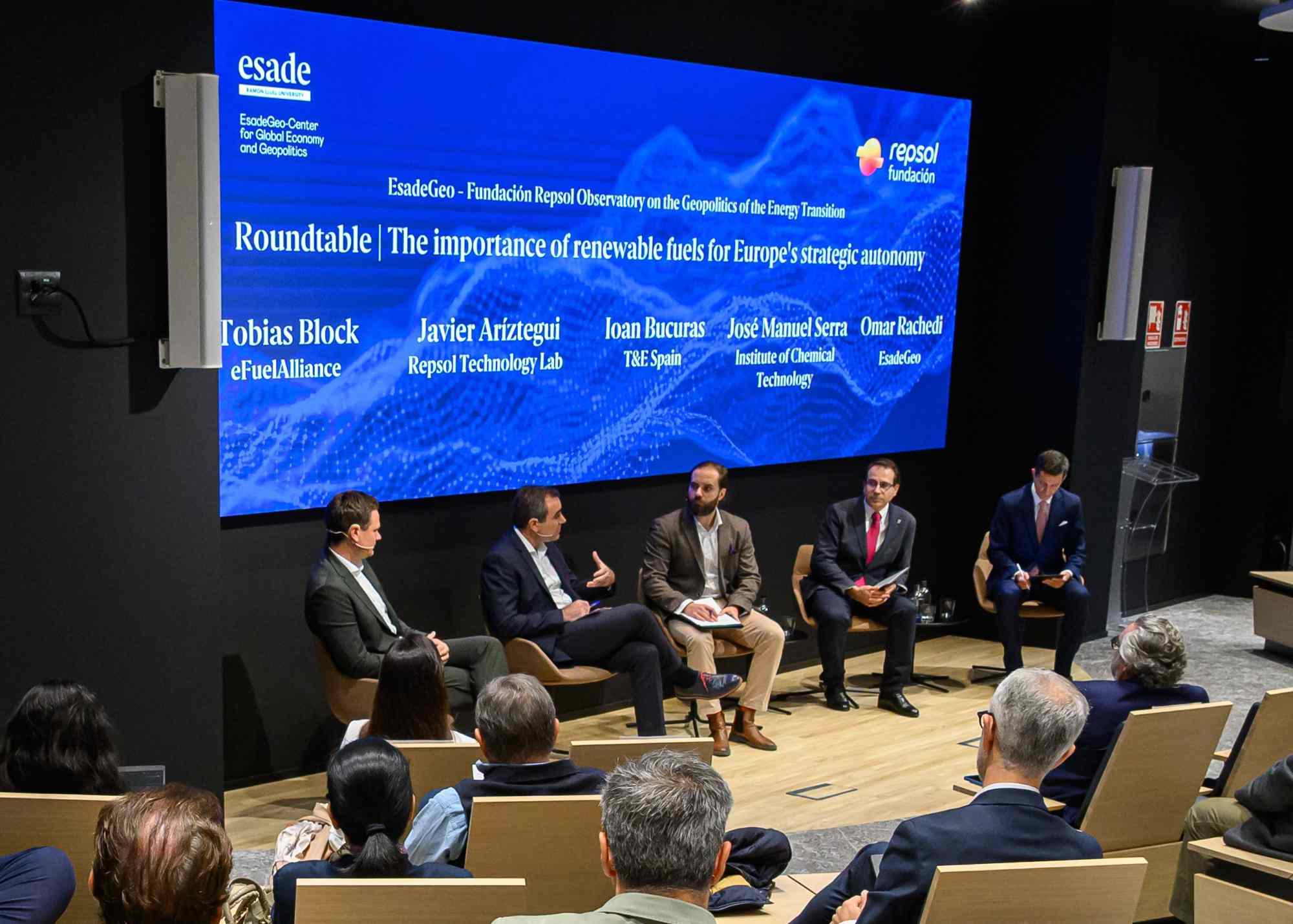
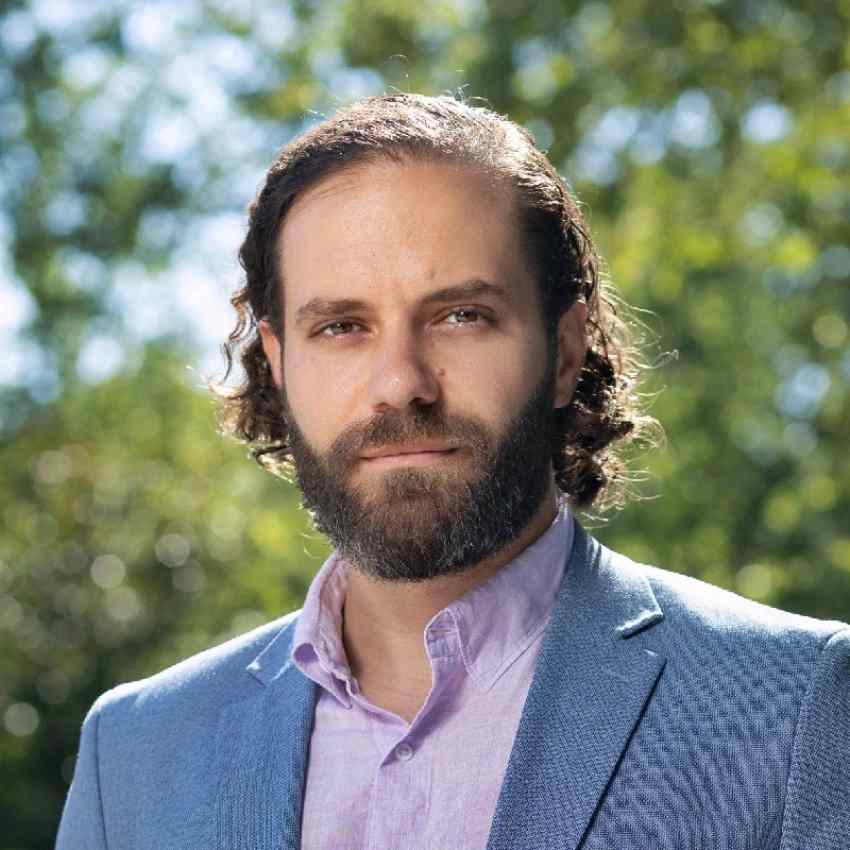
Interview with Ioan Bucuras, Deputy Director Spain at Transport & Environment (T&E).
T&E recently coordinated a broad coalition in Spain around synthetic sustainable aviation fuels (eSAF). What made this alliance possible, and why is now the right moment for such an initiative?
Ioan Bucuras: What makes this coalition remarkable is that it brings together almost the entire eSAF value chain: airlines, aircraft manufacturers, renewable energy producers, hydrogen developers, engineering companies and fuel suppliers. These sectors do not always agree on every issue, but they share a common understanding that without industrial-scale deployment of eSAF, Europe risks missing its aviation decarbonisation objectives. The timing is critical because the next two years will determine whether announced projects move towards final investment decisions or remain on paper.
The coalition brings together green hydrogen producers, oil companies, airlines and other stakeholders. How difficult is it to align the interests of such different industries around a common aviation fuel strategy?
I.B: The challenge is less about aligning interests and more about aligning risk. Every actor recognises the need for eSAF, but no single stakeholder can absorb the financial and technological risks alone. Airlines want affordable fuel, developers need long-term revenue certainty, and investors require bankable projects. That is why we advocate mechanisms that bridge this gap and create predictable conditions for investment.
How important could eSAF become for Europe’s energy security, especially in the context of geopolitical instability and fossil fuel dependency highlighted by recent crises involving Iran and global oil markets?
I.B: Recent geopolitical events have demonstrated that aviation’s greatest vulnerability is not climate regulation but dependence on imported fossil fuels. Europe still relies heavily on external oil supplies, exposing airlines and passengers to price shocks beyond their control. eSAF offers an opportunity to transform domestic renewable electricity into strategic aviation fuel. In that sense, every investment in eSAF strengthens energy resilience, industrial sovereignty and long-term economic stability.
Spain is increasingly being presented as a future European hub for alternative aviation fuels. What competitive advantages does Spain currently have compared to other EU countries?
I.B: Spain combines several advantages that few countries can match simultaneously: abundant solar and wind resources, strong potential for green hydrogen production, world-class industrial and port infrastructure, a large aviation market and a growing clean-tech ecosystem. These factors position Spain not only as a potential consumer of eSAF but as a future producer and exporter of strategic energy molecules.
From a technical perspective, what are still the biggest bottlenecks for scaling synthetic kerosene production in Europe – renewable electricity availability, green hydrogen costs, CO₂ capture infrastructure, or something else?
I.B: Technology is advancing rapidly, but the main challenge is investment certainty. Developers need access to competitively priced renewable electricity, affordable green hydrogen and reliable CO₂ sources. However, the biggest obstacle remains bankability. Many projects struggle to secure long-term offtake agreements and financing for first-of-a-kind facilities. The challenge is therefore technical, financial and regulatory at the same time.
The ReFuelEU Aviation regulation creates mandatory targets for sustainable aviation fuels. In your view, is the current regulatory framework ambitious enough to stimulate industrial-scale investment?
I.B: ReFuelEU is one of the most ambitious aviation fuel regulations in the world and sends a powerful demand signal to the market. The challenge is that demand certainty alone does not automatically create supply. We now need complementary financial instruments capable of reducing investment risk and supporting the first generation of industrial-scale projects. The next step is implementation, not deregulation.
Airlines often argue that sustainable fuels remain significantly more expensive than conventional jet fuel. How can Europe balance decarbonization targets with the economic competitiveness of the aviation sector?
I.B: The discussion often focuses on the cost of sustainable fuels while overlooking the cost of fossil fuel dependence. Recent crises have shown that geopolitical shocks can increase fuel costs far more dramatically than climate policies. The objective should be to reduce the green premium through scale, innovation and targeted support mechanisms while maintaining a level playing field for European aviation. Over time, energy security and competitiveness increasingly point in the same direction.
Many critics say Europe risks losing clean-tech industrial leadership due to slower permitting and fragmented policies. What needs to change for Europe to become globally competitive in eSAF production?
I.B: Europe must move faster from political ambition to industrial execution. Faster permitting, predictable regulation, competitive electricity prices and targeted support for first-of-a-kind projects are essential. Other regions are actively competing for investment. If Europe wants to lead in eSAF production, it must provide investors with the confidence that projects can be built, financed and operated successfully over the long term.
To what extent could the development of synthetic aviation fuels create new industrial ecosystems, jobs and engineering opportunities across Southern Europe?
I.B: The opportunity extends far beyond aviation. eSAF development requires renewable power generation, electrolysers, hydrogen infrastructure, carbon capture, industrial facilities, logistics and advanced engineering services. This creates highly skilled jobs and supports the emergence of new industrial clusters. For Southern Europe, it represents a chance to become a strategic clean-energy manufacturing and innovation hub.
Looking ahead 10 years, do you believe synthetic kerosene can become a mainstream aviation fuel, or will it remain a niche solution limited by cost and production capacity?
I.B: Within the next decade, synthetic kerosene should move from demonstration projects to meaningful commercial deployment. It is unlikely to replace conventional jet fuel overnight, but it can become a central pillar of long-haul aviation decarbonisation. The decisive factor will not be technological feasibility but whether Europe succeeds in creating the investment conditions necessary to scale production. If we get that right, eSAF can evolve from a niche technology into a strategic industry.