
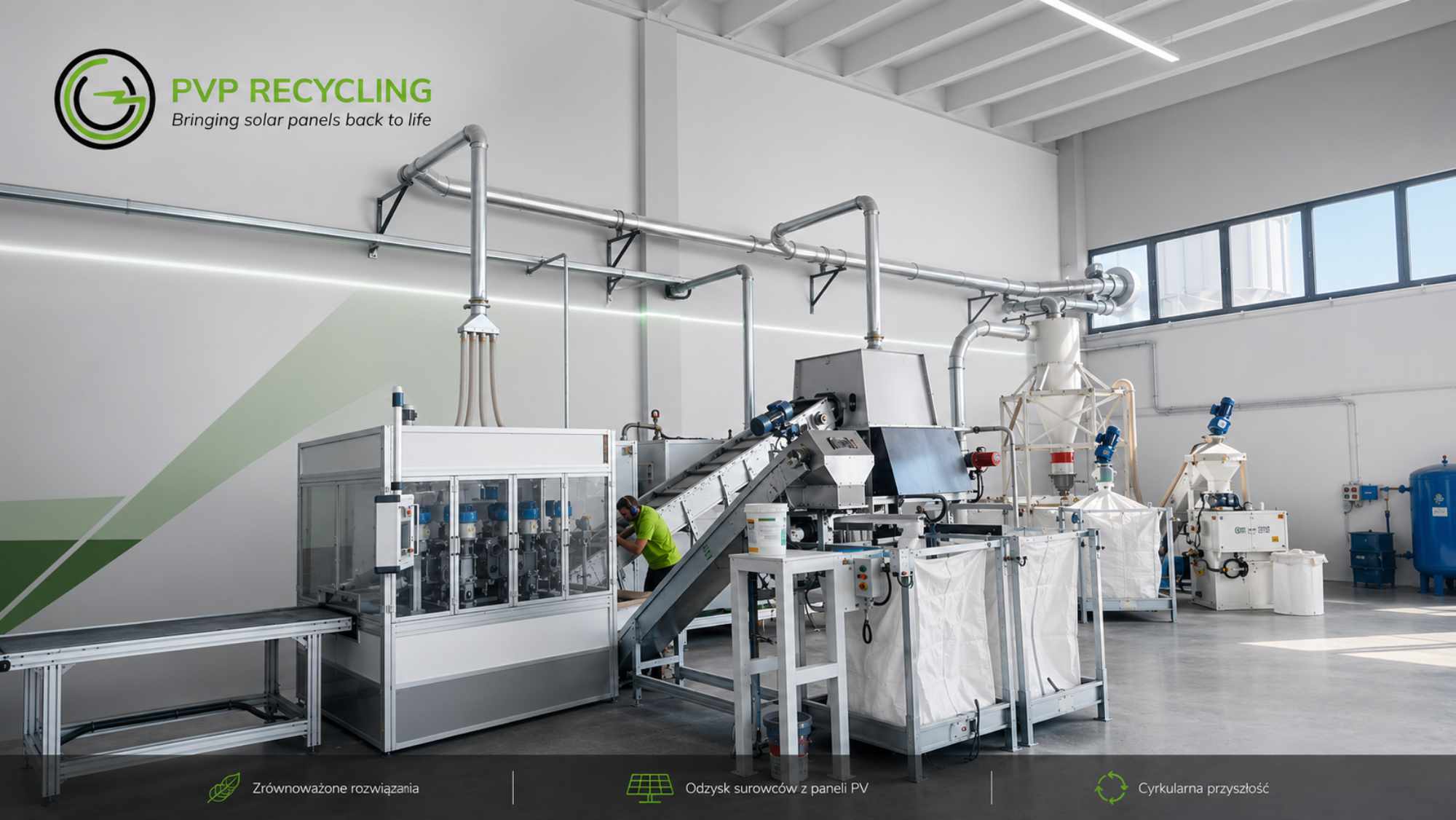
PVP Recycling develops and operates infrastructure for end-of-life photovoltaic (PV) module processing in Poland. The company focuses on the engineering and deployment of systems for collection, reverse logistics, dismantling, and material separation of crystalline silicon PV modules.
The objective is the recovery of secondary raw materials – primarily glass, aluminium, copper, silicon fractions, and silver-bearing components, from decommissioned PV modules, with emphasis on material quality suitable for re-entry into industrial supply chains.
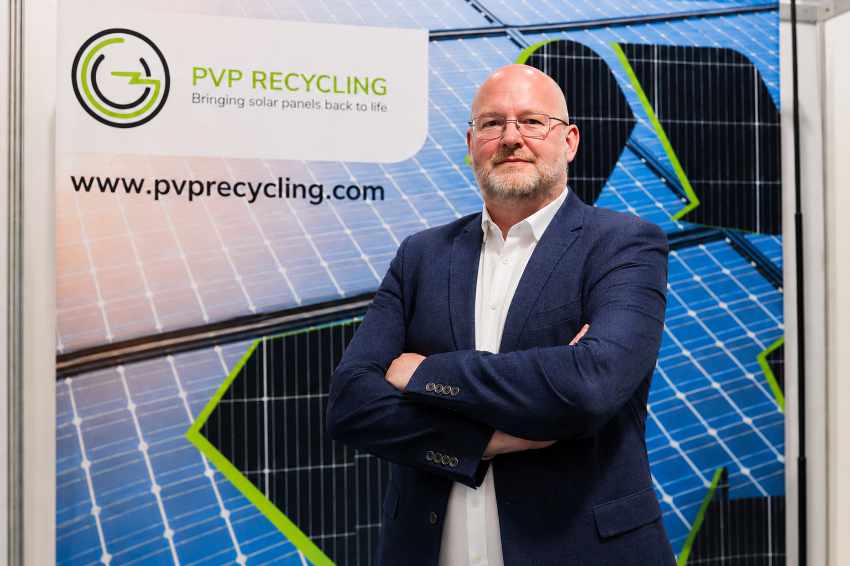
Interview with Artur Woźniakowski, CEO & Co-Owner of PVP Recycling.
What are the main areas of activity of the company?
Artur Woźniakowski: Activities are structured across the PV waste processing chain:
- Design and operation of PV module collection and reverse logistics systems
- Mechanical dismantling and size reduction of PV modules
- Separation of homogeneous material fractions (glass, aluminium frames, polymers, metals)
- Pre-processing of composite fractions for downstream metallurgical and refining processes
- Development of material flow tracking and compliance documentation systems (EPR/WEEE-aligned)
The system is designed to interface with EPC contractors, O&M operators, PV asset owners, and waste management stakeholders.
What’s the news about new products?
A.W: Current development work focuses on increasing separation efficiency and improving downstream material purity. Key engineering directions include:
- PV-specific mechanical processing lines adapted to module architecture variability
- Improved separation of laminated composite structures
- Process development for glass-glass PV modules with increased mechanical resistance and adhesive complexity
- Fraction conditioning for downstream recovery of copper and silicon-rich materials
- Assessment and preparation of silver-bearing fractions for hydrometallurgical recovery routes
The development trajectory moves from bulk dismantling toward controlled fractionation and material-grade output streams.
What are the ranges of products?
A.W: The operational scope includes:
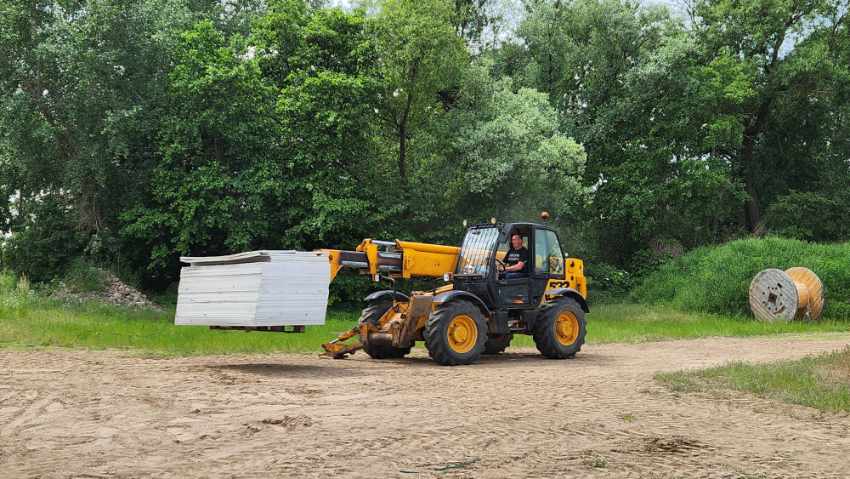
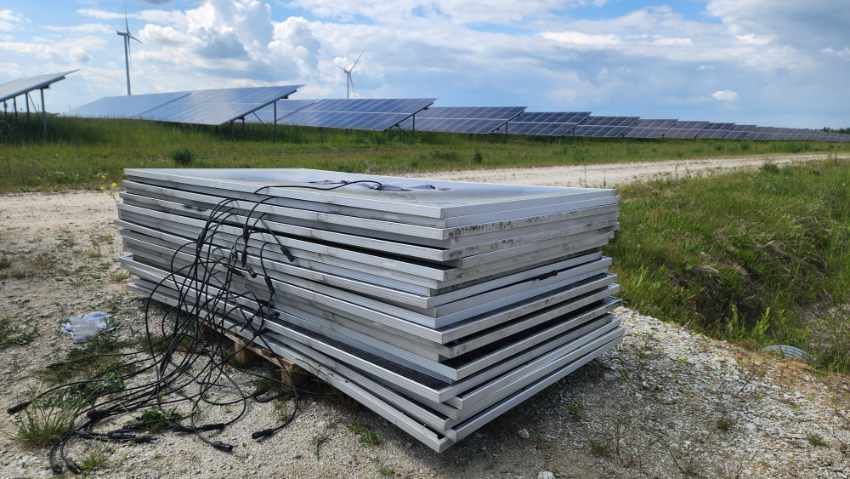
- Collection and transport of end-of-life PV modules
- Decommissioning support for rooftop and utility-scale PV systems
- Mechanical dismantling and material separation processes
- Recovery of aluminium, glass, and polymer fractions
- Preparation of intermediate fractions for refining and metallurgical processing
- Regulatory documentation and waste stream traceability
The system is designed for both distributed (prosumer) and centralized (utility-scale) PV waste streams.
At what stage is the market where you are currently active?
A.W: The PV recycling market in Europe remains in an early industrialization phase. Installed PV capacity in Poland exceeds 20 GW, corresponding to tens of millions of modules entering long-term end-of-life horizons.
Current treatment capacity is predominantly based on adapted WEEE processing infrastructure rather than PV-optimized systems. As a result, material output is typically limited to low-specification fractions, with restricted suitability for high-value reuse.
The absence of dedicated PV processing infrastructure creates a structural gap between future waste generation rates and available treatment capacity.
What can you tell us about market trends?
A.W: The sector is shaped by several technical and regulatory drivers:
- Accumulation of first-generation PV installations reaching end-of-life phase
- Expansion of EU regulatory frameworks (EPR/WEEE enforcement)
- Increasing focus on critical raw material recovery (Ag, Si, Cu)
- Transition from mass-based recycling metrics to material quality metrics (purity, contamination control)
- Development of decentralized collection systems for distributed PV assets
- Gradual introduction of automation and sensor-based sorting technologies in recycling systems
Industry direction is shifting toward material recovery systems designed for semiconductor-grade and metallurgical-grade output streams rather than generic waste processing.
What are the most innovative products marketed?
A.W: The core innovation is the design of a PV-dedicated processing architecture rather than adaptation of generic waste treatment systems.
Key elements include:
- Dedicated reverse logistics model for distributed PV waste streams
- Hybrid processing topology: regional pre-processing + centralized high-value recovery
- Process engineering focused on minimizing cross-contamination between fractions
- Specific handling pathways for glass-glass PV module architectures
- Design focus on enabling downstream recovery of Ag-, Si-, and Cu-bearing fractions
The system is structured to enable controlled material fractionation aligned with downstream refining requirements.
What estimations do you have for 2024?
A.W: Development priorities for H2 2026 are focused on scaling throughput and stabilizing process efficiency:
- Expansion of PV module intake capacity through partner network development
- Increased integration with EPC, O&M, and asset decommissioning operators
- Process stabilization for aluminium and glass recovery streams
- Optimization of mechanical separation efficiency and throughput rates
- Development of copper- and silicon-rich fraction processing routes
- Preparation of silver-bearing fraction streams for external hydrometallurgical refining
- Gradual automation of dismantling and sorting operations
The target is transition from pilot-scale operational model to early industrial-scale PV recycling infrastructure within Central and Eastern Europe.