
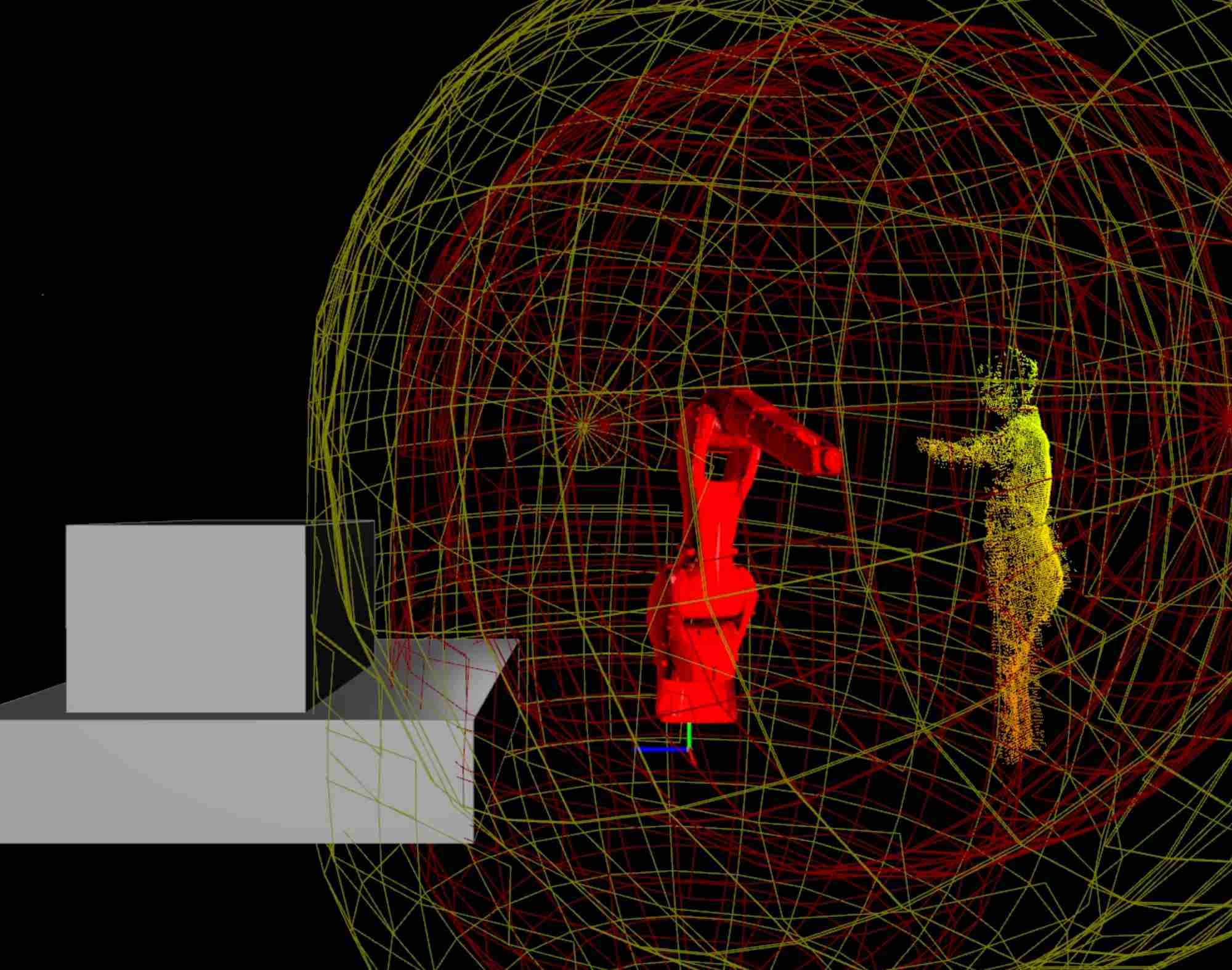
Traditional industrial robot safety often requires physical fencing, trade-offs in floor space, and increased cycle times. The SR-1 system by Sensory Robotics eliminates physical barriers using 3D time-of-flight sensing to establish dynamic, virtual safety zones around heavy payload industrial robots. Certified to UL 1740 and ISO 13849 Performance Level d (PLd), SR-1 allows humans and industrial robots to safely work side-by-side, optimizing factory layout and operational efficiency.
Most conversations about robot safety start with a tradeoff. Manufacturers assume that protecting people means physically separating them from machines, and that separation costs floor space, cycle time, and flexibility. Traditional guarding locks a cell into a fixed footprint. Every time the process changes, the fencing has to change with it.
SR-1 removes that tradeoff. It uses 3D time of flight sensing to create virtual safety zones around industrial robots, allowing people and heavy payload robots to work side by side without physical fencing. The system detects presence in three dimensions and slows or stops the robot only when a person actually enters a protected volume, rather than tripping on any breach of a two-dimensional plane.
The efficiency gains show up in four places.
Floor space. Fenced cells typically consume two to three times the area the robot actually needs. Removing the fence returns that space to production. In plants where square footage is the binding constraint on adding a line, this is the difference between expanding in place and expanding into a new building.
Cycle time. Conventional safety systems are binary. Someone crosses a light curtain, and the cell goes down, then requires a manual reset. SR-1 supports graduated speed and separation monitoring, so the robot slows as a person approaches and resumes full speed when they step back. Operators load, inspect, and clear jams without a full stop and restart.
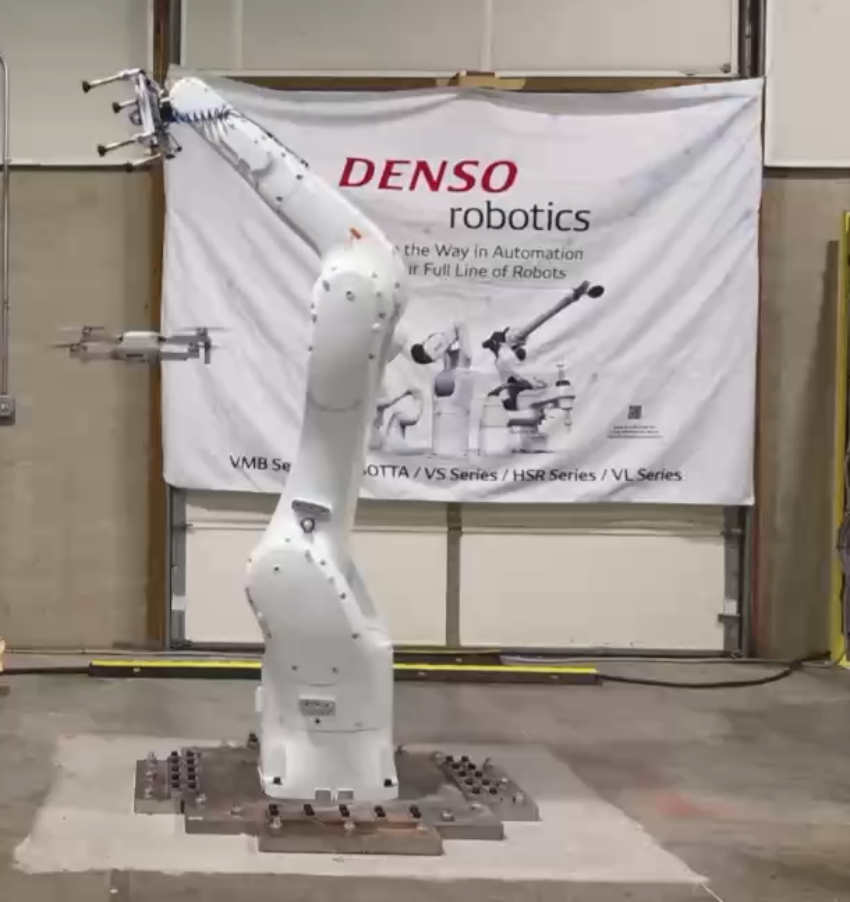
Changeover and reconfiguration. Virtual zones are defined in software. Reconfiguring a cell for a new part or a new process is a configuration change, not a demolition and rebuild project with contractors and a recertification cycle.
Deployment speed. The system is UL 1740 certified (cULus), with Performance Level d (PLd) achieved through ISO 13849 Part 1 and Part 2 methodology. That certification means our customers’ EHS and corporate engineering teams are evaluating a validated product rather than sponsoring a custom risk assessment. A major aerospace manufacturer has added Sensory Robotics as the only approved provider for fenceless safety in their standard. For smaller manufacturers, a typical order to install runs four to five weeks.
Aerospace, automotive, CPG, and heavy manufacturers are deploying the technology today, and we recently received a $1.25M Department of Defense grant for Air Force applications.
The innovation is the sensing. The efficiency is what the sensing makes possible: a factory floor where the layout is driven by how work should flow, not by where the fence has to go.