
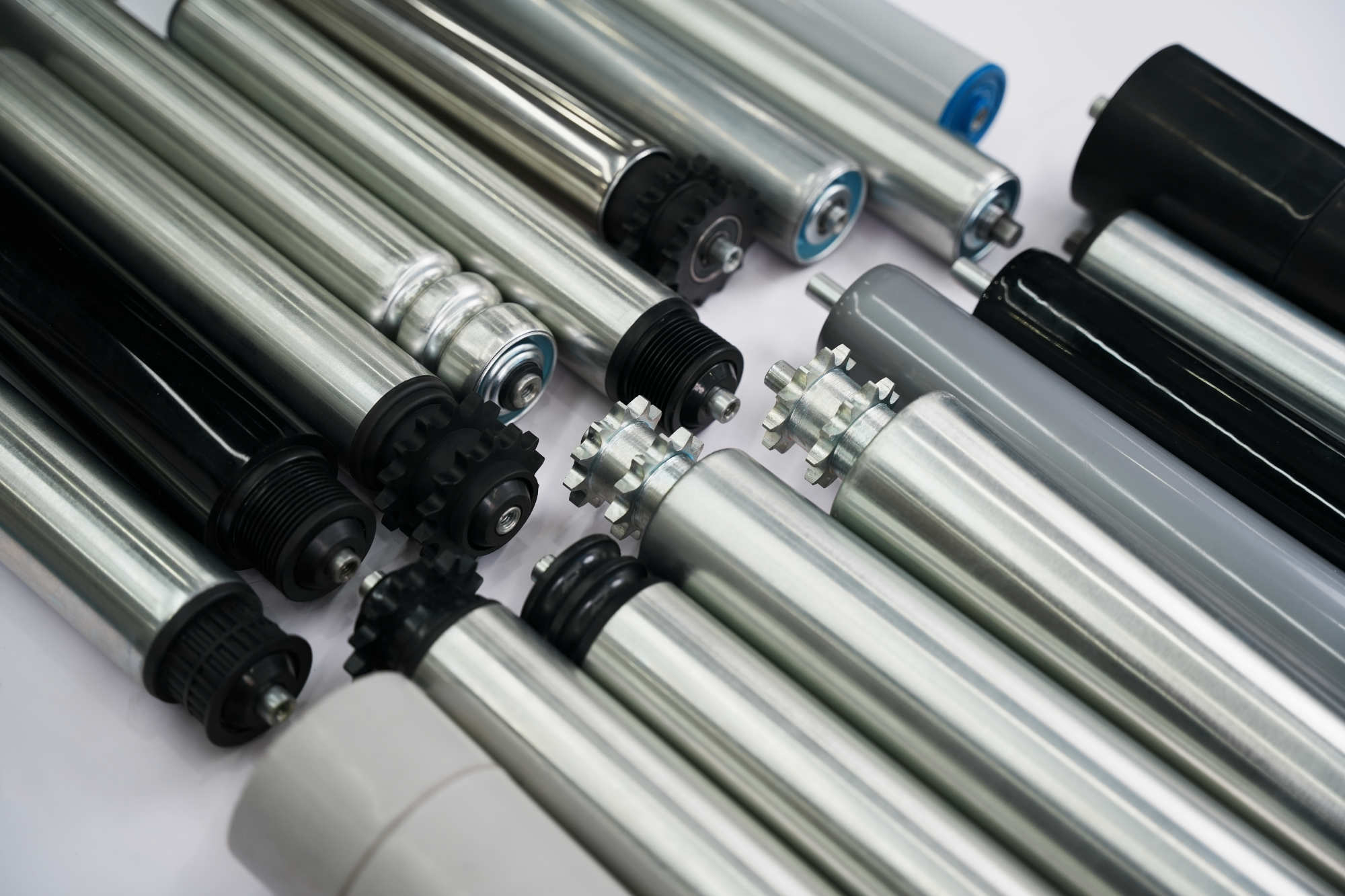
Wuxi Leev Intelligent Roller Co., Ltd., a specialized Chinese conveyor roller manufacturer with an annual capacity of 800,000 units, provides custom-engineered roller solutions for logistics, food processing, and factory automation. From heavy-duty welded housing designs to stainless steel 304/316 rollers for washdown environments, LEEV manufactures components tailored strictly to client drawings and specs.
Jack Zheng, Sales Manager at LEEV Conveyor, discusses market trends in conveyor customization,
A brief description of the company and its activities.
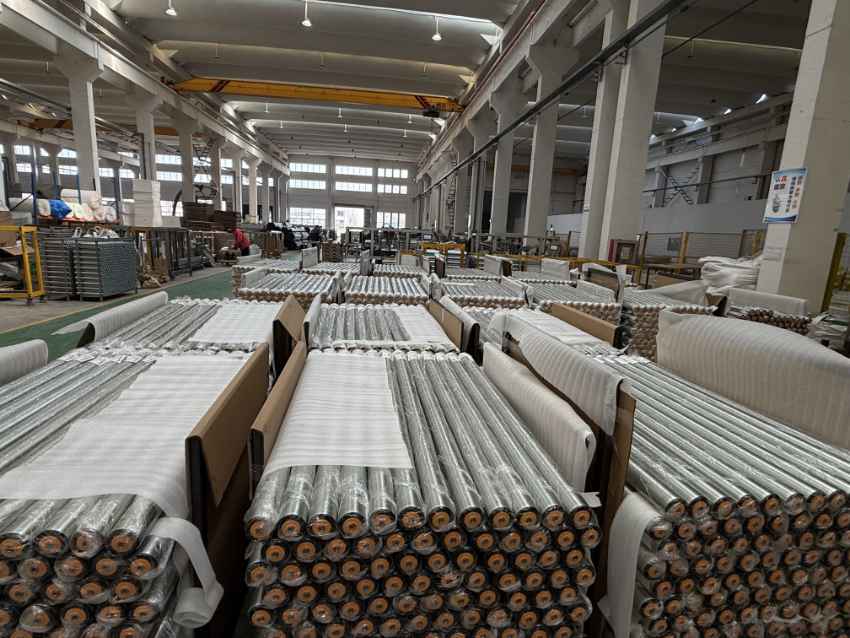
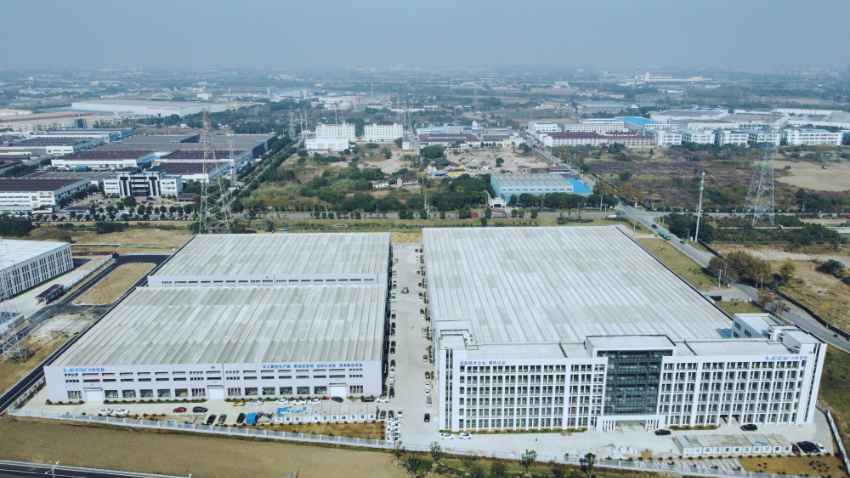
Jack Zheng: Wuxi Leev Intelligent Roller Co., Ltd. is a specialist conveyor roller manufacturer in Wuxi, China. We manufacture conveyor rollers and related components; we do not supply complete conveyor systems. Most of our work is produced to customer drawings or to specified dimensions, loads, mounting methods and operating conditions. Our ISO 9001-certified operation covers engineering evaluation, machining, welding, assembly, straightening and inspection. We have more than 200 employees, including over 30 engineers and technical staff, and an annual capacity of about 800,000 rollers. Our products have been exported to more than 50 countries, and we have served over 1,000 customers.
What are the main areas of activity of the company?
J.Z: Our main activity is the engineering and production of customized rollers for conveyor manufacturers, OEMs, system integrators and distributors. Typical applications include logistics, packaging, sorting, food processing, woodworking equipment, industrial automation and material handling. Our in-house capabilities include laser and saw cutting, CNC machining, machining centers, tube and shaft processing, robotic welding, roller assembly, straightening, inspection and packaging. Selected surface treatments are completed by long-term specialist partners. For a new project, we review the roller diameter and length, shaft design, mounting method, load, speed, temperature, humidity, cleaning method and corrosion requirements before recommending a configuration.
What’s the news about new products/services?
J.Z: Recent work includes customized stainless steel conveyor rollers for wet and food-processing environments, heavy-duty conveyor rollers with welded bearing housings for high-load applications, and rollers designed around existing packaging and sorting equipment. We are also providing more combinations of shafts, bearings, sprockets, Poly-V pulleys and O-belt grooves, together with options such as branded end caps and laser-marked components. For automated applications, we can support motorized-roller and drive-card solutions at component level. Prototype and sample production before mass production has become an increasingly important part of our work. These developments are application-led rather than fixed catalogue launches.
What are the ranges of products/services?
J.Z: Our range includes gravity conveyor rollers, sprocket conveyor rollers, Poly-V rollers, O-belt rollers, heavy-duty rollers, stainless steel rollers, tapered rollers, motorized rollers and other customized conveyor rollers. Common materials are carbon steel, zinc-plated carbon steel, stainless steel 304 or 316, and engineering plastics. Surface options include zinc plating, polishing, painting, black oxide, chrome plating and hot-dip galvanizing. Shaft arrangements include spring-loaded, female-threaded, male-threaded, milled-flat, through-shaft and fixed designs. End structures can use plastic, pressed-steel, spun or closed, and welded bearing housings. We also provide drawing review and configuration advice, but our manufacturing scope remains rollers and roller components.
What is the state of the market where you are currently active?
J.Z: The international market remains active, but requirements are becoming less standardized and purchasing decisions are more technically detailed. Customers increasingly ask for higher load capacity within limited installation space, stable repeatability across batches, clear drawings and quality documentation, and shorter lead times. Buyers are also more careful about total engineering fit, not only unit price, because an incorrectly specified roller creates installation, maintenance and downtime costs. We see continuing project activity in logistics, packaging, sorting, food processing, woodworking machinery and factory automation. Prototype orders, small batches and phased volume production are also more common than before.
What can you tell us about market trends?
J.Z: Customization is the clearest trend. A nominal roller diameter is no longer enough; customers expect the tube, wall thickness, shaft, bearings, seals, drive element and mounting arrangement to be selected as one package. A second trend is growing demand for stainless steel and corrosion-resistant structures in wet, washdown, cold-chain and food-processing environments, where cleanability is as important as corrosion resistance. Third, automation and faster sorting require better run-out control, lower noise and more consistent rotation. Customers increasingly expect suppliers to evaluate drawings, identify risks and support sample validation, while still handling flexible quantities and shorter delivery schedules.
What are the most innovative products/services marketed?
J.Z: For us, the most innovative result is often a carefully engineered configuration rather than a single headline product. Heavy-load designs may combine a thicker tube, larger shaft and welded bearing housings, followed by straightening and inspection after welding. Wet or corrosive applications may use 304 or 316 stainless steel with smoother, easier-to-clean end structures. Driven rollers can combine custom sprockets, Poly-V pulleys, O-belt grooves or motorized components around the customer’s existing frame. We are improving modularity so more tube, shaft, bearing and end-cap combinations can be evaluated quickly. CNC machining and robotic welding help improve repeatability. Our normal control targets include roller run-out of no more than 0.5 mm per meter, with axial play no more than 1 mm for rollers up to one meter and 1.5 mm for longer rollers.
What estimations do you have for the second half of 2026?
J.Z: For the second half of 2026, we expect stable project activity, particularly in automated logistics, packaging and sorting equipment, wet or corrosion-sensitive applications, and higher-load industrial handling. We do not base our planning on aggressive market-growth claims. Our priority is to respond faster to customer drawings, shorten engineering evaluation, improve consistency in repeat orders, and support prototypes and small batches before volume production. We will continue expanding practical combinations of tubes, shafts, bearings, end caps and drive elements, while improving the use of CNC machining, robotic welding and inspection data. The objective is steady, controlled growth built on repeatable manufacturing and long-term customer cooperation.