
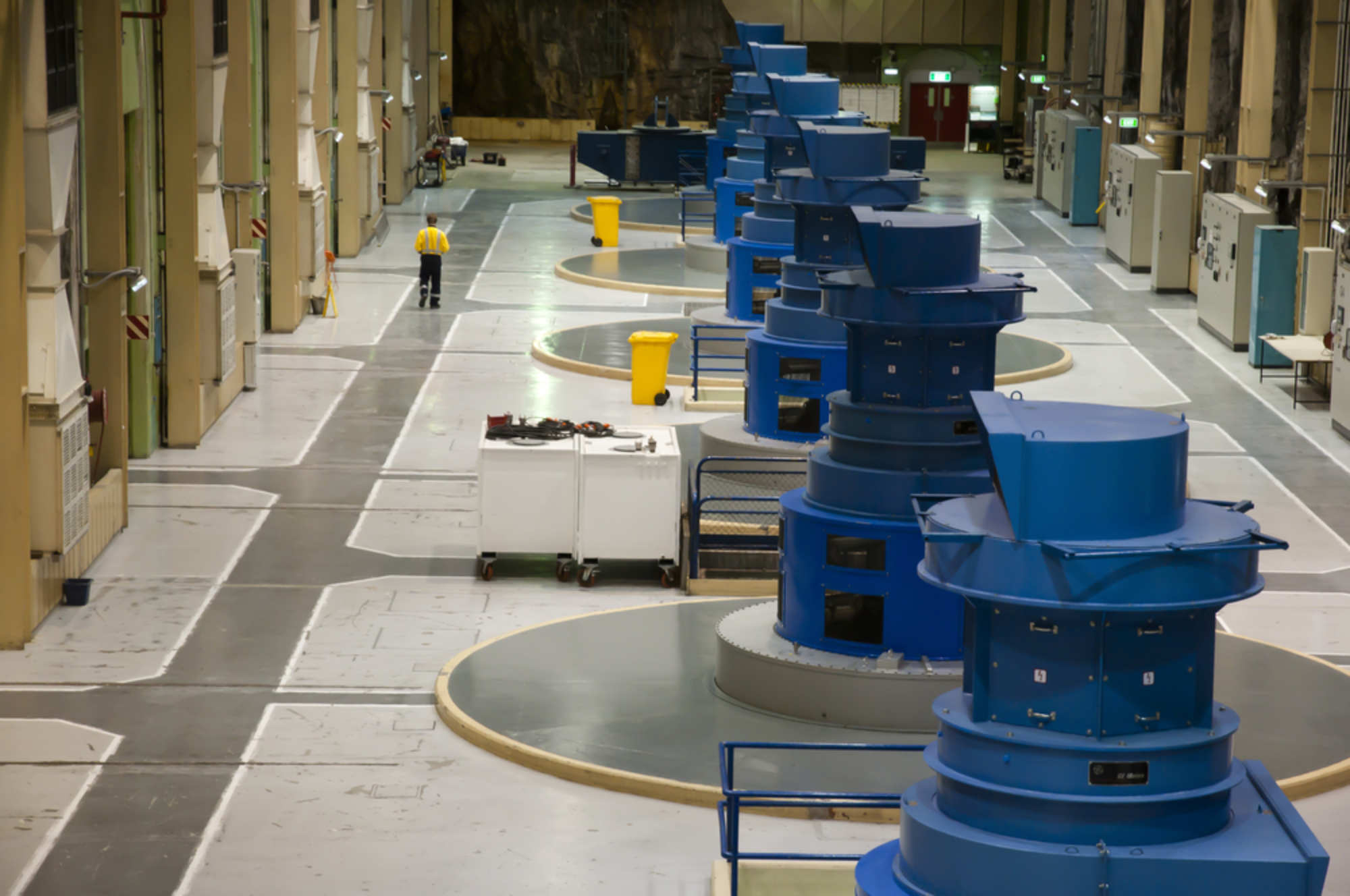
MC-monitoring, a Swiss manufacturer based in Fribourg, designs and produces protection, condition monitoring, and diagnostic systems for critical rotating machines – hydrogenerators, turbogenerators, and gas and steam turbines – used in over 1,000 power plants worldwide. As grid flexibility from wind and solar puts more mechanical stress on turbines that once ran at steady load, demand for continuous, multi-parameter monitoring is accelerating across hydro, wind, and mining applications.
We spoke with Yves Mayor, Executive Operations Director at MC-monitoring SA, about the company’s new SPS Smart Proximity System, the shift toward correlated diagnostics, and 25 years of Swiss-made sensor manufacturing.
A brief description of the company and its activities.
Yves Mayor: MC-monitoring SA is a Swiss company headquartered in the canton of Fribourg. Since 2001, we have been designing and manufacturing protection, condition monitoring and diagnostic systems for critical rotating machines such as hydrogenerators, turbogenerators, and gas and steam turbines, mainly in the power generation industry.
Our purpose is simple: give operators a continuous and accurate picture of their machines’ health, so maintenance can be planned before a failure occurs rather than after an unplanned outage. All our sensors and electronics are developed and produced in our own plant in Switzerland.
Today we ship over 10,000 sensors per year, and our systems operate in more than 1,000 power plants worldwide. We supply major OEMs and work directly with plant operators, utilities and engineering firms. 2026 is a special year for us: MC-monitoring celebrates its 25th anniversary.
What are the main areas of activity of the company?
Y.M: Our solutions are structured in three technology layers. The first layer is sensing: we design and manufacture the sensors measuring what happens inside the machine, from shaft and bearing vibration to endwinding vibration, air gap, magnetic flux and rotor temperature. Capturing these parameters on the same machine is the foundation of multi-modal monitoring and accurate diagnosis.
The second layer is protection and condition monitoring: our Rhino acquisition systems, the 19″ rack-based PMS-300P for large or critical machines or the compact, distributed PMM-300P installed close to the machine, process these signals in real time and trigger machine protection when preset danger levels are reached.
The third layer is diagnostics and predictive maintenance: our Orca CMS-500P software correlates all measured parameters in a single environment and turns raw data into a clear diagnosis operators can act on.
Hydropower is our core market and deepest field of expertise. Beyond power generation, we apply the same technology layers to direct-drive wind turbines, gearless mill drives in mining, and balance of plant (BoP) equipment such as pumps, fans and cooling towers.
What’s the news about new products/services?
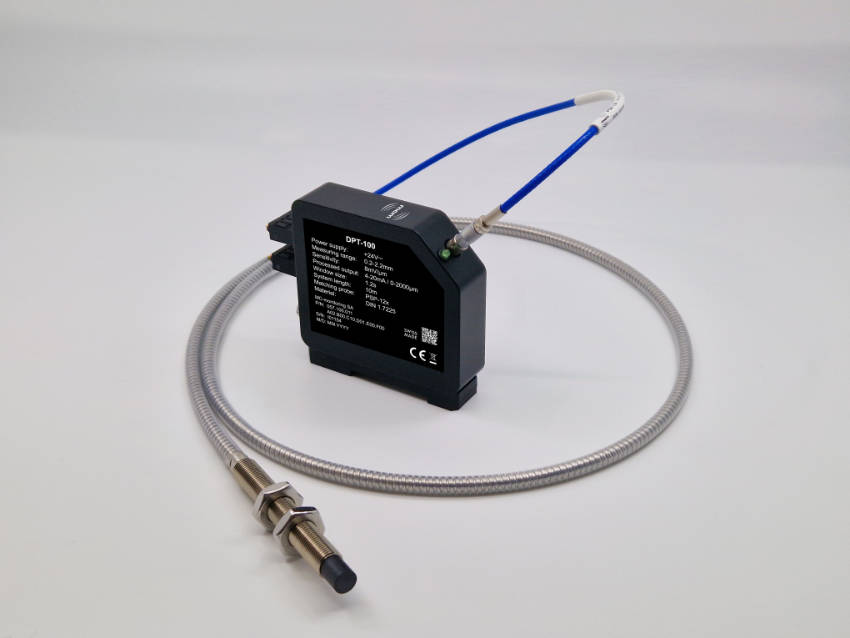
Y.M: Our latest release is the SPS Smart Proximity System, a new generation of high temperature eddy current measurement systems for shaft vibration, axial position, eccentricity or relative shaft expansion monitoring. Probe, extension cable and transmitter are fully interchangeable, simplifying installation, spare part management and on-site maintenance for new projects and retrofits alike. A digital transmitter with 4-20mA interface connects directly to PLC, DCS or SCADA systems, while an analog driver covers API 670 and ATEX compliant applications; both versions serve machine protection and condition monitoring.
Our distributed Rhino PMM-300P has also grown into a complete modular family. Extension modules mount on the same DIN rail, are powered through the sidebus with no extra wiring and are configured from the PMx-300P Manager software. The PMM-391P adds up to six software-configurable relay outputs per module, each assignable to any status or combination of statuses; the PMM-392P adds up to 6 RTD or 12 thermocouple channels per module, covering all common sensor types. A full system delivers protection and condition monitoring with minimal cabling: up to 32 vibration channels, 36 relay outputs, 32 temperature inputs, 64 digital outputs and more than 216 plant operating parameters (active power, valve positions, massflow, head, etc.) imported through Modbus TCP.
What are the ranges of products/services?
Y.M: Our sensor range covers air gap transmitters (AGT), fiberoptic acceleration sensors (FAS), magnetic flux transducers (MFT), piezoelectric acceleration and velocity sensors (PAS/PVS), linearized vibration velocity sensors (LVS), proximity probes including the new SPS, runner clearance probes (RCP), rotor temperature monitors (RTM) and our new housing expansion probe (HEP).
On the acquisition side, the 19″ rack-based PMS-300P scales to 64 vibration channels, hundreds of digital outputs and imported plant parameters, with options such as redundant power supply, unit display or Profibus communication. The PMM-305P completes the range, adding condition monitoring easily to existing third-party protection systems.
Software includes the Orca CMS-500P condition monitoring platform and the PMx-300P Manager for configuration and commissioning.
Beyond products, we deliver turnkey projects covering design, engineering, integration of third-party equipment (e.g. electrical cabinets), installation supervision, commissioning and training, backed by a global partner network for local support. Our engineers also provide vibration consulting and carry out machine fingerprinting, balancing and diagnostics on site.
What is the state of the market where you are currently active?
Y.M: The power generation market is going through intense modernization. A large part of the world’s hydroelectric fleet was built decades ago and is now being refurbished; plant owners increasingly include condition monitoring in these upgrades rather than treating it as an option. The wind turbine market also keeps growing, with ever larger generators requiring precise monitoring.
The energy transition has changed how hydro, gas and steam turbines are operated: units that used to run at steady load are now started, stopped and cycled far more often to balance grids with high shares of solar and wind. This flexible operation puts far more mechanical and thermal stress on generators, directly increasing the need for continuous monitoring. We see solid demand from OEMs and end users across Europe, Asia, Africa and the Americas.
What can you tell us about market trends?
Y.M: The clearest trend is the move from single-parameter monitoring to correlated, multi-modal diagnostics. Vibration data alone can tell you that something has changed, but rarely why. When vibration, air gap, magnetic flux, temperature and other plant operating parameters are acquired in one architecture and analyzed together, independent measurements converge on a single root cause, for example a shorted rotor turn, turning weeks of exploratory inspection into hours of analysis.
Other trends: condition based maintenance is replacing calendar based maintenance; customers expect smooth integration into existing automation architectures through standard interfaces such as Modbus and OPC UA; and industrial cybersecurity has become a firm requirement, so our systems follow internationally recognized industrial automation standards.
What are the most innovative products/services marketed?
Y.M: Three products stand out. Our AGT air gap transmitters, protected by several patents, are a reference in the hydro world; the latest generation with digital conditioners delivers higher accuracy and long-term stability, developed jointly with customers for demanding cases such as variable speed generators.
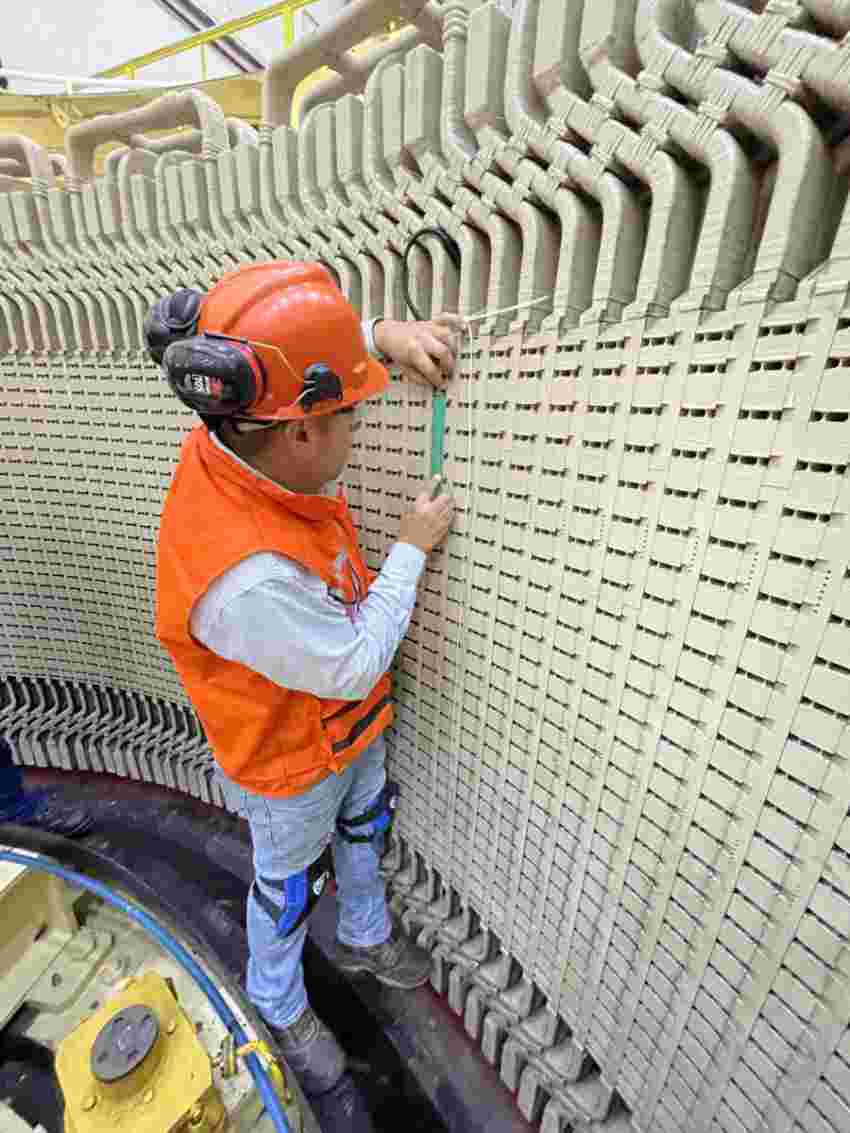
Our FAS fiberoptic acceleration sensors measure endwinding vibration directly in high voltage areas of the stator, where conventional sensors cannot operate, making them a key tool for extending the life of large generators.
And the new SPS Smart Proximity System brings a modular, fully interchangeable approach usable across a wide range of applications, environments and industries.
What estimations do you have for the second half of 2026?
Y.M: We expect the strong momentum in hydropower modernization to continue in the second half of 2026, and the SPS rollout to gain pace as first retrofit projects are commissioned.
Several turnkey projects are in execution on different continents, and we keep investing heavily in R&D: turning customer needs into new products is what has kept us at the front of this field for 25 years.
Our goal for the anniversary year is simple: keep delivering measurement quality our customers can build their maintenance decisions on.
MC-monitoring SA
Rte André Piller 19,
1762 Givisiez,
Switzerland
+41 58 411 54 00