
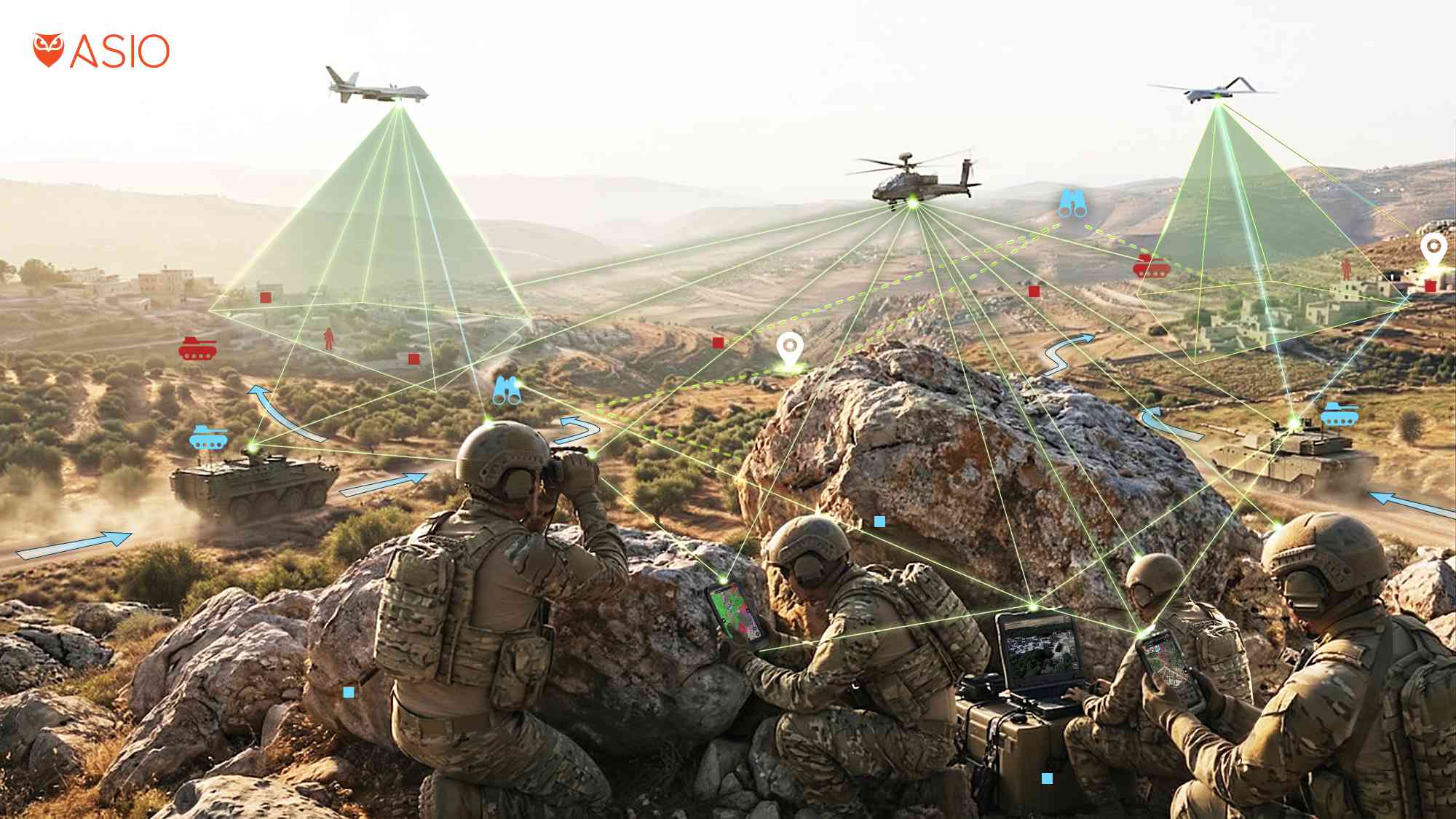
As modern electronic warfare turns GNSS jamming, spoofing, and communications blackouts into standard battlefield realities, defense organizations must prioritize operational independence at the tactical edge. Israeli tactical defense innovator ASIO Technologies is addressing these vulnerabilities through its proprietary GeoFusion™ visual positioning engine. By combining spatial visual data with local digital mapping, the company delivers offline-first situational awareness, augmented reality target overlay, and drift-free optical navigation for ground forces and Group 1–2 unmanned aerial systems (UAS).
Estie Rosen, Vice President of Business Development at ASIO Technologies, outlines the international expansion of the combat-proven NOCTA and ORION platforms, strategies for scaling offline battle management systems, and projections for defense procurement in late 2026
A brief description of the company and its activities
Estie Rosen: ASIO develops advanced defense technology for tactical forces operating in complex and contested environments. The company’s solutions provide ground forces and unmanned aerial platforms with accurate positioning, mission planning, situational awareness and decision-support capabilities, even when access to communications or GNSS is limited or unavailable.
At the core of ASIO’s portfolio is its proprietary GeoFusion™ technology, which combines multiple sources of geographic, visual and operational data into a clear, actionable understanding of the environment. ASIO’s combat-proven systems are deployed across all branches of the Israel Defense Forces and with customers worldwide.
What are the main areas of activity of the company?
E.R: ASIO operates in two primary domains:
- Tactical land systems: Mission planning, navigation, terrain analysis, augmented-reality situational awareness and battle management solutions for individual operators, tactical units and command posts.
- Resilient navigation for unmanned platforms: Vision-based navigation systems that enable UAVs to operate autonomously in GNSS-denied, degraded or spoofed environments.
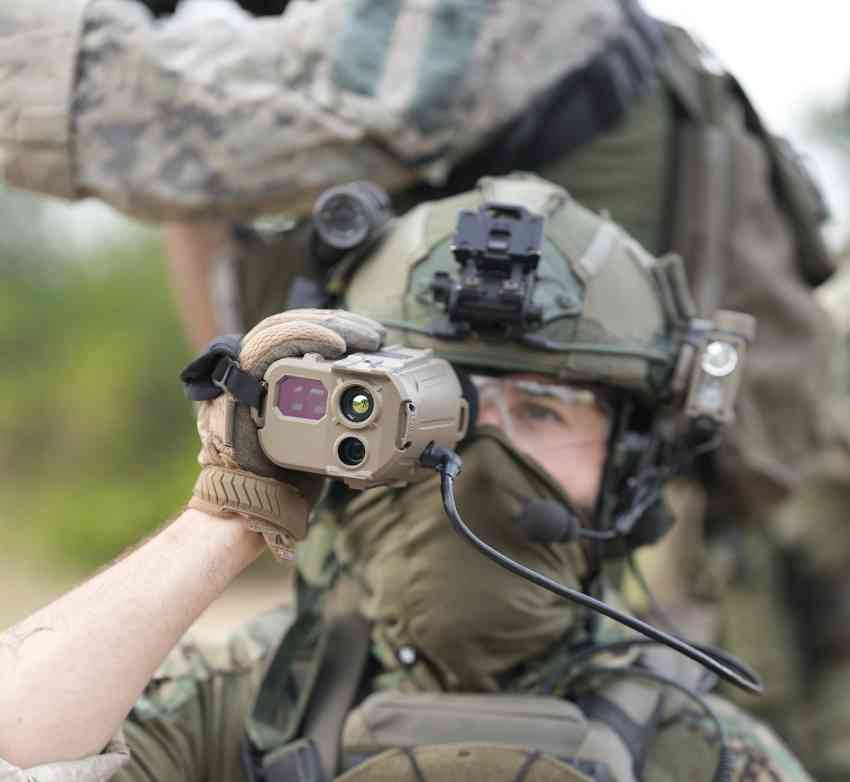
Across both domains, ASIO focuses on providing operational independence at the tactical edge, helping forces continue their missions without relying on continuous connectivity, external infrastructure or higher-echelon support.
What is the news about new products and services?
E.R: ASIO is continuing to expand its international activity and strengthen its position in the tactical defense market. The company is advancing new programs with government customers, leading defense companies and UAV manufacturers across the United States, Europe and Asia.
Recent developments include the expansion of ASIO’s U.S. operations, new strategic partnerships and contracts to deploy its systems in international markets. At the same time, the company continues to enhance its land and airborne solutions, broaden platform compatibility and support deployment at greater operational scale.
What are the ranges of products and services?
E.R: ASIO’s principal product portfolio includes:
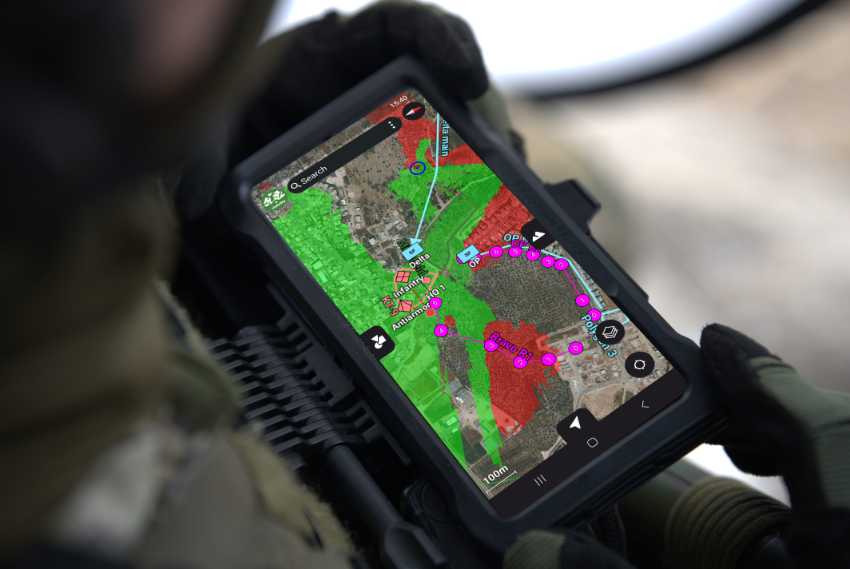
- ORION Mission Enhancement System: A compact, offline-first solution for mission planning, navigation, situational awareness and decision support at the individual and tactical-unit levels.
- LYNX Tactical AR Monocular: A low-SWaP augmented-reality system that presents essential operational information directly within the operator’s field of view.
- TAURUS Tactical Battle Management Workstation: A planning and command platform that supports terrain analysis, rapid creation of 3D models from UAV imagery and mission distribution to forces in the field.
- NOCTA Optical Navigation System: A passive, autonomous and drift-free navigation solution for UAVs operating without reliable GNSS. The system has accumulated tens of thousands of operational flight hours.
Together, these systems create an integrated ecosystem that connects mission planning, navigation, situational awareness and tactical execution.

What is the state of the market where you are currently active?
E.R: Demand is increasing across ASIO’s key markets, including the United States, Europe and Asia. Recent conflicts have demonstrated that tactical forces cannot assume uninterrupted access to GNSS, communications or centralized command-and-control infrastructure.
Defense organizations are therefore prioritizing technologies that are combat-proven, deployable in the near term and capable of operating under electronic warfare conditions. Customers are also looking beyond standalone products toward modular systems that can integrate with existing platforms, sensors and operational architectures.
ASIO is well positioned within this market because its solutions are based on extensive operational experience and are already deployed at scale.
What can you tell us about market trends?
E.R: Several trends are shaping the market:
- Growing investment in alternative positioning, navigation and timing technologies as GNSS jamming and spoofing become standard battlefield challenges.
- Increased demand for autonomy at the tactical edge, particularly for UAVs and forward-deployed units.
- Greater emphasis on offline-first and communications-independent capabilities.
- Rapid adoption of augmented reality and visual decision-support tools for dismounted forces.
- A shift toward low-SWaP solutions that can be integrated into existing platforms without extensive modification.
- Preference for mature, field-proven systems that can move rapidly from evaluation to deployment at scale.
- Growing demand for complete operational ecosystems rather than isolated systems or capabilities.
What are the most innovative products and services marketed?
E.R: NOCTA is one of ASIO’s most innovative and mature solutions. It enables UAVs to determine their position through visual information without emitting RF signals or depending on GNSS or continuous communications. Its combination of operational maturity, low-SWaP architecture and platform independence makes it highly relevant to current and future unmanned operations.
ASIO’s land systems ecosystem is equally innovative. ORION, LYNX and TAURUS connect command posts, tactical units and individual operators through a shared operational and geographic understanding. Deployed at scale, the ecosystem transforms complex data into clear, actionable information and supports faster planning, coordination and decision-making. This integrated approach enables greater operational independence and delivers ground dominance at the tactical edge.
What estimations do you have for the second half of 2026?
E.R: During the second half of 2026, demand is expected to continue growing for resilient navigation, tactical autonomy and land systems designed for disconnected and contested environments.
The market is increasingly moving beyond limited trials and individual technology evaluations. Defense customers are looking for mature, field-proven solutions that have demonstrated clear operational results and can be deployed rapidly across units and platforms at scale.
For land forces in particular, the focus will remain on equipping tactical units with integrated capabilities at the edge. These systems must provide mission planning, navigation, situational awareness and decision support while reducing dependence on continuous communications and centralized infrastructure. Solutions that combine proven performance, interoperability and scalability will be best positioned to meet evolving operational requirements.