
As international automotive trade faces complex geopolitical pressures, shifting tariffs, and an unprecedented influx of EV models from Asian OEMs, global spare-parts distribution requires real-time data integration rather than conventional cataloging. Managing a database of over 20 million Original Equipment (OE) and Original Equipment Manufacturer (OEM) references across dozens of international markets demands algorithmic sourcing, automated reference matching, and end-to-end logistics tracking. Spanish automotive tech company PCEX Automotive is addressing these supply chain bottlenecks by engineering digital tools that evaluate real-time pricing and availability across global supplier networks.
David Santiago, Founder & CEO of PCEX Automotive, outlines the architecture behind their internal price-comparison engine, the Smart Ordering Platform (SOP), and strategies for navigating geopolitical logistics pressures heading into late 2026.
A brief description of the company and its activities.
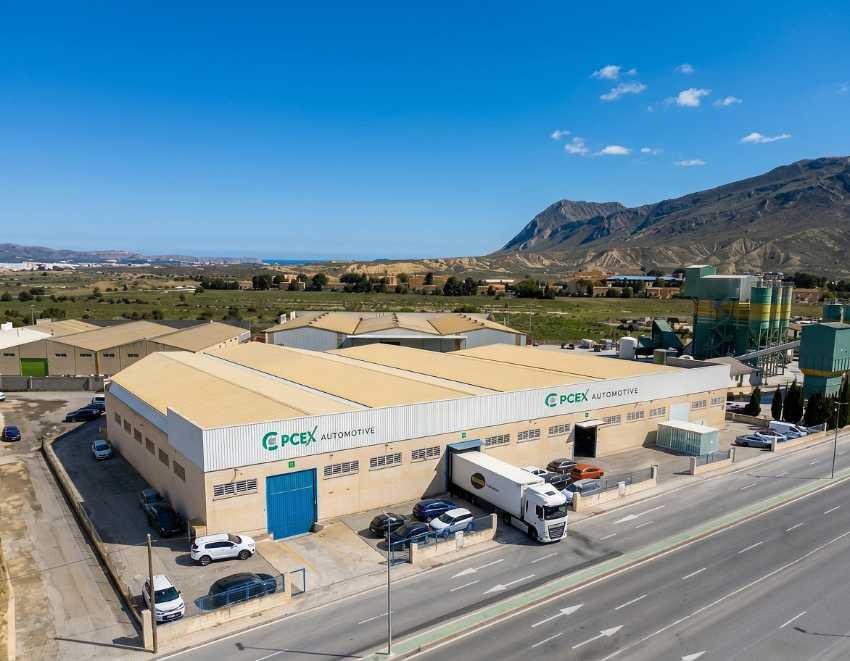
David Santiago: PCEX Automotive is a Spanish company specialised in the international distribution of OE and OEM automotive spare parts. Founded in 2012 and headquartered in Alicante, Spain, the company has evolved from a traditional international sourcing and distribution business into a technology-driven organisation focused on making global automotive spare-parts supply more efficient, scalable and transparent.
Our activity combines international sourcing, purchasing, data management, logistics and digital technology. We manage a catalogue of more than 20 million OE references and connect manufacturers, suppliers and professional customers across international markets.
Technology is at the centre of this model. We have developed our own digital tools and processes to optimise purchasing decisions, identify parts, analyse supplier options and manage logistics. Our objective is not simply to move parts from one location to another, but to engineer a more efficient way of managing the increasingly complex flow of automotive components.
What are the main areas of activity of the company?
D.S: Our activity is structured around three interconnected areas: global sourcing, automotive spare-parts distribution and technology-enabled logistics.
Global sourcing allows us to identify and compare supply opportunities across different international markets. This is particularly important in a sector where the same component can have very different availability, lead times and commercial conditions depending on the market.
The second area is the distribution of genuine OE and OEM components. We work with an extensive network of manufacturers and suppliers, providing professional customers with access to a very broad range of references.
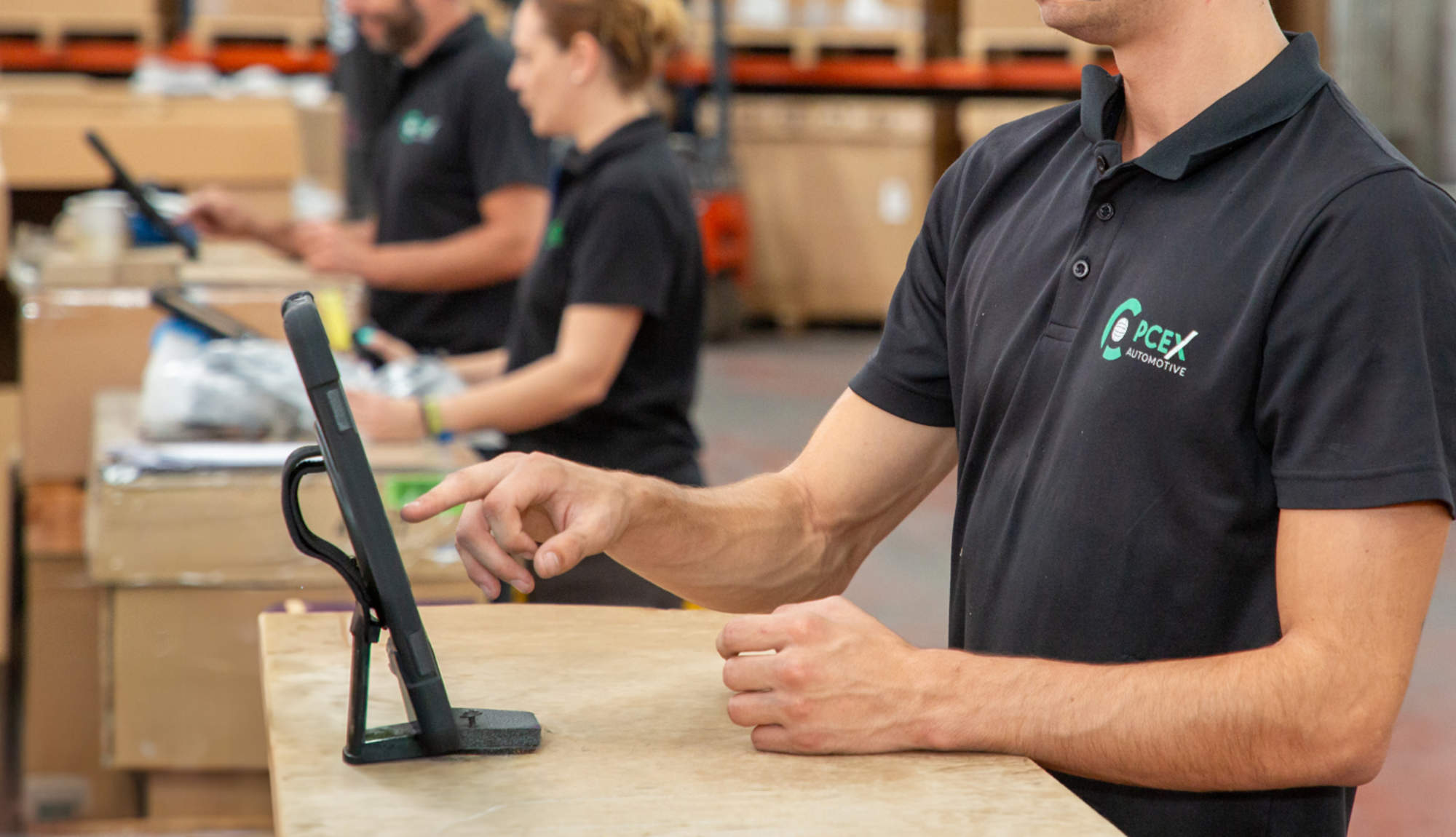
The third is logistics and process optimisation. We have developed digitalised workflows connecting purchasing, stock information, order processing, documentation and international transport. This integration allows us to control a complex supply chain while maintaining traceability and operational efficiency.
What’s the news about new products/services?
D.S: Our product portfolio is directly linked to the continuous introduction of new vehicle models and technologies by automotive manufacturers. This makes the market constantly evolving new models generate new OE references, new sourcing requirements and new commercial opportunities.
For PCEX Automotive, this means that expanding our portfolio is not simply a matter of adding new part numbers. We need to continuously identify new sources of supply, analyse their availability and commercial conditions, and improve our purchasing terms to remain competitive in an increasingly dynamic international market.
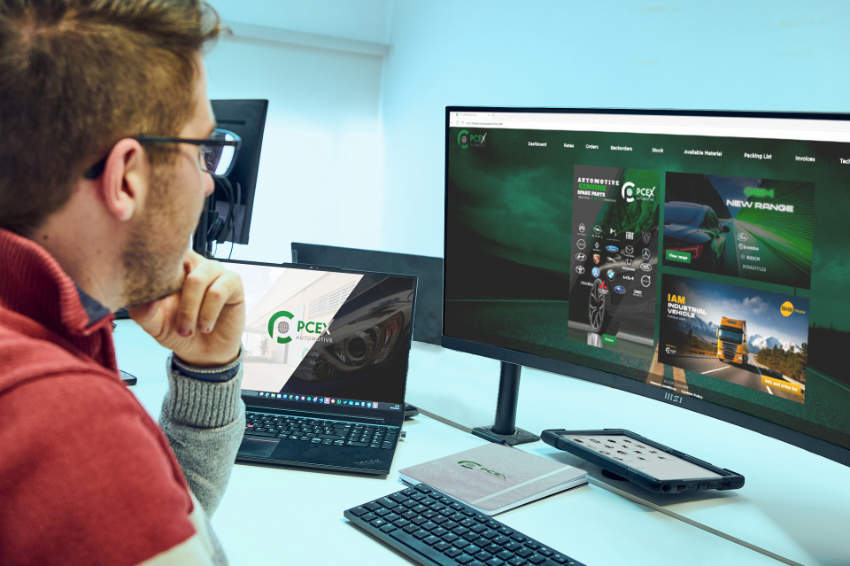
Managing this process efficiently requires technology. One of the key tools we have developed is our internal price-comparison and sourcing platform, which allows us to analyse different supply options and compare purchasing conditions across our network of sources.
The platform is not a customer-facing price comparison tool. It is an internal technology that supports our purchasing and sourcing teams, helping us identify the most competitive supply option for each product and market opportunity. This allows us to improve our purchasing efficiency and, ultimately, offer more competitive conditions to our customers.
This is an important part of our innovation strategy: using technology not only to digitise an existing process, but to continuously analyse the market and make better sourcing decisions as the automotive product landscape evolves.
What are the ranges of products/services?
D.S: Our product portfolio is primarily divided into genuine OE and OEM spare parts.
The OE portfolio covers components supplied through the original-equipment ecosystem of numerous automotive manufacturers, while our OEM range includes components produced by leading Tier suppliers.
However, our service should be understood as more than a product catalogue. We combine product availability with sourcing, purchasing optimisation, quality control, documentation and international logistics.
The technological layer is what connects these elements. By integrating product data, supplier information and operational processes, we can provide a much more scalable solution than a conventional distribution model.
What is the state of the market where you are currently active?
D.S: The automotive market is undergoing a profound transformation, not only because of electrification, but also because of the growing number of vehicle manufacturers and new brands entering the European market. New players, particularly from Asia, are introducing new models and technologies at an increasingly rapid pace, creating a much more diverse and fragmented vehicle parc.
For the aftermarket, this translates directly into a continuous expansion and transformation of the parts portfolio. Every new vehicle generation brings new OE references, components and technical specifications. The arrival of electric vehicles is accelerating this process, with new generations of batteries, electric motors, power electronics, thermal-management systems and other components entering the market.
This creates both opportunities and challenges for companies operating in international spare-parts distribution. It requires us to continuously identify new manufacturers and sources of supply, understand new product technologies and integrate new references into our systems. The ability to process and connect this information efficiently is becoming increasingly important.
At the same time, the market is being affected by a more complex geopolitical environment. Changes in international trade relations, tariffs, transport routes and sourcing dependencies can have a direct impact on product availability, lead times and purchasing conditions. This is increasing the importance of having a diversified international supplier network and the technological capacity to analyse alternative sources quickly.
For PCEX Automotive, the result is a market with significantly more complexity, but also more opportunities. Our role is to use technology, data and international sourcing capabilities to navigate this increasingly diverse automotive landscape and ensure that our customers can access the products they need under competitive and reliable conditions.
What can you tell us about market trends?
D.S: We see four major technological trends shaping the aftermarket.
The first is digitalisation. Product, supplier and logistics data are becoming strategic assets rather than simply administrative information.
The second is automation. When a business manages millions of references and thousands of potential sourcing combinations, manual decision-making becomes difficult to scale. Automation can process this complexity and allow people to concentrate on higher-value decisions.
The third is AI and advanced data processing. We see significant potential in applying artificial intelligence and algorithms to product identification, equivalence, purchasing optimisation and demand analysis.
Finally, electrification is changing the technical profile of the industry. The aftermarket will increasingly need new expertise related to batteries, power electronics, thermal management and high-voltage systems.
We therefore believe that the next generation of automotive distribution will be less about simply having the largest catalogue and more about having the technology capable of making that catalogue intelligent and actionable.
What are the most innovative products/services marketed?
D.S: For PCEX Automotive, the most innovative development is the technological ecosystem we have built around the sourcing and distribution of automotive components.
At its centre is SOP – Smart Ordering Platform – but the innovation goes beyond the customer interface. Behind it is an architecture connecting product information, supplier data, pricing, availability, purchasing processes and logistics.
One of the most important capabilities is our approach to real-time sourcing and price optimisation. Instead of relying on a fixed purchasing structure, our systems can analyse different supply possibilities and identify the most efficient option according to the specific requirement.
We are also working on increasingly automated reference identification and data matching. With millions of OE references and multiple equivalent supply sources, the ability to structure and interpret this information becomes a technological challenge.
Our innovation therefore lies in transforming a traditionally fragmented process into a connected digital workflow.
What estimations do you have for the second half of 2026?
D.S: The second half of 2026 will be strongly influenced by the evolution of the current geopolitical environment. For an international business such as ours, geopolitical instability has a direct impact on the supply chain, particularly on logistics, transport costs, lead times and the availability of certain products.
These factors are putting additional pressure on margins across the distribution chain. In some cases, companies can absorb part of the increase through greater operational efficiency; in others, higher logistics or sourcing costs inevitably have an impact on the final price of the product.
This makes the outlook for the remainder of the year difficult to separate from the evolution of international conflicts, trade relations and transport conditions. If the situation progressively stabilises, we could see logistics and supply-chain conditions move closer to the levels experienced before the current conflicts. If instability persists or intensifies, however, pressure on costs, lead times and margins could remain or increase, making the final months of the year more challenging.
Against this backdrop, our priority is to maintain flexibility in sourcing and logistics. Having access to different international supply channels and the technology to continuously analyse purchasing and transport conditions allows us to react more quickly when circumstances change.
Ultimately, how the second half of 2026 develops will depend to a significant extent on these external factors. Our objective is to remain agile and use technology and operational efficiency to mitigate their impact as much as possible, while continuing to provide our customers with competitive and reliable supply conditions.