
Manufacturing companies have long been facing a wide range of challenges. In addition to the shortage of skilled workers, particularly pronounced in small and medium-sized enterprises[1]– competition is continuously increasing, while cost pressure is currently on the rise. For these reasons, it is becoming increasingly important to optimize processes, minimize susceptibility to errors, and relieve employees.
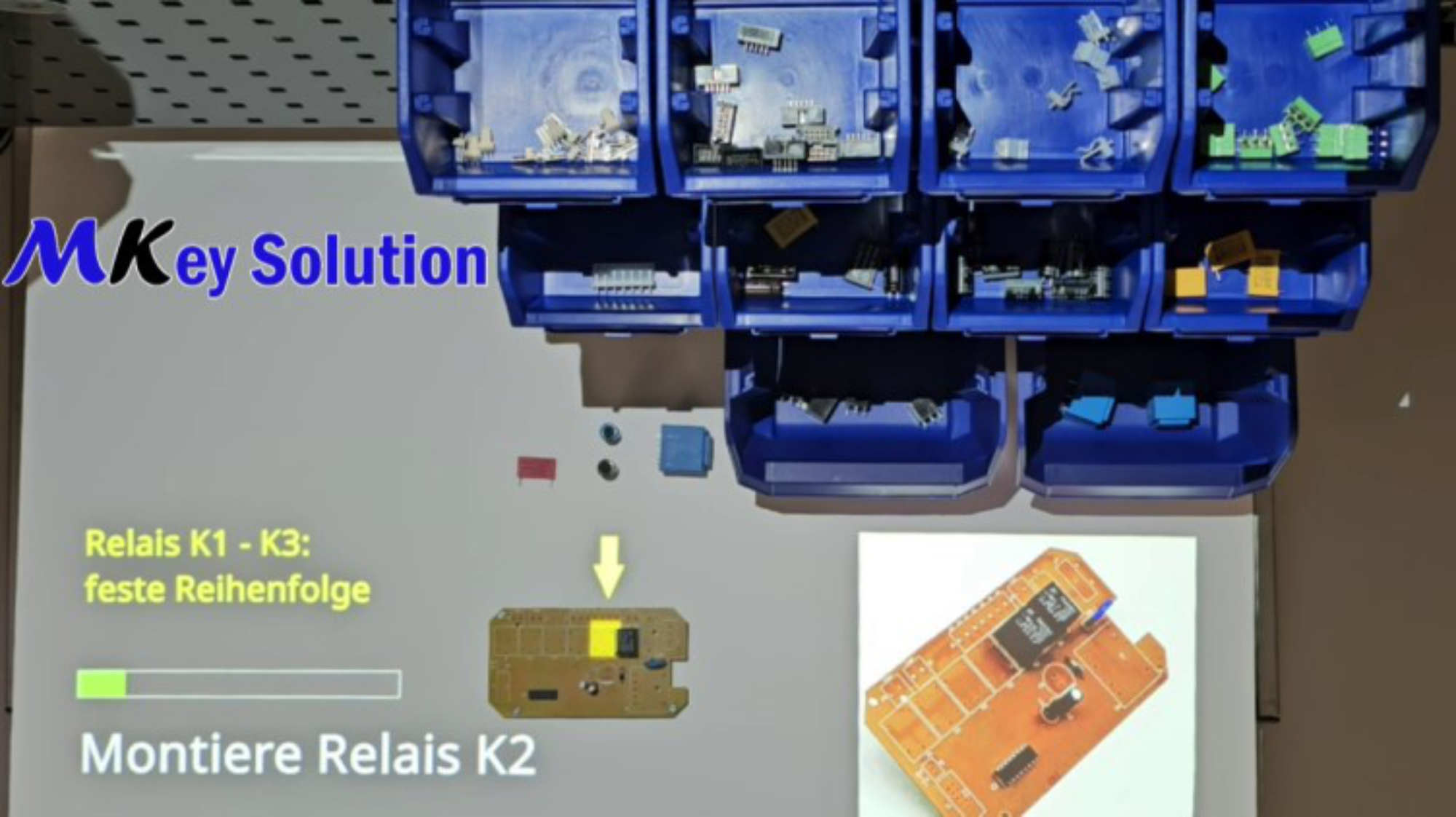
“For example, experienced employees are retiring while product variants in manufacturing are increasing. This makes knowledge transfer, quality assurance, and the rapid onboarding of new staff key success factors,” explains Michael Kunze, founder and CEO of MKey Solution GmbH, while also outlining a targeted approach: “AI-based worker assistance systems with augmented reality (AR) offer a forward-looking solution. These systems overlay work steps directly into the employee’s field of view—precisely tailored to the product variant, qualification level, and language.” In this way, intuitive step-by-step guidance in real time is achieved without static paper documentation or complex PDF manuals.
Which Screw Goes Where?
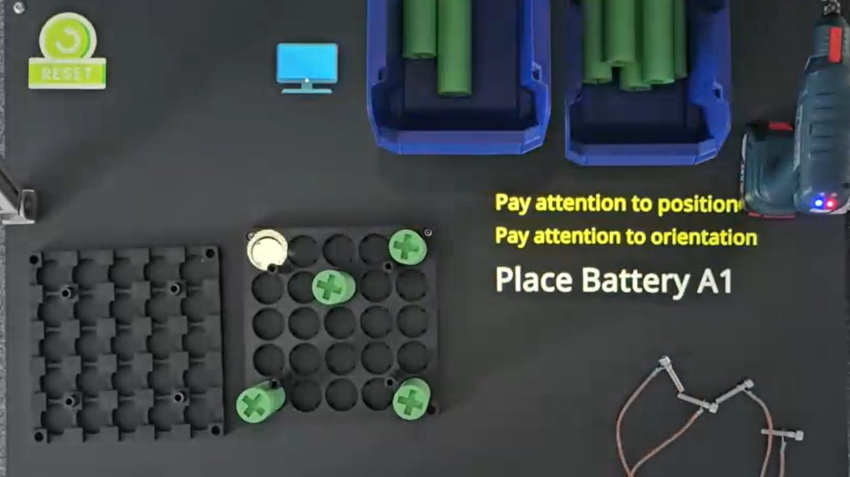
The foundation is a combination of machine vision and AR, which simplifies complex tasks while streamlining work steps. Integrated image processing also validates every step in the process. Camera-based inspection mechanisms detect whether components are correctly positioned and fully assembled.
“The system immediately displays errors and enables direct correction. This prevents follow-up errors, time losses, and potential quality issues,” Kunze explains. “Which screw belongs where? Where should the component be placed on a circuit board? The system provides answers to all of these questions, while workflows are reproducibly documented and continuously optimized.”
Especially in light of demographic developments, the systematic preservation of experiential knowledge is becoming increasingly important. New employees can thus reach the required quality level more quickly while reducing error rates.
The Safety Factor
In view of rising quality requirements and increasing complexity in manufacturing, digital assistance systems are evolving from optional tools into strategic competitive factors. Through integrated user management, employees are only assigned tasks for which they are qualified.
“Users of the worker assistance system receive the appropriate work instructions in their native language. This generally eliminates misunderstandings, leading to greater process reliability and occupational safety,”the expert adds.
In addition, companies gain transparency and traceability across all production steps. “Digital worker assistance is a key component of modern Industry 4.0 strategies. It helps companies relieve skilled workers, preserve knowledge in the long term, and make production processes more resilient,” Kunze concludes. Alongside improvements in quality, companies also benefit economically through reduced scrap rates, less rework, shorter downtime, and greater process stability.
Since its founding in 2015, MKey Solution GmbH has been developing customized systems for industrial image processing and metrology to automate production and logistics processes and ensure quality. This is achieved through the integration of cameras, sensors, and software that provide instructions and highlight errors in real time.
A particular focus is placed on worker assistance systems that support employees in assembly and manufacturing processes. Work steps are visually guided and automatically verified using time-of-flight sensors. Errors are detected immediately and prevented before they propagate further along the process chain.
[1] Skilled labor shortage in SMEs, Study 02/2026, KOFA Competence Center for Securing Skilled Labor.