
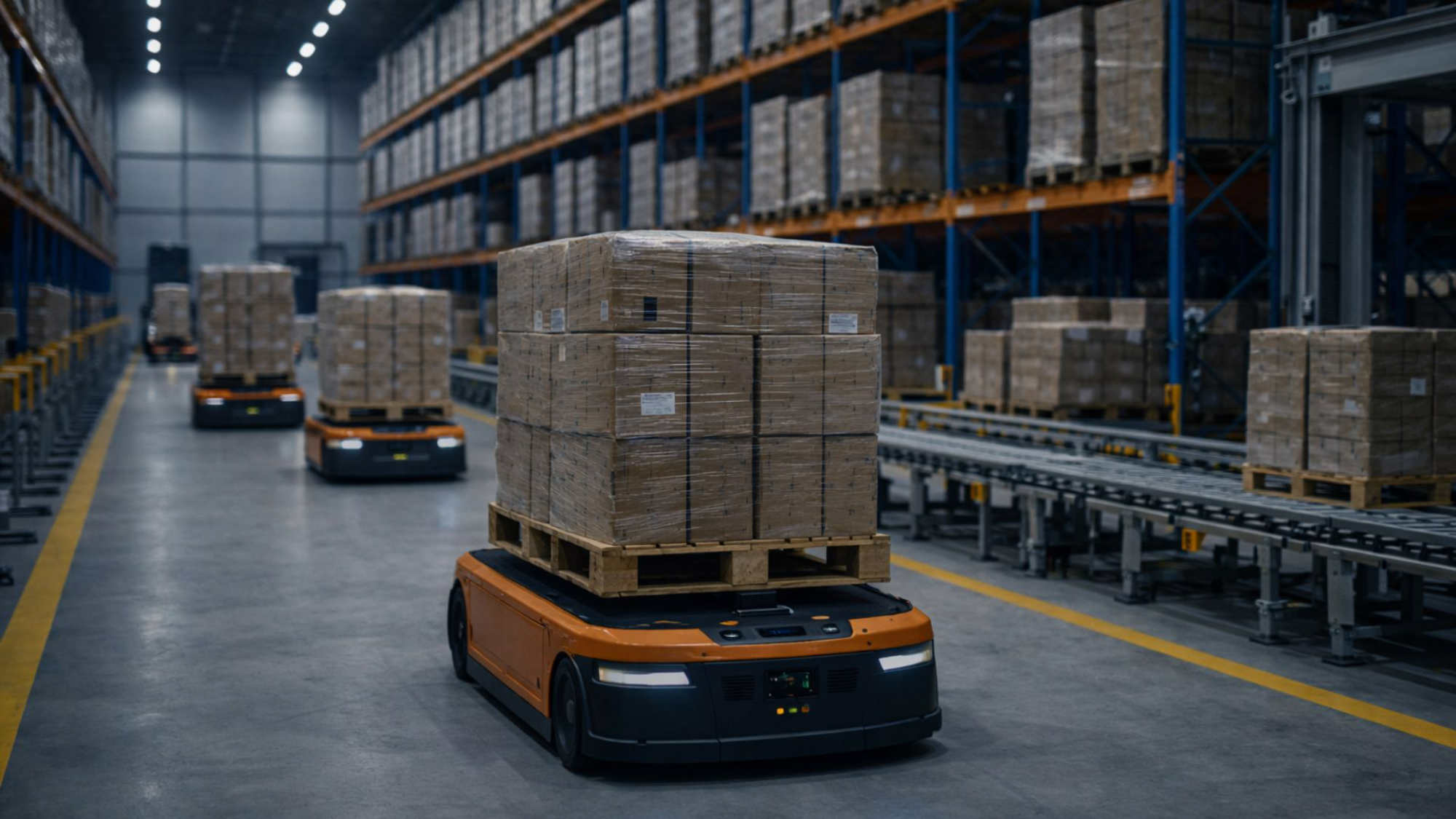
Efficiency is a fundamental measure of automated systems. The starting point of every well-designed project is to deliver higher efficiency for the customer’s business. In this article, Stevia Automation, a Polish control systems integrator with many years of experience in implementing automated internal transport, sorting, and palletizing systems, explains how the solutions used in intralogistics automation projects contribute to increased efficiency of logistics processes and improve the quality of operators’ work.
We spoke with Sylwia Suszek, Business Development Manager at Stevia Automation, about how cobots reduce costs, improve energy efficiency, and where robotic pick & place technology is heading next.
How does your company define efficiency in today’s industrial landscape, and how has that definition evolved in recent years?
Sylwia Suszek: Efficiency is a key performance indicator in our industry and is considered in every project we develop. In the field of automation, efficiency means faster operations, fewer errors, and uninterrupted process flow – the fundamental drivers behind automation investments made by our customers.
Today, improving efficiency is no longer limited to optimizing entire production or warehouse systems. It applies to every individual process that forms part of the overall operation, particularly in companies that handle high volumes of customer shipments. Processes where achieving the right level of efficiency is especially critical include palletizing and order fulfillment (order picking), as they have a direct impact on throughput, delivery times, and overall operational performance.
What are the key innovations in your portfolio that help customers improve operational efficiency, productivity, or resource utilization?
S.S: For our customers, we provide a comprehensive analysis focused on the implementation of cobots, i.e. collaborative robots, integrated with additional supporting technologies such as vision systems, conveyors, or AGV/AMR vehicles.
Collaborative robots are designed to work side by side with human operators. Unlike traditional industrial robots, they do not require full safety fencing and can be easily implemented into existing processes. Cobots are characterized by ease of deployment, operator safety, and a fast return on investment achieved through increased productivity and reduced reliance on manual labor.
How do your solutions enable customers to reduce costs while maintaining or improving quality and performance?
S.S: Collaborative robots enable repetitive and labor-intensive processes, such as packaging, palletizing, or unloading, to be performed fully automatically. Equipped with a properly selected gripper, a cobot can pick up products weighing up to 30 kg and place them accurately at the designated location.
Cobots are often equipped with vision systems that enable real-time monitoring and analysis of the process status. An application based on a collaborative robot provides a fast return on investment, typically within approximately one year, while reducing the need for manual labor and lowering operational costs. Unlike human employees, cobots do not require salary increases, tax contributions, or paid leave, and they can operate continuously to support production and logistics processes.
What role do digitalization, automation, or artificial intelligence play in enhancing the efficiency of your products or services?
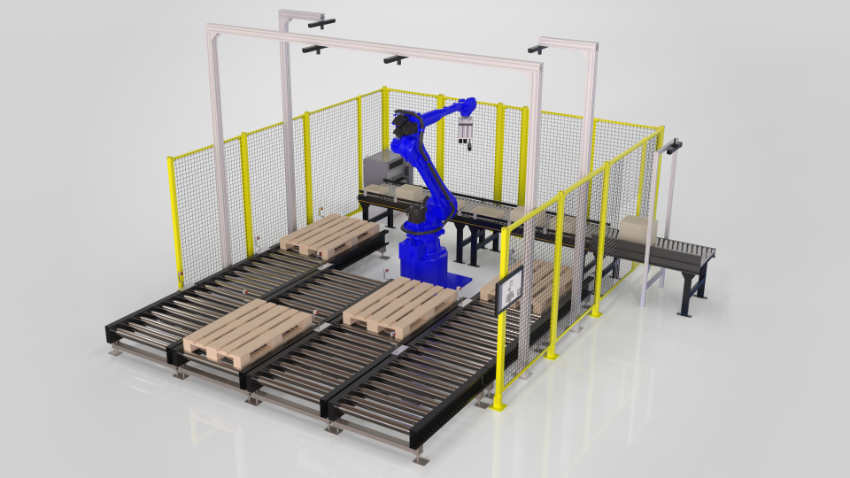
S.S: Our services include the implementation of mixed-case palletizing stations, enabling the loading of cartons of different sizes onto a single pallet according to a predefined palletizing pattern.
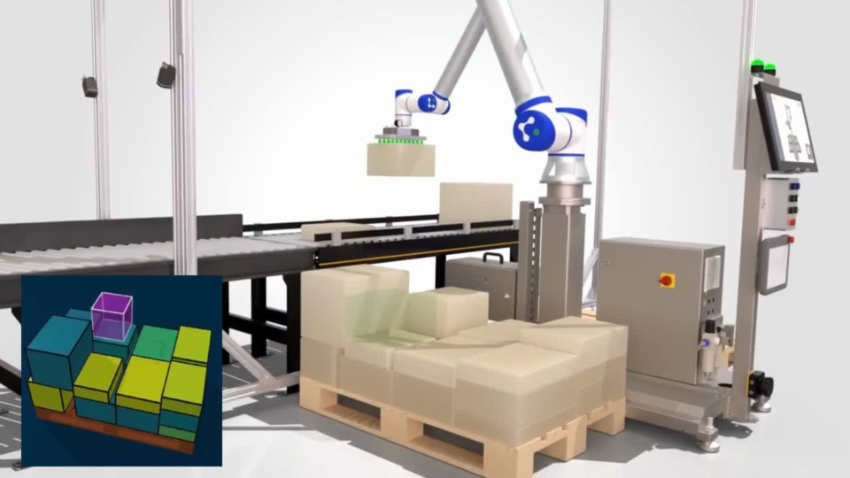
The core of the entire process is artificial intelligence, which acts as a digital pallet designer. Every product entering the line is analyzed in terms of its impact on the stability of the entire load unit. Optimization algorithms operate similarly to a multidimensional puzzle – each decision regarding carton placement takes into account not only its dimensions, but also its weight, the load-bearing capacity of the layers below, and the overall geometry of the pallet.
As a result, the system creates a load unit that is both maximally space-efficient and safe for transportation.
Can you share an example of how your solutions helped a customer overcome a significant operational challenge and achieve measurable efficiency gains?
S.S: At our customer’s facility in the tooling industry, the palletizing of manufactured cartons containing tools was previously performed manually. This process required operators to repeatedly bend down to the pallet and arrange cartons according to a specific palletizing pattern.
Thanks to automated palletizing using a collaborative robot, operators no longer need to perform physically demanding tasks that may pose risks to their spine and hands. Instead, they can focus on logistics operations and process supervision. The cobot improves work efficiency by performing continuous palletizing cycles while ensuring safe cooperation with operators, who can carry out logistical activities next to the robot in real time.
How do you balance innovation with reliability, ensuring that new technologies deliver practical value in demanding industrial environments?
S.S: When implementing a new robotic application, we always carry out comprehensive simulations and solution testing. We understand that every automation project requires the development of an individual concept and the selection of appropriate components, such as grippers or safety scanners.
Innovative solutions, such as robotic palletizing of packages with various dimensions, require the creation of a proof-of-concept (PoC) application to ensure that all elements of the process will operate correctly. We perform these tests for our customers either by working with sample products provided to us or by lending a demo palletizing station to the customer and supporting them throughout the testing process.
These tests allow us to quickly evaluate whether the innovative solutions we design have practical applications and deliver real value for the customer.
What strategies do you use to help customers improve energy efficiency and support their sustainability objectives without compromising productivity?
S.S: The use of collaborative robots significantly improves energy efficiency and supports the achievement of sustainability goals without compromising production performance.
Cobots consume less energy than traditional industrial robots, and thanks to their ability to operate in direct cooperation with human operators, they do not require extensive safety fencing. This reduces infrastructure costs and the need for additional resources.
Furthermore, cobots help reduce waste through high process repeatability, minimizing errors, and precise material handling. Their flexibility enables quick adaptation of workstations to new products without the need for costly production line modifications, extending the lifecycle of existing installations. As a result, companies can increase productivity while simultaneously reducing energy consumption and the environmental impact of their operations.
How do you work with customers to identify inefficiencies and develop solutions tailored to their specific operational needs?
S.S: As a company implementing collaborative robots, we work with customers by conducting a detailed analysis of their existing processes to identify areas requiring optimization.
We begin with technical consultations and workplace observations, during which we analyze task repetitiveness, work ergonomics, process efficiency, and potential operational limitations. Based on the collected information, we design solutions tailored to the customer’s specific operational requirements – from individual workstations equipped with collaborative robots to fully automated production cells. We select the appropriate robot model, end-of-arm tooling (such as grippers and vision systems), integration approach, and required safety functions to ensure the solution delivers maximum efficiency, reliability, and value for the customer.

What emerging technologies or industry trends do you believe will have the greatest impact on industrial efficiency over the next few years?
S.S: I believe that not only collaborative robots, but also other systems contributing to increased operational efficiency in warehouses, such as pallet shuttle systems, will have a real impact on shaping the future of intralogistics.
When it comes to robotics in intralogistics, the future will not be limited only to robotic palletizing. Solutions such as robotic pick & place systems will also play a significant role in improving efficiency and optimizing industrial applications.
Looking ahead, what is your company’s vision for helping industrial customers achieve higher levels of efficiency, resilience, and competitiveness through innovation?
S.S: Looking ahead, our goal is to support industrial customers in achieving higher levels of efficiency, operational resilience, and competitiveness through the implementation of modern automation technologies.
We believe that intelligent intralogistics systems, collaborative robots, autonomous AGV/AMR vehicles, advanced vision systems, and solutions based on data analytics and artificial intelligence will play a key role in the future of industrial operations.