
MONOCAB is a German R&D initiative developing gyroscopically stabilized, battery-electric, self-driving monorail cabins for four to six passengers, designed to reactivate disused rural rail lines with on-demand, individualized public transport. The second-generation test vehicle will be presented at InnoTrans Berlin in September 2026, as the project prepares to spin off a commercial company targeting pilot operations from 2028.
Winner of the RegioStar Award 2025 and the German Mobility Award, MONOCAB addresses rural mobility gaps by combining existing rail infrastructure with autonomous, paternoster-style transport available around the clock.
Interview with Thorsten Försterling, Public Relations/Marketing, Originator of MONOCAB.
A brief description of the company and its activities
Thorsten Försterling: MONOCAB is a research and development initiative that has been developing a gyroscopically stabilized, autonomous, battery-electric monorail vehicle since 2020. Funded through the end of 2026, the project aims to spin off a company that will bring the technology to market.
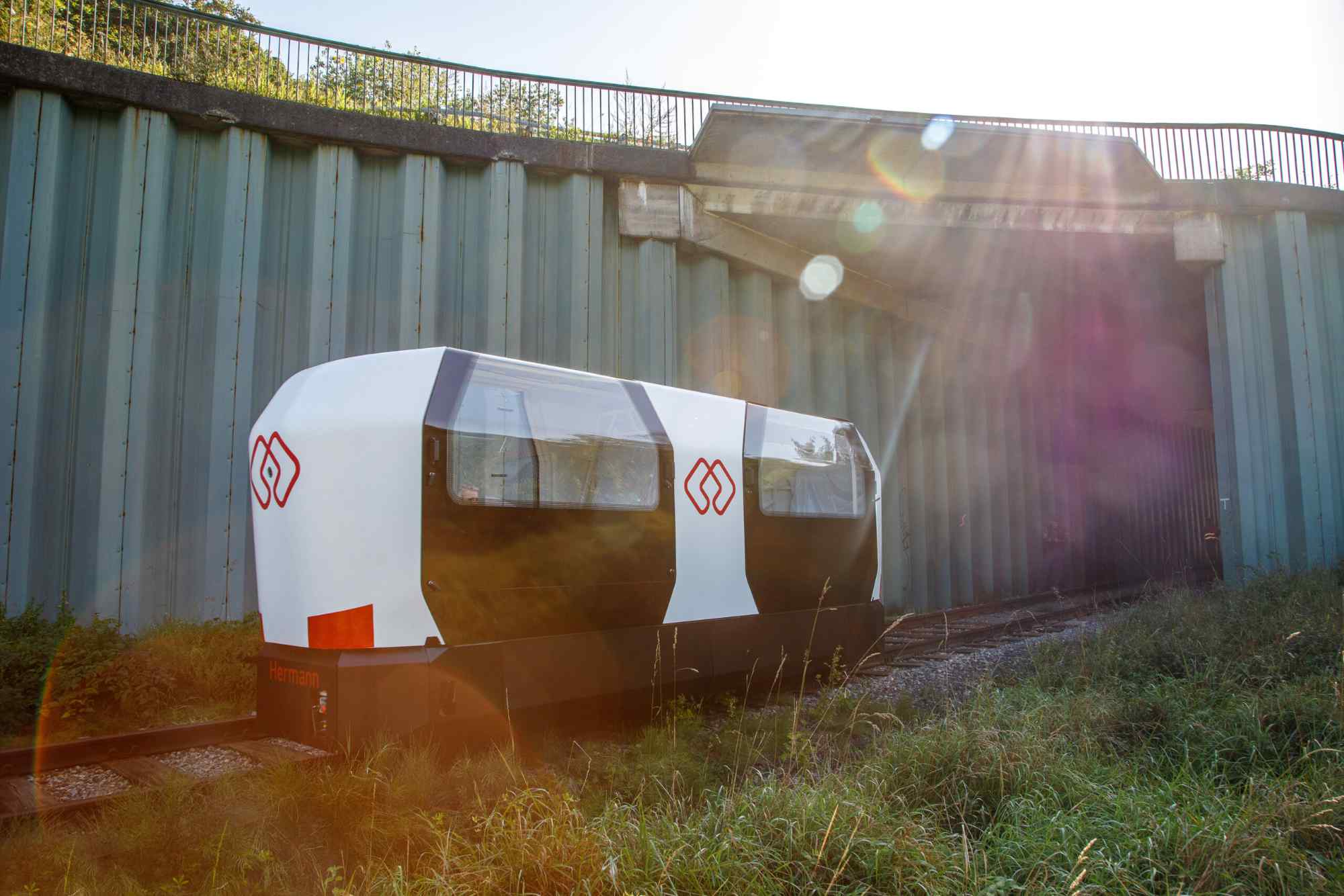
The core idea: reactivating disused or underused rural rail lines with compact, self-driving cabins for four to six passengers. The vehicles run on a single rail and travel bidirectionally on one track, passing oncoming vehicles, enabling individual, automated local public transport, a form of situational mobility similar to a paternoster lift, available around the clock as a complement to existing public transit.
What are the main areas of activity of the company?
T.F: Research and development
- Vehicle development: design, gyroscopic stabilization, running gear, support structure, drive technology and power electronics.
- Autonomous driving: integration of key technologies for automated operation, control center, safety concepts and approval preparation.
System and operating concepts
Development of an IPNV concept (individualized local public transport) with on-demand operation for reactivated lines as well as campus and neighborhood rail systems.
Spin-off perspective
Assessment of route potential, feasibility studies, and preparation of pilot regular operations and later commercial applications.
What’s the news about new products/services?
T.F: The second generation of test vehicles (“MONOCAB ready”) is currently under development, bringing together the results of parallel research projects. It features enhanced stabilization, a new running gear, an optimized support structure and a passenger cabin adapted for carrying passengers in the test field.
This new vehicle generation will be presented to an international audience of experts at InnoTrans in Berlin, from September 22 to 25. This will raise MONOCAB’s visibility as a solution for rural mobility and IPNV and help forge contacts with potential partners and customers.
What are the ranges of products/services?
T.F: As our current focus is on developing the MONOCAB system, our activities break down as follows:
- Vehicle and infrastructure: development of the monorail vehicles, adaptation of infrastructure, and demonstration on real track sections.
- Operating concepts: on-demand services, IPNV, campus and neighborhood rail systems, as well as prospective applications in factory transport and freight.
The planned spin-off aims to:
- identify and assess route potential,
- advise municipalities and transport companies,
- prepare and support initial pilot regular operations on selected lines.
What is the state of the market where you are currently active?
T.F: Demand for autonomous, individualized public transport solutions for rural areas is growing worldwide. At the same time, the market remains challenging: local authorities are under financial pressure, and infrastructure investments are frequently postponed or cut.
This is exactly where MONOCAB comes in: by making use of existing, disused rail lines and deploying small, lightweight, battery-electric vehicles, routes can be reactivated relatively cost-effectively. The result is flexible, individualized local public transport that expands the modal split in rural areas — an alternative that is “as good as your own car.”
What can you tell us about market trends?
T.F: Four trends are shaping the market particularly strongly:
- Individualized, autonomous public transport solutions: on-demand systems that respond to actual demand rather than rigid timetables.
- Reactivation of existing infrastructure: the intelligent use of existing rail lines instead of costly new construction.
- Sustainability and decarbonization: battery-electric, energy-efficient systems that reduce CO₂ emissions and make rural regions future-ready.
- Autonomous, connected systems: they ease the shortage of skilled workers in public transport and reliably connect even sparsely populated regions.
What are the most innovative products/services marketed?
T.F: The most innovative solutions include:
- The MONOCAB vehicle itself: gyroscopically stabilized, autonomously driving cabins on a single rail, running bidirectionally with oncoming traffic on one track.
- The IPNV concept: a novel approach that combines taxi-like flexibility with public transport and provides fair connectivity to rural areas.
- Campus and neighborhood rail systems: the transferability of the technology to factory, campus and urban rail systems, and prospectively to freight transport.
What all these systems have in common is that they address the shortage of skilled workers in public transport through autonomous functions while also including regions that have so far been poorly served.
What estimations do you have for the second half of 2026?
T.F: As a research consortium, our priority for the second half of 2026 is the concrete preparation of the spin-off: structuring the new company, clarifying business models, forming partnerships with municipalities and transport companies, and planning further pilot regular operations — with the goal of launching an initial fleet operation from 2028.
For the public transport market as a whole, it will be decisive whether federal and EU reforms and funding programs reach municipalities and enable investment in autonomous, sustainable systems. If these conditions are met, public transport — particularly in rural areas — can evolve into a future-ready, individualized and autonomous system in which solutions like MONOCAB play a central role.
Photo Credit: We how Sky – Peter Wehowsky