
Installing massive, curved, or overhead glass elements weighing up to 3,000 kg (6,614 lbs) under extreme environmental conditions, such as high-altitude alpine winds or sub-zero construction sites, demands specialized lifting equipment engineered with uncompromising safety margins. Standard crane attachments lack the adaptive vacuum controls and cold-weather suction technology needed to prevent catastrophic pane drop or surface damage to delicate coatings. By integrating dual-circuit redundant vacuum systems, winter-proof suction pads functional down to −20∘C (−4∘F), and field-adjustable atmospheric pressure sensors, Donauwörth-based Heavydrive GmbH delivers high-precision glass assembly solutions.
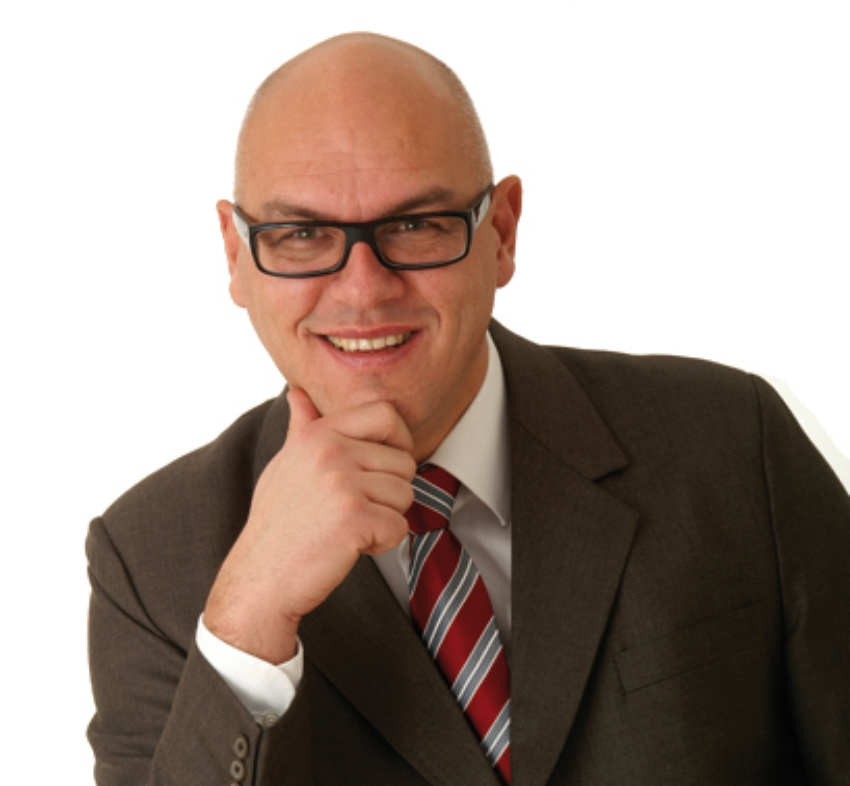
Günter Übelacker, Managing Director of Heavydrive, explains how direct feedback from their international rental fleet drives iterative equipment design and enables rapid 12-to-24-hour equipment delivery across Europe.
How do you design your solutions to deliver reliable performance over the long term, particularly in demanding industrial environments?
Günter Übelacker: We work closely with the client right from the outset, which enables us to develop a solution that is precisely tailored to the requirements of each project. The systems are then usually tested in a mock-up and optimised where necessary to ensure that everything runs smoothly during installation.
https://en.heavydrive.com/customized-solutions
What are the key factors that determine the durability and service life of your products or solutions?
G.Ü: Regular maintenance is the key to ensuring the long-term reliability of a system. Heavydrive has its own workshop where both our own and third-party equipment is serviced, inspected and repaired. Every piece of hire equipment is thoroughly tested before being sent to the site, ensuring that our equipment is always in top condition.
https://en.heavydrive.com/news/avoid-expensive-damage-with-heavydrive
How do you ensure that your solutions can withstand challenging operating conditions such as heavy loads, continuous operation, temperature variations or other demanding factors?
G.Ü: With large-scale projects in particular, we are involved right from the planning stage, enabling us to develop a bespoke installation solution. We take into account factors such as climatic conditions, ground conditions and site access. We adapt our equipment accordingly, for example by using suction cups that are winter-proof down to temperatures of -20°C (-4°F). Depending on the conditions on-site, our equipment can also be adjusted on location; for example, when performing installation work at extreme heights, where the equipment pressure must be precisely adjusted to the surrounding environment.
https://en.heavydrive.com/customized-solutions/project-planning
How do your engineering and development processes contribute to improving the long-term reliability of your solutions?
G.Ü: We develop new equipment and system variants, not for theoretical applications, but as a direct response to real-world installation challenges on site, whether it is a spherically curved glass façade, a 3,000 kg (6,614 lb) glass fin or an overhead assembly in confined spaces.
This requires an iterative development process: Defining the requirements, developing the concept, testing it in a pilot scheme under real site conditions, incorporating the findings – and only then putting the system into regular operation.
Reliability is a fundamental design principle. Our vacuum suction systems are designed to operate with redundant, independent circuits – a dual-circuit vacuum system that continues to ensure a secure holding force even if one circuit fails. For us, operational reliability is just as important as the rated lifting capacity.
There is also a close feedback loop between our rental business and our development team. Since a large proportion of our hire equipment is in continuous use, we receive ongoing field data from real-world operations, including: wear patterns, peak loads, and extreme climatic conditions. These insights feed directly into maintenance intervals, material selection and further product development – creating a continuous improvement cycle that is often not possible for manufacturers of new equipment without their own rental operation.
What role do material selection, component quality and manufacturing standards play in ensuring durability?
G.Ü: Our equipment is designed for technically demanding environments: changing weather conditions, dust and dirt on construction sites, mechanical stress during continuous operation, and extreme climatic conditions on international projects. A component failure in these environments not only puts the system at risk, but, in the worst-case scenario, also endangers human lives and glass panels weighing several tonnes.
There is little room for error. That is why we adhere to two principles:
- Sourcing from recognised manufacturers rather than building everything in-house. For critical components like mini cranes, we work with internationally recognised manufacturers such as Maeda or Unic, rather than attempting to manufacture every component ourselves. This ensures that load-bearing and safety-critical assemblies meet established industrial quality standards, rather than depending on made-to-order production.
- In-house production, where specialisation makes the difference. For our vacuum suction systems, suction cup configurations and customised solutions, such as the VSG systems for glass panes with varying curvatures, we draw on our own engineering expertise. Every detail matters: from selecting low-emission, material-friendly suction cup coatings for coated or delicate glass panes (non-marking suction cups) to designing support frames for high numbers of repeated cycles in continuous operation.
Material quality is therefore an integral part of our safety concept. Redundant vacuum circuits, load-bearing capacity well in excess of the rated capacity, and robust, low-maintenance design are fundamental requirements before any equipment enters our rental fleet or is put up for sale.
Our logistics also play an indirect role in extending equipment life. Since we can deliver equipment ready for use anywhere in Germany within 12 hours and across Europe within 24 hours, our entire fleet is designed for rapid turnaround, thorough inspection between deployments and professional transportation. These factors also have a direct impact on the service life of a system, as damage during transport and improper storage are among the most common causes of premature wear in mobile lifting equipment.
How do you approach maintenance and serviceability to help customers extend the operational life of your solutions?
G.Ü: Regular maintenance and inspection of the equipment are fundamental to ensuring smooth and safe installation work. Our experts regularly travel to customer sites worldwide to inspect equipment and ensure it remains fully operational. We also take care of tool and spare-parts logistics in accordance with the regulations applicable in each country. For customers, we also offer attractive long-term rental packages that include servicing and maintenance.
https://en.heavydrive.com/news/international-system-maintenance
How do you balance initial investment with long-term value, reliability and total cost of ownership for your customers?
G.Ü: Several key principles are firmly embedded in our business model:
Renting rather than purchase as a cost-saving strategy: Project-based rental of high-quality specialist equipment, with or without operating staff, fundamentally changes the investment equation: Instead of tying up significant capital in equipment that is only used for a few weeks a year, the customer pays only for the period they actually need it. This is particularly valuable for specialist applications such as curved façades or overhead assemblies, where purchasing the equipment would hardly be justifiable in financial terms, this makes the difference between something being ‘technically feasible’ and ‘economically viable’.
Financing options for purchases: Where purchasing makes more sense, for example for equipment that is in continuous use, we offer financing models that allow customers to avoid paying the full purchase price upfront and keep their capital available for other purposes. The higher the overall purchase price, the lower the monthly proportion can be. This gives medium-sized companies access to high-quality equipment that might otherwise be beyond their reach as a one-off investment.
Quality as a lifecycle cost factor: Quality and operational reliability pay off in terms of total cost of ownership: Equipment failure during the installation of a multi-tonne glass façade, for example, can result in downtime, contractual penalties and, in the worst-case scenario, safety risks. We therefore assess the cost-effectiveness of our systems not on the basis of unit price, but on the probability of failure over their entire service life. This approach is reflected in the redundant design of safety-critical components such as our dual-circuit vacuum system.
Logistics as a hidden cost-efficiency factor: Our worldwide logistics network, with delivery within 12 hours throughout Germany and 24 hours across Europe, reduces the amount of capital our customers need to tie up in equipment. Businesses can access our fleet of equipment at short notice and keep their own fixed assets to a minimum.
Technical advice right from the planning stage: Our team supports customers every step of the way – from planning through to trial installation and final assembly – identifying the right combination of equipment for the specific site conditions. Over- or under-specifying equipment is one of the most common sources of unnecessary cost in practice. We help avoid this through a realistic assessment of requirements at an early stage.
What technologies or innovations are you implementing to improve the durability, reliability or lifecycle performance of your solutions?
G.Ü: Our Heavydrive systems are modular, allowing equipment to be expanded and adapted for a wide range of applications. Individual components can be easily exchanged, upgraded or replaced. We develop durable equipment capable of achieving as many processes as possible on the construction site. This makes installation more efficient and reduces the number of systems required.
How do you gather feedback from customers and real-world applications to continuously improve the long-term performance of your products?
G.Ü: Our experts are constantly working on international construction sites. This keeps us in direct contact with customers, giving us first-hand insight into any problems or challenges encountered during installation. It also keeps us up to date with the latest trends in the construction industry. In addition, we are always available to our customers via video calls, allowing us to assess the situation on site directly. All of this helps us continuously optimise our equipment and develop new solutions.
Can you share an example of how one of your solutions has delivered long-term value or reliability in a particularly demanding industrial application?
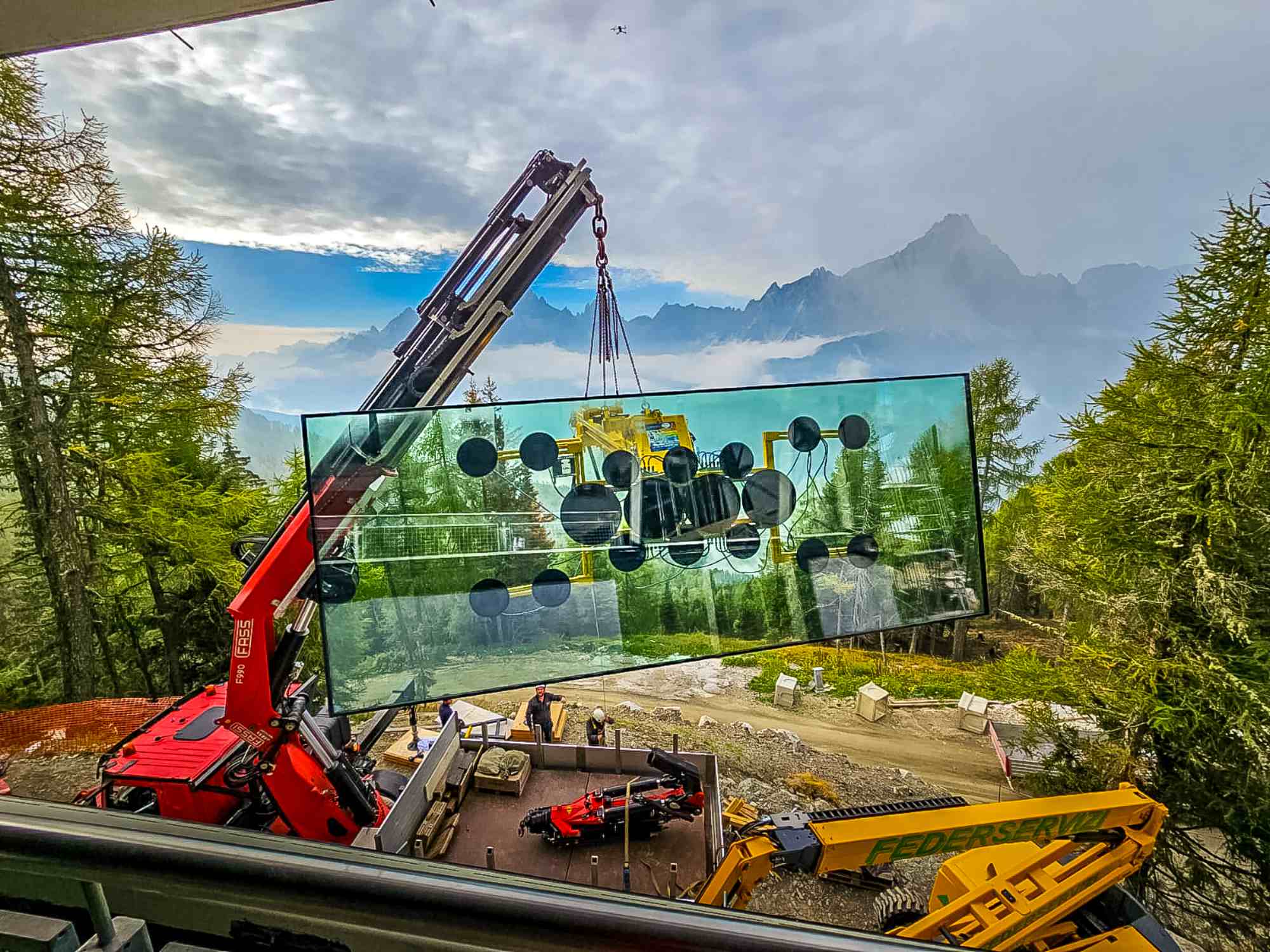
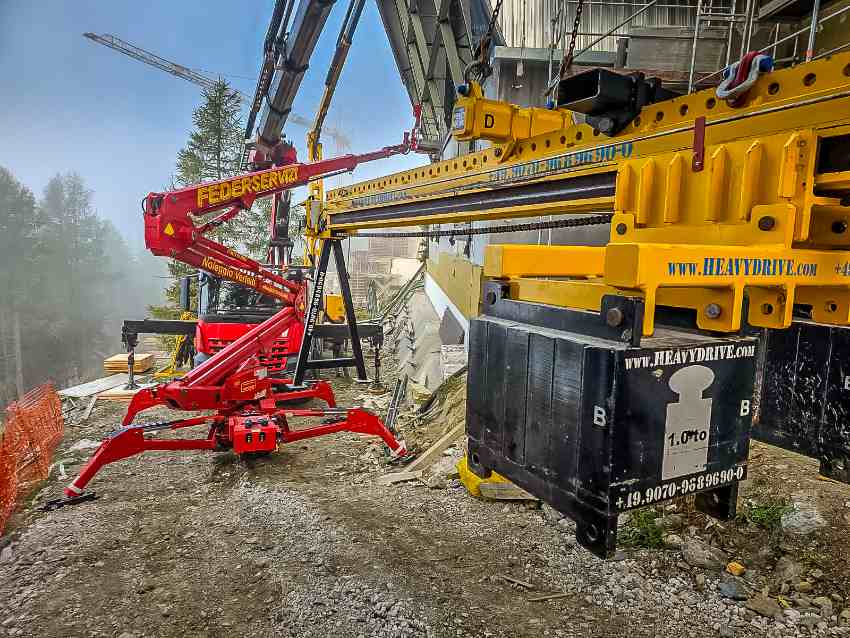
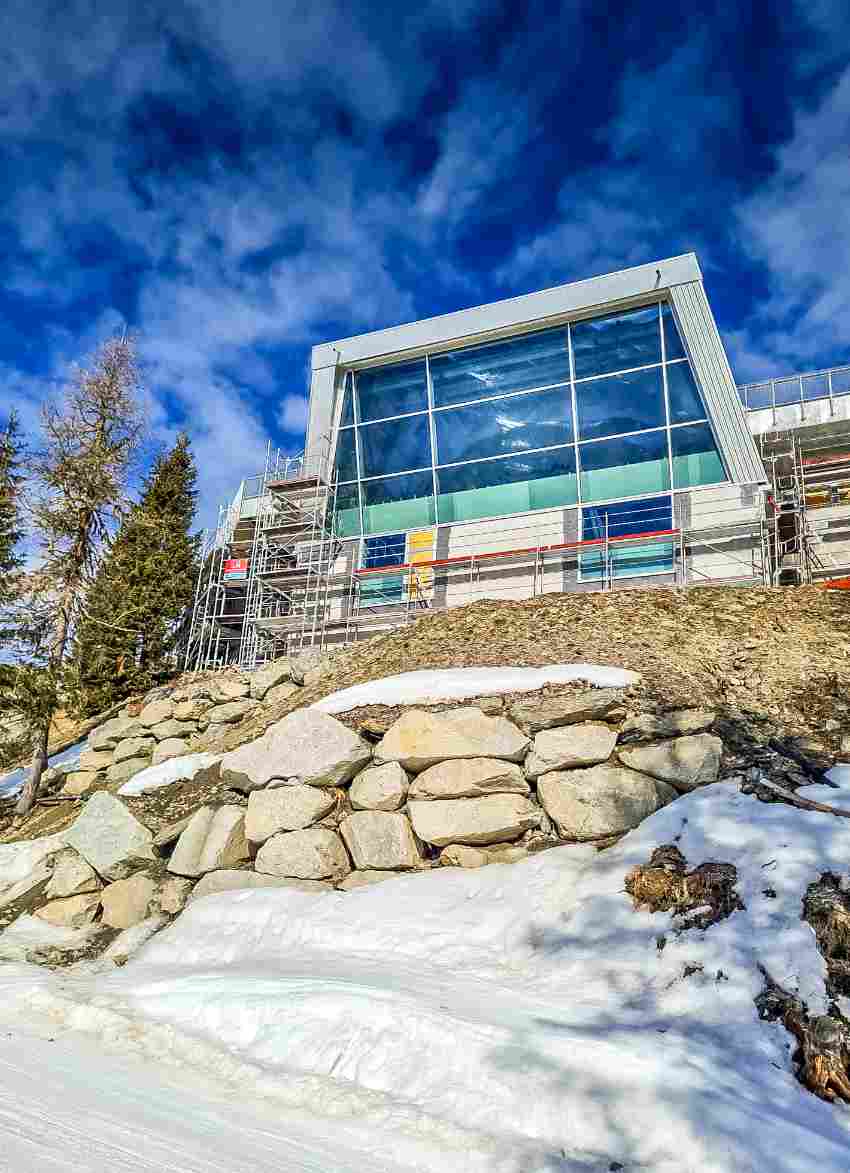
G.Ü: In the Dolomites, at Tre Cime di Lavaredo in South Tyrol, the former mountain station at Helm was redeveloped, and we installed inclined façade panels weighing up to 1,700 kg (3,748 lbs). The Heavydrive equipment was transported by truck along narrow gravel roads to an altitude of 2,050 metres (6,726 ft). At the site, the equipment was lifted from the truck by the construction crane and positioned over the building at the installation point. The glass panels, measuring up to 6 x 2.3 metres (19.7 x 7.6 ft), had to be installed at an angle and, in some cases, overhead — all within just two days and in poor weather conditions.
Before work began, the Heavydrive operator adjusted the equipment’s air pressure to account for the altitude of more than 2,000 metres. The façade elements were then able to be safely suctioned on, transported to the opening and swivelled to the required outside inclination of 17 degrees using the slope adapter. This made it possible to set the panes from outside.